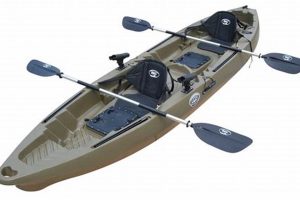
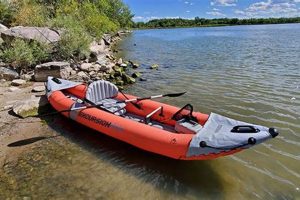
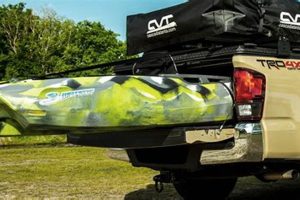
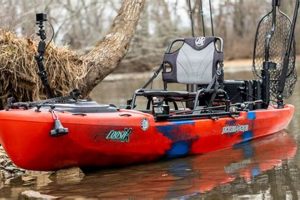
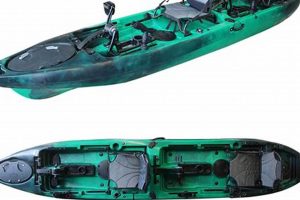
This specialized cart is designed for transporting large, sit-on-top kayaks, particularly the Big Fish 120 model. It typically features a robust frame, pneumatic tires suitable for various terrains, and adjustable straps or cradles to secure the kayak during transport. An example would be a lightweight aluminum frame with wide, balloon-style tires capable of traversing sand or gravel.
Transporting sizable kayaks can be challenging due to their weight and bulk. A dedicated transport system reduces the physical strain of moving these vessels, minimizing the risk of injury and damage to the kayak. This facilitates easier access to launch points, particularly over longer distances or uneven surfaces. The development of such specialized carts reflects the increasing popularity of kayak fishing and the need for convenient, efficient methods of moving these larger watercraft.
Further exploration will delve into specific features, construction materials, weight capacities, and user experiences related to kayak cart solutions for large vessels, offering a comprehensive understanding of their utility and selection considerations.
Tips for Kayak Cart Usage
Proper utilization of kayak carts ensures efficient and safe transport of vessels, minimizing potential strain or damage.
Tip 1: Weight Distribution: Center the kayak on the cart to maintain balance and prevent tipping. Secure the vessel with straps, adjusting tension evenly.
Tip 2: Terrain Considerations: Select a cart with appropriate tire types and widths for the intended terrain. Larger, pneumatic tires are better suited for soft surfaces like sand or gravel.
Tip 3: Cart Capacity: Verify the cart’s weight capacity exceeds the combined weight of the kayak and any gear. Overloading can lead to structural failure.
Tip 4: Proper Inflation: Ensure tires are inflated to the recommended pressure for optimal performance and load-bearing capacity.
Tip 5: Secure Fasteners: Regularly inspect and tighten all bolts, nuts, and other fasteners to maintain structural integrity.
Tip 6: Loading and Unloading: Utilize proper lifting techniques to avoid strain or injury. Enlist assistance when necessary, particularly with heavier kayaks.
Tip 7: Storage and Maintenance: Clean the cart after each use, removing sand, salt, or debris. Store the cart in a dry location to prevent corrosion.
Adherence to these guidelines promotes safe and efficient kayak transport, extending the lifespan of the cart and minimizing risks associated with moving heavy equipment.
Following these best practices allows for seamless integration of the kayak cart into transport routines, leading to more enjoyable kayaking experiences.
1. Durable Construction
Durable construction is paramount for kayak carts designed to transport larger kayaks like the Big Fish 120. These kayaks, often used for fishing, carry substantial weight with added gear and equipment. A robust cart ensures reliable performance and longevity, minimizing risks associated with structural failure during transport.
- Frame Material
The frame material significantly influences a cart’s overall durability. Aluminum offers a lightweight yet strong option, resistant to corrosion. High-impact plastics provide an alternative, offering potential cost savings while maintaining adequate strength for typical loads. Steel, while exceptionally strong, adds considerable weight and is susceptible to rust.
- Wheel Design
Wheel design impacts both durability and terrain maneuverability. Pneumatic tires with wide treads provide excellent shock absorption and traction on uneven surfaces like sand or gravel. Solid rubber tires, while requiring less maintenance, offer reduced shock absorption and can struggle on softer terrains. The axle and bearings should also be robust enough to withstand heavy loads and regular use.
- Corrosion Resistance
Exposure to saltwater and freshwater environments necessitates corrosion resistance. Aluminum frames inherently resist corrosion. Steel components require protective coatings, such as galvanization or powder coating, to prevent rust. Plastic components generally resist corrosion but can degrade with prolonged sun exposure. Stainless steel hardware offers superior corrosion resistance in harsh marine environments.
- Weight Capacity
The cart’s weight capacity must comfortably exceed the combined weight of the kayak, fishing gear, and any additional accessories. Manufacturers typically specify weight limits, and exceeding these limits can lead to structural damage or failure. Ample weight capacity ensures safe and reliable transport, particularly over challenging terrain.
Careful consideration of these aspects of durable construction is crucial when selecting a kayak cart for a Big Fish 120. Investing in a robustly built cart minimizes maintenance, prolongs lifespan, and ensures safe transport of valuable equipment, ultimately contributing to a more enjoyable kayaking experience.
2. Terrain Compatibility
Terrain compatibility is a critical factor when selecting a kayak cart for a Big Fish 120. These kayaks are frequently used in diverse environments, from sandy beaches and rocky shorelines to grassy fields and gravel paths. A cart’s ability to navigate these varied terrains directly impacts transport efficiency and ease of use. Mismatched terrain and cart design can lead to struggles with maneuverability, potential damage to the cart or kayak, and increased user exertion. For example, small, hard wheels sink into soft sand, while narrow tires can become lodged between rocks.
The primary elements influencing terrain compatibility are wheel type, wheel size, and frame design. Pneumatic tires, particularly those with wider treads and lower pressure, offer superior performance on soft surfaces like sand and mud. Their larger surface area distributes weight more evenly, preventing sinking. Larger diameter wheels roll more easily over obstacles like rocks and roots. A wider wheelbase provides greater stability, reducing the risk of tipping on uneven terrain. A cart designed for paved surfaces may employ smaller, harder wheels for efficient rolling, but these prove unsuitable for off-road use. Conversely, large, knobby tires excel off-road but sacrifice maneuverability and efficiency on paved surfaces.
Appropriate terrain compatibility minimizes strain on both the user and the equipment. This translates to easier transport, reduced risk of damage, and ultimately, a more enjoyable kayaking experience. Selecting a cart specifically designed for the intended terrain ensures optimal performance and longevity. Consider typical launch environments and transport routes when evaluating cart options. Compromises may be necessary for users frequently encountering diverse terrains, potentially requiring a cart adaptable to different environments or the use of multiple cart types.
3. Secure Kayak Mounting

Secure kayak mounting is paramount for safe and efficient transport using a Big Fish 120 kayak cart. Improperly secured kayaks risk damage from shifting, falling, or impacting obstacles during transport. A stable, secure mounting system minimizes these risks, preserving the kayak’s integrity and ensuring user safety. This section explores the crucial facets of secure kayak mounting specific to the Big Fish 120.
- Strap Material and Design
Straps play a vital role in securing the kayak to the cart. Durable, weather-resistant materials like nylon or polypropylene webbing are essential for longevity and reliable performance. Adjustable straps with robust buckles allow for customized tensioning, accommodating varying hull shapes and sizes. Cam-buckle straps offer quick and easy adjustments, while tie-down straps provide greater flexibility for securing unusual shapes or securing additional gear.
- Contact Points and Padding
The points where the straps contact the kayak hull are crucial for preventing scratches and abrasions. Padding, often incorporated into the straps or cart frame itself, protects the kayak’s finish and distributes pressure evenly. Placement of these contact points influences stability, ensuring the kayak remains securely cradled during transport. Strategic placement avoids stress on vulnerable areas of the hull.
- Cradles and Supports
Some carts utilize cradles or supports designed to conform to the kayak’s hull, offering enhanced stability compared to straps alone. These cradles, typically constructed from durable plastic or foam, provide a wider base of support, minimizing pressure points and distributing weight more evenly. Cradles are particularly beneficial for larger, heavier kayaks like the Big Fish 120, offering greater stability during transport.
- Tie-Down Points and Anchor Placement
Secure anchor points on both the kayak and the cart are essential for effective tie-down. Integrated tie-down points on the kayak offer convenient attachment locations, eliminating the need to loop straps around handles or other potentially vulnerable areas. Similarly, strategically placed anchor points on the cart frame facilitate secure strap placement, maximizing stability and minimizing movement during transport.
These facets of secure kayak mounting work in concert to ensure the Big Fish 120 remains firmly affixed to the cart during transport, minimizing the risk of damage and maximizing user safety. Selecting a cart and strapping system designed for the specific dimensions and weight of the Big Fish 120 is crucial for optimal performance and secure transport across varying terrains.
4. Weight Capacity

Weight capacity is a critical specification for big fish 120 kayak carts due to the inherent size and weight of these kayaks. Big Fish 120 kayaks, known for their stability and fishing capabilities, often carry substantial additional weight in the form of fishing gear, coolers, and other equipment. Exceeding a cart’s weight capacity can lead to structural failure, potentially damaging both the cart and the kayak. For instance, a cart with a 150-pound capacity may be insufficient for a fully loaded Big Fish 120, which can weigh over 100 pounds unloaded, plus the added weight of gear.
Understanding the relationship between kayak weight and cart capacity is crucial for safe and effective transport. Manufacturers typically specify weight limits for their carts, and adhering to these limits is essential. Overloading compromises structural integrity and can lead to axle bending, tire failure, or frame breakage, particularly during transport over uneven terrain. Consider a scenario where a fully loaded kayak exceeds the cart’s capacity by 20 pounds; traversing a sandy beach could cause the wheels to sink, straining the frame and potentially leading to collapse. Conversely, selecting a cart with ample weight capacity ensures safe and reliable transport, even with a fully equipped kayak and over challenging surfaces.
Careful consideration of weight capacity when selecting a kayak cart for a Big Fish 120 prevents equipment damage and ensures user safety. Calculating the total weight of the kayak, including all gear and equipment, and choosing a cart with a capacity exceeding this total weight is paramount. This proactive approach minimizes the risk of cart failure and contributes to a more enjoyable and worry-free kayaking experience.
5. Portability and Storage

Portability and storage are essential considerations for big fish 120 kayak cart owners. These kayaks, while offering excellent stability and fishing capabilities, are inherently large and require dedicated transport solutions. A cart’s portability directly impacts its ease of use and storage convenience, influencing both transport to the launch site and storage after use. A cumbersome, non-portable cart negates the benefits of a dedicated transport system, potentially becoming more of a hindrance than an asset.
- Cart Dimensions (Folded/Unfolded)
Cart dimensions, both when folded and unfolded, directly influence portability and storage. A compact folded size allows for easy storage in vehicle trunks, garages, or sheds. Conversely, a bulky, non-collapsible cart presents storage challenges and may require dedicated transport solutions. Consider the dimensions relative to available storage space and transport vehicle capacity.
- Weight and Material
Cart weight influences both portability and ease of handling. Lightweight materials like aluminum or high-impact plastics reduce overall cart weight, facilitating transport and maneuverability. Heavier carts, often constructed from steel, can prove cumbersome to handle, particularly for users with physical limitations. Balance weight considerations against durability requirements.
- Detachable Components
Detachable components, such as wheels or handles, further enhance portability and storage convenience. Removable wheels reduce the cart’s overall footprint, facilitating storage in confined spaces. Detachable handles minimize protrusion, preventing damage during transport and storage. Consider the ease of component removal and reassembly.
- Carrying Cases/Straps
Carrying cases or integrated straps can simplify transport and storage of collapsible carts. Dedicated carrying cases protect the cart from damage during transport and provide organized storage. Integrated straps allow for convenient carrying, particularly for shorter distances. Evaluate the practicality of these features based on typical transport and storage scenarios.
These facets of portability and storage significantly influence the overall usability of a big fish 120 kayak cart. A well-designed cart balances portability with durability and functionality, ensuring convenient transport, efficient storage, and ultimately, a more enjoyable kayaking experience. Prioritizing these factors streamlines the transport process, minimizes storage hassles, and maximizes the utility of the kayak cart.
6. Ease of Use

Ease of use is a paramount consideration for big fish 120 kayak cart users. These kayaks, often used for fishing, require transport across varying terrains, sometimes over considerable distances. A user-friendly cart simplifies this process, minimizing exertion and maximizing enjoyment of the kayaking experience. Difficult assembly, cumbersome loading procedures, or challenging maneuverability detract from the overall experience and may discourage frequent use. This section explores key facets contributing to ease of use.
- Assembly and Disassembly
Intuitive assembly and disassembly processes are crucial. A cart requiring complex assembly or specialized tools becomes a burden, particularly in outdoor settings. Quick-release mechanisms, tool-free assembly, and clearly illustrated instructions contribute to a seamless user experience. For example, a cart with snap-lock pins for joining components simplifies setup compared to one requiring bolted connections.
- Loading and Unloading
Efficient loading and unloading procedures minimize strain and potential kayak damage. Features like adjustable cradles, strategically placed straps, and integrated loading ramps simplify the process, particularly for heavier kayaks. A cart designed to accommodate the Big Fish 120’s hull shape minimizes slippage during loading. Ergonomic handles and balanced weight distribution further facilitate the loading process.
- Maneuverability and Terrain Navigation
Smooth maneuverability across varying terrains is essential. Large, pneumatic tires with wide treads excel on soft surfaces like sand or gravel, while a balanced frame design enhances stability. Swiveling front wheels facilitate navigation around obstacles. Consider a scenario where a cart must be maneuvered through a crowded beach area; a cart with excellent maneuverability simplifies this process, minimizing frustration and potential collisions.
- Storage and Transportation
Compact storage dimensions and convenient transport features contribute to overall ease of use. Collapsible designs and detachable components minimize storage space requirements. Integrated carrying handles or dedicated carrying bags simplify transport to and from the launch site. For example, a cart that folds flat and fits easily in a vehicle’s trunk simplifies transport compared to a bulky, non-collapsible cart.
These facets of ease of use significantly impact the overall kayaking experience with a Big Fish 120. A user-friendly cart simplifies transport, minimizes exertion, and maximizes enjoyment. Prioritizing these design elements ensures a seamless and efficient process, allowing kayakers to focus on the enjoyment of the sport rather than the challenges of transport.
Frequently Asked Questions
This section addresses common inquiries regarding kayak carts designed for the Big Fish 120, offering concise and informative responses.
Question 1: What is the typical weight capacity of a kayak cart suitable for a Big Fish 120?
Carts designed for larger kayaks like the Big Fish 120 typically have weight capacities ranging from 150 to 200 pounds. It is crucial to verify the cart’s specified capacity exceeds the combined weight of the kayak and all gear.
Question 2: Are pneumatic tires preferable to solid tires for these carts?
Pneumatic tires generally offer superior performance on varied terrains, providing better shock absorption and traction, particularly on soft surfaces like sand or gravel. Solid tires require less maintenance but can struggle on uneven terrain.
Question 3: How important is frame material in cart selection?
Frame material significantly impacts durability and weight. Aluminum offers a balance of strength and lightness, while steel provides greater strength but increased weight. High-impact plastics can offer a cost-effective alternative.
Question 4: What features contribute to ease of loading and unloading a Big Fish 120 onto a cart?
Features like adjustable cradles, wide bunks, and strategically placed straps facilitate secure loading. Integrated loading ramps and ergonomic handles further simplify the process, minimizing strain.
Question 5: How does cart width affect stability during transport?
A wider wheelbase generally enhances stability, reducing the risk of tipping, especially on uneven terrain. However, excessive width can hinder maneuverability in tight spaces.
Question 6: What maintenance is typically required for a kayak cart?
Regular maintenance includes cleaning the cart after each use, particularly after exposure to saltwater, and periodically inspecting and tightening hardware. Tire pressure should be checked and adjusted as needed for pneumatic tires.
Careful consideration of these frequently asked questions assists in informed decision-making regarding kayak cart selection, ensuring optimal performance and a positive user experience.
Further sections will explore specific cart models and user reviews, providing a more comprehensive understanding of available options and their practical application.
Conclusion
Effective transport of the Big Fish 120 kayak relies heavily on appropriate cart selection. Durability, terrain compatibility, secure mounting systems, sufficient weight capacity, portability, and ease of use constitute critical considerations. Careful evaluation of these factors ensures safe and efficient transport, minimizing potential damage and maximizing user convenience. Understanding the interplay of these elements allows for informed decisions aligned with individual needs and usage scenarios.
Investing in a suitable kayak cart enhances the overall Big Fish 120 experience. Streamlined transport facilitates access to diverse waterways, expanding fishing opportunities and enhancing overall enjoyment. Choosing a well-designed cart contributes to the longevity of the kayak and minimizes the physical demands associated with transport, allowing for greater focus on the pleasures of kayaking.