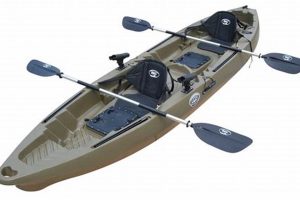
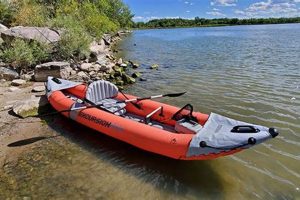
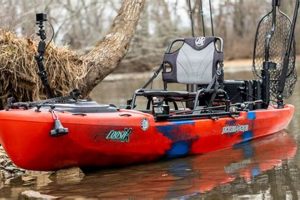
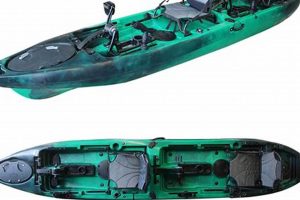
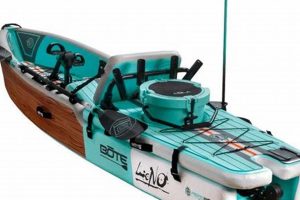
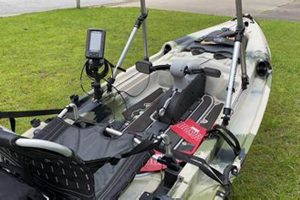
A foundational understanding of kayak fishing, specifically targeting larger species, requires specialized equipment and techniques. This encompasses selecting a kayak with sufficient stability and weight capacity, mastering paddling and maneuvering skills in diverse water conditions, and employing appropriate tackle and rigging for larger fish. For example, a longer, wider kayak with a higher weight capacity is often preferred for stability when battling strong fish, while specific rod and reel combinations are necessary to handle heavier lines and lures.
Developing proficiency in these areas is essential for a safe and successful angling experience. A stable, appropriately outfitted kayak enables anglers to confidently navigate open water or strong currents while pursuing powerful fish. Historically, fishing from kayaks provided greater access to shallower waters and diverse habitats, allowing anglers to target a broader range of species. Modern advancements in kayak design and fishing technology further enhance this capability, making specialized fishing kayaks increasingly popular for targeting large game fish.
This article will delve deeper into the specifics of selecting the right kayak, essential gear, and effective techniques for targeting large fish species from a kayak, covering topics such as kayak stability, propulsion methods, rod and reel selection, and fish-fighting strategies.
Tips for Kayak Fishing for Large Species
Successfully targeting large fish from a kayak requires careful planning and execution. The following tips offer guidance for a safe and rewarding experience.
Tip 1: Choose the Right Kayak: Kayak selection is paramount. A longer, wider kayak provides enhanced stability, crucial when battling strong fish. Consider weight capacity, including angler weight, gear, and potential catch.
Tip 2: Prioritize Stability: Stability is essential, especially in challenging conditions. Practice entering, exiting, and maneuvering the kayak before venturing into open water or strong currents.
Tip 3: Utilize Appropriate Tackle: Heavy-duty rods, reels, and lines are essential for handling larger species. Select tackle appropriate for the target fish and the fishing environment.
Tip 4: Master Kayak Control: Effective paddling and maneuvering skills are essential for navigating various water conditions and pursuing fish effectively. Practice paddle strokes and turning techniques.
Tip 5: Employ Effective Fish-Fighting Techniques: Landing large fish from a kayak requires specialized techniques. Utilize the kayak’s maneuverability to tire the fish while maintaining a safe distance and avoiding line tangles.
Tip 6: Ensure Proper Safety Precautions: Safety should always be paramount. Wear a personal flotation device, carry essential safety gear, and inform someone of fishing plans, including location and expected return time.
Tip 7: Understand Local Regulations: Familiarize oneself with local fishing regulations, including licensing requirements, size and catch limits, and permitted fishing areas.
By adhering to these guidelines, anglers can increase their chances of a successful and safe kayak fishing experience while targeting larger species. Preparation and careful consideration of these factors contribute significantly to a rewarding outing on the water.
This information provides a foundation for successful kayak fishing for larger species. The subsequent sections will delve deeper into specific techniques and strategies for various target species and environments.
1. Kayak Stability

Kayak stability forms a cornerstone of the “big fish 101 kayak” concept. A stable platform is essential for anglers targeting larger species. The inherent instability of a kayak, exacerbated by the movements of a powerful fish, necessitates careful consideration of stability factors. Loss of balance during a fight can lead to capsizing, equipment loss, and potentially dangerous situations. For example, a hooked tarpon, known for its acrobatic leaps and powerful runs, can easily destabilize a kayak if the angler is not prepared. Therefore, understanding stability principles is crucial for safe and successful angling.
Several factors contribute to kayak stability. Width, hull design, and the angler’s center of gravity all play a role. Wider kayaks generally offer greater initial stability, resisting tipping. Hull designs, such as pontoon hulls or those with pronounced chines, enhance secondary stability, the ability to recover from tipping. The angler’s weight distribution and body movements also significantly impact stability. Leaning too far to one side can compromise balance, particularly during a fight. Proper technique and weight management within the kayak are crucial for maintaining stability. Selecting a kayak designed for stability, and understanding its limitations, are key aspects of “big fish 101 kayak.”
In conclusion, kayak stability is not merely a desirable feature but a critical safety and performance component when targeting larger fish species. Choosing a stable platform and understanding the factors influencing stability are fundamental to successful “big fish 101 kayak” practices. Neglecting this aspect can jeopardize not only angling success but also angler safety. This understanding empowers anglers to select appropriate equipment and employ techniques that maximize both safety and the probability of landing a trophy fish.
2. Appropriate Tackle

Appropriate tackle is a critical component of successful kayak fishing for large species. The stresses exerted by a powerful fish necessitate robust and specialized equipment capable of withstanding these forces. Selecting appropriate tackle directly impacts the angler’s ability to control the fish, minimize fight duration, and ultimately, land the catch safely and efficiently. Inadequate tackle can lead to line breakage, equipment failure, and potentially lost fish.
- Rod and Reel Selection
The rod and reel combination must be balanced and capable of handling the target species. Heavy-duty rods with sufficient backbone provide the necessary lifting power and control during the fight. Reels should possess a smooth drag system capable of dissipating the powerful runs of large fish. For example, when targeting large saltwater species like tarpon, a heavy-action rod paired with a saltwater-rated spinning reel with a high line capacity is crucial. This combination allows the angler to exert sufficient pressure while providing the necessary line capacity for long runs.
- Line and Leader Choice
Line strength and leader material are essential considerations. Braided lines offer high tensile strength with minimal stretch, providing increased sensitivity and direct contact with the fish. Leader material, such as fluorocarbon or wire, offers abrasion resistance and protects the main line from sharp teeth or gill plates. For instance, when fishing for toothy species like barracuda, a wire leader is crucial to prevent bite-offs. Matching line and leader strength to the target species is essential for success.
- Hook and Lure Selection
Hooks must be strong and sharp enough to penetrate the bony mouths of large fish. Lure selection depends on the target species and fishing conditions. Larger lures are often necessary to attract the attention of large predators. For example, when fishing for muskie, large spinnerbaits or topwater lures are often effective. The hook size and lure type should be appropriate for the target species and the fishing environment.
- Tackle Organization and Accessibility
Maintaining a well-organized and accessible tackle system is crucial in the confined space of a kayak. Essential items should be readily available, minimizing time spent searching for gear during critical moments of the fight. For example, having pliers, line cutters, and extra leader material within easy reach can prevent fumbling and potential line breakage during a crucial moment. Efficient tackle management contributes significantly to a successful outcome.
The appropriate tackle selection directly contributes to success and safety in “big fish 101 kayak.” The combined elements of a robust rod and reel, strong line and leader, appropriately sized hooks and lures, and efficient tackle organization form a crucial foundation for anglers pursuing large fish species from a kayak. Careful consideration of these elements optimizes the chances of a successful and safe fishing experience.
3. Effective Techniques
Effective techniques are essential for successful kayak fishing, particularly when targeting large species. These techniques encompass a range of skills, from kayak control and fish fighting strategies to accurate casting and situational awareness. Mastering these skills significantly increases the angler’s chances of hooking, fighting, and landing trophy fish while maintaining safety and control throughout the process. The confined space of a kayak presents unique challenges and opportunities, necessitating specialized techniques tailored to this fishing platform.
- Kayak Control and Positioning
Precise kayak control is fundamental. Maneuvering the kayak effectively allows anglers to position themselves optimally for casting, presenting lures, and fighting fish. Utilizing paddle strokes and rudder systems efficiently enables anglers to maintain position in currents, wind, and challenging conditions. For example, holding position upstream of a likely ambush point allows for a natural drift and presentation of the lure. Mastering kayak control is crucial for maximizing fishing opportunities and responding effectively to fish movements during a fight.
- Fish Fighting Strategies
Effective fish-fighting strategies are crucial for landing large fish from a kayak. These strategies involve utilizing the kayak’s maneuverability to tire the fish while avoiding line tangles and maintaining a safe distance. Applying appropriate drag pressure and angling the rod strategically helps control the fish and prevent break-offs. For example, allowing a strong fish to run while using the kayak’s maneuverability to follow its movements can prevent line strain and increase the chances of a successful landing.
- Casting and Lure Presentation
Accurate casting and effective lure presentation are essential for enticing large fish to strike. Adapting casting techniques to the confined space of a kayak and mastering presentations that trigger strikes are key skills. Understanding the target species’ feeding habits and preferred lure types further enhances effectiveness. For instance, presenting a fly accurately near structure where large bass are known to ambush prey increases the likelihood of a successful hookup. Precise casting minimizes wasted effort and maximizes opportunities for enticing a strike.
- Situational Awareness and Safety
Maintaining situational awareness is paramount in kayak fishing. Being aware of weather conditions, water currents, boat traffic, and potential hazards is essential for safety and success. For example, recognizing changing weather patterns or increasing boat traffic can allow anglers to adjust their plans and avoid potentially dangerous situations. Prioritizing safety while focusing on fishing techniques is crucial for a positive experience.
These effective techniques are integral components of successful “big fish 101 kayak” practices. Mastering kayak control, employing effective fish-fighting strategies, presenting lures effectively, and maintaining situational awareness collectively contribute to a safe and productive fishing experience. The synergy of these techniques, adapted to the unique challenges and opportunities presented by kayak fishing, allows anglers to confidently pursue large fish species while enjoying the sport responsibly. These techniques, coupled with appropriate equipment and species knowledge, enhance not only the chances of success but also the overall enjoyment and safety of the experience.
4. Safety Precautions

Safety precautions are paramount in the context of “big fish 101 kayak.” Targeting large, powerful fish from a relatively small, unstable platform necessitates a heightened awareness of potential risks and adherence to established safety protocols. Neglecting these precautions can lead to serious consequences, jeopardizing not only the fishing experience but also angler well-being. Understanding and implementing appropriate safety measures is fundamental to responsible and successful kayak fishing for large species.
- Personal Flotation Device (PFD)
A PFD is non-negotiable. It provides essential buoyancy in the event of capsizing, especially critical during a fight with a large fish. A properly fitted and consistently worn PFD can be the difference between a minor inconvenience and a life-threatening situation. Even strong swimmers can become incapacitated due to cold water, unexpected impacts, or entanglement with fishing gear. A PFD mitigates these risks significantly.
- Communication and Float Plan
Informing someone of fishing plans, including location and expected return time, is a crucial safety measure. This allows for timely assistance in case of an emergency. A float plan should include details such as kayak description, angler attire, and planned fishing areas. This information can be invaluable for search and rescue operations if the angler becomes overdue or experiences difficulties.
- Weather Awareness and Monitoring
Checking weather forecasts before embarking on a fishing trip and continuously monitoring conditions while on the water is crucial. Sudden changes in weather, particularly strong winds or storms, can create hazardous conditions for kayakers. Being prepared for changing conditions and knowing when to seek shelter are essential for angler safety. Postponing a trip due to adverse weather conditions demonstrates prudent judgment and prioritizes safety.
- Essential Safety Gear
Carrying essential safety gear, such as a whistle, signaling mirror, first-aid kit, and bilge pump, enhances preparedness for unforeseen circumstances. A whistle can attract attention in case of distress. A signaling mirror can be used to signal for help over long distances. A first-aid kit allows for immediate treatment of minor injuries. A bilge pump helps remove water from the kayak in case of flooding. These items, while often overlooked, can prove invaluable in emergency situations.
These safety precautions are integral to the “big fish 101 kayak” philosophy. They represent a proactive approach to risk management, ensuring angler safety while pursuing the thrill of targeting large fish from a kayak. Integrating these precautions into every fishing trip establishes a culture of safety and responsible angling, allowing anglers to enjoy the sport while minimizing potential hazards. Consistent adherence to these measures reinforces the importance of safety as a fundamental element of successful kayak fishing.
5. Species Knowledge
Comprehensive species knowledge is a cornerstone of successful “big fish 101 kayak” practices. Understanding the target species’ behavior, habitat preferences, feeding patterns, and seasonal movements significantly enhances angling effectiveness and contributes to a more ethical and sustainable fishing experience. This knowledge allows anglers to make informed decisions regarding location selection, lure choice, presentation techniques, and fish-fighting strategies, maximizing the chances of success while minimizing environmental impact.
- Habitat Preferences
Understanding a species’ preferred habitat is crucial for locating and targeting them effectively. Some species prefer structured environments like reefs or submerged vegetation, while others favor open water or specific depth ranges. For instance, largemouth bass often inhabit areas with submerged logs or weed beds, while pelagic species like tuna roam open ocean waters. Knowing these preferences allows anglers to focus their efforts in areas with higher probabilities of encountering the target species, maximizing fishing time and efficiency.
- Feeding Patterns and Prey
Knowledge of a species’ feeding patterns and preferred prey is essential for selecting appropriate lures and presentation techniques. Some species are ambush predators, lying in wait for unsuspecting prey, while others actively chase schools of baitfish. For example, muskie are ambush predators that often strike large lures resembling their natural prey, while striped bass frequently feed on schools of menhaden. Matching lure selection and presentation to the target species’ feeding habits significantly increases the likelihood of eliciting a strike.
- Seasonal Movements and Migration
Many fish species exhibit seasonal movements and migrations, influenced by factors such as water temperature, spawning cycles, and prey availability. Understanding these patterns allows anglers to anticipate the presence of target species in specific locations during particular times of the year. For example, tarpon migrate along coastlines during specific seasons, following schools of baitfish. Knowing these migratory patterns allows anglers to intercept these fish during their travels, significantly increasing fishing opportunities.
- Behavior and Fighting Characteristics
Understanding a species’ typical behavior and fighting characteristics is crucial for employing effective fish-fighting strategies. Some species are known for their powerful runs and acrobatic leaps, while others exhibit a more subdued fight. For example, tarpon are renowned for their aerial displays and strong runs, while grouper tend to stay deep and exert powerful resistance. Knowing these characteristics allows anglers to anticipate fish behavior and adjust their techniques accordingly, maximizing control and minimizing the risk of line breakage or equipment failure.
This comprehensive understanding of species-specific knowledge empowers anglers to approach “big fish 101 kayak” with a targeted and informed strategy. By aligning fishing techniques with the natural behavior and ecology of the target species, anglers increase their chances of success while minimizing environmental impact. This knowledge not only enhances fishing effectiveness but also fosters a deeper appreciation for the intricate relationship between angler and the aquatic environment. This holistic approach contributes to a more rewarding and sustainable fishing experience.
6. Kayak Selection
Kayak selection is integral to the “big fish 101 kayak” concept. Targeting large, powerful fish necessitates a kayak capable of handling the increased stresses and demands of such pursuits. Appropriate kayak selection directly influences stability, maneuverability, and overall fishing effectiveness. An unsuitable kayak compromises safety and reduces the likelihood of landing trophy fish. Choosing a kayak based on specific criteria ensures a safe and productive experience. For instance, attempting to land a large tuna from a short, recreational kayak designed for calm lakes would be impractical and potentially dangerous. The kayak’s instability and limited weight capacity would be inadequate for the task. Conversely, a purpose-built fishing kayak designed for offshore use, with ample stability and storage, significantly increases the probability of success and ensures angler safety.
Several factors contribute to appropriate kayak selection for targeting large fish. Length, width, hull design, and weight capacity play crucial roles. Longer kayaks generally track better and offer increased speed, beneficial when covering larger distances or following fast-moving fish. Width contributes significantly to stability, a critical factor when battling powerful fish. Hull design influences both primary and secondary stability, affecting the kayak’s resistance to tipping and its ability to recover from leaning. Weight capacity dictates the maximum load the kayak can safely carry, including angler weight, gear, and potential catch. Careful consideration of these factors, in relation to the target species and fishing environment, ensures the kayak is appropriately matched to the task. For example, a kayak designed for river fishing might prioritize maneuverability over outright stability, while an offshore fishing kayak would emphasize stability and load capacity.
Appropriate kayak selection is not merely a matter of preference but a critical component of safe and successful “big fish 101 kayak” practices. The kayak serves as the angler’s primary platform, influencing every aspect of the fishing experience, from casting and lure presentation to fish fighting and landing. A well-chosen kayak, matched to the specific demands of targeting large fish, significantly enhances performance, safety, and overall enjoyment. Conversely, an inadequate kayak selection can jeopardize safety and undermine angling success. Understanding the interplay between kayak characteristics and the challenges of big game fishing empowers anglers to make informed decisions, optimizing their chances of landing trophy fish while prioritizing safety and maximizing enjoyment on the water. This understanding forms a cornerstone of the “big fish 101 kayak” philosophy.
Frequently Asked Questions
This section addresses common inquiries regarding kayak fishing for large species, providing concise and informative responses to clarify potential uncertainties and misconceptions.
Question 1: What kayak features are most important for targeting large fish?
Stability and weight capacity are paramount. A wider kayak with a higher weight limit offers a more stable platform for battling strong fish. Sufficient storage space for essential gear and potential catches is also crucial.
Question 2: Is specialized fishing tackle necessary for kayak angling for large species?
Specialized tackle is highly recommended. Heavy-duty rods, reels, and lines designed for larger species provide the necessary strength and durability to withstand the stresses of fighting powerful fish. Appropriate tackle selection significantly increases the chances of a successful outcome.
Question 3: What safety precautions are essential when kayak fishing for large species?
Wearing a personal flotation device (PFD) is non-negotiable. Informing someone of fishing plans, including location and expected return time, is crucial. Monitoring weather conditions and carrying essential safety gear, such as a whistle and signaling mirror, enhance preparedness for unforeseen circumstances.
Question 4: How does kayak fishing compare to boat fishing for large species?
Kayak fishing offers distinct advantages, including access to shallower waters and stealthier approaches. However, boats generally provide greater stability and storage capacity. The optimal choice depends on individual preferences, target species, and fishing environment. Each platform presents unique advantages and limitations.
Question 5: What are the essential skills for successful kayak fishing for large fish?
Essential skills include proficient kayak control, effective fish-fighting techniques, accurate casting and lure presentation, and situational awareness. Mastering these skills enhances both safety and fishing effectiveness. Practice and experience contribute significantly to skill development.
Question 6: How can one learn more about targeting specific large fish species from a kayak?
Consulting local fishing guides, joining kayak fishing clubs, and researching species-specific information online or in print publications provide valuable insights. Learning from experienced anglers and utilizing available resources enhances species knowledge and improves fishing success.
These responses provide foundational knowledge for anglers interested in kayak fishing for large species. Careful consideration of these points enhances safety, improves fishing effectiveness, and contributes to a more informed and rewarding experience.
This concludes the frequently asked questions section. The following section will provide further information on advanced techniques and strategies for targeting specific large fish species from a kayak.
Big Fish 101 Kayak
This exploration of “big fish 101 kayak” has highlighted the multifaceted nature of targeting large fish species from a kayak. Key aspects discussed include the critical importance of kayak stability, the selection of appropriate tackle capable of handling powerful fish, the mastery of effective techniques for kayak control and fish fighting, and the prioritization of essential safety precautions. Furthermore, the significance of comprehensive species knowledge, encompassing habitat preferences, feeding patterns, and behavioral characteristics, has been emphasized. Finally, the crucial role of appropriate kayak selection, considering factors such as length, width, hull design, and weight capacity, has been thoroughly examined. Each of these elements contributes significantly to a safe, successful, and rewarding kayak fishing experience when targeting large game fish.
The pursuit of large fish from a kayak presents unique challenges and rewards. Careful consideration of the principles and practices outlined herein empowers anglers to approach this pursuit with enhanced preparedness, maximizing the probability of success while minimizing potential risks. Continual learning, adaptation to specific circumstances, and a steadfast commitment to safety remain crucial for long-term enjoyment and success within this specialized angling discipline. The information presented serves as a foundation for further exploration and development of individual skills and techniques, contributing to the ongoing evolution of “big fish 101 kayak” as a dynamic and rewarding pursuit.