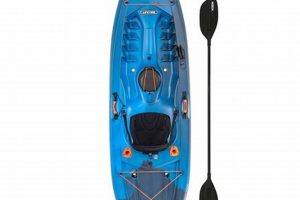
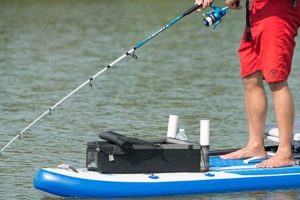
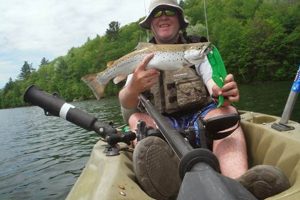
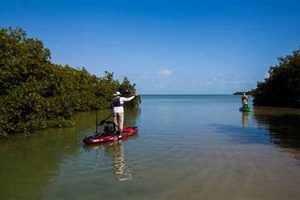
The ability to stand in a kayak designed for angling offers anglers enhanced visibility, casting range, and leverage when fighting fish. This design feature typically involves a wider, flatter hull platform for improved stability, often paired with specialized features like non-slip deck padding and strategically placed handles or rails. Imagine the advantage of spotting shallow-water fish from an elevated position or casting a lure further into a promising eddy.
Elevated angling platforms provide a significant tactical advantage, allowing for more precise lure presentations and improved hook sets. Historically, anglers relied on traditional sit-on-top or sit-in kayaks, which limited mobility and perspective. The development of stable platforms enabling standing has revolutionized kayak fishing, opening new possibilities for targeting different species and navigating diverse waterways. This innovation enhances the angling experience by improving sight fishing, increasing casting distance, and providing greater leverage for battling larger fish.
This article will further explore the advantages and disadvantages of kayaks designed for stand-up fishing, discuss various hull designs and features, and offer guidance on selecting the appropriate vessel for individual needs and fishing styles. Considerations such as stability, maneuverability, and storage capacity will be examined in detail.
Tips for Stand-Up Kayak Fishing
Successfully fishing from a standing position in a kayak requires preparation and adherence to specific safety and performance guidelines. The following tips offer valuable insights for maximizing stability and effectiveness.
Tip 1: Select the appropriate water conditions. Calm, flat water presents the ideal environment for stand-up fishing. Avoid strong currents, high winds, and choppy conditions, as these significantly increase instability.
Tip 2: Utilize a kayak specifically designed for stand-up fishing. Wider, flatter hulls provide a more stable platform. Look for features like non-slip decking and strategically placed grab rails.
Tip 3: Practice entering a standing position in shallow water. Before venturing into deeper areas, familiarize oneself with the kayak’s balance and stability. Start slowly and gradually increase standing time as confidence grows.
Tip 4: Distribute weight evenly. Centering body weight over the kayak’s centerline is crucial for maintaining balance. Avoid sudden movements or leaning too far in any direction.
Tip 5: Wear a personal flotation device (PFD). Safety should always be a priority. A PFD is essential safety equipment, regardless of experience or perceived skill level.
Tip 6: Use a kayak paddle leash. Losing a paddle while standing can create a hazardous situation. A leash ensures the paddle remains within reach even if dropped.
Tip 7: Start with shorter fishing rods. Shorter rods offer improved control and reduce the chance of entanglement when fishing from an elevated position.
By following these tips, anglers can improve stability and safety while enjoying the benefits of stand-up kayak fishing. Preparation and mindful practice contribute to a more successful and enjoyable experience.
The subsequent section will discuss specific techniques for casting, retrieving, and landing fish from a standing position in a fishing kayak.
1. Stability

Stability forms the cornerstone of successful stand-up fishing in a kayak. The ability to maintain balance while standing dictates casting accuracy, effective fish fighting, and overall safety. Compromised stability can lead to falls, equipment loss, and potentially dangerous situations. Consider the scenario of hooking a large fish while struggling to maintain balance; the angler’s focus shifts from landing the fish to preventing capsize, decreasing the chance of a successful outcome and increasing the risk of an accident. Therefore, stability considerations influence every aspect of the stand-up kayak fishing experience.
Several factors influence stability. Hull design plays a critical role; wider, flatter hulls provide greater primary stability (initial resistance to tipping), while longer, narrower hulls offer superior secondary stability (resistance to capsize once tilted). The angler’s center of gravity also significantly impacts balance; keeping weight low and centered enhances stability. Environmental factors, such as wind and current, can further compromise stability, requiring constant adjustments and heightened awareness. For instance, an angler fishing in a narrow, unstable kayak in windy conditions faces significantly greater stability challenges compared to an angler in a wider, more stable kayak on calm water.
Understanding the factors influencing stability is paramount for safe and effective stand-up kayak fishing. Anglers should select kayaks designed for stand-up fishing, practice maintaining balance in controlled environments, and consider environmental conditions before attempting to stand. Prioritizing stability ensures a more enjoyable and safer fishing experience, allowing anglers to focus on the task at hand catching fish rather than struggling to stay upright. Neglecting stability considerations increases the risk of accidents and detracts from the overall fishing experience.
2. Kayak Design

Kayak design plays a pivotal role in facilitating stand-up fishing. Specific design elements directly influence stability, maneuverability, and overall angling effectiveness. Understanding these design features empowers anglers to select appropriate vessels for their individual needs and fishing styles.
- Hull Design
Hull design significantly impacts stability and performance. Wider, flatter hulls, such as those found in pontoon-style kayaks, offer exceptional primary stability, making them ideal for stand-up fishing. However, this stability often comes at the expense of maneuverability and speed. Conversely, longer, narrower hulls, like those found in touring kayaks, provide better tracking and speed but sacrifice primary stability, making them less suitable for stand-up fishing. Hybrid designs attempt to balance stability and maneuverability, offering a compromise between the two extremes. The specific hull design should align with the intended fishing environment and angler preferences.
- Deck Features
Deck features further enhance stand-up fishing capability. Non-slip deck padding provides secure footing, reducing the risk of slips and falls. Recessed rod holders keep fishing rods organized and within easy reach. Integrated storage compartments offer convenient access to tackle and gear. Strategically placed handles and rails provide additional support and assist in maintaining balance while standing. These features contribute to both safety and efficiency while fishing from an elevated position.
- Propulsion Systems
Kayak propulsion systems influence maneuverability and accessibility. Paddle kayaks offer excellent control and maneuverability in shallow water and tight spaces, making them suitable for navigating complex shorelines and backwater areas. Pedal-powered kayaks allow anglers to maintain a standing position while simultaneously maneuvering the vessel, freeing hands for fishing. Motorized kayaks provide greater speed and range, enabling anglers to cover larger distances and access remote fishing spots. The choice of propulsion system depends on fishing style, target species, and the characteristics of the fishing environment.
- Weight Capacity
Weight capacity determines the amount of gear and equipment an angler can safely carry. Exceeding the weight capacity compromises stability and can lead to capsizing. Anglers should consider the combined weight of their body, fishing gear, tackle, and any other accessories when selecting a kayak. Kayaks designed for stand-up fishing typically have higher weight capacities to accommodate the added challenge of balancing while standing.
Careful consideration of these design features is crucial for selecting a kayak appropriate for stand-up fishing. Balancing stability, maneuverability, and features like deck padding and propulsion systems ensures optimal performance and safety. Choosing a kayak aligned with individual needs and fishing styles enhances the overall angling experience, allowing anglers to focus on enjoying the sport rather than struggling with an unsuitable vessel. The interplay between these design elements ultimately determines the kayak’s suitability for stand-up fishing and its effectiveness in various fishing scenarios.
3. Balance

Balance represents a critical element in stand-up kayak fishing, directly influencing safety and effectiveness. Maintaining equilibrium within a relatively unstable platform requires constant adjustment and awareness. Failure to maintain balance compromises casting accuracy, hinders fish fighting, and increases the risk of capsizing. This section explores the multifaceted nature of balance within the context of stand-up kayak fishing.
- Center of Gravity
A low center of gravity contributes significantly to stability. Bending the knees and keeping the body’s core engaged lowers the center of gravity, enhancing balance. Conversely, extending the body upwards raises the center of gravity, increasing instability. Consider the analogy of a tightrope walker using a long pole for balance; the pole effectively lowers the walker’s center of gravity, improving stability. Similarly, maintaining a low center of gravity in a kayak enhances balance, especially in challenging conditions.
- Core Engagement
Engaging core muscles provides essential stability and support. Strong core muscles allow for subtle adjustments and corrections, maintaining balance in response to external forces like wind or waves. Visualize a building’s foundation; a strong foundation provides stability, resisting external pressures. Similarly, engaged core muscles provide a stable base, allowing anglers to maintain balance within the dynamic environment of a kayak.
- Environmental Factors
Wind, current, and waves directly impact balance. Strong winds can push the kayak off course, requiring adjustments to maintain stability. Currents create uneven forces against the hull, demanding compensatory movements. Waves introduce dynamic instability, requiring constant adjustments to maintain equilibrium. Imagine balancing on a moving platform; maintaining balance requires continuous adaptation to the platform’s movements. Similarly, adapting to environmental factors in a kayak is essential for preserving balance.
- Kayak Design
Kayak design influences balance through its impact on stability. Wider, flatter hulls provide greater initial stability, allowing for more confident standing. Features like outriggers and stabilizers further enhance stability, minimizing the risk of capsize. Think of a tripod offering inherent stability due to its broad base. Similarly, a wider kayak hull provides a broader base of support, improving balance and stability for stand-up fishing.
These facets of balance intertwine to influence the overall experience of stand-up kayak fishing. Mastering balance through practice, proper posture, and careful consideration of environmental conditions maximizes safety and effectiveness. Neglecting these aspects increases the risk of falls, detracts from fishing performance, and diminishes enjoyment of the sport. Understanding the interplay between these elements allows anglers to make informed decisions regarding kayak selection, fishing techniques, and environmental awareness, leading to a safer and more rewarding experience on the water.
4. Casting Techniques

Casting techniques in stand-up kayak fishing differ significantly from shore-based or traditional sit-down kayak angling. The elevated position and inherent instability of the kayak necessitate adjustments in casting mechanics and rod manipulation. Effective casting maximizes fishing coverage while maintaining balance and minimizing the risk of capsize. An understanding of specialized casting techniques tailored for stand-up kayak fishing is crucial for optimizing angling success and ensuring safety on the water.
- Underhand Casting
Underhand casting proves valuable in confined spaces or low-clearance situations often encountered beneath overhanging branches or bridges. This technique minimizes vertical rod movement, reducing the risk of entanglement or striking overhead obstructions. Imagine casting under a low-hanging dock; an underhand cast allows for precise lure placement beneath the structure, targeting fish inaccessible through overhead casting. In stand-up kayak fishing, the lower center of gravity associated with underhand casts enhances stability, crucial in the dynamic environment of a kayak.
- Sidearm Casting
Sidearm casting offers enhanced control and accuracy in windy conditions. Keeping the rod closer to the water reduces the impact of wind on the lure trajectory, improving accuracy and minimizing line tangles. Visualize casting across a windswept lake; a sidearm cast keeps the line lower, reducing wind drift and improving casting precision. This technique also proves beneficial in stand-up kayak fishing by minimizing lateral body movement, which is essential for maintaining balance on the unstable platform.
- Pitching
Pitching involves a short, controlled underhand cast used for precise targeting of specific structures or cover. This technique is ideal for placing lures near submerged logs, rocks, or vegetation, where fish often ambush prey. Imagine targeting a specific pocket of water amidst dense lily pads; pitching allows for pinpoint accuracy, placing the lure exactly where intended. In stand-up kayak fishing, pitching minimizes disruptive body movements, contributing to overall stability while maintaining stealth and accuracy.
- Casting Arc Adjustments
Adapting the casting arc compensates for the elevated position and confined space within a kayak. Shortening the backcast and increasing the forward cast arc allows for efficient casting without striking the water or the kayak itself. Consider casting from a small, elevated platform; adapting the casting arc is essential for preventing the lure from hitting the platform’s edge during the backcast. Similarly, adjusting the casting arc in stand-up kayak fishing optimizes casting distance and accuracy within the confines of the kayak’s deck.
These specialized casting techniques, combined with an understanding of balance and kayak dynamics, empower anglers to effectively target fish from a stand-up position. Mastering these adaptations enhances casting accuracy, reduces the risk of tangles and snags, and improves overall fishing success while maintaining balance and safety within the dynamic environment of a stand-up fishing kayak. Choosing the appropriate casting method depends on specific circumstances encountered on the water, such as wind conditions, proximity to cover, and the need for pinpoint accuracy.
5. Safety Precautions
Safety precautions are paramount in stand-up kayak fishing, where the elevated position and inherent instability amplify risks. Neglecting these precautions can lead to accidents, injuries, and potentially life-threatening situations. Understanding and implementing appropriate safety measures ensures a more enjoyable and secure angling experience.
- Personal Flotation Device (PFD)
A PFD is essential safety equipment for all kayak anglers, particularly crucial in stand-up fishing. A PFD provides buoyancy in the event of a capsize, preventing drowning, especially in cold water or strong currents. Imagine an angler losing balance and falling overboard; a PFD keeps the angler afloat, providing time for self-rescue or assistance. Selecting a comfortable, well-fitting PFD designed for kayaking allows for unrestricted movement while fishing.
- Leash Essential Equipment
Leashing essential equipment, such as paddles and fishing rods, prevents loss in the event of a fall. A loose paddle drifting away can create a dangerous situation, hindering self-rescue or return to shore. Similarly, losing a fishing rod represents both a financial loss and a potential environmental hazard. Imagine an angler falling overboard and watching their paddle float away; a leash prevents this scenario, ensuring access to essential equipment for recovery. Securing essential gear with leashes provides peace of mind and enhances safety.
- Weather Awareness
Checking weather conditions before embarking on a fishing trip is crucial. Strong winds, storms, and rapid changes in weather can create hazardous conditions for kayak anglers, especially those fishing from a standing position. Imagine an angler standing in a kayak when a sudden squall arises; the increased wind and waves significantly increase the risk of capsize. Staying informed about weather forecasts and avoiding unfavorable conditions mitigates risks and prioritizes safety.
- Communication Devices
Carrying a communication device, such as a waterproof VHF radio or a mobile phone in a waterproof case, enables communication in emergencies. In the event of a capsize, injury, or other unforeseen circumstances, contacting emergency services or nearby boaters can be critical. Imagine an angler sustaining an injury far from shore; a communication device allows for contacting help, potentially averting a more serious situation. Reliable communication ensures prompt assistance when needed.
These safety precautions form a fundamental aspect of responsible stand-up kayak fishing. Integrating these measures into pre-fishing planning and on-the-water practices minimizes risks, enhances safety, and allows anglers to focus on enjoying the sport with reduced concern for potential hazards. Prioritizing safety contributes to a more positive and secure experience on the water. Neglecting these precautions can transform a recreational activity into a dangerous situation.
6. Water Conditions
Water conditions significantly influence the feasibility and safety of stand-up kayak fishing. Attempting to stand in a kayak in unsuitable conditions dramatically increases the risk of capsizing, jeopardizing both angler safety and fishing effectiveness. Careful assessment of water conditions is essential before attempting stand-up fishing.
- Current
Strong currents create instability, making it difficult to maintain balance while standing. The force of the current against the hull can cause the kayak to drift or turn unexpectedly, increasing the likelihood of losing balance. For example, attempting to stand in a fast-flowing river presents significantly greater challenges compared to standing in a calm lake. Current speed and direction should be carefully considered before attempting stand-up fishing.
- Wind
Wind exerts significant force on a kayak, especially when standing. Strong winds can push the kayak off course and create instability, increasing the risk of capsize. Consider the scenario of standing in a kayak during a strong gust of wind; the sudden force can easily disrupt balance, leading to a fall. Wind speed and direction should be assessed before attempting stand-up fishing, with particular caution exercised in exposed areas.
- Waves
Waves create dynamic instability, requiring constant adjustments to maintain balance. Larger waves can overwhelm a kayak, leading to capsize. Imagine attempting to stand in a kayak amidst choppy waves; the constant rocking motion makes maintaining balance extremely difficult, increasing the likelihood of falling overboard. Wave height and frequency significantly influence stability and should be carefully considered.
- Water Depth
Water depth influences the consequences of a fall. Falling into shallow water presents a lower risk of injury compared to falling into deep water, especially if rocks or other hazards are present. Consider the difference between falling into knee-deep water versus falling into water over one’s head; the deeper water poses greater risks, especially if the angler is not a strong swimmer. Water depth should be a factor in assessing the overall safety of stand-up fishing in a given location.
These interconnected water conditions collectively determine the suitability of an environment for stand-up kayak fishing. Prioritizing stability and safety requires careful evaluation of these conditions before attempting to stand. Neglecting these factors significantly increases the risk of capsize, jeopardizing angler safety and detracting from the overall fishing experience. A thorough understanding of how these conditions interact empowers informed decision-making, contributing to a safer and more successful outing.
7. Equipment Choices

Equipment choices significantly influence the safety, effectiveness, and overall experience of stand-up kayak fishing. Appropriate gear enhances stability, improves fishing performance, and contributes to angler comfort and confidence. Conversely, unsuitable equipment can compromise balance, hinder fishing effectiveness, and increase the risk of accidents. Careful selection of equipment tailored to the demands of stand-up kayak fishing is essential.
- Rod and Reel Selection
Shorter rods, typically between 6 and 7 feet, offer enhanced control and maneuverability in the confined space of a kayak, minimizing the risk of entanglement and facilitating precise casts. Lighter rods reduce fatigue during extended fishing sessions. A balanced rod and reel combination tailored to target species and fishing techniques ensures optimal performance. For example, a shorter, lighter rod paired with a low-profile baitcasting reel proves effective for targeting bass in tight cover, whereas a longer, heavier rod combined with a spinning reel might be preferred for offshore saltwater fishing. Appropriate rod and reel selection directly impacts casting accuracy, fish fighting effectiveness, and overall angling enjoyment.
- Paddle Choice
A lightweight, high-angle paddle designed for kayaking enhances maneuverability and reduces fatigue. A shorter paddle length is often preferred for stand-up fishing, as it allows for quicker strokes and easier maneuverability in tight spaces. The paddle’s blade shape influences stroke efficiency and overall paddling performance. For instance, a paddle with a smaller blade surface area requires less effort per stroke, reducing fatigue during long paddling sessions. Choosing a paddle appropriate for individual paddling style and kayak dimensions enhances control and efficiency on the water.
- Anchor System
A well-designed anchor system enhances stability and control in windy conditions or currents. A lightweight, easily deployable anchor keeps the kayak in position, allowing the angler to focus on fishing rather than constantly adjusting position. An anchor trolley system facilitates positioning the anchor at various points along the kayak, optimizing boat control in different fishing scenarios. Imagine fishing in a windy cove; an anchor system keeps the kayak positioned effectively, preventing drift and allowing the angler to concentrate on fishing. Effective anchor deployment improves fishing efficiency and enhances safety by minimizing drift in challenging conditions.
- Safety Gear
Essential safety gear includes a personal flotation device (PFD), a whistle, a first-aid kit, and a communication device. A PFD provides buoyancy in the event of a capsize, while a whistle allows for signaling in emergencies. A first-aid kit addresses minor injuries, and a communication device enables contact with emergency services or other boaters. Consider the scenario of an angler falling overboard in remote waters; a PFD and communication device become crucial for ensuring rescue. Carrying appropriate safety gear contributes to angler safety and preparedness for unforeseen circumstances.
These equipment choices collectively contribute to a safe, efficient, and enjoyable stand-up kayak fishing experience. Selecting appropriate gear based on individual needs, fishing style, and environmental conditions enhances performance and minimizes risks. The interplay between these equipment components ultimately determines the angler’s level of comfort, control, and success on the water. Investing in high-quality, specialized equipment tailored to the demands of stand-up kayak fishing significantly improves the overall angling experience.
Frequently Asked Questions
This section addresses common inquiries regarding stand-up kayak fishing, offering concise and informative responses to facilitate informed decision-making and enhance understanding of this specialized angling technique.
Question 1: What type of kayak is best suited for stand-up fishing?
Kayaks designed specifically for stand-up fishing typically feature wider, flatter hulls for enhanced stability. Pontoon-style and hybrid designs often provide a good balance between stability and maneuverability. Key features to consider include deck padding, strategically placed handles, and a higher weight capacity.
Question 2: Is prior kayaking experience necessary for stand-up fishing?
While prior kayaking experience can be beneficial, it is not strictly required. Beginners can learn to stand and fish effectively with practice and proper instruction. Starting in calm, shallow water and gradually progressing to more challenging conditions allows for developing essential skills and confidence.
Question 3: What safety precautions should be taken when stand-up kayak fishing?
Wearing a personal flotation device (PFD) is paramount. Leashing essential equipment, such as paddles and fishing rods, prevents loss in the event of a fall. Checking weather conditions before venturing out and carrying a communication device are crucial safety measures.
Question 4: How does one maintain balance while standing in a kayak?
Maintaining a low center of gravity by bending the knees and engaging core muscles enhances stability. Distributing weight evenly and avoiding sudden movements contribute to balance. Practicing in calm, shallow water allows for developing balance skills before venturing into more challenging conditions.
Question 5: What are the advantages of stand-up kayak fishing compared to traditional seated fishing?
Stand-up fishing provides an elevated vantage point, improving sight fishing and casting range. It also allows for greater leverage when fighting fish. The increased visibility and casting range enhance angling effectiveness, particularly in shallow water or when targeting specific structures.
Question 6: What are the challenges associated with stand-up kayak fishing?
Maintaining balance presents the primary challenge. Wind, waves, and currents can further destabilize a kayak, increasing the difficulty of standing. Selecting an appropriate kayak designed for stand-up fishing and practicing in controlled environments mitigate these challenges.
Understanding these frequently asked questions provides a foundation for informed decision-making regarding kayak selection, safety practices, and effective fishing techniques. Prioritizing safety and selecting appropriate equipment enhance the overall experience and contribute to a more enjoyable and productive time on the water.
The next section will offer a comprehensive guide to selecting the right kayak for stand-up fishing, considering various factors such as hull design, features, and budget.
Fishing Kayak Stand Up
This exploration of elevated angling from kayaks has highlighted the multifaceted nature of this specialized fishing technique. From kayak design considerations and specialized casting techniques to the critical importance of balance and safety precautions, the advantages and challenges inherent in stand-up fishing have been thoroughly examined. Understanding the interplay between these elements is crucial for maximizing both safety and fishing effectiveness. Appropriate equipment selection, including kayaks designed for stability and specialized paddles, further enhances performance and angler comfort. Adapting to varying water conditions and practicing essential skills contribute to a more controlled and confident experience on the water.
The evolution of kayak design continues to refine the possibilities of stand-up fishing, offering anglers enhanced opportunities to explore diverse waterways and target a wider range of species. As technology advances and design innovations emerge, the future of stand-up kayak fishing promises even greater stability, maneuverability, and angling effectiveness. Embracing responsible angling practices, prioritizing safety, and continually refining techniques will ensure the continued enjoyment and sustainability of this dynamic and evolving angling pursuit.