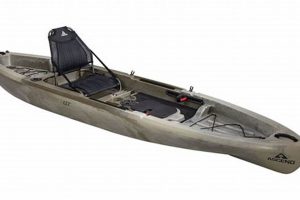
A personal flotation device designed specifically for angling from a kayak combines buoyancy with specialized storage for tackle and tools. These garments typically feature multiple pockets and attachment points for items like fishing rods, lures, and other essential gear, allowing anglers to remain organized and efficient on the water. An example would be a brightly colored vest with adjustable straps, numerous pockets of varying sizes, and D-rings for attaching tools.
Such specialized apparel enhances safety and improves the fishing experience. The inherent buoyancy safeguards against accidental immersion, while the readily accessible equipment streamlines fishing activities and reduces the need for cumbersome tackle boxes. This contributes to a more enjoyable and productive outing. Historically, anglers adapted general-purpose life vests for fishing, but the development of dedicated designs has significantly improved both safety and practicality for kayak anglers.
Further exploration will cover topics such as key features to consider when selecting these devices, proper fit and adjustment, essential safety practices, and recommended maintenance procedures.
Tips for Choosing and Using a Fishing-Specific PFD
Selecting and utilizing a properly fitted and equipped personal flotation device designed for fishing from a kayak is crucial for safety and enhances angling effectiveness.
Tip 1: Prioritize Fit and Comfort: Ensure a snug yet comfortable fit that allows for a full range of motion. A properly fitted device should not ride up or constrict movement when paddling or casting.
Tip 2: Consider Storage Capacity: Evaluate storage needs based on typical fishing gear. Ample pockets and attachment points are essential for organizing tackle and tools, keeping them readily accessible.
Tip 3: Select High-Visibility Colors: Bright colors and reflective elements enhance visibility on the water, crucial for safety in low-light conditions or emergencies.
Tip 4: Inspect and Maintain Regularly: Check for wear and tear, including frayed straps, damaged buckles, and compromised buoyancy. Regular maintenance ensures continued performance and reliability.
Tip 5: Practice Proper Use: Familiarize oneself with the device’s features and adjustments before embarking on a fishing trip. Understanding its functionality is essential for effective use in an emergency.
Tip 6: Choose Durable and Water-Resistant Materials: Opt for a device constructed from durable, water-resistant materials that can withstand the rigors of the aquatic environment and frequent use.
Adhering to these guidelines will contribute to a safer and more productive fishing experience, enabling anglers to focus on their craft while minimizing risks associated with on-the-water activities.
This information provides essential guidance for choosing and utilizing a specialized personal flotation device. Next, concluding remarks will summarize the key takeaways and underscore the importance of prioritizing safety and preparedness.
1. Safety

A primary concern for kayak anglers is ensuring personal safety on the water. A kayak PFD fishing vest addresses this concern directly, providing essential buoyancy and contributing to overall safety in various on-the-water scenarios.
- Flotation and Buoyancy
The fundamental purpose of a PFD is to provide flotation in the event of capsizing or accidental immersion. A properly fitted vest keeps the wearer afloat, especially crucial in cold water or challenging conditions where self-rescue might be difficult. This buoyancy offers critical time for recovery and reduces the risk of drowning.
- Visibility
Bright colors and reflective elements on a fishing vest enhance visibility, making the wearer more noticeable to other boaters and rescuers. This increased visibility is particularly important in low-light conditions, fog, or during search and rescue operations, minimizing the risk of collisions or delays in assistance.
- Protection from Impact
While not the primary function, a PFD offers a degree of impact protection. In the event of a fall or collision, the vest’s padding can cushion the blow and potentially reduce the severity of injuries to the chest and torso.
- Carrying Emergency Equipment
Many fishing vests incorporate attachment points and pockets designed to carry essential safety gear, such as whistles, signaling devices, and small first-aid kits. This easy access to critical equipment can prove invaluable in emergency situations.
These combined features highlight the crucial role a kayak PFD fishing vest plays in angler safety. By providing flotation, enhancing visibility, and offering a platform for carrying essential safety equipment, these vests contribute significantly to a safer and more secure on-the-water experience, allowing anglers to focus on their activity with reduced risk.
2. Buoyancy

Buoyancy, the upward force exerted by a fluid that opposes the weight of an immersed object, is paramount in the design and function of a kayak PFD fishing vest. This inherent buoyancy is what keeps an angler afloat in the event of accidental immersion, a critical safety feature, particularly in kayaking where the risk of capsizing exists. The level of buoyancy required depends on factors such as the wearer’s weight, the water conditions, and the type of clothing worn. A vest’s buoyancy rating, typically measured in Newtons, indicates its lifting capacity. Choosing a vest with appropriate buoyancy is crucial for ensuring effective flotation.
Consider a scenario where an angler capsizes in cold water. Without a PFD providing sufficient buoyancy, the angler risks rapid heat loss and potential drowning. The vest’s ability to keep the individual afloat allows time for self-rescue or assistance from others, significantly increasing the chances of survival. Even in calmer waters, a PFD offers peace of mind, enabling the angler to focus on fishing rather than constantly worrying about accidental immersion. This focus contributes to a more relaxed and enjoyable fishing experience. Understanding the role of buoyancy emphasizes the critical nature of wearing a properly fitted and appropriately rated PFD for any kayaking activity.
In summary, buoyancy is not merely a technical specification but a fundamental safety element intrinsically linked to the effectiveness of a kayak PFD fishing vest. Selecting a vest with the correct buoyancy rating, based on individual needs and anticipated conditions, is essential for maximizing safety and minimizing risks associated with on-the-water activities. Failure to consider buoyancy can have severe consequences, underscoring the importance of this aspect in PFD selection and overall water safety practices.
3. Storage

Storage capacity is a defining feature of a kayak PFD fishing vest, directly impacting an angler’s efficiency and organization on the water. Unlike standard life vests, these specialized PFDs incorporate multiple pockets, compartments, and attachment points designed to hold various fishing essentials. This integrated storage system eliminates the need for bulky tackle boxes, allowing anglers to keep tools and equipment readily accessible, streamlining fishing processes and maximizing time spent actively fishing. For example, quick access to lures, hooks, and lines facilitates swift bait changes, crucial for adapting to changing fish behavior or water conditions. Similarly, designated compartments for pliers, clippers, and other tools prevent fumbling and maintain a streamlined, organized workspace. The ability to carry essential items directly on the vest also contributes to safety by reducing the need to reach into storage compartments within the kayak, minimizing the risk of capsizing or losing balance.
Consider a fly fisherman wading a river. A well-designed fishing vest allows for organized storage of various fly patterns, leaders, tippets, and other small accessories required for this specialized angling technique. The readily available equipment allows for quick changes in fly selection, adapting to the fish’s feeding preferences and maximizing opportunities for successful catches. Similarly, a bass angler trolling lures from a kayak benefits from the vest’s ability to hold a selection of lures, pliers for removing hooks, and a small first-aid kit in case of accidents. This readily available equipment reduces interruptions and allows for a more efficient and enjoyable fishing experience. Furthermore, the strategic distribution of weight across the vest can enhance stability and balance, particularly important when maneuvering in a kayak.
In conclusion, the storage capacity inherent in kayak PFD fishing vests offers significant practical advantages. By facilitating efficient organization and quick access to essential equipment, these vests contribute to a more productive and enjoyable fishing experience. This integrated storage not only streamlines fishing processes but also enhances safety by reducing the need for potentially hazardous movements within the kayak. Therefore, careful consideration of storage features is paramount when selecting a kayak PFD fishing vest to ensure it aligns with individual angling needs and preferences.
4. Comfort
Comfort is a critical factor influencing the overall effectiveness and enjoyment of kayak fishing. A poorly fitting or uncomfortable personal flotation device (PFD) can hinder paddling, casting, and general movement, leading to fatigue, distraction, and a potentially less productive fishing experience. Conversely, a comfortable PFD allows anglers to focus on the task at hand, enhancing endurance and maximizing enjoyment on the water. Key elements contributing to PFD comfort include adjustable straps, breathable materials, and strategic padding. Adjustable straps ensure a customized fit, accommodating various body types and clothing layers. Breathable fabrics promote ventilation, minimizing overheating and perspiration, especially during warmer weather. Strategic placement of padding enhances comfort and prevents chafing or pressure points during prolonged wear. An uncomfortable PFD can discourage consistent wear, compromising safety. Therefore, prioritizing comfort encourages proper and consistent PFD use, essential for maximizing safety on the water.
Consider a scenario where an angler spends hours kayaking and fishing in warm, humid conditions. A PFD constructed from non-breathable materials can lead to excessive sweating, discomfort, and potential skin irritation. This discomfort might tempt the angler to remove the PFD, increasing the risk of serious injury or drowning should an accident occur. Alternatively, a comfortable, breathable PFD allows the angler to remain protected without sacrificing comfort, enabling a safe and enjoyable experience. Similarly, a poorly adjusted PFD can restrict arm movement, hindering casting accuracy and efficiency. Conversely, a properly fitted PFD allows for unrestricted movement, enabling the angler to cast effectively and maximize fishing opportunities. The difference between a comfortable and uncomfortable PFD can significantly impact the overall outcome of a fishing trip.
In conclusion, comfort in a kayak PFD fishing vest is not merely a matter of convenience but a crucial factor influencing safety, performance, and overall enjoyment. Prioritizing comfort encourages consistent PFD use, minimizing risks associated with on-the-water activities. Furthermore, a comfortable PFD allows anglers to focus on fishing, maximizing their chances of success and enhancing the overall experience. Understanding the interplay between comfort and functionality emphasizes the importance of selecting a well-designed, properly fitted PFD tailored to individual needs and preferences. This careful consideration of comfort contributes significantly to a safer, more productive, and ultimately more enjoyable kayaking and fishing experience.
5. Fit

Proper fit is paramount for a kayak PFD fishing vest to function as intended. An ill-fitting vest compromises both safety and performance. A loose vest can ride up in the water, reducing buoyancy and potentially obstructing airways. Conversely, a tight vest restricts movement, hindering paddling, casting, and overall comfort. The vest’s design should conform to the wearer’s body shape, allowing for a full range of motion without sacrificing security. Adjustable straps at the shoulders, sides, and waist enable customization for a snug, secure fit. For example, an angler with a broader chest might require a larger vest size with wider shoulder straps, while a smaller individual benefits from a more compact design with greater adjustability. The vest should sit close to the body without constricting movement or breathing.
Consider an angler attempting a self-rescue after capsizing. A loose PFD can shift position, hindering the ability to regain balance or enter the kayak. A properly fitted vest remains secure, providing essential buoyancy and assisting in the self-rescue process. Furthermore, a comfortable fit contributes to consistent wear. An uncomfortable vest might tempt anglers to remove it, negating its protective benefits. Practical considerations, such as layering clothing for varying weather conditions, should inform PFD selection. A vest with ample adjustability accommodates additional layers without compromising fit or performance. Testing the fit with anticipated clothing layers ensures optimal performance in diverse conditions.
In summary, proper fit is not merely a matter of comfort but a critical safety consideration. A well-fitting kayak PFD fishing vest maximizes buoyancy, allows for unrestricted movement, and promotes consistent wear. Understanding the relationship between fit and function ensures anglers can select and adjust their PFDs effectively, contributing to a safer and more productive on-the-water experience. Neglecting proper fit compromises safety and can have serious consequences in emergency situations, underscoring the importance of this often overlooked aspect of PFD selection and use.
6. Durability

Durability is a critical aspect of a kayak PFD fishing vest, directly impacting its lifespan and long-term effectiveness. These vests endure significant wear and tear from exposure to the elements, including sunlight, water, and abrasion from fishing gear and the kayak itself. A durable vest withstands these challenges, maintaining its structural integrity and functionality over extended periods. Construction from robust, abrasion-resistant materials, such as ripstop nylon or heavy-duty polyester, contributes significantly to a vest’s longevity. Reinforced stitching and heavy-duty zippers further enhance durability, ensuring the vest remains functional even under demanding conditions. A durable vest represents a valuable investment, providing reliable performance and safety over multiple fishing seasons. Conversely, a poorly constructed vest may deteriorate rapidly, requiring frequent replacement and potentially compromising safety.
Consider a fishing vest subjected to regular saltwater exposure. Saltwater accelerates corrosion and material degradation. A durable vest, constructed from corrosion-resistant hardware and treated fabrics, resists these damaging effects, maintaining its functionality and appearance. In contrast, a less durable vest might exhibit rusting buckles, frayed straps, and weakened fabric, diminishing its protective capabilities and necessitating premature replacement. Similarly, a vest frequently exposed to sharp hooks or abrasive fishing gear requires robust construction to resist tears and punctures. Durable materials and reinforced stitching minimize the risk of damage, preserving the vest’s structural integrity and ensuring continued functionality. Choosing a durable vest ultimately contributes to cost savings and reduces environmental impact associated with frequent replacements.
In conclusion, durability is an essential consideration when selecting a kayak PFD fishing vest. A durable vest withstands the rigors of the fishing environment, providing reliable performance and safety over an extended lifespan. Investing in a well-constructed, durable vest represents a sound decision, ensuring continued functionality, minimizing replacement costs, and reducing environmental impact. Understanding the connection between durability and long-term value underscores the importance of this factor in the selection process and contributes to a more sustainable and cost-effective approach to kayak fishing equipment.
Frequently Asked Questions
Addressing common inquiries regarding kayak PFD fishing vests provides clarity for informed selection and usage.
Question 1: What differentiates a kayak fishing PFD from a standard life vest?
Kayak fishing PFDs prioritize storage and accessibility of fishing gear. They incorporate multiple pockets, attachment points, and specialized compartments tailored to anglers’ needs, while retaining essential buoyancy for safety.
Question 2: How does one determine the correct PFD size and fit?
Proper fit is crucial. The PFD should fit snugly without restricting movement. Adjustable straps accommodate various body types and clothing layers. Consulting manufacturer sizing charts and trying on the vest before purchase are recommended.
Question 3: Are there specific PFDs designed for different types of fishing?
While core functionality remains consistent, some PFDs cater to specific fishing styles. Fly fishing vests, for instance, often include specialized pockets and attachments for fly boxes and tools.
Question 4: What maintenance is required for a kayak fishing PFD?
Regular rinsing with fresh water after each use removes salt, dirt, and debris, prolonging the vest’s lifespan. Periodic inspection of straps, buckles, and zippers ensures continued functionality.
Question 5: Can inflatable PFDs be used for kayak fishing?
Inflatable PFDs are permissible, provided they meet required safety standards and are worn correctly. However, inherent buoyancy of foam PFDs offers immediate flotation without requiring inflation, a critical advantage in emergency situations.
Question 6: What safety features should one look for in a kayak fishing PFD?
Essential safety features include high-visibility colors, reflective elements, a whistle attachment point, and potentially a D-ring for attaching other safety gear.
Understanding these key points ensures informed selection and effective utilization of a kayak PFD fishing vest. Prioritizing safety and appropriate fit enhances the overall fishing experience.
Next, a concluding section will summarize the essential aspects discussed throughout this guide.
Kayak PFD Fishing Vest
Careful selection and proper utilization of a kayak PFD fishing vest are paramount for safe and productive angling. This specialized garment provides essential buoyancy, integrated storage solutions, and enhanced visibility, contributing significantly to angler safety and efficiency. Key factors such as appropriate fit, comfortable design, durable construction, and adequate storage capacity influence vest effectiveness. Prioritizing these elements ensures anglers can focus on fishing with reduced risk and enhanced organizational capabilities.
Ultimately, investing in a high-quality kayak PFD fishing vest represents a commitment to safety and preparedness. This proactive approach minimizes risks associated with on-the-water activities, allowing anglers to enjoy their passion with confidence and peace of mind. Continued emphasis on safety education and responsible equipment selection cultivates a culture of informed decision-making within the angling community, fostering a safer and more sustainable environment for all.