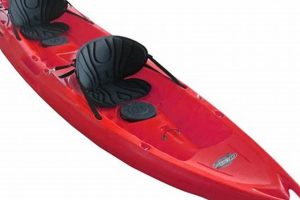
A kayak designed specifically for angling, distinguished by its vibrant hue, offers a unique blend of visibility and functionality on the water. This type of small watercraft typically features specialized components like rod holders, tackle storage, and sometimes even livewells or anchor trolleys, catering to the needs of anglers.
The bright color enhances visibility, a crucial safety factor in open water, particularly during low-light conditions or in areas with significant boat traffic. This heightened visibility can also be advantageous for fishing companions or rescue personnel. Furthermore, kayaks designed for fishing often offer stability and maneuverability, crucial for navigating various water conditions, from calm lakes to flowing rivers. The evolution of these specialized vessels reflects the growing popularity of kayak fishing, a pursuit that combines the tranquility of paddling with the excitement of angling.
This discussion will further explore the various aspects of selecting, outfitting, and utilizing such a watercraft, covering topics from essential accessories and safety considerations to ideal fishing locations and techniques.
Tips for Kayak Fishing
Careful planning and preparation contribute significantly to a successful and enjoyable fishing experience from a kayak.
Tip 1: Prioritize Stability: Select a kayak designed for stability, especially in challenging conditions. Wider hulls generally offer greater stability than narrower designs.
Tip 2: Visibility is Key: Brightly colored kayaks enhance visibility on the water, a critical safety factor for anglers. Consider adding reflective tape or lights for additional visibility during low-light periods.
Tip 3: Organize Tackle and Gear: Utilize designated storage compartments and organizers to keep fishing tackle and essential gear readily accessible and prevent clutter within the kayak.
Tip 4: Dress Appropriately: Wear clothing suitable for the weather conditions and water temperature. Layering allows for adjustments throughout the day. Quick-drying fabrics and a waterproof outer layer are recommended.
Tip 5: Practice Paddling and Maneuvering: Gain proficiency in paddling and maneuvering the kayak before venturing into fishing areas. Practice entering and exiting the kayak, especially in deeper water.
Tip 6: Check Weather Conditions: Always consult weather forecasts before heading out. Avoid fishing during storms, strong winds, or extreme temperatures.
Tip 7: Inform Someone of Your Plans: Share your fishing location and expected return time with a friend or family member as a safety precaution.
Tip 8: Respect Wildlife and the Environment: Adhere to Leave No Trace principles. Pack out all trash and avoid disturbing wildlife or sensitive habitats.
By following these guidelines, anglers can maximize their enjoyment and safety while kayak fishing.
These preparatory steps contribute to a more rewarding and safe experience on the water, allowing for a focused and enjoyable fishing trip.
1. Visibility

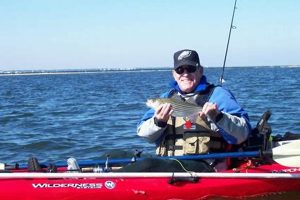
Visibility represents a crucial safety factor in kayak fishing, significantly influenced by kayak color. A red kayak offers enhanced visibility in various conditions, from bright sunlight to overcast skies and even during dawn or dusk. This heightened visibility increases the likelihood of being seen by other boaters, significantly reducing the risk of collisions, particularly in congested waterways or areas with limited visibility. For example, in foggy conditions or during early morning fishing trips, a red kayak stands out more prominently against the backdrop of water and foliage compared to kayaks of darker hues. This enhanced visibility offers an additional safety margin for anglers, especially in emergencies.
The practical significance of this enhanced visibility extends beyond collision avoidance. A brightly colored kayak simplifies locating the angler from a distance, which can be beneficial for coordinated fishing efforts with multiple kayaks or for rescue operations if needed. The ability to quickly locate a red kayak against a diverse range of backgrounds, including open water, vegetation, and shorelines, proves advantageous in various scenarios. This high visibility factor also contributes to peace of mind for anglers venturing into less frequented or remote fishing locations.
In summary, the enhanced visibility offered by a red fishing kayak provides a tangible safety advantage. This characteristic contributes to both accident prevention and ease of location in diverse environments and lighting conditions, ultimately promoting a safer and more secure fishing experience. While other safety measures remain essential, the inherent visibility advantage of a red kayak represents a significant contribution to overall angler safety.
2. Stability

Stability forms a cornerstone of effective kayak fishing, directly influencing angling success and safety. A stable platform allows anglers to cast, reel, and land fish without compromising balance, a critical factor, especially when handling larger fish or navigating challenging water conditions. The inherent stability of a kayak significantly impacts an angler’s ability to focus on fishing rather than maintaining equilibrium. Wider hulls and lower centers of gravity contribute to greater stability, allowing for more confident and effective fishing techniques. For example, standing to cast, a maneuver that enhances visibility and casting range, necessitates a stable platform. Similarly, the ability to react quickly to a fish strike without risking capsizing hinges on the kayak’s inherent stability.
While color does not directly influence stability, the choice of a red fishing kayak often intersects with stability considerations. Many fishing kayaks prioritize stability in their design, featuring wider hulls and specialized features like outriggers or stabilizers. The selection of a red kayak for its visibility benefits often coincides with the selection of a fishing-specific model designed for enhanced stability. Anglers seeking a highly visible kayak for safety often prioritize stability as well, recognizing its importance for a secure and effective fishing platform. This confluence of visibility and stability represents a key consideration in the selection process. Choosing a red kayak often reflects a prioritization of both safety and fishing performance, with stability playing a pivotal role in achieving both objectives.
In summary, stability represents a critical factor in kayak fishing, impacting both safety and fishing effectiveness. While color itself does not dictate stability, the choice of a red fishing kayak often aligns with the pursuit of a stable platform, highlighting the interconnectedness of these considerations. Understanding this relationship empowers anglers to make informed decisions, selecting a kayak that balances visibility and stability for an optimal fishing experience. A stable and visible kayak provides a secure and effective platform, ultimately maximizing both enjoyment and safety on the water.
3. Storage

Adequate storage significantly impacts the functionality and practicality of a fishing kayak. The ability to organize and readily access essential gear, such as tackle boxes, rods, reels, and safety equipment, directly influences fishing efficiency and overall experience. Dedicated storage compartments within a fishing kayak allow for organized stowage, preventing clutter and ensuring that essential items remain within easy reach. This organized approach minimizes disruptions during fishing, allowing anglers to focus on the task at hand rather than searching for misplaced gear. For instance, a well-designed storage system can accommodate different sizes of tackle boxes, keeping lures, hooks, and other small items neatly organized and protected from the elements. Similarly, designated rod holders secure fishing rods, preventing tangling and damage while keeping them readily accessible for quick deployment.
While the color of the kayak does not inherently dictate storage capacity, fishing kayaks, regardless of color, often prioritize storage solutions. Manufacturers recognize the importance of ample and organized storage for anglers and incorporate design features that cater to this need. Therefore, the choice of a red fishing kayak often correlates with an emphasis on storage functionality. Anglers selecting a red kayak for visibility are also likely to benefit from the thoughtful storage solutions typically incorporated into fishing-specific kayak designs. This connection between color preference and practical features underscores the integrated nature of kayak selection, where visibility, stability, and storage converge to create an optimal fishing platform.
In summary, ample and well-organized storage represents a critical component of a functional fishing kayak, contributing significantly to efficiency and enjoyment on the water. While color does not directly determine storage capacity, the choice of a red fishing kayak often aligns with a focus on practical features, including storage solutions. Understanding this relationship allows anglers to select kayaks that effectively balance visibility and functionality. Adequate storage contributes to a more streamlined and productive fishing experience, allowing anglers to maximize their time on the water and focus on the pursuit of their target species.
4. Maneuverability
Maneuverability represents a critical performance attribute in fishing kayaks, directly influencing an angler’s ability to navigate various water conditions and access prime fishing locations. The capacity to efficiently and precisely control the kayak’s movement contributes significantly to fishing success, allowing anglers to position themselves strategically and respond effectively to changing conditions or fish activity. While color itself does not inherently dictate maneuverability, the choice of a red fishing kayak often intersects with maneuverability considerations due to the design features commonly found in fishing-specific kayaks.
- Hull Design and Length
Hull design and length significantly impact maneuverability. Shorter kayaks generally offer greater maneuverability in tight spaces, such as narrow creeks or weed-choked areas, allowing for quick turns and precise adjustments. Longer kayaks, while potentially faster in open water, may require more effort to maneuver in confined environments. Fishing kayaks often prioritize a balance between maneuverability and stability, opting for designs that facilitate both precise control and a secure fishing platform.
- Water Conditions
The impact of maneuverability varies depending on prevailing water conditions. In calm lakes or slow-moving rivers, maneuverability may be less critical than in faster currents or turbulent waters. Kayaks designed for maneuverability provide an advantage in challenging conditions, allowing anglers to maintain control and position themselves effectively despite changing currents or wind. The ability to quickly adjust position or navigate through obstacles becomes particularly valuable in dynamic environments.
- Fishing Techniques
Different fishing techniques may necessitate varying degrees of maneuverability. Trolling, for example, may prioritize tracking and stability, while casting or jigging may benefit from greater maneuverability to precisely target specific areas or follow fish movement. A kayak’s maneuverability influences the range of fishing techniques that can be effectively employed, allowing anglers to adapt to diverse fishing scenarios and target different species.
- Weight Capacity and Distribution
The kayak’s weight capacity and the distribution of weight within the kayak also influence maneuverability. A kayak loaded near its capacity or with uneven weight distribution may exhibit reduced maneuverability compared to a lighter or more evenly loaded kayak. Proper weight management contributes to optimal performance, allowing for more responsive and controlled movements. Understanding the kayak’s weight capacity and distributing gear evenly enhances both maneuverability and stability.
In conclusion, maneuverability represents a crucial performance characteristic in fishing kayaks, influencing fishing effectiveness and the ability to navigate diverse water environments. While color itself does not directly affect maneuverability, the choice of a red fishing kayak often coincides with designs that prioritize maneuverability for specific fishing applications. Considering hull design, anticipated water conditions, intended fishing techniques, and weight management allows anglers to select a kayak that balances maneuverability with other essential features like stability and visibility, ultimately optimizing their fishing experience. A maneuverable kayak empowers anglers to navigate efficiently, position themselves strategically, and adapt to dynamic conditions, maximizing their chances of success on the water.
5. Specialization

Specialization distinguishes fishing kayaks from recreational models, enhancing their effectiveness and angler experience. Features like rod holders, tackle storage, anchor trolleys, and even integrated fish finders cater specifically to angling needs. These specialized components streamline fishing processes, allowing for efficient gear management and optimized angling techniques. For instance, strategically placed rod holders secure rods while paddling or preparing tackle, preventing loss or damage. Similarly, integrated tackle storage keeps essential gear organized and readily accessible, minimizing disruptions during fishing. While color does not inherently dictate specialization, the choice of a red fishing kayak often reflects a prioritization of these specialized features. Anglers seeking the enhanced visibility of a red kayak frequently select models designed specifically for fishing, recognizing the value of these specialized components.
The practical significance of specialization becomes evident on the water. An angler equipped with a specialized fishing kayak can transition seamlessly between paddling, casting, and retrieving, maximizing fishing time and efficiency. For example, an anchor trolley system allows for precise boat positioning in current, maintaining an optimal fishing location without constant paddling adjustments. Similarly, integrated fish finders provide real-time information about water depth, fish location, and bottom structure, enhancing the angler’s ability to target specific species. These specialized features, often present in red fishing kayaks chosen for their visibility, contribute directly to improved fishing outcomes and a more streamlined angling experience. The combination of visibility and specialized features creates a synergistic effect, enhancing both safety and fishing effectiveness.
In summary, specialization represents a defining characteristic of fishing kayaks, setting them apart from recreational models. While color does not directly determine specialization, the selection of a red fishing kayak often aligns with a preference for these specialized features. Rod holders, tackle storage, anchor trolleys, and integrated fish finders exemplify the practical advantages of specialization, enhancing efficiency, organization, and overall fishing success. The integration of these specialized features with the enhanced visibility of a red kayak creates a powerful combination, optimizing both safety and angling performance. Understanding the importance of specialization empowers anglers to select kayaks that align with their specific fishing needs and preferences, ultimately maximizing their enjoyment and success on the water.
Frequently Asked Questions
Addressing common inquiries regarding kayaks designed for fishing and distinguished by their red coloration provides clarity for prospective purchasers and users.
Question 1: Does the red color of the kayak affect fish behavior?
While some fish species are sensitive to certain colors, the impact of a kayak’s red hull on fish behavior is generally considered negligible, especially in deeper water or under typical fishing conditions. Factors like water clarity, light penetration, and fishing technique exert a more substantial influence on fish behavior than the color of the kayak.
Question 2: Are red kayaks more susceptible to fading or discoloration from sun exposure?
Modern kayak manufacturing processes often employ UV-resistant pigments and protective coatings to mitigate fading and discoloration from prolonged sun exposure. However, all kayaks, regardless of color, can experience some degree of fading over time with extended exposure to sunlight. Proper storage and maintenance practices can help preserve the kayak’s color and overall appearance.
Question 3: Is a red fishing kayak inherently more expensive than kayaks of other colors?
Color itself does not typically dictate the price of a kayak. The cost is primarily determined by factors such as size, material, features, and brand. A red fishing kayak might be more expensive if it includes specialized features designed for angling, but the color itself is not a direct cost factor.
Question 4: Are there any specific regulations or recommendations regarding kayak color for safety purposes?
While no specific regulations mandate kayak color, many boating safety organizations recommend bright and highly visible colors, like red, to enhance visibility on the water. This increased visibility can be particularly important in low-light conditions, foggy weather, or areas with heavy boat traffic.
Question 5: How does the red color affect the kayak’s temperature in direct sunlight?
Darker colors, including red, absorb more sunlight than lighter colors, potentially leading to a slightly elevated surface temperature. However, this temperature difference is unlikely to significantly impact the angler’s comfort or the kayak’s performance. Proper ventilation and hydration practices remain crucial for comfort during hot weather conditions, regardless of kayak color.
Question 6: Does the red color make the kayak more difficult to camouflage or blend in with natural surroundings when fishing in shallow or vegetated areas?
In shallow or heavily vegetated areas, a red kayak might offer less camouflage compared to kayaks of more natural colors like green or brown. However, the impact on fish behavior in such close proximity is debatable, and other factors, such as angler movement and noise, typically play a more significant role in spooking fish.
Understanding these aspects allows for informed decision-making regarding kayak selection and usage. Prioritizing factors like stability, maneuverability, and specialized features alongside visibility considerations ensures a balanced approach to kayak selection.
This FAQ section addresses common concerns surrounding red fishing kayaks, enabling potential users to assess the implications of color choice and prioritize performance and safety features.
Conclusion
This exploration has examined the multifaceted nature of the fishing kayak distinguished by its red hue, encompassing aspects of visibility, stability, storage, maneuverability, and specialized features. Emphasis has been placed on the practical implications of these attributes, highlighting the synergy between enhanced visibility and optimized fishing functionality. The analysis underscores the importance of informed decision-making in kayak selection, considering the interplay of color, design, and intended usage.
The selection of a fishing kayak represents a significant investment for anglers. Careful consideration of individual needs and priorities, encompassing intended fishing environments, target species, and desired level of comfort and performance, will ultimately determine the most suitable choice. A thorough understanding of the factors contributing to a successful and safe kayaking experience empowers anglers to make informed decisions, leading to enhanced enjoyment and productivity on the water.