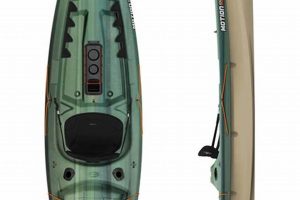
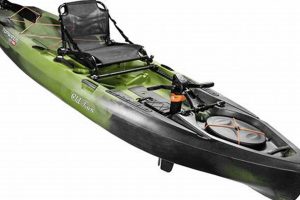
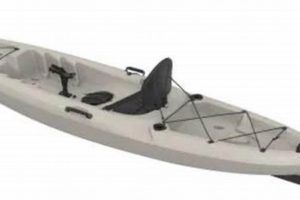
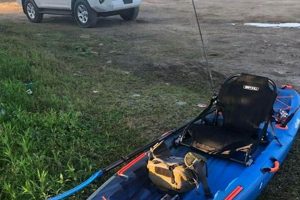
This specific model designates a small, versatile watercraft designed for angling. Typically constructed from durable, lightweight materials, it offers stability and maneuverability for navigating various aquatic environments. Such vessels frequently incorporate features like rod holders, storage compartments, and comfortable seating, catering to the needs of recreational fishers.
Small, purpose-built fishing boats provide anglers with enhanced access to fishing grounds often inaccessible from shore. Their compact size and portability allow for easy transport and launch, opening up opportunities in diverse locations, from ponds and lakes to slow-moving rivers and calm coastal waters. The specialized design contributes to an efficient and enjoyable fishing experience.
This discussion will further delve into the specifics of this type of vessel, covering aspects like construction materials, design features, performance characteristics, and suitable fishing environments. A deeper understanding of these factors will equip prospective users with the knowledge necessary for informed selection and optimal utilization.
Tips for Small Fishing Kayak Usage
Proper utilization of compact fishing kayaks enhances safety and maximizes angling success. Adherence to recommended practices ensures efficient operation and prolongs the lifespan of the equipment.
Tip 1: Stability Considerations: Weight distribution plays a crucial role in maintaining balance. Gear should be evenly distributed and secured to prevent shifting during movement. Low center of gravity enhances stability.
Tip 2: Paddle Selection and Technique: A paddle appropriate for the user’s height and kayak width is essential. Efficient paddling technique minimizes fatigue and maximizes propulsion.
Tip 3: Safety Precautions: Wearing a personal flotation device (PFD) is paramount. Carrying a whistle, signaling device, and communication equipment enhances safety in emergencies.
Tip 4: Navigation and Trip Planning: Familiarization with water conditions, weather forecasts, and local regulations is essential. Planning routes and establishing communication protocols enhances safety and preparedness.
Tip 5: Environmental Awareness: Respecting aquatic ecosystems is crucial. Avoiding sensitive habitats and adhering to leave-no-trace principles minimizes environmental impact.
Tip 6: Equipment Maintenance: Regular cleaning and proper storage extend the life of the kayak and associated gear. Inspecting for damage before each use ensures safe operation.
Following these guidelines contributes to a safer and more productive fishing experience from a small kayak. Preparation and adherence to best practices ensure enjoyment and minimize potential risks.
These insights provide a foundation for successful outings. Further research tailored to specific fishing locations and target species enhances preparedness and overall angling effectiveness.
1. Compact Design

The compact design of the Moken 10 fishing kayak is a defining characteristic influencing its portability, maneuverability, and overall suitability for specific fishing environments. Understanding the implications of this design choice is crucial for informed selection and effective utilization.
- Length and Width Dimensions
Typical length and width dimensions contribute to both maneuverability and stability. Shorter lengths allow for tighter turns in confined areas such as creeks or shallow waters, while a balanced width maintains stability necessary for casting and reeling. These dimensions often represent a compromise between maneuverability and stability, optimizing the vessel for its intended use.
- Weight and Portability
Reduced weight facilitates transport and handling. This characteristic enables users to easily carry the kayak to and from launch points, including areas inaccessible to larger vessels. Lightweight construction often involves specialized materials and design choices that prioritize portability without compromising structural integrity.
- Storage Capacity
Compact designs often necessitate efficient storage solutions. Integrated storage compartments, strategically placed recesses, and bungee cord systems maximize space for fishing gear, personal items, and safety equipment within the limited hull space. Careful consideration of storage needs is crucial during the selection process.
- Suitability for Specific Environments
The compact nature makes these kayaks well-suited to smaller bodies of water, including ponds, lakes, slow-moving rivers, and protected coastal areas. Their maneuverability allows for navigation in tight spaces, while their stability provides a suitable platform for fishing activities. Understanding environmental limitations related to size and capacity is crucial for safe and effective operation.
The compact design of the Moken 10 influences its suitability for specific fishing styles and environments. Anglers seeking a portable, maneuverable, and stable platform for accessing smaller bodies of water will find this design advantageous. However, limitations regarding storage capacity and open-water suitability should be carefully considered. The interplay of these factors ultimately determines the overall effectiveness and appropriateness of the Moken 10 for individual angling needs.
2. Fishing-Specific Features

Dedicated features differentiate fishing kayaks from recreational models. These features enhance angling effectiveness and overall user experience. The presence and design of these features significantly influence a fishing kayak’s practicality and suitability for specific angling techniques.
Common fishing-specific features often found in models like the Moken 10 include:
- Rod holders: Flush-mounted, adjustable, or rotating rod holders secure fishing rods, freeing hands for other tasks like paddling, baiting hooks, or landing fish. Their placement and design impact accessibility and usability.
- Tackle storage: Dedicated compartments, trays, or storage wells organize and protect tackle, ensuring easy access to lures, hooks, lines, and other essential fishing gear. The capacity and organization of these storage solutions contribute to efficient angling practices.
- Paddle parks/clips: Securely hold paddles when not in use, preventing loss or interference with fishing activities. This feature promotes a clutter-free deck and enhances safety.
- Anchor trolley system: Allows for controlled anchoring and positioning in various water conditions and depths, maximizing fishing effectiveness in specific locations.
- Fish finders and transducers: Mounting points or integrated systems accommodate fish finders and transducers, providing valuable underwater insights and enhancing fish-locating capabilities.
- Gear tracks: Modular systems allowing customization with accessories like cameras, rod holders, or GPS mounts, catering to individual angling preferences and techniques.
These features enhance angling effectiveness by providing dedicated spaces for equipment, facilitating specific fishing techniques, and improving overall organization and efficiency. The integration of these features directly addresses the practical needs of anglers, highlighting the purpose-built nature of fishing kayaks.
Understanding the availability, placement, and functionality of these features on a specific model like the Moken 10 is crucial for informed purchasing decisions. Evaluating these features against individual fishing styles and target species further ensures the selected kayak aligns with specific angling requirements and enhances the overall fishing experience. Failure to consider these specialized features can lead to a less efficient and less enjoyable fishing experience.
3. Stability and Maneuverability
Stability and maneuverability represent critical performance characteristics of the Moken 10 fishing kayak, significantly impacting its suitability for various fishing environments and techniques. The interplay between these two attributes dictates the vessel’s effectiveness in diverse on-the-water scenarios. A balanced combination of stability and maneuverability allows anglers to confidently navigate various water conditions while maintaining a stable platform for casting, reeling, and landing fish.
Hull design plays a crucial role in determining both stability and maneuverability. Wider hulls generally offer greater initial stability, reducing the likelihood of tipping, especially during casting or landing fish. However, increased width can compromise maneuverability, requiring more effort to turn and navigate tight spaces. Conversely, narrower hulls enhance maneuverability but may sacrifice some stability. The Moken 10’s design seeks to strike a balance between these two competing factors, optimizing performance for its intended use in relatively calm waters.
Consider, for instance, fishing in a narrow, winding creek. Maneuverability becomes paramount for navigating tight bends and avoiding obstacles. The ability to quickly and efficiently change direction is crucial for accessing prime fishing spots. In contrast, when fishing in open, calmer waters, stability takes precedence. A stable platform allows anglers to comfortably stand and cast, enhancing casting distance and accuracy. The Moken 10’s design considerations aim to address both scenarios, providing sufficient maneuverability for navigating confined waterways while maintaining adequate stability for a comfortable and productive fishing experience.
Understanding the balance between stability and maneuverability in the Moken 10 allows anglers to make informed decisions about its suitability for their specific needs. Recognizing the limitations and advantages of its design in various fishing environments is crucial for maximizing performance and ensuring a safe and enjoyable experience. Anglers targeting fish in tight, vegetated areas will appreciate the Moken 10’s maneuverability. Those fishing in open water may find the stability sufficient for their needs but should exercise caution in rough conditions. Ultimately, assessing these characteristics in relation to intended fishing locations and techniques allows for informed equipment selection and contributes to a successful and enjoyable angling experience.
4. Portability and Transport

Portability and ease of transport are defining features of the Moken 10 fishing kayak, significantly impacting its accessibility and appeal to anglers. The kayak’s relatively lightweight construction and compact dimensions facilitate transport using various methods, expanding fishing opportunities beyond locations accessible by larger, less portable vessels. This portability directly influences the types of fishing environments reachable, from remote ponds and secluded creeks to small lakes and protected coastal waters.
Several factors contribute to the Moken 10’s portability. The use of lightweight yet durable materials, such as high-density polyethylene, minimizes overall weight without compromising structural integrity. Compact dimensions allow the kayak to fit easily onto roof racks, inside truck beds, or even be carried short distances by hand. This ease of transport expands fishing possibilities, enabling anglers to access locations otherwise unreachable with heavier, more cumbersome craft. Consider, for example, a small, secluded pond nestled deep within a wooded area. Transporting a traditional boat to such a location would be impractical, if not impossible. The Moken 10, however, can be easily transported by hand or on a small trailer, opening up angling opportunities in otherwise inaccessible environments.
Understanding the transport options and limitations is crucial for maximizing the Moken 10’s utility. While its portability is a significant advantage, considerations such as vehicle compatibility, storage solutions, and local regulations regarding watercraft transport remain relevant. Planning transportation logistics in advance ensures seamless access to desired fishing locations. Failure to adequately address transport considerations can lead to frustration and limit fishing opportunities. Ultimately, the Moken 10’s portability enhances its versatility, enabling anglers to explore diverse waterways and expand their fishing horizons. This attribute significantly contributes to the kayak’s appeal, particularly for those seeking convenient access to a variety of fishing environments.
5. Durability and Construction
Durability and construction directly influence the lifespan and performance of the Moken 10 fishing kayak. Material selection and construction techniques determine the vessel’s ability to withstand the rigors of on-water use, including impacts, abrasion, and exposure to the elements. Understanding these factors is crucial for assessing long-term value and suitability for diverse fishing environments.
High-density polyethylene (HDPE) is a common material choice for kayaks due to its impact resistance, UV stability, and relatively low cost. HDPE kayaks can withstand impacts from rocks, submerged logs, and other obstacles encountered in various aquatic environments. Rotational molding, a common manufacturing process for HDPE kayaks, creates a seamless, one-piece hull with uniform wall thickness, enhancing overall durability and structural integrity. This construction method contributes to the kayak’s ability to withstand years of use in diverse conditions, from shallow, rocky rivers to open lakes and protected coastal waters. For example, the ability to withstand impacts from rocks in a fast-moving stream directly contributes to the kayak’s longevity and suitability for river fishing. Similarly, UV resistance ensures the material maintains its structural integrity even after prolonged exposure to sunlight, preventing cracking and degradation.
Proper construction techniques are essential for ensuring watertight seals and preventing leaks. Well-executed seams and fittings contribute to the kayak’s ability to remain afloat and dry, even in challenging conditions. Furthermore, the quality of hardware, such as handles, latches, and deck rigging, influences overall durability and functionality. Corrosion-resistant materials and robust attachment methods ensure these components withstand the stresses of regular use and exposure to saltwater environments. Ultimately, the combination of durable materials and robust construction techniques directly impacts the Moken 10’s long-term performance, reliability, and resistance to wear and tear. This understanding empowers informed purchasing decisions and promotes responsible use and maintenance practices, ensuring years of dependable service in various fishing environments.
6. Targeted Aquatic Environments

The Moken 10 fishing kayak’s design and features align with specific aquatic environments, influencing its suitability and effectiveness. Understanding these target environments is crucial for maximizing performance and ensuring angler safety. Factors such as water conditions, accessibility, and the presence of target fish species all contribute to determining appropriate usage scenarios. For example, the Moken 10’s stability and maneuverability make it well-suited to calm lakes, slow-moving rivers, and protected coastal areas. Its compact size allows access to shallow waters and narrow creeks often inaccessible to larger vessels. Conversely, open ocean environments or areas with strong currents and significant wave action exceed the Moken 10’s capabilities, posing safety risks and compromising performance.
Consider a scenario involving fishing for bass in a shallow, weedy lake. The Moken 10’s shallow draft allows navigation through vegetation, while its stability provides a platform for casting and retrieving lures. Conversely, attempting to use the Moken 10 in offshore ocean fishing would be unsuitable and potentially dangerous due to its limited size and stability in challenging sea conditions. Matching the kayak to the intended environment ensures both effectiveness and angler safety. Attempting to fish in unsuitable conditions not only reduces fishing success but also increases the risk of capsizing or other safety incidents.
Appropriate environment selection directly impacts angling success and user safety. Matching the Moken 10’s capabilities to the intended environment ensures optimal performance and minimizes risks. Failure to consider environmental factors can lead to ineffective fishing experiences and potentially hazardous situations. Understanding the target environments for the Moken 10 empowers informed decision-making, contributing to both a productive and safe angling experience. This awareness promotes responsible kayak usage and underscores the importance of aligning equipment choices with specific environmental conditions.
7. Recreational Angling Focus

The design and features of the Moken 10 fishing kayak directly reflect a focus on recreational angling. This prioritization influences key aspects of the kayak, from its size and stability to its specialized features and portability. The emphasis on recreational use differentiates the Moken 10 from kayaks designed for other purposes, such as touring or whitewater paddling. Understanding this focus is crucial for assessing the kayak’s suitability for various angling styles and target species. Consider the inclusion of features like rod holders, tackle storage, and an anchor trolley system. These elements directly cater to the needs of recreational anglers, enhancing convenience and fishing effectiveness. The Moken 10’s compact size and portability further support recreational use, allowing easy transport to and from diverse fishing locations, such as calm lakes, slow-moving rivers, and protected coastal waters. This design philosophy prioritizes ease of use and accessibility for casual anglers seeking a convenient and enjoyable fishing experience.
The recreational focus influences material selection and construction techniques as well. Durable, lightweight materials such as high-density polyethylene (HDPE) balance performance with affordability, aligning with the needs of recreational users. While robust enough for general fishing environments, HDPE may not offer the same level of performance as more specialized materials used in high-end fishing kayaks designed for extreme conditions. This reflects a design compromise prioritizing affordability and ease of maintenance, characteristics valued by recreational anglers. Furthermore, the Moken 10’s stability prioritizes a comfortable and secure platform for casual fishing, even for less experienced paddlers. This focus on stability, however, may come at the expense of maneuverability compared to kayaks designed for more demanding paddling conditions or specialized fishing techniques. The design choices reflect a deliberate balance between performance attributes, optimized for the needs and expectations of recreational anglers.
Recognizing the Moken 10’s recreational angling focus clarifies its intended purpose and target audience. This understanding allows for realistic expectations regarding performance characteristics and suitability for various fishing scenarios. While well-suited for casual fishing in calm waters, the Moken 10 may not meet the demands of more specialized angling pursuits. Acknowledging these limitations ensures informed purchasing decisions and promotes responsible kayak usage. Ultimately, the Moken 10’s design philosophy prioritizes accessibility, convenience, and affordability, aligning with the needs and preferences of recreational anglers seeking an enjoyable and efficient on-the-water fishing experience.
Frequently Asked Questions
This section addresses common inquiries regarding the Moken 10 fishing kayak, providing concise and informative responses to facilitate informed decision-making and promote safe and effective kayak usage.
Question 1: What is the weight capacity of the Moken 10 fishing kayak?
Weight capacity varies depending on the specific model year and manufacturer specifications. Consulting official product documentation provides precise weight limits. Exceeding the specified capacity compromises stability and safety.
Question 2: Is the Moken 10 suitable for use in saltwater environments?
While typically constructed from saltwater-resistant materials, proper rinsing and maintenance after saltwater exposure are crucial for preventing corrosion and prolonging lifespan. Specific usage recommendations may vary depending on manufacturer guidelines.
Question 3: What type of paddle is recommended for the Moken 10?
Paddle selection depends on user height and paddling style. Manufacturers often provide recommendations for paddle length and blade type. Consulting retailer expertise or online resources specializing in kayak paddling can further assist in appropriate paddle selection.
Question 4: How does one transport the Moken 10 fishing kayak?
Transport options include roof racks, truck beds, and specialized kayak trailers. Selecting an appropriate method depends on vehicle type and individual circumstances. Adhering to manufacturer recommendations and securing the kayak properly during transport ensures safe and damage-free transit.
Question 5: What safety precautions should be taken when using the Moken 10?
Wearing a personal flotation device (PFD) is paramount. Checking weather conditions, informing someone of paddling plans, and carrying essential safety equipment, such as a whistle and signaling device, further enhance on-water safety.
Question 6: Where can replacement parts be obtained for the Moken 10?
Authorized dealers and online retailers specializing in kayak equipment typically stock replacement parts. Consulting the manufacturer’s website or contacting customer support directly facilitates locating specific components.
Understanding these frequently asked questions fosters informed decision-making regarding Moken 10 usage. Consulting official product documentation and adhering to manufacturer recommendations ensures safe and effective operation, maximizing enjoyment and promoting responsible kayak practices.
Further information regarding specific features, performance characteristics, and usage guidelines can be found in the subsequent sections of this document.
Conclusion
This exploration of the Moken 10 fishing kayak has provided a comprehensive overview of its key features, performance characteristics, and suitability for various angling scenarios. From its compact design and specialized features to its portability, durability, and intended usage environments, the analysis has highlighted the factors influencing its effectiveness as a recreational fishing platform. Particular attention has been given to the interplay between stability and maneuverability, crucial aspects impacting on-water performance. Furthermore, discussions regarding transport considerations, construction materials, and targeted aquatic environments have underscored the importance of informed decision-making when selecting and utilizing this type of kayak. Addressing frequently asked questions has provided practical insights into ownership and operational considerations.
The Moken 10 fishing kayak presents a viable option for anglers seeking a compact, portable, and stable platform for recreational fishing in calm waters. Careful consideration of individual needs, target species, and intended fishing environments remains paramount for maximizing its utility and ensuring a safe and enjoyable angling experience. Ultimately, informed selection and responsible usage practices contribute to the long-term enjoyment and effectiveness of this specialized fishing craft. Continued exploration of specific fishing techniques and adaptation to individual preferences further enhances the overall angling experience and promotes successful outings on the water.