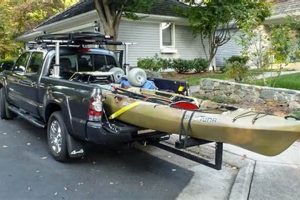
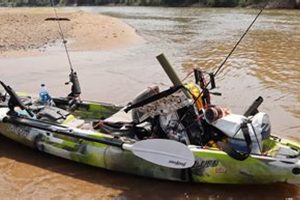
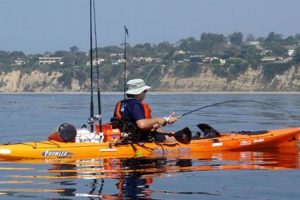
A small, human-powered watercraft designed for angling, paired with a lightweight road-transport platform, offers anglers enhanced mobility and access to diverse fishing locations. This combination allows individuals to easily transport their vessel to remote lakes, rivers, or coastal waters, expanding fishing opportunities beyond shore-bound limitations. The platform typically consists of a frame, wheels, and a coupling mechanism for attachment to a vehicle.
This pairing represents a significant advancement in angling accessibility. The ability to launch from various points along a waterway grants anglers the flexibility to target specific fish species or explore otherwise inaccessible areas. Historically, transporting small watercraft required significant effort, often limiting fishing excursions to easily accessible locations. This modern approach significantly reduces transportation challenges, allowing for more frequent and diverse fishing experiences. This increased mobility also contributes to the growing popularity of kayak fishing as a recreational activity.
The following sections delve deeper into specific aspects of selecting, using, and maintaining these essential tools for the modern angler. Topics covered include choosing the right vessel for specific fishing styles, proper trailering techniques, and essential safety considerations for both on-water and roadway travel.
Tips for Utilizing Kayaks and Trailers for Fishing
Careful consideration of several factors contributes to safe and successful fishing excursions using kayaks and trailers. These tips offer guidance for maximizing the benefits of this equipment.
Tip 1: Match the kayak to the fishing environment. Ocean fishing requires a different vessel than calm lakes. Consider water conditions, target species, and required storage capacity when selecting a kayak.
Tip 2: Choose an appropriate trailer. Trailers should be correctly sized for the kayak’s length and weight. Ensure the trailer offers adequate support and secure tie-down points.
Tip 3: Practice safe loading and unloading procedures. Use proper lifting techniques and secure the kayak firmly to the trailer before transport. Consider using loading aids, especially with heavier kayaks.
Tip 4: Observe proper trailering practices. Distribute weight evenly on the trailer and ensure proper tire inflation. Adhere to speed limits and maintain safe following distances.
Tip 5: Prioritize safety equipment. Carry essential safety gear, including a personal flotation device, a whistle, and navigation lights, especially in low-light conditions.
Tip 6: Respect the environment. Adhere to local fishing regulations and practice “Leave No Trace” principles. Properly dispose of fishing line and other waste materials.
Tip 7: Plan trips carefully. Check weather forecasts before embarking on fishing trips. Inform someone of your itinerary and expected return time.
Following these guidelines will ensure a safer and more enjoyable experience, promoting responsible angling practices and enhancing the longevity of equipment.
By adhering to these recommendations, anglers can maximize their fishing potential while minimizing risks associated with kayak and trailer usage. The following section concludes this discussion with final thoughts on responsible and enjoyable kayak fishing.
1. Kayak Choice

Appropriate kayak selection forms the foundation of a successful fishing kayak and trailer setup. The kayak’s characteristics significantly influence not only on-the-water performance but also transportation logistics and overall practicality. Choosing wisely ensures compatibility between the vessel, trailer, and intended fishing environment.
- Hull Design
Hull design dictates stability, maneuverability, and tracking in the water. A flat-bottomed hull offers excellent stability for calm waters, while a V-shaped hull provides better tracking in rougher conditions. Consider the typical fishing environment and desired performance characteristics when selecting a hull design. A stable hull might be preferable for stationary fishing, while a more maneuverable hull suits navigating tight spaces or swift currents. This choice impacts trailer needs; a longer, faster kayak might require a longer, more robust trailer.
- Length and Width
Kayak dimensions impact storage capacity, speed, and stability. Longer kayaks typically track straighter and offer more storage, while shorter kayaks are easier to maneuver. Wider kayaks provide greater stability, while narrower kayaks offer increased speed. Balancing these factors against available trailer space and transport limitations is crucial. A shorter kayak may fit on a smaller, more economical trailer.
- Weight Capacity
Weight capacity determines how much gear and equipment the kayak can safely carry. Anglers must factor in their body weight, fishing gear, and any additional equipment when assessing capacity needs. Exceeding weight limits compromises stability and safety. This directly impacts trailer selection, as the trailer must be rated to handle the fully loaded kayak’s weight.
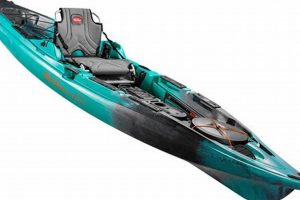
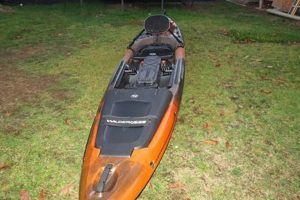
- Sit-On-Top vs. Sit-Inside
Sit-on-top kayaks offer easier entry and exit, along with self-bailing capabilities, making them ideal for warmer climates and calmer waters. Sit-inside kayaks provide better protection from the elements and greater storage capacity, making them suitable for colder conditions or longer trips. This choice influences how the kayak is secured and transported on the trailer. A sit-inside kayak may require more careful securing to prevent water accumulation during transport.
Ultimately, optimal kayak choice depends on individual angler needs and preferences, but it remains intrinsically linked to trailer suitability and the overall practicality of the fishing kayak and trailer system. Carefully considering these factors ensures a balanced approach to maximizing fishing efficiency and enjoyment while maintaining safety and ease of transport.
2. Trailer Selection

Appropriate trailer selection is crucial for safe and efficient transport of fishing kayaks. The trailer serves as the critical link between home and fishing destination, ensuring the kayak arrives safely and ready for use. Choosing the correct trailer involves careful consideration of kayak dimensions, weight, and transport conditions. Overlooking these factors can lead to equipment damage, unsafe driving conditions, and a compromised fishing experience.
- Capacity and Size
Trailer capacity must exceed the combined weight of the kayak, gear, and any additional equipment. The trailer’s length and width must accommodate the kayak’s dimensions securely. Insufficient capacity or improper sizing can lead to trailer failure, kayak damage, or unsafe towing conditions. A trailer designed for smaller, lighter watercraft will be inadequate for a larger, fully equipped fishing kayak. Overloading a trailer can strain its components, leading to potential breakdowns or accidents.
- Construction and Materials
Trailer construction and materials influence durability and longevity. A robust frame and corrosion-resistant materials are essential for withstanding exposure to various weather conditions and saltwater environments. Galvanized steel or aluminum frames offer superior protection against rust and deterioration. A lightweight yet sturdy construction minimizes strain on the towing vehicle and improves fuel efficiency. Trailers exposed to saltwater environments necessitate thorough rinsing after each use to prevent corrosion and prolong lifespan.
- Loading and Securing Mechanisms
Effective loading and securing mechanisms are essential for protecting the kayak during transport. Adjustable bunks or cradles provide support and distribute weight evenly. Durable tie-down straps secure the kayak firmly to the trailer, preventing movement or damage during transit. Improperly secured kayaks can shift or detach during transport, causing damage to the kayak, trailer, or other vehicles. Ease of loading and unloading should also be considered, particularly for heavier kayaks. Utilizing loading aids, such as rollers or ramps, can minimize strain and simplify the process.
- Roadworthiness and Legal Requirements
Trailers must meet specific roadworthiness and legal requirements, including proper lighting, registration, and tire condition. Regular maintenance and inspections are crucial for ensuring safe and legal operation. Neglecting these requirements can result in fines, equipment failure, or accidents. Tire pressure, wheel bearings, and lights should be checked regularly to ensure safe and compliant operation. Understanding and adhering to local regulations regarding trailer dimensions and towing capacity is essential for safe and legal transport.
Careful trailer selection directly contributes to the overall success and enjoyment of fishing kayak excursions. A properly chosen trailer ensures safe and efficient transport, allowing anglers to focus on the fishing experience rather than logistical challenges. Integrating these considerations with kayak selection and fishing location planning creates a cohesive and streamlined approach to maximizing angling opportunities.
3. Safe Transport
Safe transport of fishing kayaks via trailer is paramount for preserving equipment integrity and ensuring roadway safety. Negligence in transport procedures can lead to kayak damage, trailer failure, or traffic incidents. Properly securing the kayak and adhering to safe trailering practices mitigates these risks, allowing for worry-free transport and maximizing the enjoyment of fishing excursions. This section details essential aspects of securement and transport best practices.
- Securement Techniques
Effective securement techniques safeguard the kayak from movement or detachment during transit. Using appropriate tie-down straps, strategically placed at bow, stern, and potentially the cockpit, minimizes shifting. Cam buckle straps offer superior tensioning compared to rope, ensuring a firm hold. Padding contact points between straps and the kayak prevents scratches or abrasion during transport. Regularly inspecting straps for wear and tear ensures ongoing reliability and prevents unexpected failures. For instance, using worn or frayed straps significantly increases the risk of kayak detachment during transport, potentially leading to damage or accidents.
- Weight Distribution
Proper weight distribution on the trailer is crucial for stability and safe towing. Centering the kayak’s weight over the trailer’s axle minimizes sway and improves handling. Uneven weight distribution can lead to trailer instability, particularly at higher speeds or during sudden maneuvers. This instability increases the risk of accidents and can damage both the kayak and trailer. Distributing heavier gear evenly within the kayak further enhances stability and prevents undue stress on specific trailer components.
- Trailer Maintenance
Regular trailer maintenance is essential for safe and reliable operation. This includes routine checks of tire pressure, wheel bearings, lights, and the coupling mechanism. Properly inflated tires ensure optimal handling and prevent blowouts. Well-lubricated wheel bearings minimize friction and reduce the risk of overheating or failure. Functioning lights are crucial for visibility and signaling to other drivers, particularly at night or in inclement weather. A properly maintained trailer significantly reduces the risk of mechanical failures during transport, safeguarding both the kayak and other road users.
- Driving Practices
Safe driving practices when towing a kayak are as important as proper securement and trailer maintenance. Reduced speeds, increased following distances, and heightened awareness of surrounding traffic conditions are vital. Sudden braking or sharp turns can destabilize the trailer, potentially leading to loss of control. Adjusting driving behavior to account for the added length and weight of the trailer ensures safe and predictable handling. Awareness of wind conditions, particularly when crossing bridges or open areas, is also crucial, as strong gusts can impact trailer stability.
Adherence to these safe transport practices demonstrates responsible equipment ownership and a commitment to roadway safety. Integrating these procedures into pre- and post-fishing routines ensures the longevity of the kayak and trailer, minimizes the risk of accidents, and allows anglers to focus on enjoying their time on the water.
4. Launch & Retrieval

Efficient launch and retrieval procedures are essential components of successful kayak fishing excursions. These processes directly impact the overall fishing experience, influencing both time spent on the water and the preservation of equipment. Smooth, well-executed launches and retrievals maximize fishing time and minimize potential strain on both the angler and the equipment, contributing to a more enjoyable and productive outing. Understanding the nuances of these procedures, in conjunction with proper kayak and trailer utilization, significantly enhances the overall fishing experience.
- Site Selection
Choosing an appropriate launch site is the first step towards a successful launch. Factors to consider include water depth, shoreline accessibility, currents, and potential obstacles. A gently sloping shoreline free of rocks or debris simplifies launching and minimizes the risk of damage to the kayak’s hull. Evaluating water conditions and currents is crucial for safe entry and exit, especially in tidal areas or rivers. For example, launching from a steep, rocky bank can be challenging and potentially damage the kayak, while a calm, sandy beach offers a much easier and safer entry point.
- Launching Techniques
Different launching techniques suit various kayak and shoreline types. A common method involves positioning the kayak parallel to the shore, partially in the water, and then stepping or sliding into the seat. In shallow water, wading alongside the kayak while entering or exiting may be necessary. Practicing these techniques in calm conditions builds confidence and reduces the risk of capsizing or equipment damage. For instance, launching from a dock requires a different technique than launching from a beach, and mastering these variations ensures smooth and safe entry.
- Retrieval Strategies
Retrieval strategies mirror launching techniques, but with added considerations for water and weather conditions. Approaching the shore perpendicular to the waves or current minimizes the risk of capsizing. Having assistance when retrieving heavier kayaks or navigating challenging shorelines can prevent strain and equipment damage. For example, retrieving a kayak in strong winds requires careful maneuvering and potentially assistance from another person to prevent the kayak from being blown away or damaged.
- Equipment Considerations
Specialized equipment can simplify both launching and retrieval. Kayak carts or dollies facilitate transport from the trailer to the water’s edge, particularly over longer distances or uneven terrain. Anchor systems allow for controlled positioning during retrieval, preventing the kayak from drifting away in currents or wind. Utilizing these aids reduces physical strain and minimizes the risk of damage to the kayak. For example, using a kayak cart eliminates the need to carry a heavy kayak over long distances, reducing fatigue and minimizing the risk of dropping or damaging the vessel. This contributes to a more enjoyable and efficient experience, particularly for anglers with physical limitations or when dealing with challenging terrain.
Mastering efficient launch and retrieval techniques contributes significantly to a positive kayak fishing experience. These procedures, when executed smoothly, maximize fishing time and minimize potential stress on both the angler and the equipment. Integrating these practices with appropriate trailer usage and kayak selection ensures a streamlined and enjoyable outing, allowing anglers to focus on the thrill of the catch.
5. Fishing Accessories

Fishing accessories enhance the functionality and effectiveness of a fishing kayak and trailer setup, transforming it from a simple transport system into a dedicated angling platform. Careful selection and integration of accessories optimize fishing potential, improve safety, and contribute to a more organized and enjoyable experience. Understanding the role of various accessories and their compatibility with specific kayak and trailer configurations is crucial for maximizing on-the-water success.
- Rod Holders & Storage
Rod holders secure fishing rods, freeing hands for paddling, navigation, and other tasks. Various types exist, including flush-mount, adjustable, and rotating holders, each offering specific benefits for different fishing styles. Secure rod storage during transport prevents damage and maximizes space utilization on the trailer. For example, a rotating rod holder allows for quick adjustments to fishing angles, while flush-mount holders minimize obstruction during paddling. Integrating rod storage solutions within the kayak and on the trailer streamlines transport and setup, contributing to a more efficient and organized fishing experience.
- Fish Finders & GPS
Fish finders and GPS units provide crucial information about water depth, fish location, and navigation. These electronic aids enhance fishing success by enabling anglers to target specific areas and depths. Integrating these devices into the kayak requires careful consideration of power sources and mounting locations. Portable units offer flexibility, while integrated systems provide a more streamlined setup. For example, a GPS unit with pre-loaded maps helps anglers navigate unfamiliar waters and mark productive fishing spots. Compatibility between these devices and the kayak’s electrical system is essential for reliable operation.
- Anchors & Drift Chutes
Anchors and drift chutes control kayak positioning, maintaining stability in currents or wind. Anchors provide a fixed position for stationary fishing, while drift chutes slow down drift speed, allowing for controlled movement. Storage and deployment of these accessories should be integrated into the kayak’s layout for efficient use. For example, a retractable anchor system minimizes clutter and simplifies deployment and retrieval. Choosing the appropriate anchor type and size depends on the fishing environment and kayak’s size.
- Safety & Comfort Enhancements
Safety and comfort enhancements, such as personal flotation devices (PFDs), bilge pumps, and comfortable seating, contribute to a safer and more enjoyable fishing experience. A PFD is essential safety equipment, while a bilge pump quickly removes unwanted water from the kayak. Ergonomic seating enhances comfort during long fishing trips. Storing these items accessibly on the kayak or trailer ensures they are readily available when needed. For instance, a high-back seat with lumbar support improves posture and reduces fatigue, allowing for extended fishing sessions. Integrating these elements with the overall kayak and trailer setup ensures a safe, comfortable, and productive fishing experience.
Strategic selection and integration of fishing accessories significantly enhances the overall utility of a fishing kayak and trailer system. By carefully considering individual needs and fishing style, anglers can customize their setup for optimal performance, safety, and enjoyment. These accessories, when combined with a well-chosen kayak and trailer, transform a basic transport system into a highly effective and personalized angling platform, maximizing the potential for success on the water.
Frequently Asked Questions
This section addresses common inquiries regarding fishing kayaks and trailers, providing concise and informative responses to assist individuals in making informed decisions and maximizing their fishing experiences.
Question 1: What kayak length is best suited for ocean fishing?
Optimal kayak length for ocean fishing depends on targeted species and water conditions. Generally, longer kayaks (12-16 feet) offer superior tracking and stability in rougher seas, while shorter kayaks provide enhanced maneuverability in calmer waters or tighter spaces. Specific length selection requires careful consideration of individual angler needs and anticipated fishing environment characteristics.
Question 2: How is trailer capacity determined for a fishing kayak?
Trailer capacity encompasses the total weight the trailer can safely transport, including the kayak’s weight, gear, and any additional equipment. Exceeding the manufacturer’s specified capacity compromises safety and risks trailer failure. Accurate assessment of the fully loaded kayak’s weight is crucial for selecting a trailer with adequate capacity. Consulting trailer specifications and weight rating labels ensures proper selection.
Question 3: What are essential safety considerations when trailering a fishing kayak?
Essential safety considerations include proper securement techniques, even weight distribution on the trailer, regular trailer maintenance, and adherence to safe driving practices. Proper securement prevents kayak movement during transit, while even weight distribution ensures stable towing. Regular maintenance addresses potential mechanical failures, and safe driving practices account for the added length and weight of the trailer. Prioritizing these considerations minimizes risks and ensures safe transport.
Question 4: What are the advantages of using a kayak cart for launching and retrieving?
Kayak carts simplify transport between the trailer and launch site, minimizing strain and potential damage to the kayak, particularly over longer distances or uneven terrain. They reduce physical effort required for transport, especially with heavier kayaks, making launch and retrieval more accessible for individuals with physical limitations. This contributes to a more efficient and enjoyable experience, conserving energy for the fishing activity itself.
Question 5: What are recommended fishing accessories for kayak angling?
Recommended accessories include rod holders, fish finders, GPS units, anchors, drift chutes, and safety equipment such as PFDs and bilge pumps. Rod holders secure rods, fish finders and GPS aid in locating fish, anchors and drift chutes control positioning, and safety equipment enhances angler well-being. Specific accessory choices depend on individual fishing style and target species. Appropriate accessory selection improves fishing effectiveness and overall experience.
Question 6: How does kayak hull design influence fishing performance?
Hull design impacts stability, maneuverability, and tracking. Flat-bottomed hulls excel in stability for calm waters, while V-shaped hulls improve tracking in rough conditions. Pontoon hulls provide exceptional stability but sacrifice maneuverability. Choosing the appropriate hull design hinges on anticipated water conditions and fishing style. Understanding hull characteristics optimizes kayak selection for specific fishing environments.
Careful consideration of these frequently asked questions facilitates informed decisions regarding kayak and trailer selection, safe transport, and effective utilization of accessories, ultimately contributing to a more rewarding and enjoyable fishing experience.
The following section offers concluding thoughts on responsible kayak fishing practices and the importance of environmental stewardship.
Fishing Kayak and Trailer
This exploration of fishing kayak and trailer systems has highlighted key aspects of equipment selection, safe transport, efficient launch and retrieval procedures, and the strategic use of accessories. Careful consideration of kayak characteristics, such as hull design, length, and weight capacity, is crucial for matching the vessel to specific fishing environments and angler needs. Trailer selection hinges on compatibility with kayak dimensions and weight, ensuring safe and reliable transport. Proper securement techniques, weight distribution, and trailer maintenance are essential for preventing equipment damage and ensuring roadway safety. Efficient launch and retrieval procedures maximize fishing time and minimize strain, while strategically chosen accessories enhance on-water performance and overall fishing experience.
Responsible ownership and operation of fishing kayak and trailer systems contribute significantly to enjoyable and sustainable angling practices. Prioritizing safety, adhering to environmental regulations, and respecting fellow anglers fosters a positive and productive fishing environment. Continued advancements in kayak and trailer design promise further enhancements to accessibility and on-water performance. A thorough understanding of these interconnected elements empowers anglers to make informed decisions, maximizing their fishing potential while promoting responsible stewardship of aquatic resources.