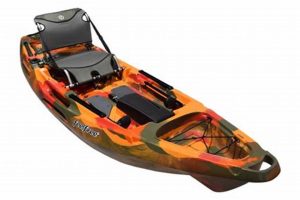
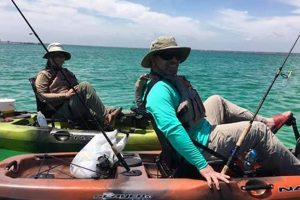
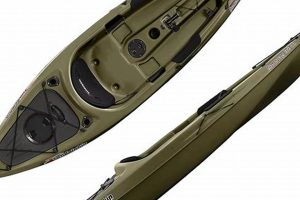
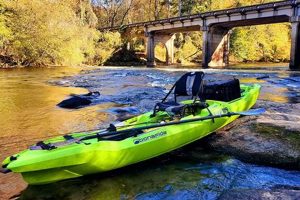
The Tarpon 120 is a sit-on-top kayak designed for anglers, manufactured by Wilderness Systems. This specific model is known for its stability, maneuverability, and ample storage for fishing gear. It typically features specialized accessories like rod holders, paddle parks, and storage hatches designed for tackle and other equipment. This style of kayak offers anglers an accessible and versatile platform for fishing in various environments, from calm lakes to slow-moving rivers.
Sit-on-top kayaks like this model offer several advantages for fishing. The elevated seating position provides improved visibility for spotting fish and casting. Their inherent stability makes them ideal for standing and casting, enhancing fishing techniques. The open deck design allows for easy entry and exit, as well as quick recovery in case of capsizing. Furthermore, the design readily accommodates modifications and additions of fishing-specific accessories. The evolution of fishing kayak design has progressed significantly, leading to specialized craft tailored to specific fishing needs and conditions, contributing to the popularity of this type of kayak.
Further exploration could delve into specific features, user experiences, comparisons with similar models, and optimal usage scenarios. Manufacturing processes, material science involved in construction, and environmental considerations associated with this kayaks usage also offer promising avenues for further investigation.
Tips for Utilizing a Fishing Kayak
Effective use of a fishing kayak requires consideration of several factors to maximize performance and ensure safety. These tips focus on enhancing the fishing experience through proper preparation and technique.
Tip 1: Weight Distribution: Proper weight distribution is crucial for stability and efficient paddling. Gear should be distributed evenly, with heavier items positioned low and centrally. This balance prevents tipping and improves tracking in the water.
Tip 2: Paddle Selection: Choosing the correct paddle length is essential for efficient paddling. Paddle length should be tailored to individual body size and kayak width. An appropriately sized paddle minimizes fatigue and maximizes power transfer.
Tip 3: Safety Gear: Carrying essential safety equipment is paramount. A personal flotation device (PFD), a whistle, and a signaling device are crucial for personal safety. A first-aid kit and a communication device should also be considered.
Tip 4: Anchor Positioning: Proper anchor deployment is vital for maintaining position in a chosen fishing spot. Understanding current and wind conditions will inform appropriate anchor placement. Utilizing an anchor trolley system allows for adjustments to positioning based on changing conditions.
Tip 5: Kayak Entry and Exit: Practicing proper entry and exit techniques, particularly in shallow water or from a dock, minimizes the risk of capsizing. Maintaining a low center of gravity and using stable points of contact are crucial.
Tip 6: Navigation and Planning: Planning the fishing route and understanding navigational markers and local regulations are essential for a safe and successful trip. Checking weather forecasts and tides, and informing someone of the intended route, are recommended safety practices.
Tip 7: Fishing Etiquette: Respecting other anglers and the environment is essential. Maintaining a safe distance from other boaters and avoiding disturbing wildlife promotes a positive experience for all.
By adhering to these guidelines, individuals can enhance safety, improve fishing success, and contribute to responsible kayak fishing practices.
Considering these practical tips sets the stage for a more detailed exploration of specific fishing techniques, advanced kayak maneuvering skills, and responsible environmental stewardship.
1. Sit-on-Top Design
The sit-on-top design is a defining characteristic of the Wilderness Systems Tarpon 120, significantly influencing its suitability for fishing applications. This design eliminates the enclosed cockpit found in traditional kayaks, providing anglers with several key advantages. The open deck allows for greater freedom of movement, facilitating casting, fighting fish, and changing positions. This design element contributes significantly to the Tarpon 120s stability, a crucial factor for anglers standing to cast or land a fish. Self-bailing scupper holes, integral to sit-on-top kayaks, further enhance stability and safety by shedding water that washes over the deck. For instance, an angler encountering a wave or unexpected splash will remain relatively dry and the kayak will maintain its buoyancy due to the self-bailing feature. This design also simplifies re-entry should an angler capsize in calmer waters. The lack of a confined cockpit reduces anxiety for some anglers, particularly in warmer climates.
The sit-on-top design directly impacts the Tarpon 120’s functionality as a fishing platform. The open deck provides ample space for mounting fishing-specific accessories like rod holders, fish finders, and tackle crates. This adaptability allows anglers to customize their setup for specific fishing styles and target species. The ease of entry and exit inherent in the design allows for quick transitions between paddling and fishing, a crucial element for sight fishing or pursuing moving schools of fish. Consider a scenario where an angler spots a fish from a distance: the sit-on-top design allows for swift repositioning and a quick cast. This responsive design makes the Tarpon 120 well-suited for dynamic fishing environments.
In summary, the sit-on-top design of the Wilderness Systems Tarpon 120 is fundamental to its effectiveness as a fishing kayak. The enhanced stability, freedom of movement, self-bailing capabilities, and adaptability for accessories directly address the specific needs of anglers. While this design might not be ideal for all kayaking disciplines, its advantages for fishing applications are undeniable, contributing significantly to the models popularity. This understanding clarifies the connection between design and function, emphasizing the importance of choosing the right kayak for specific on-the-water activities.
2. Stability

Stability is a critical performance attribute for the Wilderness Systems Tarpon 120 fishing kayak, directly influencing its effectiveness as a fishing platform. Several design elements contribute to this stability, creating a secure and balanced platform conducive to various fishing activities. The kayak’s width, hull design, and low center of gravity are key factors influencing its stability. A wider hull inherently provides greater initial stability, resisting tipping. The Tarpon 120’s shallow-V hull design blends initial stability with maneuverability. This balance allows anglers to maintain a stable platform while retaining the ability to navigate various water conditions. The relatively low center of gravity further enhances stability, making it less susceptible to tipping forces. This characteristic is particularly advantageous when standing to cast or fight fish, a common practice in kayak fishing.
The practical significance of stability in a fishing kayak is evident in various on-the-water scenarios. Consider an angler casting a fishing line. A stable platform allows for controlled casting motions, maximizing accuracy and minimizing the risk of losing balance. When fighting a strong fish, a stable kayak provides the necessary leverage and control, preventing capsizing and increasing the chances of a successful landing. Furthermore, stability enhances safety, particularly in challenging conditions such as windy days or choppy water. A stable kayak instills confidence, allowing anglers to focus on fishing rather than constantly correcting balance. The Tarpon 120’s stability extends its usability to a wider range of anglers, including those new to kayak fishing or those with mobility limitations.
In conclusion, stability is a defining characteristic of the Wilderness Systems Tarpon 120, contributing significantly to its appeal as a fishing kayak. The interplay of design elements such as hull width, design, and center of gravity creates a stable platform that enhances fishing performance, improves safety, and expands accessibility. Understanding the factors influencing stability contributes to informed decision-making for anglers seeking a kayak suited to their individual needs and the demands of their fishing style. This focus on stability underscores the prioritization of performance and safety in kayak design and its direct impact on the user experience.
3. Maneuverability

Maneuverability is a crucial performance characteristic of the Wilderness Systems Tarpon 120 fishing kayak, directly impacting its effectiveness in diverse fishing environments. The kayak’s hull design, length, and rudder system interplay to influence its responsiveness and turning capabilities. The Tarpon 120 typically features a shallow-V hull, blending initial stability with efficient tracking and maneuverability. This design enables the kayak to track straight for efficient paddling while maintaining the agility to navigate tight turns. The kayak’s length also plays a role; while longer kayaks generally track better in open water, the Tarpon 120’s moderate length strikes a balance between tracking and maneuverability. An optional rudder system can further enhance maneuverability, particularly in windy conditions or when navigating strong currents. The rudder provides precise control, allowing for adjustments to course and position without excessive paddling effort.
The practical benefits of maneuverability become apparent when considering real-world fishing scenarios. Navigating narrow creeks or shallow flats, often rich in fish populations, requires a kayak that can turn quickly and efficiently. The Tarpon 120’s maneuverability allows anglers to explore these productive areas without cumbersome paddling or the risk of grounding. Consider a scenario involving fishing around submerged structures or fallen trees. Precise maneuvering is essential to position the kayak effectively for casting and retrieving lures. Similarly, in river environments, maneuverability allows anglers to navigate around obstacles, maintain position in current, and adjust to changing water flows. The ability to swiftly reposition the kayak when pursuing moving schools of fish is another distinct advantage offered by the Tarpon 120’s maneuverability. This responsiveness translates to increased fishing opportunities and improved angling success.
In summary, maneuverability represents a significant advantage of the Wilderness Systems Tarpon 120. The balanced design, incorporating hull shape, length, and the option of a rudder system, enhances the kayak’s responsiveness and turning capabilities. This characteristic translates to practical advantages in diverse fishing environments, from navigating tight waterways to maintaining position in currents. The enhanced maneuverability directly contributes to the Tarpon 120s versatility and effectiveness as a fishing platform, allowing anglers to access productive fishing areas and adapt to dynamic on-the-water situations. This understanding highlights the connection between design features and practical performance, emphasizing the importance of maneuverability for a successful fishing kayak.
4. Storage Capacity
Storage capacity is a critical consideration for fishing kayaks, directly impacting their practicality and effectiveness. The Wilderness Systems Tarpon 120 addresses this need with a thoughtfully designed storage system, enabling anglers to carry essential gear and maintain an organized on-the-water experience. Understanding the storage features and their practical implications contributes to a comprehensive appreciation of this kayak’s design and functionality for fishing applications.
- Tankwell Storage:
The Tarpon 120 typically features a large rear tankwell, providing ample space for storing larger items like a crate, tackle box, or cooler. Bungee cords secure these items, preventing shifting during transport and rough water conditions. This storage area accommodates essential gear, freeing up deck space for fishing activities. For example, an angler can store a cooler with food and drinks, ensuring a comfortable and sustained fishing trip.
- Hatch Storage:
Front and center hatches offer additional storage solutions, often designed for smaller items requiring protection from water. These hatches can accommodate tackle boxes, fishing tools, electronics, and personal items like wallets or phones. Watertight seals protect these items from splashes and submersion. Storing sensitive electronics, such as a GPS or fish finder battery, in a dry hatch safeguards these essential tools from damage.
- Side Storage:
Side storage compartments, often located near the angler’s seat, offer quick access to frequently used items like pliers, fishing line, or leader material. These compartments may be open or feature mesh pockets for drainage and visibility. Storing essential tools within easy reach minimizes disruption to the fishing process, allowing for quick lure changes or line adjustments without searching through larger storage areas.
- Rod Holders:
Dedicated rod holders, typically flush-mounted or adjustable, are integral to the Tarpon 120s fishing-focused design. These holders secure rods during paddling and allow for quick access when a fish strikes. Multiple rod holders accommodate diverse fishing techniques, enabling anglers to switch between different setups efficiently. For example, an angler could carry one rod rigged for trolling and another for casting, maximizing fishing versatility.
The strategic placement and variety of storage options on the Wilderness Systems Tarpon 120 directly contribute to its effectiveness as a fishing platform. The ability to carry essential gear, maintain organization, and access equipment efficiently enhances the overall fishing experience. The design considerations surrounding storage capacity reflect a focus on practicality and user needs, contributing to the Tarpon 120s popularity among anglers. This detailed examination of storage capacity demonstrates the interconnectedness of design features and practical functionality, highlighting the importance of considering storage solutions when selecting a fishing kayak. Further exploration could compare the Tarpon 120s storage capacity to similar kayaks, offering a broader perspective on available options and their respective advantages.
5. Fishing Features

Specialized features distinguish fishing kayaks from recreational models, enhancing their utility and angler performance. The Wilderness Systems Tarpon 120 incorporates several key fishing features, contributing to its popularity among anglers. Examination of these features provides insight into the design considerations specific to fishing kayaks and how these features contribute to an enhanced on-the-water experience.
- Rod Holders
Rod holders are fundamental to fishing kayak design, providing secure storage and quick access to fishing rods. The Tarpon 120 typically includes multiple rod holders, often a combination of flush-mounted and adjustable holders. Flush-mounted holders offer a streamlined profile for paddling while adjustable holders provide flexibility for different fishing techniques. An angler trolling might utilize flush-mounted holders to keep lines clear, while an angler casting might prefer adjustable holders for quick access and optimal rod positioning. This variety accommodates diverse fishing styles and enhances on-the-water efficiency.
- Tackle Storage
Dedicated tackle storage is crucial for maintaining organization and efficiency while fishing. The Tarpon 120 offers various tackle storage solutions, including hatches, compartments, and integrated tackle boxes. These storage options keep essential gear readily accessible and protected from the elements. For example, an angler can quickly access lures, hooks, and other small items without disrupting the fishing process. Organized tackle storage contributes to a more focused and productive fishing experience.
- Gear Tracks/Mounting Points
Gear tracks and mounting points offer customization options for attaching accessories like fish finders, GPS units, cameras, and additional rod holders. The Tarpon 120 often features integrated gear tracks, providing versatility for personalized setups. An angler utilizing a fish finder can mount it within easy view, enhancing situational awareness and fish-finding capabilities. These customization options cater to individual angler preferences and specific fishing needs.
- Anchor Trolley System
An anchor trolley system allows anglers to control kayak positioning in current or wind. This system, often included or readily added to the Tarpon 120, facilitates precise anchor deployment and adjustments. By controlling the anchor’s position, anglers can maintain optimal presentation of lures or bait in specific locations, enhancing fishing effectiveness. This feature proves particularly valuable in river systems or tidal areas.
The integration of these fishing features within the Wilderness Systems Tarpon 120 reinforces its purpose-built design for angling. These features enhance fishing effectiveness, improve organization, and contribute to a more customized and enjoyable on-the-water experience. The presence of these features highlights the specialized nature of fishing kayaks and their evolution to meet the specific needs of anglers. Further exploration might compare these features with those found on competing fishing kayaks, providing a more comprehensive understanding of the competitive landscape and available options.
6. Durable Construction
Durable construction is paramount for fishing kayaks, ensuring they withstand the rigors of diverse environments and prolonged use. The Wilderness Systems Tarpon 120’s reputation for durability stems from specific design choices and material selections. Understanding these construction elements provides insights into the kayak’s longevity and resilience, contributing to informed purchasing decisions and appropriate usage practices.
- Material Selection
The Tarpon 120 typically utilizes rotomolded polyethylene, a durable plastic known for its impact resistance and UV stability. This material resists cracking, fading, and warping under prolonged sun exposure and impacts from rocks, submerged obstacles, or transport. Rotomolded polyethylene’s inherent buoyancy contributes to the kayak’s overall safety profile. This material choice aligns with the demands of fishing environments, where kayaks often encounter harsh conditions.
- Hull Design
The kayak’s hull design contributes to its durability. A well-designed hull distributes impacts effectively, reducing stress on individual areas. The Tarpon 120’s shallow-V hull combines stability with efficient tracking, while its robust construction resists damage from shallow-water impacts or collisions with submerged objects. This design consideration enhances the kayak’s longevity in challenging environments.
- Hardware and Fittings
Durable hardware and fittings are essential for long-term performance. Rust-resistant stainless steel or reinforced plastic components resist corrosion in saltwater environments. Securely attached fittings prevent leakage and maintain structural integrity. High-quality hardware contributes to the kayak’s overall resilience, minimizing maintenance requirements and extending its lifespan.
- Construction Process
The rotomolding manufacturing process contributes to uniform wall thickness and consistent material density throughout the hull. This process minimizes weak points and ensures consistent structural integrity, enhancing overall durability. The single-piece construction further contributes to the kayak’s robustness, eliminating seams prone to leakage or failure. This manufacturing method directly influences the Tarpon 120’s long-term performance and resistance to wear and tear.
The Wilderness Systems Tarpon 120’s durable construction translates to a reliable and long-lasting fishing platform. The selection of rotomolded polyethylene, thoughtful hull design, robust hardware, and meticulous construction process combine to create a kayak capable of withstanding demanding fishing environments. This durability translates to a lower cost of ownership over time, as the kayak requires less frequent repairs or replacements. Understanding the elements contributing to the Tarpon 120’s durability empowers informed decision-making for anglers seeking a reliable and resilient fishing kayak. Further investigation could compare the Tarpon 120’s construction to other fishing kayak models, providing additional context and insights into the varying approaches to kayak construction.
Frequently Asked Questions
This section addresses common inquiries regarding the Wilderness Systems Tarpon 120 fishing kayak, providing concise and informative responses to facilitate informed decision-making.
Question 1: What is the weight capacity of the Tarpon 120?
The Tarpon 120 typically boasts a weight capacity of 350-400 lbs, accommodating anglers and their gear comfortably. Consulting manufacturer specifications confirms precise capacity for specific model years.
Question 2: Is the Tarpon 120 suitable for ocean fishing?
While designed primarily for calmer waters, the Tarpon 120 can handle moderate ocean conditions, particularly near shore or in protected bays. However, caution is advised in rough seas or strong currents. Experienced paddlers with proper safety precautions may find it suitable for certain ocean environments.
Question 3: What is the approximate length and width of this kayak?
The Tarpon 120 measures approximately 12 feet in length and 30 inches in width. These dimensions contribute to a balance of stability and maneuverability.
Question 4: Does the Tarpon 120 come equipped with a rudder?
Some Tarpon 120 models come standard with a rudder, while others offer it as an optional accessory. A rudder enhances maneuverability, especially in windy or current-prone areas. Checking specific model specifications confirms rudder inclusion.
Question 5: What materials are used in the construction of the Tarpon 120?
Rotomolded polyethylene is the primary material used in the Tarpon 120’s construction. This durable plastic provides impact resistance, UV protection, and long-term durability. The material selection contributes to the kayak’s resilience in various environments.
Question 6: What is the average price range for a new Tarpon 120?
Pricing for a new Tarpon 120 can vary based on model year, features, and retailer. Researching current market prices provides a realistic expectation. Used models may offer cost savings but require careful inspection for condition and potential repairs.
These responses provide a foundational understanding of the Wilderness Systems Tarpon 120. Consulting manufacturer specifications and reputable retailers offers further detailed information and expert guidance.
Continuing exploration could delve into specific user experiences, comparative analyses with similar kayaks, and advanced fishing techniques suited to this platform.
Conclusion
The Wilderness Systems Tarpon 120 fishing kayak presents a compelling option for anglers seeking a stable, maneuverable, and feature-rich platform. Its sit-on-top design, coupled with ample storage and specialized fishing features, caters specifically to angling needs. Durable construction ensures longevity, while adaptable design elements allow for personalized configurations. From calm lakes to slow-moving rivers, the Tarpon 120 provides anglers with a versatile vessel for pursuing their passion.
Careful consideration of individual needs, fishing styles, and target environments remains crucial in selecting appropriate fishing kayak equipment. The Tarpon 120 offers a compelling blend of performance and practicality, contributing to the continued evolution and refinement of fishing kayak design. Its enduring presence in the market underscores its value and relevance for anglers seeking specialized watercraft.