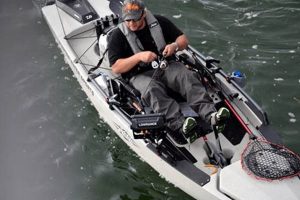
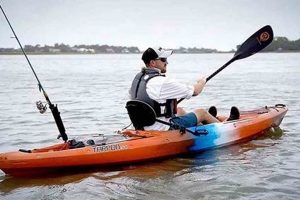
Small, human-powered watercraft designed for angling often incorporate motorized assistance. Integrating a propulsion system, like a compact, battery-powered propeller, enhances maneuverability and extends range on the water, allowing anglers to access more distant fishing spots or navigate challenging currents with less physical exertion. This motorized approach complements traditional paddling, offering flexibility and efficiency for anglers.
Motorized kayaks offer significant advantages for fishing enthusiasts. Increased speed reduces travel time, allowing more time for actual fishing. Enhanced maneuverability simplifies navigation through tight spaces, shallows, and vegetation. The ability to maintain position effortlessly against currents or wind improves fishing presentation and reduces angler fatigue. Historically, fishing from small craft relied solely on human power. Technological advancements now offer convenient and effective motorized propulsion, expanding fishing opportunities and improving the overall experience.
Further exploration will cover various propeller types, their integration with kayak design, battery technologies, and the impact of these advancements on angling practices and the environment.
Tips for Utilizing Motorized Kayaks
Effective use of kayaks equipped with propellers requires consideration of several factors to maximize performance and ensure safety. The following tips offer guidance for anglers seeking to enhance their fishing experience with these specialized vessels.
Tip 1: Battery Management: Understand the battery’s capacity and range. Carry a spare battery for extended trips. Monitor power consumption and adjust speed accordingly to conserve energy. Proper charging and storage practices will prolong battery lifespan.
Tip 2: Propeller Maintenance: Regularly inspect the propeller for damage, debris, or fishing line entanglement. Clean the propeller after each use to ensure optimal performance. Understand the process for removing and replacing the propeller for maintenance or repairs.
Tip 3: Navigation and Safety: Familiarize oneself with local waterway regulations regarding motorized vessels. Carry appropriate safety gear, including a personal flotation device and signaling devices. Plan routes carefully, taking into account water conditions and potential hazards.
Tip 4: Choosing the Right Propeller: Different propeller designs offer varying levels of thrust and efficiency. Select a propeller that matches the kayak’s design and the angler’s intended use. Consider factors such as water conditions, fishing style, and desired speed.
Tip 5: Respecting the Environment: Minimize noise and disturbance to aquatic life and other water users. Adhere to no-wake zones and speed limits. Avoid disturbing sensitive habitats such as nesting areas and shallow spawning grounds.
Tip 6: Kayak Compatibility: Ensure the chosen propeller and motor system are compatible with the specific kayak model. Consider weight capacity, hull design, and mounting options. Incorrect pairing can lead to instability or damage.
Tip 7: Pre-Trip Checks: Before each outing, inspect the entire system, including the battery, propeller, motor mount, and wiring. Ensure all components are securely fastened and functioning correctly. A pre-trip checklist can be helpful.
By adhering to these guidelines, anglers can enhance safety, optimize performance, and enjoy the full benefits of motorized kayak fishing while minimizing environmental impact.
The subsequent conclusion will summarize the advantages and considerations discussed, offering a comprehensive overview of integrating propeller-driven propulsion into kayak fishing.
1. Maneuverability

Maneuverability represents a critical advantage offered by propeller-driven fishing kayaks. Traditional paddle kayaks require physical exertion and skilled technique to navigate tight spaces, shallow waters, or areas with dense vegetation. Integrated propellers provide precise control, enabling effortless movement in various environments. This enhanced maneuverability allows anglers to access previously inaccessible fishing spots, position themselves strategically within currents, and navigate complex shorelines or submerged structures effectively.
Consider a scenario where an angler targets fish holding near a fallen tree submerged in shallow water. A traditional kayak might struggle to approach quietly and precisely due to paddle limitations. A kayak equipped with a propeller allows the angler to approach the target zone stealthily and maintain position with minimal disturbance, significantly increasing the chances of a successful catch. Similarly, navigating strong currents becomes considerably easier with a propeller, allowing the angler to hold position or traverse the current precisely without constant paddling effort. This is particularly beneficial when fishing in rivers or tidal zones.
The enhanced maneuverability provided by propeller systems translates to improved fishing efficiency and access. While paddle kayaks remain viable for certain fishing styles and environments, integrating a propulsion system offers a distinct advantage in situations requiring precision control and reduced physical exertion. This advantage, however, must be balanced against responsible usage, including adherence to local regulations and minimizing environmental impact in sensitive aquatic habitats.
2. Speed and Range

Speed and range are fundamental considerations when evaluating the utility of a propeller-driven fishing kayak. Unlike traditional paddle-powered kayaks, motorized versions offer extended reach and faster travel times, significantly impacting fishing efficiency and access to distant locations. Understanding the relationship between speed, range, and the components of a motorized kayak system is crucial for informed decision-making.
- Battery Capacity and Range:
Battery capacity directly influences the operational range of a motorized kayak. Higher capacity batteries provide longer run times, enabling anglers to cover greater distances. A large-capacity battery might allow traversing several miles of open water to reach offshore fishing grounds, while a smaller battery might be suitable for shorter trips within a protected bay. Factors such as speed, current, and wind conditions affect battery consumption and overall range. Choosing the appropriate battery capacity requires careful consideration of intended fishing locations and typical trip duration.
- Motor Power and Speed:
Motor power directly affects the kayak’s maximum speed. Higher-powered motors enable faster travel, reducing transit times and allowing anglers to cover more water in a given timeframe. Higher speeds, however, often correlate with increased battery consumption, impacting range. Balancing speed and range requirements requires careful consideration of motor power and available battery capacity. A high-speed motor might be ideal for quickly reaching distant fishing spots, while a lower-powered motor offers extended range at slower speeds.
- Hull Design and Efficiency:
Kayak hull design plays a significant role in influencing both speed and efficiency. A streamlined hull minimizes drag, allowing the kayak to move through the water more efficiently. Reduced drag translates to higher speeds with less power consumption, maximizing range. Conversely, wider, flatter hulls, often favored for stability, might experience greater drag, reducing speed and range. Selecting a hull design optimized for efficiency can significantly impact overall performance.
- Environmental Factors:
External factors, such as wind and current, directly impact speed and range. Strong headwinds or opposing currents decrease speed and increase battery consumption, reducing effective range. Conversely, favorable currents or tailwinds can extend range and increase speed. Anglers must account for prevailing environmental conditions when planning trips and estimating travel times. Monitoring weather forecasts and understanding local tidal patterns are crucial for safe and efficient navigation.
The interplay between battery capacity, motor power, hull design, and environmental conditions directly influences the speed and range achievable with a motorized fishing kayak. Careful consideration of these factors during the selection process ensures the system aligns with individual fishing needs and intended usage patterns, optimizing performance and maximizing time on the water. Understanding these interconnected elements allows anglers to make informed decisions and enhances the overall fishing experience.
3. Hands-Free Fishing

Hands-free fishing represents a significant advantage afforded by motorized kayaks, particularly those equipped with propellers. Traditional paddling necessitates consistent physical effort, often requiring one or both hands to maneuver the kayak. This limits an angler’s ability to simultaneously manage fishing rods, tackle, or other equipment. A propeller-driven system eliminates the need for continuous paddling, freeing both hands for dedicated fishing activities. This translates to improved responsiveness to bites, more efficient line management, and the ability to employ techniques requiring two-handed operation, such as fly fishing or certain casting methods.
Consider the scenario of an angler trolling multiple lines. In a traditional kayak, maintaining course and speed while simultaneously managing multiple rods presents a considerable challenge. A motorized kayak allows the angler to focus entirely on fishing, adjusting lures, setting hooks, and reeling in catches without the distraction of paddling. This hands-free operation is equally beneficial in situations requiring precise boat control, such as maintaining position in a current while bottom fishing. The angler can focus on detecting bites and reacting quickly without the constant need to adjust the kayak’s position with a paddle.
The practical significance of hands-free fishing extends beyond mere convenience. It enhances fishing efficiency, allowing for more casts, better bait presentation, and faster reaction times to strikes. This can translate to increased catch rates and a more rewarding fishing experience. Furthermore, hands-free operation contributes to safety by allowing anglers to maintain better situational awareness and react more effectively to unexpected events or changing water conditions. While hands-free fishing is not exclusive to propeller-driven kayaks, the integration of a propeller system offers a particularly effective solution for achieving this advantage, streamlining the fishing process and allowing anglers to concentrate on the core aspects of their pursuit.
4. Power source (battery)
Battery technology forms the cornerstone of propeller-driven fishing kayaks, directly influencing performance, range, and overall usability. Understanding battery characteristics and their implications for kayak propulsion is essential for informed selection and effective operation. The following facets explore the crucial aspects of battery technology within the context of motorized kayak fishing.
- Battery Types and Chemistries:
Different battery chemistries offer varying performance characteristics. Lead-acid batteries, while cost-effective, are heavier and offer lower energy density compared to lithium-ion batteries. Lithium-ion batteries, though more expensive, provide longer run times, lighter weight, and improved lifespan. Selecting the appropriate battery chemistry involves balancing cost, performance, and weight considerations. A lithium-ion battery might be preferable for longer fishing trips requiring extended range, while a lead-acid battery might suffice for shorter excursions in calmer waters.
- Battery Capacity and Amp-Hours (Ah):
Battery capacity, measured in amp-hours (Ah), dictates the total energy stored and directly influences run time. Higher Ah ratings translate to longer operational periods before recharging becomes necessary. Choosing the appropriate capacity involves estimating typical trip duration and desired range. A higher capacity battery ensures sufficient power for longer expeditions, while a smaller capacity battery might suffice for shorter outings. Calculating estimated run times based on motor consumption and battery capacity is crucial for planning fishing trips effectively.
- Battery Maintenance and Lifespan:
Proper battery maintenance is essential for maximizing lifespan and ensuring reliable performance. Regular charging, proper storage, and avoiding deep discharges contribute to prolonged battery health. Storing batteries in a cool, dry environment and utilizing appropriate charging procedures optimize lifespan and prevent premature degradation. Understanding the specific maintenance requirements for different battery chemistries is crucial for maximizing their operational life and ensuring reliable performance throughout their intended lifespan.
- Integration and System Compatibility:
Seamless integration of the battery system within the kayak is essential for optimal performance and safety. Secure mounting, appropriate wiring, and compatible connectors ensure reliable power delivery and prevent potential hazards. The battery system must be compatible with the chosen motor and other electrical components. Careful consideration of voltage, amperage, and connector types ensures proper system integration and avoids potential malfunctions or safety risks. Consulting manufacturer specifications and seeking professional advice when necessary ensures a safe and reliable setup.
Battery technology plays a pivotal role in the performance and usability of propeller-driven fishing kayaks. Understanding the nuances of battery types, capacities, maintenance requirements, and system integration is crucial for maximizing fishing efficiency and ensuring a safe and enjoyable experience. Careful selection and proper maintenance of the battery system contribute significantly to the overall performance and longevity of the motorized kayak, allowing anglers to fully leverage the advantages of propeller propulsion.
5. Propeller Maintenance
Propeller maintenance is essential for the optimal performance and longevity of propeller-driven fishing kayaks. Neglecting regular maintenance can lead to decreased efficiency, reduced battery life, potential motor damage, and compromised safety. Several factors contribute to propeller wear and tear, including impacts with submerged objects, entanglement with fishing line or vegetation, and corrosion from prolonged exposure to water. Regular inspection and cleaning are crucial preventative measures. For instance, a propeller fouled with fishing line can restrict rotation, placing strain on the motor and reducing thrust. This added strain increases battery drain, shortening operational time and potentially damaging the motor over time.
Practical maintenance involves removing the propeller, inspecting it for damage, and cleaning it thoroughly. A damaged propeller can create vibrations, reduce efficiency, and potentially lead to further mechanical issues. Bent or chipped blades should be repaired or replaced promptly. Cleaning involves removing accumulated debris, fishing line, and aquatic growth. A stiff brush and fresh water are usually sufficient for cleaning. More stubborn deposits might require specialized cleaning solutions. Regular lubrication of moving parts within the propeller assembly, as recommended by the manufacturer, further ensures smooth operation and prolongs lifespan. Frequency of maintenance depends on usage patterns and environmental conditions. Operating in shallow, debris-filled waters necessitates more frequent inspections and cleaning compared to use in clear, open water. Establishing a regular maintenance schedule based on usage patterns is a proactive approach to preventing potential issues and ensuring consistent performance.
Investing time in propeller maintenance directly translates to enhanced performance, extended equipment lifespan, and increased safety on the water. A well-maintained propeller minimizes energy consumption, maximizing battery life and operational range. Furthermore, it reduces the risk of motor damage and ensures consistent, reliable propulsion. This proactive approach minimizes downtime and maximizes the enjoyment and efficiency of fishing excursions. Understanding the direct link between propeller maintenance and overall kayak performance empowers anglers to take preventative measures, contributing to a safer and more rewarding fishing experience.
6. Environmental Impact
Motorized fishing kayaks, while offering numerous advantages, present potential environmental impacts requiring careful consideration. Responsible usage and adherence to best practices are crucial for minimizing these impacts and preserving the natural environment for future generations. The following facets explore the complex interplay between motorized kayaks and the aquatic ecosystems they operate within.
- Noise Pollution:
Propellers, even relatively small ones, generate underwater noise that can disrupt aquatic life. Fish and other aquatic organisms rely on sound for communication, navigation, and predator avoidance. Excessive noise can interfere with these essential behaviors, potentially impacting feeding patterns, breeding success, and overall ecosystem health. For example, studies have shown that noise from motorized vessels can displace fish from preferred habitats and disrupt spawning activities. Minimizing noise pollution requires operating kayaks at reasonable speeds, avoiding sensitive areas during critical periods like spawning seasons, and choosing quieter propeller designs.
- Disturbance of Habitats:
Kayaks, particularly those operating in shallow waters or near sensitive habitats like seagrass beds or mangrove forests, can physically disturb these environments. Propeller wash can resuspend sediment, reducing water clarity and potentially smothering bottom-dwelling organisms. Physical contact with vegetation can damage or uproot plants, disrupting the structural integrity of the habitat. These impacts can have cascading effects on the ecosystem, affecting water quality, biodiversity, and the overall health of the aquatic environment. Responsible operation involves avoiding shallow areas and sensitive habitats whenever possible, minimizing speed in these zones, and exercising caution when navigating near vegetation.
- Water Quality Impacts:
While electric motors themselves do not produce direct emissions, the manufacturing process of batteries and other components involves resource extraction and energy consumption, contributing to a wider environmental footprint. Improper disposal of spent batteries can leach harmful chemicals into the environment, contaminating soil and water. Furthermore, propeller strikes on submerged objects or the seabed can release pollutants trapped in sediments, impacting local water quality. Responsible usage involves adhering to proper battery disposal procedures, minimizing the risk of propeller strikes, and supporting manufacturers committed to sustainable production practices.
- Interaction with Wildlife:
Motorized kayaks can potentially disturb wildlife, particularly in areas with high concentrations of birds, marine mammals, or other sensitive species. Close approaches, sudden movements, and excessive noise can cause stress, disrupt feeding patterns, and displace animals from their natural habitats. Respectful interaction with wildlife involves maintaining a safe distance, avoiding sudden changes in speed or direction, and minimizing noise levels. Understanding local wildlife patterns and adhering to established guidelines for wildlife viewing minimizes disturbance and contributes to the preservation of these valuable resources.
Minimizing the environmental impact of motorized fishing kayaks requires a concerted effort from manufacturers, users, and regulatory bodies. Technological advancements in propeller and motor design, coupled with responsible usage practices and adherence to established guidelines, can significantly reduce the footprint of these vessels on aquatic ecosystems. A proactive approach to environmental stewardship ensures the continued enjoyment of motorized kayak fishing while preserving the natural environment for future generations. It is crucial to recognize that the convenience and advantages offered by these vessels come with a responsibility to minimize their impact and contribute to the long-term health of our waterways.
Frequently Asked Questions
This section addresses common inquiries regarding fishing kayaks equipped with propellers, providing concise and informative responses to facilitate informed decision-making and responsible usage.
Question 1: What are the primary advantages of using a fishing kayak with a propeller?
Key advantages include increased speed and range, enhanced maneuverability, hands-free fishing capabilities, and reduced physical exertion compared to traditional paddle kayaks. These features allow access to more distant fishing locations, easier navigation in challenging waters, and more time dedicated to fishing rather than paddling.
Question 2: How does propeller propulsion affect battery life?
Battery life is influenced by several factors, including propeller size, motor power, speed, and environmental conditions like wind and current. Higher speeds and larger propellers generally consume more power, reducing run time. Careful battery management and efficient operation are crucial for maximizing operational range.
Question 3: What maintenance is required for a kayak propeller?
Regular inspection and cleaning are essential. Propellers should be checked for damage, debris entanglement (e.g., fishing line, vegetation), and signs of corrosion. Cleaning should be performed after each use, especially in environments with significant debris or aquatic growth. Lubrication of moving parts, as recommended by the manufacturer, also contributes to longevity.
Question 4: Are there environmental concerns associated with using motorized kayaks?
Potential environmental impacts include noise pollution affecting aquatic life, disturbance of sensitive habitats like seagrass beds or spawning grounds, and water quality impacts related to battery production and disposal. Responsible usage, adhering to speed limits, and avoiding sensitive areas minimize these impacts.
Question 5: How do motorized fishing kayaks compare to traditional paddle kayaks in terms of cost?
Motorized kayaks typically represent a higher initial investment due to the inclusion of the motor, battery, and associated components. Long-term costs, however, can vary depending on usage patterns and maintenance requirements. Factors such as battery replacement costs and potential motor repairs should be considered when evaluating overall expenses.
Question 6: Are there specific regulations regarding the use of motorized kayaks?
Regulations vary by location and may include registration requirements, speed limits, restrictions on operating in certain areas (e.g., no-wake zones, protected habitats), and mandatory safety equipment. Consulting local authorities or waterway management agencies is essential for understanding and complying with applicable regulations.
Careful consideration of these frequently asked questions provides a foundational understanding of the key aspects associated with fishing kayaks equipped with propellers. This knowledge empowers prospective users to make informed decisions regarding selection, operation, and environmental stewardship, contributing to a safe, enjoyable, and responsible fishing experience.
The following conclusion provides a comprehensive summary of the key takeaways discussed throughout this exploration of fishing kayaks with propellers.
Fishing Kayak with Propeller
Motorized fishing kayaks offer distinct advantages for anglers seeking enhanced efficiency and access. Integration of a propeller system provides increased speed and range, improved maneuverability, and hands-free fishing opportunities, expanding fishing possibilities compared to traditional paddle-powered approaches. However, responsible usage is paramount. Careful consideration of battery management, propeller maintenance, and environmental impact mitigates potential drawbacks associated with motorized operation. Balancing performance benefits with environmental stewardship ensures sustainable enjoyment of this evolving angling technology.
The evolution of fishing kayak propulsion presents opportunities for enhanced angling experiences while underscoring the importance of responsible interaction with aquatic ecosystems. Informed decision-making regarding kayak selection, operation, and maintenance ensures both angler satisfaction and environmental preservation. Continued advancements in battery technology, motor efficiency, and propeller design promise further refinement of this specialized equipment, shaping the future of kayak fishing and demanding ongoing consideration of sustainable practices.