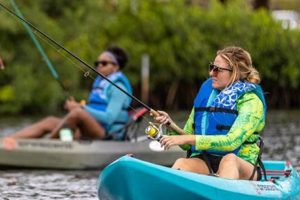
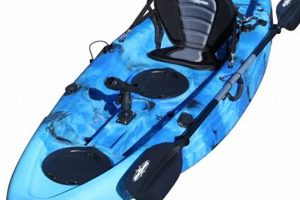
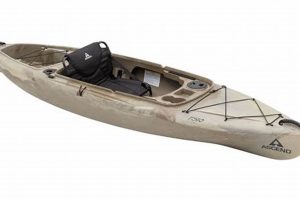
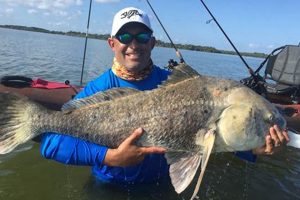
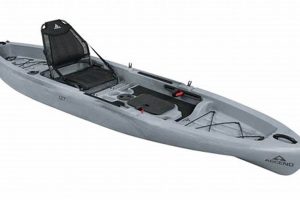
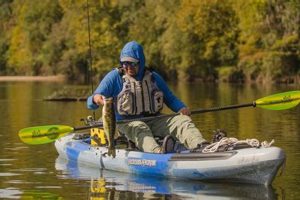
Fishing from a small, human-powered boat in darkness presents unique opportunities and challenges. This activity often involves targeting species more active after sunset, utilizing specialized equipment like low-light navigation aids and underwater lighting. Anglers might employ different tactics compared to daytime excursions, such as slow trolling or focusing on areas illuminated by moonlight or artificial light sources.
The pursuit of fish under the cloak of night offers several potential advantages. Cooler temperatures can make for a more comfortable experience, while reduced boat traffic contributes to a tranquil atmosphere. Certain fish species, like catfish or walleye, exhibit increased feeding activity during nocturnal hours, improving the chances of a successful catch. Historically, fishing after dark has been practiced in various cultures for subsistence and recreational purposes, leveraging the natural behaviors of aquatic life.
This discussion will further explore the key aspects of this specialized angling method. Topics will include selecting appropriate gear and equipment, understanding nocturnal fish behavior, identifying safe and productive locations, and employing effective techniques for navigating and fishing in low-light conditions.
Tips for After-Dark Kayak Angling
Preparation and awareness are crucial for a safe and successful nocturnal fishing experience. The following tips offer guidance for maximizing effectiveness and minimizing risks.
Tip 1: Prioritize Safety Equipment. Navigation lights are mandatory in most regions and essential for visibility to other boaters. A personal flotation device (PFD) is always crucial, and carrying a whistle or other signaling device is highly recommended.
Tip 2: Plan and Share Your Route. Inform someone about the intended fishing location and estimated return time. Familiarize oneself with the area’s waterways and potential hazards before setting out.
Tip 3: Utilize Low-Light Navigation Tools. Chartplotters with night modes and headlamps with red light options preserve night vision while providing crucial navigational assistance.
Tip 4: Adapt Tackle and Techniques. Darker lures or those incorporating luminescent or reflective elements can be more effective. Slower retrieval speeds and quieter presentations may also entice nocturnal species.
Tip 5: Understand Target Species’ Nocturnal Behaviors. Research the feeding patterns and preferred habitats of target species during nighttime hours to optimize fishing locations and techniques.
Tip 6: Minimize Light Pollution. Excessive artificial light can spook fish. Use red-filtered lights whenever possible and avoid shining bright lights directly into the water.
Tip 7: Check Weather Conditions. Wind, rain, and fog can create hazardous conditions, especially in darkness. Always consult a reliable weather forecast before venturing out.
By adhering to these guidelines, anglers can significantly enhance their chances of a productive and enjoyable experience while minimizing potential risks associated with fishing from a kayak in low-light environments.
With these preparatory steps complete, a deeper examination of specific techniques and strategies for after-dark kayak fishing will follow.
1. Safety

Safety is paramount in night time kayak fishing due to the inherent risks associated with reduced visibility and navigating waterways in darkness. Compromised situational awareness amplifies the potential consequences of unexpected events, such as encountering submerged obstacles, other vessels, or sudden changes in weather. A nighttime capsize, for example, presents significantly greater challenges compared to a daytime incident due to difficulties locating and rescuing the kayaker. The inability to see approaching boats or changes in water conditions increases the likelihood of collisions or navigational errors.
Practical safety measures address these elevated risks. High-visibility clothing and proper navigation lights are essential for ensuring other boaters can see the kayak. Carrying communication devices, such as a VHF radio or a charged mobile phone in a waterproof case, enables contacting emergency services if needed. A reliable headlamp with a red light setting preserves night vision while providing illumination for essential tasks. Furthermore, informing someone of the planned fishing location and expected return time is a crucial precautionary step. A float plan, even a simple text message, can significantly aid search and rescue efforts should an unforeseen event occur.
Minimizing risks associated with night time kayak fishing demands proactive planning and a constant awareness of the surrounding environment. Neglecting safety protocols can have severe repercussions, transforming a recreational activity into a life-threatening situation. Therefore, a comprehensive understanding of safety procedures and meticulous adherence to them is not merely advisable but essential for responsible nocturnal angling.
2. Planning
Thorough planning is critical for successful and safe night time kayak fishing. Unlike daytime excursions, reduced visibility significantly impacts navigation and situational awareness, necessitating careful preparation. Factors such as tidal currents, moon phase, and weather forecasts become paramount. A misjudged tide could leave a kayak stranded, while unexpected fog can drastically reduce visibility, creating disorientation and increasing collision risks. Checking lunar cycles helps anticipate the amount of natural light available. Ignoring weather forecasts could lead to encountering unexpected storms or unsafe conditions, jeopardizing the angler’s safety.
Consider a scenario where an angler plans a night fishing trip without consulting tidal charts. Launching at high tide without accounting for a receding tide in a shallow area could result in the kayak grounding several hours later, miles from the launch point, creating a dangerous situation, particularly in darkness. Similarly, neglecting weather forecasts might lead to being caught in unexpected fog, hindering navigation and increasing the risk of collisions with other vessels or unseen obstacles. Conversely, careful planning, including checking tide times, moon phase, and weather conditions, allows for informed decision-making and mitigates potential hazards.
Effective planning mitigates risks and enhances fishing success. Identifying optimal fishing locations, selecting appropriate tackle based on target species’ nocturnal behavior, and packing essential safety equipment are integral parts of the planning process. These preparations maximize the chances of a productive and enjoyable experience while prioritizing safety. Neglecting these crucial elements significantly increases the likelihood of encountering preventable difficulties or even dangerous situations. Thorough planning, therefore, underpins both the safety and effectiveness of nocturnal kayak fishing expeditions.

Navigation presents distinct challenges during night time kayak fishing. Darkness obscures familiar landmarks and reduces depth perception, increasing the risk of disorientation and collisions. Navigating unfamiliar waterways in low-light conditions requires heightened awareness and reliance on specialized tools and techniques. For example, a daytime kayak angler might rely on visual cues like shoreline features or channel markers. At night, these become difficult or impossible to discern, necessitating the use of navigational aids like GPS devices or chartplotters with night modes. These tools provide crucial positional information, allowing anglers to maintain their bearings and avoid hazards. The inability to rely solely on visual cues also underscores the importance of pre-trip planning, including familiarization with charts and potential obstacles.
Effective nocturnal navigation necessitates adapting to the limitations of low-light environments. Kayakers must exercise greater caution and reduce speed to allow ample time to react to unseen obstacles or other vessels. Understanding the impact of wind and currents on kayak drift becomes crucial as visual references are diminished. Consider a scenario where an angler kayaks into an area with strong currents at night. Without clear visual references to gauge their position relative to the shoreline, the angler might drift significantly off course, potentially ending up in hazardous waters or facing difficulties returning to their launch point. Employing navigational lights, both to enhance visibility to other boaters and to mark the kayak’s position, is essential for safety. These lights serve as beacons, alerting other vessels to the kayak’s presence and reducing the risk of collisions in the darkness.
Proficient navigation is fundamental to safe and successful night time kayak fishing. It requires a combination of pre-trip planning, specialized equipment, and adapted techniques. The challenges posed by reduced visibility underscore the importance of understanding navigational principles and employing appropriate tools. Failure to prioritize navigation in low-light conditions can lead to disorientation, collisions, and potentially dangerous situations. Careful route planning, consistent monitoring of position, and awareness of environmental factors are crucial for ensuring a safe and productive nocturnal fishing experience.
4. Equipment

Specialized equipment plays a crucial role in safe and effective night time kayak fishing. Darkness necessitates adaptations to standard fishing gear and the inclusion of items not typically required during daylight hours. The selection and utilization of appropriate equipment directly influence both angler safety and fishing success. For example, standard fishing line may be difficult to see in low light, increasing the risk of tangles or missed strikes. Using brightly colored or fluorescent line enhances visibility, improving line management and strike detection. Similarly, a fish finder with a good quality display and night mode becomes essential for locating fish and navigating in darkness, replacing reliance on visual cues readily available during the day.
Several key equipment choices distinguish night time kayak fishing. A headlamp with both white and red light settings is crucial. White light aids in pre-trip setup and handling equipment, while red light preserves night vision. A reliable GPS device or chartplotter with night mode is indispensable for navigation, especially in unfamiliar waters or areas with limited visibility. Rod holders designed for kayak use allow for hands-free operation, improving safety and facilitating lure retrieval. Carrying spare batteries for electronic devices is essential, preventing potentially dangerous situations arising from equipment failure in darkness. Furthermore, appropriate clothing, including layers for warmth and rain gear, enhances comfort and safety in unpredictable nighttime conditions. The choice of fishing tackle also requires adaptation. Lures with luminescent or reflective properties can attract fish in low light, while darker colored lures may silhouette effectively against the night sky. Finally, carrying basic safety equipment, such as a whistle, signaling mirror, and first-aid kit, becomes even more critical in darkness when obtaining assistance might be more challenging.
Appropriate equipment is essential for mitigating the inherent risks and maximizing the opportunities of night time kayak fishing. Careful consideration of equipment needs and selection of specialized gear contribute directly to angler safety and enhance fishing effectiveness. While standard daytime fishing gear might suffice in some situations, optimizing for low-light conditions significantly improves the overall experience. Failing to adapt equipment to the specific demands of night fishing compromises both safety and the likelihood of a successful outing.
5. Techniques
Effective techniques in night time kayak fishing differ significantly from daytime approaches. Reduced visibility necessitates modifications to lure presentation, retrieval methods, and overall fishing strategy. Adapting techniques to the specific challenges and opportunities of low-light conditions is crucial for maximizing success and ensuring angler safety.
- Lure Presentation:
Nocturnal fish behavior often dictates slower, more deliberate lure presentations. Subtle movements and quieter retrieves can be more effective than aggressive daytime techniques. For example, slowly dragging a bottom-dwelling lure along the seabed can entice nocturnal feeders like catfish. Fast retrieves, effective in daylight for triggering reaction strikes, may prove less productive in darkness. Instead, focusing on finesse and allowing the lure to remain in the strike zone longer increases the likelihood of enticing a bite from less active, light-sensitive fish.
- Sound and Vibration:
Sound plays a heightened role in attracting fish at night. Rattles or other noise-making features incorporated into lures can help draw fish from a distance in low-visibility conditions. Similarly, topwater lures that create subtle surface disturbances can be highly effective. For instance, a popping frog lure, effective during the day, becomes even more enticing at night due to the increased reliance of predatory fish on sound and vibration to locate prey in darkness. Understanding how sound travels underwater and how fish perceive it is essential for optimizing lure selection and retrieval techniques.
- Drift Fishing:
Drift fishing, allowing the kayak to drift naturally with the current, can be a highly productive technique at night. This method covers more water and presents lures naturally, often mimicking the movement of injured prey. For example, drifting a live bait or a scented soft plastic lure along a river channel at night can be particularly effective for targeting species like walleye or catfish that actively feed in current breaks. Controlling the drift speed using a drift sock or sea anchor allows for precise lure presentation and maximizes coverage of productive areas.
- Patience and Observation:
Patience and keen observation are crucial for night time kayak fishing. Reduced visibility necessitates relying on tactile feedback, such as line movement or rod tip vibrations, to detect strikes. Waiting longer between casts and paying close attention to subtle changes in line tension can be the difference between missing a bite and landing a trophy fish. For example, noticing a slight twitch in the fishing line might indicate a subtle take that would be easily missed in daylight. Developing heightened sensitivity to these subtle cues significantly improves the chances of detecting and hooking fish in darkness.
Mastering these techniques significantly increases the chances of a successful night time kayak fishing trip. Adapting to the unique challenges and opportunities of low-light conditions requires a shift in mindset and a willingness to experiment. By understanding how fish behave at night and adjusting fishing techniques accordingly, anglers can unlock the full potential of this rewarding and exciting angling experience.
6. Location
Location selection is paramount in night time kayak fishing. The distribution of fish species, underwater structures, and prevailing conditions vary significantly between different locations and change throughout the day-night cycle. Choosing a suitable location directly impacts both angler safety and fishing success. An inappropriate location could expose the angler to unnecessary risks, such as strong currents or navigational hazards, while a well-chosen spot can significantly improve the chances of encountering target species.
- Proximity to Structure:
Fish often congregate around structures like submerged logs, rock piles, or vegetation, especially at night. These areas offer shelter from predators and provide ambush points for feeding. A kayak angler targeting nocturnal species like bass might choose a location near a submerged tree line or a rocky point where these fish are likely to hunt. Understanding how different species utilize structure at night is crucial for effective location selection.
- Water Depth and Current:
Water depth and current flow influence fish behavior and distribution, particularly at night. Certain species prefer shallower areas for feeding during nocturnal hours, while others seek refuge in deeper water. Current breaks, areas where the current slows down, often hold higher concentrations of fish. Choosing a location with a moderate current and varying depths can increase the likelihood of encountering target species. For example, fishing the edge of a channel drop-off where the current slows can be productive for targeting catfish.
- Light and Visibility:
Ambient light levels significantly impact fish behavior and angler success. Areas illuminated by moonlight or artificial lights can attract baitfish and, subsequently, predatory species. However, excessive light can also spook fish. A kayak angler might choose a location near a dock light that attracts baitfish but positions the kayak slightly away from the brightest area to avoid alarming larger fish. Understanding how light influences fish behavior at night informs effective location selection.
- Accessibility and Safety:
Accessibility and safety considerations are crucial when choosing a night time kayak fishing location. Launch points should be easily accessible in darkness, and the chosen fishing area should be free from known hazards like submerged obstacles or strong currents. Avoiding areas with heavy boat traffic minimizes collision risks. For example, opting for a sheltered cove or a less frequented section of a river enhances safety and reduces potential disruptions from passing boats. Prioritizing safety considerations during location selection ensures a more enjoyable and secure fishing experience.
Strategic location selection is integral to successful night time kayak fishing. By considering factors such as proximity to structure, water depth and current, light and visibility, and accessibility and safety, anglers can significantly increase their chances of a productive and enjoyable experience. Understanding how these factors interact and influence fish behavior is essential for choosing optimal locations that maximize both safety and fishing success.
7. Species Knowledge

Comprehensive species knowledge is fundamental to successful night time kayak fishing. Understanding the nocturnal behavior, feeding patterns, and preferred habitats of target species significantly influences location selection, lure choice, and presentation techniques. This knowledge enables anglers to anticipate fish location and optimize their approach, maximizing the chances of a successful catch. For example, knowing that walleye often move into shallower, rocky areas to feed at night informs location selection. Similarly, understanding that catfish are primarily bottom feeders with a keen sense of smell dictates the use of scented baits and bottom-dwelling lures. Lacking this specific knowledge diminishes the angler’s ability to effectively target desired species.
Consider the scenario of targeting largemouth bass at night. Understanding that bass often ambush prey near submerged structures, such as fallen trees or weed beds, guides the angler’s choice of location and lure presentation. Employing a slow-moving, weedless soft plastic lure near these structures is more likely to elicit a strike than using a fast-moving crankbait in open water. Conversely, an angler targeting crappie might focus on areas with deeper water and submerged brush piles, using small jigs or minnows presented vertically. The effectiveness of these approaches hinges on specific species knowledge and its application to location selection and fishing techniques.
Species knowledge empowers informed decisions that enhance efficiency and minimize wasted effort. It allows anglers to choose locations and employ techniques that align with the natural behaviors of target species during nocturnal hours. This targeted approach not only improves the likelihood of success but also contributes to responsible angling practices. By understanding the vulnerabilities of specific species at night, anglers can adopt appropriate catch-and-release techniques to minimize stress and ensure the long-term health of fish populations. Ultimately, a deep understanding of species-specific nocturnal behavior is an essential element of successful and responsible night time kayak fishing.
Frequently Asked Questions
Addressing common queries regarding nocturnal kayak angling can provide clarity and enhance safety and enjoyment.
Question 1: Is specialized equipment necessary for night fishing from a kayak?
While some daytime equipment can be adapted, specialized gear enhances safety and effectiveness. Navigation lights, headlamps with red light options, and fish finders with night modes are highly recommended. High-visibility clothing and lines also improve safety and ease of use in low-light conditions.
Question 2: Are there specific safety concerns unique to night fishing?
Reduced visibility increases risks associated with navigation and situational awareness. Proper lighting, communication devices, and float plans become crucial. Awareness of changing weather conditions and potential hazards is also essential.
Question 3: How does lure selection differ between day and night fishing?
Nocturnal fish behavior often necessitates adjustments in lure choice. Darker colors, luminescent or reflective properties, and lures incorporating rattles or noise-making features can be more effective in low-light conditions. Slower retrieval speeds and more subtle presentations may also improve results.
Question 4: What are the best locations for night time kayak fishing?
Productive locations often include areas with structure like submerged logs or vegetation, transitions between deep and shallow water, or zones illuminated by ambient light sources. Accessibility, safety, and the presence of target species should also factor into location decisions.
Question 5: How can weather affect night fishing from a kayak?
Weather conditions can significantly impact safety and fishing effectiveness. Wind, fog, and rain can create hazardous navigation conditions. Checking forecasts before departure and continuously monitoring conditions throughout the trip is crucial.
Question 6: Are there legal restrictions specific to night fishing?
Regulations vary by location. Consulting local fishing authorities for information on licensing requirements, permitted fishing hours, and catch limits for specific species is essential for ensuring compliance.
Careful consideration of these frequently asked questions enhances preparedness and promotes a safer, more productive, and enjoyable night time kayak fishing experience. Understanding the unique challenges and opportunities associated with nocturnal angling allows for informed decision-making and mitigates potential risks.
With these common queries addressed, practical tips and advanced strategies for night time kayak fishing can be further explored.
Conclusion
Nocturnal kayak angling presents unique challenges and rewards. Safe and successful excursions require meticulous planning, specialized equipment, adapted techniques, and a deep understanding of fish behavior in low-light conditions. Prioritizing safety through proper lighting, communication devices, and adherence to navigational best practices is paramount. Strategic location selection, informed by knowledge of target species’ nocturnal habits and habitat preferences, maximizes fishing effectiveness. Adapting techniques, such as slower lure retrievals and the use of sounds and vibrations, caters to the heightened sensory perception of fish in darkness. Careful consideration of these elements distinguishes successful nocturnal kayak anglers.
The allure of nocturnal kayak fishing lies in the tranquility of darkened waterways and the opportunity to encounter species exhibiting unique behaviors under the cloak of night. This specialized pursuit offers a rewarding experience for those prepared to embrace its challenges and respect its inherent risks. Continued learning and adaptation are essential for maximizing success and fostering responsible engagement with this dynamic and evolving angling discipline. The integration of knowledge, preparation, and respect for the nocturnal environment ensures the longevity and sustainability of this unique angling pursuit.