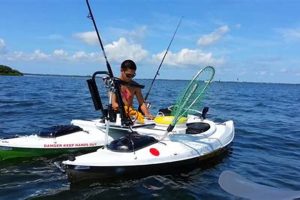
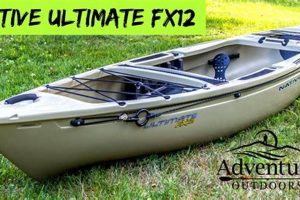
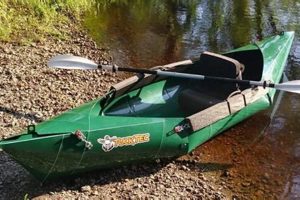
Selecting the right kayak for fishing involves careful consideration of various factors to ensure optimal performance and enjoyment on the water. This process entails evaluating hull design, length, width, weight capacity, propulsion systems, and integrated features like rod holders and storage compartments, aligning these aspects with individual fishing styles, target species, and waterway characteristics.
A well-chosen vessel significantly enhances angling success and safety. It provides stability in diverse water conditions, facilitates efficient navigation to fishing grounds, offers ample space for gear and catches, and integrates specialized features that streamline the fishing process. The evolution of fishing kayaks has seen remarkable innovation, moving from basic adaptations of recreational kayaks to highly specialized designs incorporating advanced materials, propulsion technologies, and angler-centric features.
The subsequent sections will delve into specific factors influencing kayak selection, offering detailed guidance on assessing hull types, understanding size and weight considerations, exploring propulsion options, evaluating storage and accessory integration, and matching these elements to individual fishing needs and preferences.
Tips for Kayak Selection
Choosing a fishing kayak requires careful consideration of several key factors to ensure a suitable match for individual needs and fishing styles. The following tips offer guidance on navigating the selection process.
Tip 1: Define Fishing Style and Target Species: Consider the type of fishing pursued (e.g., stillwater angling, river fishing, offshore excursions) and the target species. This informs decisions regarding kayak size, stability, and required features.
Tip 2: Evaluate Hull Design: Different hull designs (sit-on-top, sit-inside, pontoon) offer varying levels of stability, speed, and maneuverability. Select a hull type that aligns with the intended fishing environment and personal preferences.
Tip 3: Assess Length and Width: Longer kayaks generally track better and offer higher speeds, while shorter kayaks provide enhanced maneuverability. Wider kayaks offer greater stability, while narrower kayaks are faster but less stable.
Tip 4: Determine Weight Capacity: Calculate the total weight of the angler, gear, and potential catch to ensure the kayak’s weight capacity is sufficient for safe and stable operation.
Tip 5: Consider Propulsion Options: Evaluate paddle propulsion, pedal drives, and motor systems based on fishing style, physical capabilities, and budgetary constraints.
Tip 6: Examine Storage and Features: Assess the availability and placement of rod holders, storage compartments, and other features such as anchor trolleys and fish finders to ensure they meet specific fishing needs.
Tip 7: Test and Compare: Whenever possible, test different kayak models before making a purchase. This allows for firsthand evaluation of stability, comfort, and maneuverability.
By carefully considering these factors, anglers can select a fishing kayak that enhances on-the-water experiences and contributes to successful fishing excursions.
A well-chosen kayak provides a stable, efficient, and enjoyable platform for pursuing angling passions.
1. Hull Design

Hull design represents a critical factor in fishing kayak selection, significantly influencing stability, maneuverability, and overall performance in various water conditions. Understanding the nuances of different hull types empowers informed decision-making, ensuring the chosen kayak aligns with specific fishing styles and target environments.
- Sit-on-Top Kayaks
Sit-on-top kayaks offer inherent stability and self-bailing capabilities, making them suitable for warmer climates and calmer waters. Their open design allows for easy entry and exit, accommodating anglers of varying sizes and mobility levels. These kayaks excel in near-shore fishing and protected bays, providing a stable platform for casting and reeling.
- Sit-Inside Kayaks
Sit-inside kayaks provide greater protection from the elements and offer enhanced paddling efficiency in colder conditions. Their lower center of gravity contributes to increased speed and tracking, making them well-suited for longer distances and open water environments. However, they require more skill to recover from capsizing.
- Pontoon Hull Kayaks
Pontoon hull kayaks prioritize stability above all else, providing an exceptionally stable platform ideal for stillwater fishing and activities like fly fishing or photography. Their wide stance minimizes rocking and tipping, offering a secure and comfortable fishing experience, although they sacrifice maneuverability and speed.
- Hybrid Hull Designs
Hybrid hull designs combine elements of different hull types to achieve specific performance characteristics. For instance, a kayak might incorporate a sit-on-top design with a shallow-V hull for enhanced stability and tracking. These designs cater to specific fishing needs and offer versatile performance in diverse water conditions.
Selecting the appropriate hull design necessitates careful consideration of fishing style, target environment, and personal preferences. Prioritizing stability, maneuverability, or speed, depending on individual needs, ensures optimal performance and enjoyment on the water. Matching the hull design to the intended fishing application significantly enhances the overall kayaking experience.
2. Length and Width

Kayak length and width significantly influence performance characteristics crucial for fishing. Length directly impacts tracking and speed; longer kayaks generally track straighter and achieve higher speeds, advantageous for covering larger bodies of water or paddling against currents. Conversely, shorter kayaks exhibit superior maneuverability, ideal for navigating tight rivers, creeks, or vegetated areas. Consider a 12-foot kayak suitable for open lakes versus a 10-foot kayak better suited for maneuvering within mangrove tunnels.
Width governs stability; wider kayaks provide a more stable platform, reducing the likelihood of tipping, particularly beneficial for stand-up fishing or navigating choppy waters. Narrower kayaks, while less stable, offer reduced drag and increased speed. A wider, 34-inch kayak provides enhanced stability for sight casting, while a narrower, 30-inch kayak offers increased speed for traversing long distances. Balancing stability and speed requirements based on intended fishing styles and water conditions represents a critical aspect of kayak selection. Choosing appropriate dimensions directly impacts fishing effectiveness and safety.
Selecting optimal length and width requires careful consideration of the intended fishing environment and personal preferences. Prioritizing stability necessitates a wider, shorter kayak, whereas prioritizing speed favors a longer, narrower design. Understanding the interplay between length, width, stability, and maneuverability enables informed decisions, maximizing on-water performance and angling success. Matching these dimensions to specific fishing needs ensures a balanced and efficient kayaking experience.
3. Weight Capacity
Weight capacity represents a critical factor in fishing kayak selection, directly impacting safety, stability, and performance. Careful consideration of this specification ensures the vessel adequately supports the combined weight of the angler, gear, and potential catch. Exceeding the specified weight capacity compromises stability, increases the risk of capsizing, and negatively affects maneuverability. Understanding the relationship between weight capacity and intended use ensures a safe and efficient fishing experience.
Calculating total load requires accurate assessment of individual body weight, combined with the weight of all fishing gear, including rods, reels, tackle boxes, coolers, and safety equipment. Adding an estimated average catch weight provides a realistic total load figure. Comparing this figure to the manufacturer’s stated weight capacity determines suitability. For instance, an angler weighing 175 pounds with 50 pounds of gear and a potential 25-pound catch requires a kayak with a minimum weight capacity of 250 pounds. Selecting a kayak with ample weight capacity ensures stability, prevents submersion of the hull, and maintains optimal performance characteristics.
Ignoring weight capacity compromises safety and negatively impacts the fishing experience. An overloaded kayak sits lower in the water, reducing freeboard and increasing the risk of swamping. Maneuverability suffers, making paddling and navigating more challenging. Stability decreases, elevating the risk of capsizing, particularly in rough water or when landing larger fish. Adhering to manufacturer-specified weight capacities ensures safe and efficient operation, contributing to a positive and productive angling experience.
4. Propulsion System

Propulsion systems represent a pivotal aspect of fishing kayak selection, significantly influencing on-the-water mobility, fishing range, and overall angling experience. Choosing the appropriate propulsion method requires careful consideration of individual fishing styles, physical capabilities, target environments, and budgetary constraints. Each propulsion system offers distinct advantages and disadvantages, impacting speed, efficiency, and maneuverability.
- Paddle Propulsion
Traditional paddle propulsion offers affordability, simplicity, and a full-body workout. It requires no specialized equipment beyond the paddle itself, making it a cost-effective option. However, paddling can be physically demanding, particularly during long trips or against strong currents, and it occupies both hands, potentially limiting fishing activities. This method remains popular for its versatility and ease of use, particularly in calm waters and shorter distances.
- Pedal Drives
Pedal-powered kayaks utilize leg muscles for propulsion, freeing hands for fishing and offering increased speed and efficiency compared to paddling. This hands-free operation facilitates techniques like trolling or casting while maintaining boat control. Pedal drives come in fin or propeller-based systems, each with specific performance characteristics regarding weed clearance and shallow-water operation. However, pedal drives add cost and complexity to the kayak.
- Motorized Kayaks
Motorized kayaks offer the greatest speed and range, covering vast distances with minimal physical exertion. Electric motors provide quiet operation suitable for stealthy angling, while gas-powered motors offer greater power for challenging conditions. However, motors add significant weight and cost, require battery maintenance or fuel, and may be subject to waterway regulations. They provide excellent access to distant fishing grounds and excel in strong currents or windy conditions.
- Combination Systems
Some kayaks offer the flexibility of combining propulsion methods, such as paddle and pedal drive systems, allowing anglers to adapt to changing conditions or personal preferences. This versatility provides the option of paddling for exercise or utilizing the pedal drive for longer distances or hands-free fishing. These systems offer the benefits of multiple propulsion options, catering to diverse fishing scenarios.
Matching the propulsion system to individual fishing styles and target environments represents a crucial decision in selecting a fishing kayak. Careful consideration of physical limitations, budgetary constraints, and desired fishing range empowers informed choices, maximizing on-the-water efficiency and overall angling enjoyment. The chosen propulsion system significantly influences fishing effectiveness and contributes to a positive kayaking experience.
5. Storage and Features
Storage capacity and integrated features represent crucial considerations when selecting a fishing kayak. Adequate storage accommodates essential gear, including tackle boxes, safety equipment, and personal items, ensuring readily available tools and a clutter-free fishing experience. Well-designed storage compartments contribute to efficient organization and prevent gear from shifting during transit, minimizing disruptions while on the water. Integrated features, such as rod holders, further enhance fishing functionality. Flush-mounted rod holders secure rods during paddling, while adjustable rod holders offer versatile positioning for trolling or casting. An example of practical application involves selecting a kayak with a large rear well for storing a crate packed with tackle and gear, coupled with strategically placed rod holders for quick access and secure rod storage during transit.
The interplay between storage solutions and integrated features significantly impacts fishing efficiency. Dedicated compartments for specific items, such as tackle trays or electronic devices, streamline organization and prevent equipment damage. Features like anchor trolleys simplify anchor management, particularly in currents or windy conditions, allowing anglers to focus on fishing rather than boat control. Built-in fish finders offer immediate access to underwater information, enhancing the ability to locate fish-holding structures. Consider the scenario of a kayak angler targeting offshore reefs; ample storage for safety gear, including a VHF radio and flares, combined with a built-in fish finder transducer and rod holders designed for trolling, significantly improves preparedness and fishing effectiveness in this demanding environment.
Selecting a fishing kayak necessitates careful evaluation of storage capacity and available features. Matching these aspects to individual fishing styles and target species optimizes on-the-water functionality and overall angling success. A kayak adequately equipped to carry necessary gear and offering features that streamline fishing activities contributes to a more productive and enjoyable experience. Understanding the practical significance of these elements empowers informed decisions, aligning kayak selection with specific angling needs and maximizing performance in diverse fishing environments.
Frequently Asked Questions
This section addresses common inquiries regarding fishing kayak selection, providing concise and informative responses to facilitate informed decision-making.
Question 1: What is the most stable type of fishing kayak?
Pontoon kayaks and wider sit-on-top kayaks generally offer the highest degree of stability due to their wider base and design.
Question 2: What length fishing kayak is best for a beginner?
Shorter kayaks (under 12 feet) generally offer greater maneuverability and ease of control, making them suitable for beginners. However, the best length depends on individual needs and the intended fishing environment.
Question 3: How important is weight capacity when choosing a kayak?
Weight capacity is crucial for safety and performance. Exceeding the manufacturer’s stated limit compromises stability and can lead to capsizing. Total load should include body weight, gear, and potential catch.
Question 4: What are the advantages of a pedal-drive kayak?
Pedal drives free up hands for fishing, offer increased speed and efficiency compared to paddling, and provide a lower-impact workout. However, they add cost and complexity.
Question 5: What features should one look for in a fishing kayak for ocean use?
Ocean fishing kayaks should prioritize stability, tracking, and ample storage. Features like rudder systems, high weight capacity, and multiple rod holders enhance performance in open water conditions. Safety features like leashes and bilge pumps are also essential.
Question 6: How to determine the right kayak for different fishing styles?
Matching kayak characteristics to specific fishing styles is essential. Stillwater fishing benefits from stability, river fishing requires maneuverability, and offshore fishing demands speed and tracking. Considering target species also influences feature selection, such as rod holders and storage for specific gear.
Careful consideration of these frequently asked questions, along with individual needs and preferences, contributes to informed decision-making and a more satisfying fishing kayak experience. Selecting the appropriate kayak enhances on-water performance, improves fishing success, and ensures angler safety.
Beyond these frequently asked questions, exploring in-depth reviews and seeking expert advice further refines the selection process, ensuring the chosen kayak aligns perfectly with individual angling aspirations.
How to Pick a Fishing Kayak
Selecting a fishing kayak involves a comprehensive evaluation of various interconnected factors. Hull design, length, width, weight capacity, propulsion system, and storage features all play crucial roles in determining a kayak’s suitability for specific fishing applications. Matching these elements to individual fishing styles, target species, and preferred waterways optimizes on-the-water performance, enhances fishing success, and ensures angler safety. Understanding the nuanced interplay of these factors empowers informed decision-making, leading to a kayak that seamlessly integrates with individual angling aspirations.
Careful consideration of these elements transforms kayak selection from a daunting task into a rewarding process. A well-chosen fishing kayak becomes an extension of the angler, facilitating seamless integration with the aquatic environment and maximizing the pursuit of angling passions. The investment of time and effort in selecting the right kayak yields significant returns in terms of on-the-water enjoyment, fishing effectiveness, and overall satisfaction.