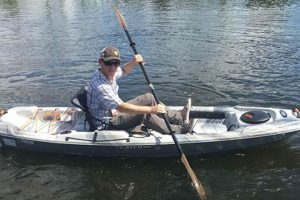
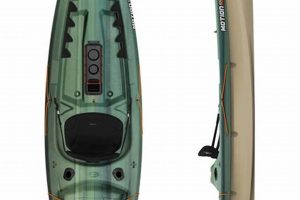
Small, human-powered boats designed for navigating waterways offer a unique blend of utility and enjoyment. These vessels are employed for diverse purposes, from angling in tranquil lakes and rivers to exploring scenic coastlines and enjoying leisurely paddles. Specialized models cater to specific activities, featuring adaptations like rod holders, extra storage, and enhanced stability for angling, or comfortable seating and increased maneuverability for recreational use.
The popularity of these watercraft stems from the close connection with nature they provide, along with the physical and mental health benefits of paddling. Historically, kayaks were developed by indigenous peoples for hunting and transportation. Their modern evolution has broadened their application, transforming them into versatile tools for sport, leisure, and exploration, fostering a deeper appreciation for aquatic environments.
This discussion will delve into the various facets of selecting, utilizing, and maintaining these versatile vessels. Topics will include an overview of different hull designs, essential equipment, safety considerations, popular fishing techniques from these platforms, and recommended locations for both fishing and recreational paddling.
Tips for Effective Kayak Use
Maximizing enjoyment and ensuring safety on the water requires careful planning and adherence to best practices. The following tips offer guidance for successful outings.
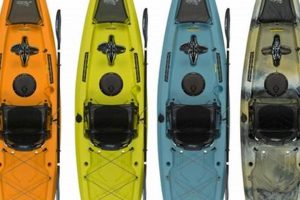
Tip 1: Select the Right Vessel: Kayak choice should align with intended use and water conditions. Fishing kayaks offer stability and storage, while recreational models prioritize speed and maneuverability. Ocean kayaks are designed for open water, while shorter, wider kayaks are better suited for calm lakes and rivers.
Tip 2: Prioritize Safety: Always wear a personal flotation device (PFD) and carry essential safety gear, including a whistle, signaling device, and first-aid kit. Check weather forecasts before embarking and inform someone of the planned route and return time.
Tip 3: Master Basic Paddling Techniques: Efficient paddling conserves energy and enhances control. Learn proper posture, stroke technique, and maneuvering skills before venturing into challenging conditions.
Tip 4: Respect Wildlife and the Environment: Observe wildlife from a safe distance and avoid disturbing natural habitats. Pack out all trash and adhere to “Leave No Trace” principles.
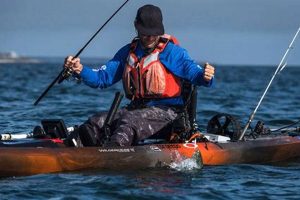
Tip 5: Plan for Fishing Success: Equip fishing kayaks with rod holders, tackle storage, and an anchor system. Research target species and employ appropriate fishing techniques for the chosen location.
Tip 6: Enhance Recreational Experiences: Explore diverse waterways and tailor outings to individual preferences. Consider bringing binoculars for wildlife viewing, a waterproof camera for capturing memories, and a dry bag for personal items.
Tip 7: Regular Maintenance Extends Kayak Lifespan: Rinse kayaks with fresh water after each use and store them properly to prevent damage from sunlight and extreme temperatures. Inspect and repair any damage promptly.
Adhering to these guidelines contributes significantly to safe and enjoyable experiences on the water, allowing individuals to fully appreciate the benefits of kayaking.
By understanding these practical tips and incorporating them into paddling practices, individuals can derive maximum enjoyment from their time on the water while minimizing potential risks.
1. Vessel Selection

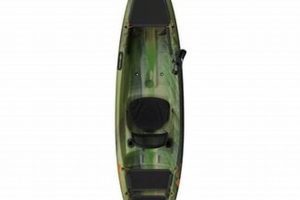
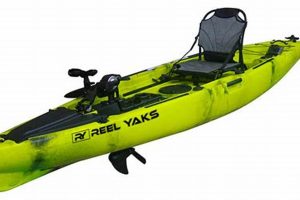
Vessel selection stands as a pivotal element within the realm of kayak-based fishing and recreation. The chosen craft directly influences stability, maneuverability, storage capacity, and overall comfort, thus impacting the quality of the experience. A kayak optimized for angling differs significantly from one designed for leisurely exploration. Fishing kayaks typically feature wider hulls for enhanced stability, ample storage for tackle and equipment, and specialized features such as rod holders and anchor systems. Recreational kayaks, conversely, often prioritize speed and maneuverability, employing narrower hulls and lighter construction. Choosing an inappropriate vessel can lead to instability, inadequate storage, and reduced enjoyment. For instance, attempting to fish from a narrow, unstable recreational kayak can prove challenging and potentially unsafe, while using a bulky fishing kayak for a leisurely paddle on a narrow river can hinder maneuverability and enjoyment.
Practical application of this understanding requires careful consideration of intended activities and the environment. Open-water fishing necessitates a longer, more stable kayak capable of handling rougher conditions, while exploring sheltered coves and inlets allows for shorter, more agile vessels. Similarly, anglers targeting large game fish require kayaks with higher weight capacities and specialized features, whereas recreational paddlers prioritizing birdwatching might prefer quieter, less obtrusive designs. Ignoring these nuances can compromise safety and diminish the overall experience. For example, using a short, recreational kayak in open ocean conditions presents significant safety risks, while utilizing a heavy fishing kayak for a short trip on a calm lake proves unnecessarily cumbersome.
Successful kayak fishing and recreation hinge upon informed vessel selection. Understanding the interplay between kayak design and intended use ensures both safety and enjoyment. Careful evaluation of individual needs and environmental factors, coupled with awareness of available kayak types, empowers informed decisions, ultimately contributing to positive experiences on the water. Failure to appreciate the significance of vessel selection can lead to frustration, diminished performance, and potentially hazardous situations. Thus, careful consideration of this critical element remains paramount for successful kayak-based pursuits.
2. Safety Equipment

Safety equipment stands as a critical component of responsible kayak use for both fishing and recreation. The inherent risks associated with on-water activities necessitate careful consideration and utilization of appropriate safety gear. Neglecting safety precautions can lead to serious consequences, ranging from minor injuries to life-threatening situations. A direct correlation exists between preparedness and positive outcomes in aquatic environments. For example, an unexpected capsize in cold water without a personal flotation device (PFD) can rapidly lead to hypothermia and drowning, while a readily available signaling device can facilitate swift rescue in such circumstances.
Several key pieces of safety equipment warrant attention. PFDs, designed to keep individuals afloat in the event of a capsize, are paramount. A whistle, readily accessible and attached to the PFD, facilitates signaling for assistance. A waterproof first-aid kit allows for immediate treatment of minor injuries. A communication device, such as a waterproof VHF radio or a charged mobile phone in a waterproof case, enables contact with emergency services or shore-based contacts. Navigation tools, including a compass and charts, become essential in unfamiliar waters or during adverse weather conditions. A bilge pump, paddle float, and spare paddle provide essential backup in case of equipment failure or capsize. Carrying these items enhances preparedness and mitigates potential risks, fostering a safer and more enjoyable experience. For example, a bilge pump can quickly remove water from a swamped kayak, restoring stability and preventing a complete capsize, while a paddle float aids in re-entering a kayak after an accidental fall overboard.
Prioritizing safety equipment demonstrates a commitment to responsible kayak usage. Understanding the function and importance of each piece of equipment, combined with consistent and proper utilization, significantly reduces risks associated with on-water activities. Failure to prioritize safety equipment compromises both individual well-being and the overall enjoyment of kayaking experiences. Therefore, proper preparation and adherence to safety protocols are indispensable for maximizing the benefits and minimizing the risks associated with kayak fishing and recreation.
3. Paddling Techniques

Effective paddling techniques are essential for maximizing efficiency, control, and enjoyment in kayak fishing and recreation. Proficiency in these techniques allows for effortless maneuvering, conserves energy, and enhances overall performance on the water. Understanding and applying proper paddling techniques translates directly to a more rewarding and less strenuous experience, regardless of the chosen activity.
- Forward Stroke
The forward stroke propels the kayak forward. Proper technique involves a combination of core rotation, arm extension, and blade immersion. A smooth, powerful forward stroke maximizes efficiency and minimizes fatigue. In fishing scenarios, a controlled forward stroke allows for precise positioning near fishing grounds, while in recreational paddling, it facilitates efficient travel over longer distances. For example, maintaining a consistent forward stroke enables anglers to quietly approach fish without disturbing the water, while recreational kayakers benefit from covering greater distances with less effort.
- Reverse Stroke
The reverse stroke serves to stop forward momentum or propel the kayak backward. It involves reversing the motion of the forward stroke, drawing the blade from the stern towards the bow. This stroke is crucial for maneuvering in tight spaces, avoiding obstacles, and controlling drift. In fishing, the reverse stroke enables precise backing away from snags or repositioning after a cast. Recreational paddlers utilize the reverse stroke to navigate narrow channels or reverse away from hazards. For instance, a quick reverse stroke can prevent entanglement in overhanging branches or steer the kayak away from shallow water.
- Sweep Stroke
Sweep strokes turn the kayak. A forward sweep stroke involves sweeping the paddle wide from bow to stern, turning the kayak away from the paddling side. A reverse sweep stroke achieves the opposite effect, turning the kayak towards the paddling side. Mastery of sweep strokes is essential for navigating winding waterways, turning in tight spaces, and maintaining directional control. Anglers use sweep strokes to adjust position relative to structure or current, while recreational paddlers utilize them for navigating around islands or changing direction during exploration. For example, a forward sweep stroke allows an angler to pivot the kayak for a better casting angle, while a reverse sweep stroke helps a recreational kayaker maneuver around a rock.
- Draw Stroke
The draw stroke moves the kayak sideways. By placing the paddle vertically in the water and pulling it towards the kayak, sideways movement is achieved. This stroke is valuable for precise positioning near docks, other boats, or points of interest. In fishing, the draw stroke allows for subtle adjustments to maintain proximity to structure or cover. Recreational kayakers use the draw stroke for maneuvering alongside other kayaks or approaching a shoreline for landing. For instance, anglers can use the draw stroke to position the kayak closer to a weed bed without disturbing the fish, while recreational kayakers can utilize it to align their kayaks for conversation with fellow paddlers.
Mastery of these fundamental paddling techniques significantly enhances the kayak fishing and recreation experience. Efficient and controlled paddling contributes to increased enjoyment, reduced fatigue, and improved safety. By combining these techniques effectively, individuals can navigate diverse waterways with confidence and precision, maximizing their time on the water and achieving their desired objectives, whether angling for fish or exploring scenic landscapes. Moreover, proficient paddling reduces the risk of accidents and incidents, ensuring a safer and more rewarding experience for all.
4. Location Scouting

Location scouting represents a crucial preparatory step for successful kayak fishing and recreation outings. Appropriate location selection directly influences not only the potential for a successful fishing experience but also the overall enjoyment and safety of any on-water adventure. Thorough research and consideration of various environmental factors, access points, and potential hazards contribute significantly to a positive and productive experience.
- Water Conditions
Water conditions, including current speed, water clarity, and depth, play a vital role in determining suitable locations. Fast-flowing currents can present challenges for less experienced paddlers, while murky water can hinder visibility for fishing. Understanding prevailing water conditions is crucial for both safety and enjoyment. For instance, strong currents near river bends or during periods of high water flow can create hazardous conditions, while calm, clear waters in sheltered bays provide ideal environments for observing aquatic life.
- Accessibility
Accessibility encompasses ease of launching and retrieving kayaks, availability of parking, and presence of designated launch areas. Difficult or hazardous launch sites can detract from the overall experience and pose risks to both individuals and equipment. Identifying suitable access points simplifies logistics and ensures a smooth start and finish to outings. For example, a gently sloping beach or a dedicated kayak launch provides easy access, while rocky shorelines or areas with limited parking can present challenges.
- Fish Habitat (for Fishing)
For fishing excursions, understanding fish habitat within the chosen location is paramount. Factors such as presence of vegetation, submerged structures, and water temperature gradients significantly influence fish distribution and behavior. Targeting areas with suitable habitat increases the likelihood of successful angling. Researching known fish holding areas, such as weed beds, drop-offs, or submerged logs, enhances fishing prospects. For example, targeting areas where cooler streams flow into warmer rivers can concentrate fish seeking optimal temperature conditions.
- Potential Hazards
Identifying potential hazards, including strong currents, submerged obstacles, boat traffic, and changing weather patterns, is crucial for ensuring safety. Pre-trip planning should involve assessing these potential risks and developing mitigation strategies. Awareness of potential hazards allows for informed decision-making and reduces the likelihood of encountering dangerous situations. For example, consulting nautical charts can reveal submerged rocks or reefs, while checking weather forecasts alerts paddlers to potential storms or strong winds.
Effective location scouting contributes significantly to positive outcomes in kayak fishing and recreation. Careful consideration of water conditions, accessibility, fish habitat (for fishing), and potential hazards ensures not only a more productive and enjoyable experience but also enhances safety. Investing time in pre-trip planning and research allows individuals to maximize their time on the water and minimize potential risks, ultimately fostering a deeper appreciation for the aquatic environment and the activities it supports.
5. Fishing Accessories
Specialized fishing accessories significantly enhance the effectiveness and enjoyment of kayak angling. These accessories integrate seamlessly with fishing kayaks, optimizing functionality and improving the overall fishing experience. The considered selection and utilization of appropriate accessories directly influence angling success and contribute to a more organized and efficient approach on the water. For example, rod holders secure fishing rods, freeing hands for paddling and other tasks, while tackle boxes organize lures and terminal tackle, enabling quick access to essential gear.
Several key fishing accessories warrant consideration. Rod holders, available in various configurations and mounting options, secure rods while paddling, trolling, or fighting fish. Tackle storage systems, ranging from simple trays to dedicated tackle boxes, organize lures, hooks, and other essential gear, maximizing efficiency and minimizing clutter. Fish finders, utilizing sonar technology, provide valuable insights into underwater topography, fish location, and depth, enhancing angling success. Anchor systems, specifically designed for kayaks, allow anglers to maintain position in desired fishing areas, particularly in current or wind. Landing nets aid in securing hooked fish, minimizing stress on both the fish and the angler. These accessories contribute to a more streamlined and productive fishing experience. For instance, a well-placed anchor prevents drift away from a promising fishing spot, while a readily available landing net ensures safe and efficient retrieval of a hooked fish.
Integrating appropriate fishing accessories transforms a standard kayak into a specialized angling platform. This integration directly enhances fishing efficiency, improves organization, and elevates the overall experience. Understanding the function and application of these accessories allows anglers to tailor their kayak setup to specific fishing styles and target species. Failure to utilize appropriate accessories can lead to frustration, reduced effectiveness, and missed opportunities. Therefore, strategic selection and utilization of fishing accessories remain essential components of successful kayak angling.
6. Environmental Awareness

Environmental awareness constitutes a crucial aspect of responsible kayak fishing and recreation. Respect for natural environments and understanding of potential impacts ensures the preservation of these valuable resources for future generations. Sustainable practices minimize disruption to ecosystems and contribute to the long-term health and viability of aquatic environments. Ignoring environmental considerations can lead to habitat degradation, pollution, and disruption of delicate ecological balances. Responsible engagement with nature fosters a deeper appreciation for its intrinsic value and promotes sustainable interactions.
- Leave No Trace Principles
Adhering to “Leave No Trace” principles minimizes human impact on natural environments. Packing out all trash, avoiding disturbing vegetation, and minimizing campfire impacts (where permitted) exemplify these principles. In the context of kayaking, this translates to carrying all refuse back to shore, avoiding dragging kayaks across sensitive vegetation, and refraining from disturbing wildlife or their nesting areas. For example, discarded fishing line can entangle wildlife, while trampling vegetation along shorelines can contribute to erosion.
- Respect for Wildlife
Respecting wildlife involves observing animals from a safe distance, avoiding disruptive behaviors, and refraining from feeding or interacting with them directly. Kayaks offer a unique opportunity for close-range observation, but responsible behavior ensures minimal disturbance to natural animal behaviors. For instance, approaching nesting birds too closely can cause them to abandon their nests, while feeding wildlife can alter their natural foraging patterns and create dependence on human interaction.
- Water Quality Protection
Protecting water quality requires avoiding the use of harmful chemicals, properly disposing of waste, and minimizing the introduction of pollutants into aquatic ecosystems. Kayak anglers should utilize biodegradable fishing line and avoid discarding lead sinkers or other toxic materials into the water. Recreational paddlers should refrain from using soaps or detergents in or near water bodies. For example, chemical runoff from sunscreen or insect repellent can contaminate water sources and harm aquatic organisms.
- Responsible Fishing Practices
Responsible fishing practices encompass adhering to catch and release guidelines, utilizing appropriate fishing gear, and respecting fishing regulations. Minimizing the handling time of caught fish reduces stress and increases their chances of survival upon release. Using barbless hooks further reduces the risk of injury to fish. Adhering to size and bag limits ensures the sustainability of fish populations. For example, practicing catch and release with proper handling techniques helps preserve fish populations, while adhering to fishing regulations ensures the long-term health of the fishery.
Integrating environmental awareness into kayak fishing and recreation practices ensures the long-term health and viability of these activities. Respect for natural environments, coupled with responsible behavior, contributes to the preservation of these valuable resources for future generations. By embracing sustainable practices, individuals can enjoy the benefits of kayaking while minimizing their impact on the delicate ecosystems they explore. This fosters a deeper appreciation for the natural world and strengthens the connection between human activity and environmental stewardship. Ultimately, responsible engagement with nature benefits both the environment and the individuals who enjoy it.
Frequently Asked Questions
This section addresses common inquiries regarding kayak utilization for fishing and recreational purposes. Clear and concise responses aim to provide comprehensive information for informed decision-making and enhanced on-water experiences.
Question 1: What are the primary differences between fishing and recreational kayaks?
Fishing kayaks prioritize stability and storage, featuring wider hulls, rod holders, and specialized compartments for tackle and gear. Recreational kayaks emphasize speed and maneuverability, typically exhibiting narrower hulls and lighter construction.
Question 2: What safety precautions are essential for kayak fishing and recreation?
Essential safety measures include consistently wearing a personal flotation device (PFD), carrying a whistle, signaling device, and first-aid kit, checking weather forecasts prior to embarking, and informing someone of the planned route and estimated return time.
Question 3: How does one choose the appropriate kayak size and type?
Kayak selection depends on intended use, paddler size and weight, and anticipated water conditions. Longer kayaks track better in open water, while shorter, wider kayaks offer enhanced maneuverability in calmer environments. Weight capacity should accommodate the combined weight of the paddler, gear, and potential catch.
Question 4: What essential gear is recommended for a kayak fishing trip?
Essential fishing gear includes a fishing rod and reel appropriate for the target species, a selection of lures or bait, appropriate terminal tackle (hooks, weights, swivels), a landing net, a fishing license (where required), and a means of storing and preserving the catch.
Question 5: What are the benefits of using a kayak for recreational paddling?
Kayak recreation offers numerous benefits, including low-impact exercise, close proximity to nature, exploration of otherwise inaccessible waterways, opportunities for wildlife observation, and a tranquil escape from daily routines.
Question 6: How does one maintain a kayak properly?
Proper kayak maintenance involves rinsing with fresh water after each use, storing out of direct sunlight and extreme temperatures, regularly inspecting for damage, and promptly repairing any defects. Appropriate storage practices extend kayak lifespan and preserve performance.
Understanding these frequently addressed concerns contributes significantly to safe, enjoyable, and environmentally responsible kayak experiences. Careful consideration of these aspects empowers informed decision-making and fosters a deeper appreciation for the diverse benefits of kayak utilization.
For further information regarding specific aspects of kayak fishing and recreation, consult specialized resources or connect with experienced paddlers and anglers.
Conclusion
Exploration of kayaks as versatile vessels for both fishing and recreation reveals their significant utility in diverse aquatic environments. Careful selection based on intended use, coupled with appropriate safety precautions and proficient paddling techniques, ensures rewarding experiences. Specialized accessories enhance fishing effectiveness, while environmental awareness promotes responsible interaction with nature. Understanding these elements contributes to successful and sustainable engagement with aquatic environments.
The continued popularity of kayaks underscores their adaptability and the unique connection they offer to nature. Embracing responsible practices ensures the preservation of these valuable resources for future enjoyment and fosters a deeper appreciation for the intrinsic value of aquatic ecosystems.