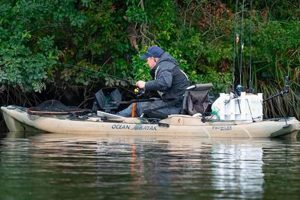
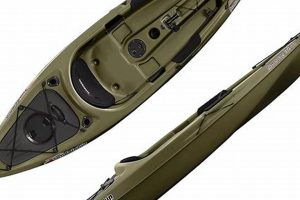
Securing fishing rod holders to a kayak involves several methods, depending on the kayak’s construction and the holder type. Common approaches include track-mounted systems, where holders slide into pre-installed tracks, and flush-mounted systems, requiring drilling into the kayak’s surface. Adhesive mounts offer a less permanent solution for certain kayak materials. Each method demands careful consideration of placement for optimal fishing access and stability.
Proper installation enhances angling experiences by freeing hands for paddling, landing fish, and managing other gear. It also minimizes the risk of losing rods overboard, especially in challenging conditions. This practice has evolved alongside kayak fishing’s growing popularity, providing anglers greater convenience and efficiency on the water. Modern systems cater to diverse fishing styles and kayak designs.
Key considerations when choosing and installing a system include holder type, kayak compatibility, preferred fishing style, and desired level of permanence. Understanding these factors is essential for a successful and enjoyable kayak fishing setup. The following sections will delve into specific mounting methods, offering step-by-step guidance and addressing potential challenges.
Tips for Mounting Fishing Rod Holders on Kayaks
Proper installation ensures stability, accessibility, and longevity. Consider these essential tips before mounting fishing rod holders.
Tip 1: Choose Appropriate Holders: Select holders designed for intended fishing styles and rod types. Consider features like adjustable angles and rotating bases for optimal flexibility.
Tip 2: Prioritize Kayak Compatibility: Ensure chosen mounting methods align with kayak construction materials and design. Avoid methods that could compromise structural integrity.
Tip 3: Plan Placement Carefully: Position holders within easy reach, yet avoid interference with paddling or other onboard activities. Consider reach, casting angles, and potential line tangling.
Tip 4: Use Quality Mounting Hardware: Opt for marine-grade stainless steel hardware to resist corrosion. Ensure screws and bolts are appropriately sized for the chosen mounting method.
Tip 5: Prepare Surfaces Thoroughly: Clean and dry mounting surfaces before installation. For adhesive mounts, ensure optimal adhesion by using appropriate cleaning agents.
Tip 6: Reinforce High-Stress Areas: Consider reinforcing mounting locations, particularly with heavier rod and reel setups or in areas subjected to high stress during use.
Tip 7: Test Stability Rigorously: After installation, thoroughly test holder stability by applying realistic pressure. Ensure holders remain secure under simulated fishing conditions.
Following these guidelines promotes secure and functional rod holder installations, enhancing safety and efficiency on the water.
By addressing these considerations, anglers can optimize their kayak fishing setup for enhanced performance and enjoyment.
1. Placement

Rod holder placement significantly impacts kayak fishing efficiency and safety. Strategic positioning maximizes casting range, minimizes interference with paddling, and ensures easy access to rods while maintaining kayak stability.
- Reach and Accessibility:
Holders should be within comfortable reach for casting, retrieving, and adjusting tackle. Positioning too far forward or backward can compromise balance and efficiency. For example, a right-handed angler might place two holders slightly behind and to the right, ensuring easy access without hindering paddle strokes.
- Casting Angles and Line Management:
Placement should allow unobstructed casting angles, minimizing the risk of snagging lines on the kayak or other gear. Multiple holders should be spaced to prevent lines from tangling. Anglers targeting larger fish might angle holders slightly outward to facilitate maneuvering during a fight.
- Kayak Balance and Stability:
Rod holder placement must consider the kayak’s center of gravity. Distributing weight evenly helps maintain stability, particularly in rough water or when fighting fish. Adding holders to one side necessitates counterbalancing gear on the opposite side.
- Interference with Paddling and Other Gear:
Holders should not obstruct paddling strokes or interfere with essential gear, such as fish finders or tackle boxes. Careful planning ensures smooth, efficient operation and avoids accidental entanglement.
Considering these placement factors enhances fishing performance and safety. A well-planned setup allows anglers to focus on fishing rather than managing equipment or struggling with awkward positioning, leading to a more enjoyable and productive experience on the water.
2. Mounting Type

The mounting type significantly influences the installation process, rod holder stability, and overall kayak configuration. Selecting the appropriate method depends on factors such as kayak construction, desired adjustability, and intended fishing style. Understanding the various options is crucial for a successful and functional setup.
- Track Systems:
Track systems offer versatility and adjustability. These systems involve installing tracks onto the kayak deck, allowing rod holders to slide along the track and be secured in various positions. They are ideal for anglers who frequently change fishing techniques or prefer customizable setups. For example, a kayak angler might reposition rod holders further back when trolling to reduce line interference.
- Flush Mounts:
Flush mounts provide a low-profile, streamlined appearance and are generally considered more permanent. Installation involves drilling holes into the kayak deck and securing the holders directly to the surface. These mounts are well-suited for anglers seeking a minimalist setup and those fishing in areas with potential snags. However, they offer less flexibility in terms of repositioning.
- Adhesive Mounts:
Adhesive mounts offer a less permanent solution, suitable for kayaks with specific material compatibility. These mounts use strong adhesives to secure the holders to the kayak surface without drilling. They are relatively easy to install and remove, making them a good option for renters or those who frequently change their kayak configuration. However, they may not be as durable as track or flush mounts, particularly in extreme conditions.
- StarPort Mounts:
StarPort mounts offer a versatile and modular system. These mounts involve installing a StarPort base, which allows for quick attachment and removal of various accessories, including rod holders. They provide a good balance between stability and flexibility, allowing anglers to customize their setup as needed.
Each mounting type presents distinct advantages and disadvantages. Careful consideration of individual needs and kayak compatibility ensures optimal rod holder performance and enhances the overall fishing experience. Choosing the right mounting type directly impacts the practicality, durability, and effectiveness of the fishing setup, contributing significantly to angling success.
3. Kayak Compatibility

Kayak compatibility plays a crucial role in successfully mounting fishing rod holders. Material and structural considerations directly influence mounting method selection and long-term holder stability. Ignoring compatibility can lead to installation failure, kayak damage, and potential safety hazards. For example, inflatable kayaks require specialized mounting systems different from those used on rigid hulls. Similarly, composite kayaks might necessitate reinforced mounting points to distribute stress effectively.
Understanding kayak construction materials is essential. Polyethylene kayaks, common for recreational fishing, often accommodate various mounting types, including track, flush, and adhesive systems. However, thinner hulls might require reinforcement backing plates for added strength. Composite kayaks, known for their rigidity and lighter weight, often benefit from track systems or specialized inserts designed to avoid compromising structural integrity. Mounting directly onto an inflatable kayak’s fabric is generally not recommended; dedicated inflatable kayak fishing accessories, such as inflatable mounts or fishing platforms often ensure more secure placement. Incorrectly chosen mounting methods risk weakening the kayak’s structure or causing leaks.
Evaluating hull design further clarifies suitable mounting options. Sit-on-top kayaks provide ample deck space for various mounting solutions. Sit-inside kayaks, offering more protection from the elements, might require careful consideration of available deck space and potential interference with paddling or entry and exit. Selecting inappropriate mounting locations can compromise stability and maneuverability. Successful rod holder integration hinges on thoughtful evaluation of kayak compatibility, ensuring structural integrity, optimal functionality, and long-term performance. Neglecting this crucial aspect can lead to equipment failure, potentially jeopardizing safety and diminishing the overall fishing experience.
4. Holder Selection

Appropriate fishing rod holder selection is integral to a successful kayak fishing setup. The chosen holder type must complement the intended fishing style, target species, and rod type, while also integrating seamlessly with the chosen mounting system. Careful consideration of these factors ensures optimal functionality, prevents equipment damage, and enhances angling efficiency.
- Holder Material and Construction:
Rod holder materials directly influence durability and resistance to corrosion. Common materials include plastic, composite, and stainless steel. Plastic holders offer affordability but may be less durable than other options. Composite holders provide a balance of strength and weight, while stainless steel offers maximum durability, albeit at a higher cost. Selecting a holder constructed from robust, corrosion-resistant materials ensures longevity and reliable performance in harsh marine environments. For example, saltwater anglers often opt for stainless steel or high-quality composite holders to withstand corrosive saltwater exposure.
- Rod Size and Type Compatibility:
Holders must securely accommodate the intended rod sizes and types. Some holders are designed for specific rod diameters, while others offer adjustable grips to accommodate various sizes. Specialized holders exist for fly rods, spinning rods, and baitcasting rods, catering to specific angling techniques. Using a holder incompatible with the rod type can lead to rod slippage, damage, or even loss overboard. For instance, using a small diameter holder for a heavy offshore rod risks rod slippage and potential breakage during a strong fight.
- Adjustability and Features:
Holder adjustability significantly impacts fishing versatility. Adjustable angles allow anglers to position rods optimally for trolling, casting, or drifting. Rotating bases provide 360-degree adjustability, enabling quick adaptation to changing fish behavior or fishing conditions. Additional features, such as rod tethers or locking mechanisms, further enhance security and prevent accidental rod loss. Choosing a holder with appropriate adjustability features allows anglers to customize their setup to specific fishing techniques and target species. For example, adjustable holders are beneficial when trolling, allowing anglers to precisely control line angle and depth.
- Mounting System Compatibility:
The chosen rod holder must be compatible with the kayak’s mounting system. Track-mounted holders require compatible tracks, while flush-mounted holders require specific mounting hardware. Ensuring compatibility between the holder and the mounting system simplifies installation and ensures a secure, stable connection. Using incompatible components can lead to installation difficulties and potential instability, compromising safety and efficiency.
Careful rod holder selection, considering material, compatibility, adjustability, and features, directly impacts kayak fishing success. Selecting appropriate holders enhances angling efficiency, minimizes equipment-related challenges, and ultimately contributes to a more enjoyable and productive experience on the water.
5. Hardware Choice

Hardware selection significantly influences the longevity, safety, and overall success of kayak fishing rod holder installations. Appropriate hardware ensures secure attachment, resists corrosion in harsh marine environments, and withstands the stresses inherent in kayak fishing. Choosing inferior hardware can lead to premature failure, jeopardizing equipment and potentially compromising angler safety. For example, using stainless steel screws and bolts in a saltwater environment prevents corrosion, while nylon locking nuts maintain consistent tension, reducing the risk of loosening due to vibration. Conversely, using non-stainless steel hardware in saltwater environments inevitably leads to rust, weakening the installation and potentially damaging the kayak.
Several factors dictate appropriate hardware choices. The kayak’s construction material influences screw type and length. Thicker polyethylene kayaks might require longer, self-tapping screws, while composite kayaks often benefit from machine screws with embedded nuts or specialized inserts. The mounting system also dictates hardware requirements. Track systems often employ specific T-bolts, while flush mounts might require well nuts or rivets depending on the kayak’s construction. The rod holder itself might come with specific hardware recommendations, crucial for ensuring proper fit and function. For instance, heavier-duty rod holders designed for larger fish require robust mounting hardware capable of withstanding higher stresses. Understanding these relationships allows for informed decisions, leading to secure and durable installations.
Appropriate hardware selection ensures long-term performance and safety. Marine-grade stainless steel hardware resists corrosion, essential for longevity in saltwater environments. Using appropriately sized and typed screws prevents stripping and ensures a secure hold. Employing sealant or waterproof gaskets further protects against water intrusion and subsequent damage. Ultimately, careful hardware choices reflect a commitment to a robust and reliable kayak fishing setup, minimizing the risk of equipment failure and maximizing enjoyment on the water. This proactive approach to hardware selection contributes significantly to a safe, efficient, and rewarding kayak fishing experience.
6. Installation Process

The installation process is the critical link between choosing the right fishing rod holder setup and achieving a functional, secure, and enjoyable kayak fishing experience. A properly executed installation ensures the stability and longevity of the rod holders, directly impacting angler safety and efficiency on the water. A poorly executed installation, conversely, can lead to equipment failure, frustration, and potentially dangerous situations.
- Surface Preparation
Adequate surface preparation is paramount for achieving a strong and lasting bond between the rod holder and the kayak. This involves thoroughly cleaning the mounting area to remove dirt, grime, and any residual oils or waxes. For adhesive mounts, this step is particularly crucial as contaminants can significantly compromise adhesion. For track or flush mounts, ensuring a clean surface allows for proper sealant application, preventing water intrusion and subsequent damage. For example, using isopropyl alcohol on the mounting area before applying adhesive ensures a clean, contaminant-free surface, promoting optimal bonding strength. Neglecting this step can lead to premature bond failure, especially in demanding marine environments.
- Hardware Installation
Precise hardware installation is essential for secure and stable rod holder attachment. This involves using the correct type and size of screws, bolts, and nuts, as well as employing appropriate installation techniques. Over-tightening screws can strip threads or damage the kayak, while under-tightening can result in loosening and instability. Using appropriate tools, such as a torque wrench, ensures proper hardware tightness without risking damage. For instance, when installing a track system, ensuring screws are driven straight and flush with the track surface prevents interference with rod holder movement and maximizes stability. Incorrect hardware installation compromises the entire setup’s integrity, potentially leading to equipment failure and safety risks.
- Sealant Application
Proper sealant application is crucial for preventing water intrusion, particularly with flush mounts and track systems. Applying marine-grade sealant around screw holes and along mounting surfaces creates a watertight barrier, protecting the kayak’s interior and preventing corrosion of hardware. Choosing an appropriate sealant compatible with both the kayak material and the mounting hardware is essential for long-term effectiveness. For example, using a UV-resistant marine sealant prevents degradation from sunlight exposure, ensuring long-lasting protection against leaks and corrosion. Failing to apply sealant properly can lead to water damage within the kayak’s hull, compromising its structural integrity and potentially leading to instability.
- Stability Testing
Rigorous stability testing after installation confirms the rod holder’s secure attachment and ability to withstand the stresses of fishing. This involves applying realistic pressure to the holder, simulating the forces exerted during casting, retrieving, and fighting fish. Checking for any movement, flex, or signs of stress ensures the installation can handle the demands of actual fishing scenarios. For instance, after installing a flush mount, applying firm pressure in multiple directions verifies its secure attachment and ability to withstand the forces encountered during fishing. Neglecting this crucial testing phase can lead to unexpected equipment failure during use, potentially resulting in lost gear or even compromising angler safety.
Each step in the installation process plays a crucial role in establishing a functional and secure rod holder setup. A meticulous approach to surface preparation, hardware installation, sealant application, and stability testing ensures the longevity and reliability of the system, maximizing angler safety and promoting a more enjoyable and productive kayak fishing experience. By adhering to these principles, anglers can confidently rely on their equipment, focusing on the thrill of the catch rather than worrying about equipment failure. This attention to detail transforms the “how to” of mounting rod holders into a foundation for successful kayak fishing adventures.
7. Stability Testing

Stability testing forms an integral part of correctly mounting fishing rod holders on kayaks. It verifies the effectiveness of the chosen mounting method and the overall structural integrity of the installation. This process directly impacts both safety and functionality. A stable rod holder setup minimizes the risk of equipment loss and ensures efficient fishing practices, allowing anglers to focus on the activity rather than precarious equipment. Conversely, inadequate stability testing can lead to rod holder failure, potentially resulting in lost tackle, compromised kayak stability, and even angler injury. For example, a rod holder inadequately secured to a kayak’s deck could detach during a strong fight, leading to the loss of both the rod and the catch.
Several factors influence the stability testing process. The type of mounting system employedtrack, flush, or adhesivedictates the specific stresses to be tested. Track systems require assessment of both the track’s securement to the kayak and the rod holder’s stability within the track. Flush mounts necessitate testing the strength of the screws and the surrounding kayak material. Adhesive mounts require evaluation of the bond’s strength and resistance to peeling or shearing forces. The type of fishing anticipated also impacts stability testing protocols. Anglers targeting larger, stronger fish must subject rod holders to higher stress levels during testing, simulating the forces encountered during a protracted fight. Similarly, kayak anglers frequently fishing in rough conditions should test their setups for stability under simulated wave impacts and kayak rocking. Practical testing scenarios often involve applying firm pressure to the mounted rod holder in various directions, mimicking the forces experienced during casting, retrieving, and fighting fish. Observing any movement, flex, or signs of stress indicates potential weaknesses in the installation.
Thorough stability testing provides essential feedback, validating installation quality and highlighting potential weaknesses before they manifest in real-world scenarios. Addressing identified issues through reinforcement or adjustments prevents equipment failure and ensures a safe and productive fishing experience. This proactive approach to stability testing underscores its crucial role within the broader context of how to mount fishing rod holders on kayaks, shifting the focus from mere installation to ensuring functional and reliable performance on the water. The practical implications of this understanding translate directly to enhanced angler safety, reduced equipment loss, and an overall more enjoyable and successful kayak fishing experience.
Frequently Asked Questions
Addressing common queries regarding rod holder installation on kayaks provides clarity and promotes best practices for anglers. These answers aim to enhance understanding and contribute to safer, more effective kayak fishing experiences.
Question 1: What type of rod holder is best suited for a sit-on-top kayak?
While various types can be used, track systems and flush mounts are often preferred for their stability and versatility on sit-on-top kayaks. Track systems offer adjustable positioning, while flush mounts provide a low profile, minimizing interference with gear and movement.
Question 2: Can rod holders be mounted on inflatable kayaks?
Yes, but specialized mounting systems designed for inflatable kayaks are essential. These typically involve inflatable mounts or platforms specifically engineered for secure attachment to inflatable kayak fabrics. Traditional mounting methods risk damaging the inflatable material.
Question 3: How many rod holders can be safely mounted on a kayak?
The safe number depends on the kayak’s size, stability, and the angler’s experience. Overloading a kayak with rod holders can compromise stability and maneuverability. Prioritizing balance and functionality over quantity is recommended. Starting with two holders and gradually increasing based on experience and need is advisable.
Question 4: What is the best way to prevent rod holder corrosion in saltwater environments?
Using marine-grade stainless steel hardware and applying a waterproof sealant during installation are crucial for corrosion prevention. Regularly rinsing the kayak and rod holders with fresh water after saltwater exposure further mitigates corrosion risks.
Question 5: How can one determine the appropriate screw length for mounting rod holders?
Screw length depends on the kayak’s construction material and the thickness of the mounting surface. Screws should be long enough to securely grip the underlying material without penetrating completely through the hull. Consulting the rod holder manufacturer’s instructions or seeking advice from experienced kayak outfitters can provide specific guidance.
Question 6: What steps can be taken to ensure rod holder stability after installation?
Thorough stability testing is essential. Applying realistic pressure to the installed rod holders simulates fishing conditions, revealing any weaknesses. Reinforcement or adjustments, if necessary, further enhance stability and prevent equipment failure during use.
Careful consideration of these frequently asked questions empowers anglers to make informed decisions regarding rod holder installation, ultimately contributing to enhanced safety, efficiency, and enjoyment on the water.
By understanding these common concerns and their solutions, kayak anglers can create customized setups optimized for individual needs and fishing styles, promoting successful and enjoyable experiences on the water.
How to Mount Fishing Rod Holder on Kayak
Proper installation of fishing rod holders on kayaks involves careful consideration of several key factors. Selection of appropriate holder types, mounting systems, and hardware hinges on kayak compatibility, intended fishing style, and desired levels of adjustability and permanence. Meticulous attention to surface preparation, hardware installation techniques, sealant application, and rigorous stability testing ensures secure, functional, and durable setups. Addressing these elements optimizes angler safety, minimizes equipment-related challenges, and maximizes fishing efficiency.
Successful rod holder integration enhances kayak fishing experiences by streamlining equipment management and promoting a focused, efficient approach to angling. Understanding the nuances of mounting procedures empowers anglers to create customized setups tailored to individual needs and preferences. This knowledge translates directly to increased enjoyment and success on the water, underscoring the importance of informed decision-making in every aspect of kayak fishing preparation.