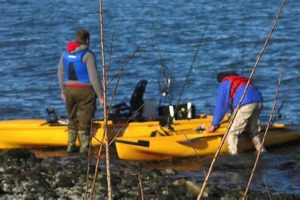
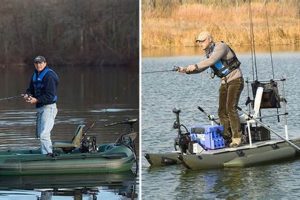
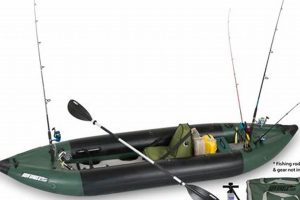
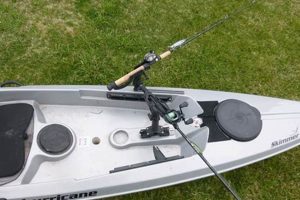
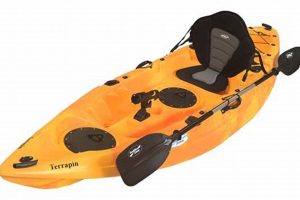
A small, narrow watercraft, specifically designed for stability and maneuverability in rivers and lakes, serves as an ideal platform for angling with artificial flies. These specialized vessels often feature elevated seating, rod holders, and storage compartments tailored to the needs of the fly fisher. An example would be a lightweight, sit-on-top model equipped with adjustable footrests and anchor trolleys.
This approach to the sport offers significant advantages over wading or shore-based fishing, providing access to otherwise unreachable waters and offering a stealthy approach to wary fish. Historically, anglers adapted general-purpose kayaks for this activity, but the development of purpose-built designs has significantly enhanced the experience and effectiveness. This evolution reflects a growing recognition of the unique demands and rewards of this specialized pursuit.
The following sections will delve deeper into key aspects of this specialized form of fishing, exploring optimal vessel selection, essential equipment, effective techniques, and prominent destinations.
Tips for Fly Fishing from a Kayak
Effective angling from a kayak requires specialized knowledge and techniques. The following tips offer guidance for maximizing success and safety on the water.
Tip 1: Choose the Right Vessel: Selecting an appropriate watercraft is paramount. Consider stability, maneuverability, and storage capacity. Longer kayaks track better in open water, while shorter models offer superior agility in rivers and streams. Sit-on-top designs provide easier access to gear and re-entry after a spill.
Tip 2: Prioritize Safety: Always wear a personal flotation device and carry essential safety equipment, including a whistle, signaling device, and first-aid kit. Check weather conditions before embarking and inform someone of the intended fishing location and return time.
Tip 3: Master Basic Paddle Strokes: Proficiency in fundamental paddling techniques is crucial for efficient navigation and positioning. Practice forward and reverse strokes, sweeps, and draws to control the kayak effectively in varying currents and wind conditions.
Tip 4: Organize Gear Strategically: Arrange tackle, flies, and other essentials within easy reach. Utilize waterproof storage containers and consider a gear leash to prevent loss of valuable items.
Tip 5: Practice Casting Techniques: Refining casting while seated in a kayak requires practice. Focus on maintaining balance and utilizing a shorter, more compact casting stroke. Consider practicing on land before venturing onto the water.
Tip 6: Understand Water Conditions: Observe current flows, wind direction, and underwater structures. These factors influence fish behavior and dictate optimal fishing locations and techniques.
Tip 7: Respect the Environment: Practice leave-no-trace principles. Pack out all trash, avoid disturbing wildlife, and adhere to local fishing regulations. Responsible angling ensures the preservation of these valuable resources.
By implementing these strategies, anglers can enhance their success, safety, and overall enjoyment while fly fishing from a kayak.
In conclusion, the combination of specialized equipment, refined techniques, and a mindful approach allows anglers to fully appreciate the unique rewards of this engaging pursuit.
1. Specialized Kayak Choice

Specialized kayak selection is integral to successful fly fishing from a kayak. The vessel serves as the angler’s mobile platform, directly impacting casting accuracy, line management, and overall fishing effectiveness. Choosing the correct kayak requires careful consideration of stability, maneuverability, and storage capacity. Stability ensures a secure casting platform, minimizing the risk of capsizing, particularly during challenging hooksets or when navigating turbulent waters. Maneuverability allows anglers to position themselves precisely for optimal presentations and to navigate tight quarters in rivers and streams. Adequate storage accommodates essential fishing gear, including rods, reels, tackle boxes, and safety equipment. For example, a wider, flatter-bottomed kayak provides enhanced stability for stillwater fishing, while a shorter, rockered hull allows for greater agility in moving water.
The connection between specialized kayak choice and fly fishing success is further underscored by the availability of purpose-built fishing kayaks. These designs often feature elevated seating for improved visibility and casting angles, integrated rod holders for convenient storage and access, and specialized storage compartments for tackle organization. Anchor trolleys and rudder systems enhance boat control in windy conditions or strong currents. Consider the practical implications: an angler in a stable, maneuverable kayak, equipped with readily accessible rods and gear, can focus on fishing rather than managing equipment or struggling to maintain balance. This translates to more efficient fishing time and increased opportunities for success. Conversely, an angler in an ill-suited kayak may struggle to maintain position, cast effectively, or manage gear, ultimately hindering their ability to fish effectively.
In conclusion, the choice of kayak significantly influences the overall fly fishing experience. Selecting a specialized vessel tailored to the specific demands of this activity allows anglers to optimize their time on the water, enhancing both efficiency and enjoyment. Careful consideration of stability, maneuverability, and storage capacity, along with an understanding of available specialized features, equips anglers to make informed decisions that contribute directly to their success on the water.
2. Essential Gear Selection
Essential gear selection directly impacts the effectiveness and enjoyment of kayak fly fishing. Appropriate equipment facilitates efficient angling while enhancing safety and comfort on the water. Consider the rod and reel combination: shorter, faster-action rods (typically 7-9 feet) are better suited to the confined casting space of a kayak, offering improved control and accuracy. Balanced reels with smooth drag systems are crucial for managing feisty fish in close quarters. Fly line selection should align with target species and fishing conditions; weight-forward floating lines are versatile choices for many freshwater applications, while sinking lines or sink-tip lines are beneficial when targeting deeper-dwelling fish. Leader and tippet selection should consider water clarity and target species’ shyness. For example, a shorter, stouter leader might be suitable for targeting aggressive bass in murky water, while a longer, finer leader is often preferred for presenting dry flies to wary trout in clear streams.
Beyond rod, reel, and line, essential gear includes appropriate flies, tools, and safety equipment. Fly selection depends on target species, prevailing insect hatches, and water conditions. Carrying a diverse assortment of dry flies, nymphs, and streamers allows anglers to adapt to changing circumstances. Essential tools include nippers for trimming line, forceps for removing hooks, and a floatant for keeping dry flies afloat. Safety equipment, such as a personal flotation device (PFD), whistle, and signaling device, is paramount for personal well-being. A waterproof bag or box safeguards electronic devices, wallets, and other valuables from unexpected splashes or submersion. Consider the practical implications: a well-prepared angler with the appropriate gear can readily adapt to changing fishing conditions, maximizing their opportunities for success, while a poorly equipped angler may struggle to present flies effectively or manage unexpected challenges.
In summary, careful gear selection is an integral component of successful kayak fly fishing. Understanding the function and application of various rods, reels, lines, flies, and accessories allows anglers to assemble a kit tailored to their specific needs and target species. Prioritizing safety equipment ensures a secure and responsible angling experience. Ultimately, the thoughtful selection of essential gear contributes directly to an angler’s effectiveness, comfort, and overall enjoyment on the water.
3. Effective Casting Techniques
Effective casting techniques are fundamental to successful fly fishing from a kayak. The confined space and inherent instability of a kayak present unique challenges that necessitate adapted casting strokes and specialized approaches. Traditional fly casting techniques, often employed while wading or fishing from shore, may prove impractical or inefficient within the confines of a kayak. The limited backcast space requires modifications to avoid snagging rods on overhanging branches or entangling lines in surrounding vegetation. Furthermore, the dynamic nature of a floating platform demands adjustments in balance and posture to maintain stability throughout the casting stroke. For example, a sidearm or underhand cast may be more effective than a traditional overhead cast when fishing beneath low-hanging branches or in windy conditions.
The importance of effective casting techniques within the context of kayak fly fishing is amplified by the need for precise presentations. Accurately placing a fly in the desired target zone is crucial for enticing fish, particularly in challenging environments such as fast-flowing streams or densely vegetated areas. A poorly executed cast may spook fish, create drag on the fly line, or result in tangles, ultimately hindering fishing success. Consider the scenario of presenting a dry fly to a selective trout rising beneath a willow tree: a precise, delicately presented fly, delivered with a controlled underhand cast, increases the likelihood of a successful hookup, whereas a clumsy overhead cast, hampered by the limited backcast space, might snag the fly in the branches or splash down heavily, alerting the fish and ruining the opportunity.
In summary, mastering specialized casting techniques tailored to the constraints and opportunities of kayak fly fishing is essential for maximizing angling success. Adapting traditional casting strokes, maintaining balance, and prioritizing accuracy enhance presentation effectiveness and minimize disruptions. This proficiency allows anglers to confidently navigate the challenges of a dynamic fishing platform and effectively target fish in a variety of environments. The result translates directly to increased hookups and a more rewarding fishing experience.
4. Strategic Positioning
Strategic positioning is paramount in kayak fly fishing, directly influencing angling success by maximizing presentation effectiveness and minimizing disturbance to target fish. Unlike shore-based fishing, where anglers are stationary, kayak fishing offers mobility and the ability to precisely control approach angles and fishing locations. Understanding water currents, wind direction, fish behavior, and underwater structures is crucial for effectively implementing strategic positioning techniques. This proactive approach allows anglers to optimize their presentations, increasing the likelihood of enticing fish and maximizing their time on the water.
- Current Management
Currents play a significant role in strategic positioning. Anglers must consider current speed and direction when approaching target areas. Positioning the kayak upstream of the target zone allows the fly to drift naturally downstream, mimicking the movement of aquatic insects and minimizing drag on the fly line. This natural drift enhances presentation realism and reduces the likelihood of spooking wary fish. For example, when fishing a seam line where faster and slower currents converge, positioning the kayak upstream of the seam allows the fly to drift naturally along the current break, maximizing exposure to holding fish.
- Wind Consideration
Wind influences both kayak control and fly presentation. Strong winds can push the kayak off course, making precise positioning challenging. Anglers must account for wind direction and adjust their approach accordingly. Positioning the kayak so that the wind is at one’s back facilitates casting and line management, minimizing line tangles and improving accuracy. For instance, when fishing a lake on a windy day, positioning the kayak with the wind at one’s back allows for longer casts and better line control.
- Structure Utilization
Underwater structures, such as rocks, submerged logs, and weed beds, provide shelter and ambush points for fish. Strategic positioning near these structures increases the likelihood of encountering actively feeding fish. Presenting flies close to these features allows anglers to target fish holding in ambush or seeking cover. For example, quietly positioning the kayak near a submerged log and presenting a fly along its edge increases the chances of hooking a bass or other predator lying in wait.
- Stealth and Approach
A stealthy approach is crucial for avoiding detection by wary fish, especially in clear water. Minimizing noise and sudden movements prevents disturbance and increases the chances of a successful presentation. Approaching target areas slowly and quietly, utilizing subtle paddle strokes, allows anglers to get within casting range without spooking fish. For example, when targeting bonefish on shallow flats, a slow, quiet approach is essential to avoid alarming these easily spooked fish.
In conclusion, strategic positioning is an integral aspect of successful kayak fly fishing. By understanding the interplay of currents, wind, structure, and fish behavior, anglers can optimize their approach, maximizing presentation effectiveness and increasing their chances of hooking fish. This proactive approach, combined with skillful casting and appropriate gear selection, elevates kayak fly fishing from a simple pastime to a strategic pursuit, enhancing both the challenge and the rewards of this engaging outdoor activity.
5. Safety Precautions

Safety precautions are paramount in kayak fly fishing, ensuring angler well-being and fostering responsible enjoyment of the sport. The inherent risks associated with on-water activities, coupled with the specialized demands of fly fishing, necessitate a proactive approach to safety management. Understanding and implementing appropriate safety measures mitigate potential hazards, allowing anglers to focus on the fishing experience with confidence and peace of mind.
- Personal Flotation Devices (PFDs)
Wearing a properly fitted PFD is non-negotiable. PFDs provide essential buoyancy in the event of capsizing or accidental immersion, significantly increasing survival chances. Choosing a PFD specifically designed for paddling offers enhanced comfort and freedom of movement during casting and fishing activities. For example, inflatable PFDs are less bulky than traditional foam PFDs, allowing for greater range of motion while paddling and casting. The consistent use of a PFD reflects a commitment to personal safety and responsible angling practices.
- Communication Devices
Carrying a reliable communication device enables anglers to summon assistance in emergencies. A waterproof cell phone or VHF radio provides a lifeline in case of injury, capsizing, or unexpected changes in weather conditions. Informing someone onshore of the intended fishing location and estimated return time adds an extra layer of security. For instance, a handheld VHF radio allows direct communication with the Coast Guard and other boaters in the area, providing a crucial link to assistance in case of an emergency.
- Weather Awareness
Checking weather forecasts before embarking on a kayak fishing trip is crucial. Sudden changes in weather conditions, such as strong winds, thunderstorms, or rapid temperature drops, can create hazardous situations on the water. Being prepared for changing conditions, including having appropriate clothing and emergency gear, enhances safety and comfort. For example, bringing a waterproof jacket and extra layers of clothing can provide protection from unexpected rain or cold fronts, preventing hypothermia and enhancing overall comfort.
- Navigation and Awareness
Understanding navigational markers, water hazards, and local regulations enhances safety and responsible boating practices. Carrying a map or chart of the fishing area, especially in unfamiliar waters, aids in orientation and route planning. Being aware of potential hazards, such as submerged rocks, strong currents, or boat traffic, reduces the risk of accidents. For example, knowing the location of shallow areas or submerged obstacles helps prevent grounding or capsizing, protecting both the angler and the kayak from damage.
In conclusion, prioritizing safety precautions is integral to responsible and enjoyable kayak fly fishing. Implementing these measures minimizes potential risks and allows anglers to focus on the immersive experience of fishing from a kayak. The conscious adoption of safety protocols reflects a commitment to personal well-being and fosters a culture of responsible angling within the broader kayaking community.
6. Environmental Awareness
Environmental awareness is integral to responsible kayak fly fishing, ensuring the preservation of natural resources and the long-term health of aquatic ecosystems. Anglers engaging in this activity interact directly with fragile environments, necessitating a mindful approach that minimizes impact and promotes conservation. Understanding the ecological interconnectedness of waterways and the potential impacts of human activities fosters responsible angling practices and contributes to the sustainability of this rewarding pursuit.
- Leave No Trace Principles
Adhering to Leave No Trace principles minimizes human impact on natural environments. Packing out all trash, including fishing line, discarded tippet material, and food wrappers, prevents pollution and protects wildlife. Avoiding disturbing vegetation and minimizing bank erosion preserves habitat integrity. Properly disposing of human waste minimizes water contamination. For example, carrying a reusable trash bag and packing out all refuse demonstrates a commitment to Leave No Trace ethics.
- Respecting Aquatic Life
Handling fish with care minimizes stress and injury, promoting their survival after release. Using barbless hooks facilitates quick and gentle hook removal, reducing handling time and potential harm. Wetting hands before handling fish helps protect their delicate slime coat, which acts as a natural barrier against infection. Reviving exhausted fish in the water before release ensures their recovery and survival. For instance, supporting a fish gently in the water until it swims away on its own demonstrates respect for aquatic life and promotes conservation.
- Invasive Species Awareness
Preventing the spread of invasive species protects native ecosystems. Thoroughly cleaning kayaks, paddles, and fishing gear after each outing removes any attached plant fragments or aquatic organisms, preventing their introduction into new waterways. Draining bilge water and live wells before leaving a fishing area further reduces the risk of invasive species transfer. Educating oneself about local invasive species and reporting any sightings to relevant authorities contributes to early detection and rapid response efforts. For example, inspecting and cleaning a kayak after fishing in a known invasive species area prevents their unintentional spread to other waterways.
- Water Quality Protection
Avoiding the use of harmful chemicals, such as sunscreen and insect repellent containing oxybenzone or octinoxate, protects water quality and aquatic organisms. Opting for biodegradable and reef-safe alternatives minimizes chemical contamination and preserves the health of aquatic ecosystems. Properly disposing of used fishing line and other tackle prevents entanglement of wildlife and reduces plastic pollution in waterways. For instance, using biodegradable sunscreen demonstrates a commitment to water quality protection.
In conclusion, environmental awareness is essential for the responsible enjoyment and long-term sustainability of kayak fly fishing. By incorporating these principles into angling practices, individuals contribute to the preservation of these valuable natural resources, ensuring that future generations can enjoy the same opportunities. This mindful approach not only protects the environment but also enhances the overall fishing experience, fostering a deeper appreciation for the interconnectedness of natural systems and the importance of responsible stewardship.
7. Paddle Mastery
Paddle mastery is integral to effective kayak fly fishing, representing the essential link between angler and environment. Proficient paddling facilitates precise boat control, enabling strategic positioning for optimal presentations and efficient navigation through diverse water conditions. This skill transcends mere propulsion, encompassing a nuanced understanding of paddle strokes, boat dynamics, and water flow. Consider the scenario of a fly fisher attempting to present a dry fly to a rising trout in a swift current: without adept paddle control, maintaining position and achieving a drag-free drift becomes nearly impossible, diminishing the likelihood of a successful hookup. Conversely, a skilled paddler can subtly adjust the kayak’s position, countering the current’s influence and ensuring a natural fly drift, maximizing presentation effectiveness.
The practical significance of paddle mastery extends beyond individual presentations. Efficient paddling conserves energy, allowing anglers to cover greater distances and explore a wider range of fishing locations. This mobility expands fishing opportunities, particularly in larger lakes or river systems. Furthermore, proficient paddling enhances safety, providing the ability to maneuver quickly and effectively in challenging conditions, such as strong winds or swift currents. Consider navigating a narrow, winding river choked with submerged logs: adept paddle control becomes essential for avoiding obstacles and maintaining a safe course. Similarly, in open water, the ability to efficiently paddle against wind or current ensures a safe return to shore.
In summary, paddle mastery is not merely a supplementary skill in kayak fly fishing; it is a foundational element that directly influences angling success, efficiency, and safety. This proficiency empowers anglers to interact effectively with their environment, optimizing presentations, expanding fishing opportunities, and ensuring a secure and rewarding experience on the water. The dedication to refining paddling technique translates directly to enhanced angling prowess and a deeper appreciation for the nuanced interplay between angler, equipment, and the aquatic world.
Frequently Asked Questions
This section addresses common inquiries regarding the specialized pursuit of fly fishing from a kayak, offering concise and informative responses to clarify potential uncertainties and enhance understanding.
Question 1: What type of kayak is best suited for fly fishing?
Kayaks designed specifically for fishing offer advantages such as enhanced stability, specialized storage, and integrated rod holders. Sit-on-top models provide easier access to gear and simplify re-entry after a water landing. Shorter kayaks offer superior maneuverability in rivers and streams, while longer models track better in open water. Vessel selection should align with individual needs and intended fishing environments.
Question 2: What essential gear is required for kayak fly fishing?
Essential gear includes a fly rod and reel balanced for kayak use, appropriate fly lines and leaders, a selection of flies tailored to target species, and basic tools such as nippers and forceps. Safety equipment, including a personal flotation device (PFD), whistle, and signaling device, is paramount. Waterproof storage protects valuables from unexpected immersion.
Question 3: How do casting techniques differ in a kayak compared to shore-based fishing?
The confined space of a kayak necessitates adaptations in casting techniques. Shorter, more compact casting strokes, such as sidearm or underhand casts, are often employed to avoid obstructions and maintain balance. Practicing these adapted techniques on land before venturing onto the water enhances proficiency and efficiency.
Question 4: What safety precautions should be taken when fly fishing from a kayak?
Wearing a PFD at all times is crucial. Checking weather conditions before embarking and informing someone of the fishing location and estimated return time enhances safety. Carrying a communication device, such as a waterproof cell phone or VHF radio, enables contact in emergencies. Understanding navigational markers and local regulations promotes responsible boating practices.
Question 5: How can anglers minimize their environmental impact while kayak fly fishing?
Adhering to Leave No Trace principles minimizes environmental impact. Packing out all trash, avoiding disturbing vegetation, and properly disposing of waste preserves habitat integrity. Using barbless hooks and handling fish with care minimizes stress and injury, promoting their survival after release. Cleaning kayaks and gear after each outing prevents the spread of invasive species.
Question 6: What are the advantages of fly fishing from a kayak compared to other methods?
Kayak fishing offers access to otherwise unreachable waters, providing a stealthy approach to wary fish. The elevated perspective enhances visibility and expands casting opportunities. Kayaks offer greater mobility compared to wading, allowing anglers to cover larger areas and explore diverse fishing locations. The inherent stability of a kayak provides a secure platform for casting and fighting fish.
Careful consideration of these frequently asked questions equips prospective kayak fly fishers with the knowledge and understanding necessary for a safe, successful, and environmentally responsible experience. The combination of specialized equipment, refined techniques, and a mindful approach allows anglers to fully appreciate the unique rewards of this engaging pursuit.
For those seeking further guidance, the following resources offer comprehensive information on kayak selection, gear recommendations, fishing techniques, and safety protocols.
Kayak for Fly Fishing
This exploration of specialized kayaks for fly fishing has highlighted key aspects contributing to a successful and enriching experience. Optimal vessel selection, emphasizing stability, maneuverability, and storage capacity, provides a foundation for effective angling. Essential gear considerations, encompassing rods, reels, lines, flies, and safety equipment, directly influence angling success and personal well-being. Adapting casting techniques to the confined space of a kayak maximizes presentation effectiveness and minimizes disruptions. Strategic positioning, informed by an understanding of water currents, wind direction, and fish behavior, enhances angling opportunities. Prioritizing safety precautions, including the consistent use of personal flotation devices and communication devices, ensures a secure and responsible experience. Finally, maintaining environmental awareness through adherence to Leave No Trace principles and responsible fish handling practices contributes to the long-term health of aquatic ecosystems.
The pursuit of fly fishing from a specialized kayak presents a unique opportunity to connect with nature, challenge angling skills, and experience the tranquility of aquatic environments. Careful consideration of the elements presented herein empowers anglers to embark on this rewarding pursuit with confidence, preparedness, and a deep appreciation for the delicate balance of the natural world. The continued evolution of specialized kayak design and fly fishing techniques promises further advancements in this engaging and dynamic outdoor activity.