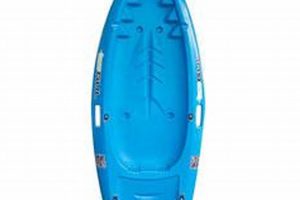
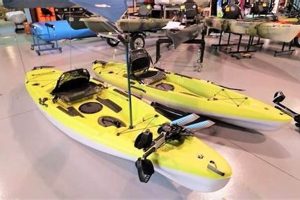
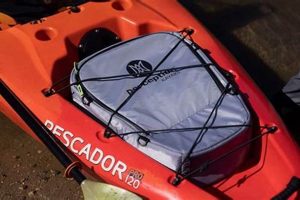
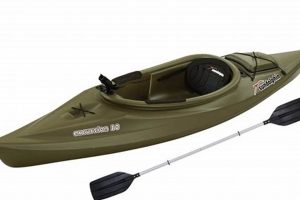
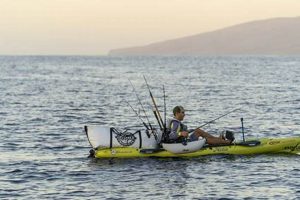
This specific type of small watercraft is designed for angling in calm, inland waters. Typically shorter and wider than touring kayaks, these vessels prioritize stability and often feature specialized accessories like rod holders, anchor trolleys, and livewells. An example would be a sit-on-top model equipped with a swivel seat and ample storage for tackle and gear.
The stability offered by these specialized boats allows anglers to stand and cast with greater ease and confidence. This design also facilitates easier access to fishing gear and equipment. Historically, small boats have been used for fishing in lakes, but the development of purpose-built angling kayaks provides a modern approach that combines maneuverability, affordability, and a closer connection to the water. This approach opens up new possibilities for accessing shallow waters and secluded fishing spots often unreachable by larger motorized boats.
Further exploration will cover key features to consider when selecting a suitable vessel, popular accessories, and essential safety precautions for a successful and enjoyable experience on the water.
Tips for Lake Kayak Fishing
Successful angling from a kayak requires careful planning and consideration of various factors. The following tips offer guidance for a productive and enjoyable experience.
Tip 1: Stability is Paramount: Prioritize stability when selecting a watercraft. Wider hulls offer greater stability, especially for anglers who prefer to stand while casting.
Tip 2: Essential Gear Selection: Choose specialized equipment designed for kayak angling, including rod holders, anchor trolleys, and a fish finder. Compact and easily accessible tackle storage is crucial.
Tip 3: Safety First: Always wear a personal flotation device (PFD) and carry a whistle and signaling devices. Check weather conditions before embarking and inform someone of the intended fishing location and return time.
Tip 4: Paddle Choice: Select a paddle appropriate for the kayak’s width and the angler’s physique. Consider a lightweight, adjustable paddle for efficient and comfortable paddling.
Tip 5: Location Scouting: Research potential fishing spots in advance. Utilize maps and online resources to identify areas with favorable structures and fish habitats.
Tip 6: Quiet Approach: Kayaks offer a stealthy approach to fish. Minimize noise and movement to avoid spooking fish.
Tip 7: Respectful Angling: Practice catch-and-release whenever possible. Adhere to local fishing regulations and minimize environmental impact.
By adhering to these guidelines, anglers can maximize their chances of success while ensuring a safe and rewarding experience on the water. Careful preparation and thoughtful consideration of these factors contribute significantly to an enjoyable outing.
These tips provide a solid foundation for a successful lake kayak fishing trip. The next section will explore advanced techniques for locating and catching specific fish species.
1. Stability

Stability forms a cornerstone of successful lake fishing kayak design and usage. A stable platform is essential for various angling activities, from casting and retrieving to landing fish. Compromised stability can lead to capsizing, jeopardizing not only the fishing experience but also angler safety. The relationship between stability and kayak design involves factors like hull width, hull shape, and center of gravity. Wider hulls generally offer greater primary stability (resistance to initial tipping), while a lower center of gravity enhances secondary stability (resistance to further tipping once leaned). For example, a wider, flatter-bottomed hull offers more initial stability than a narrower, V-shaped hull, making it preferable for stand-up fishing. Conversely, a kayak with a rounded hull may feel less stable initially but provide better secondary stability in rougher conditions. Consider a scenario where an angler hooks a large fish. A stable kayak enables the angler to maintain balance and control during the fight, increasing the chances of a successful landing.
The practical implications of stability extend beyond simply preventing capsizes. Enhanced stability allows anglers to focus on fishing techniques rather than constantly correcting their balance. This is particularly important in situations requiring precise casting, such as targeting structure or presenting lures in specific locations. Furthermore, a stable platform allows for more comfortable and efficient use of fishing accessories like fish finders and rod holders. Anglers can confidently operate these tools without the risk of losing balance or tipping. Choosing a kayak with appropriate stability characteristics depends on individual fishing styles and preferences. Those who prefer to stand and cast will prioritize primary stability, while anglers primarily sitting might prioritize a balance of primary and secondary stability.
In conclusion, stability stands as a critical consideration in lake fishing kayak selection and utilization. Understanding the factors influencing stability and their practical impact on fishing performance and safety is essential for a successful and enjoyable on-the-water experience. Choosing the right kayak for individual needs and fishing styles requires careful evaluation of stability characteristics alongside other features. This understanding ultimately empowers anglers to maximize their time on the water, focusing on the pursuit of fish rather than the struggle to stay upright.
2. Maneuverability
Maneuverability represents a critical performance attribute in lake fishing kayaks, directly influencing angling effectiveness and overall experience. Efficient navigation through diverse water conditions, including shallows, weedy areas, and tight spaces, requires a kayak capable of responsive and precise movements. Understanding the factors contributing to maneuverability allows for informed decisions during kayak selection and enhances on-the-water performance.
- Hull Design and Length
Hull design significantly impacts maneuverability. Shorter kayaks generally turn more quickly than longer ones, making them ideal for navigating confined spaces like narrow creeks or weed beds. However, shorter kayaks may sacrifice tracking (the ability to maintain a straight course) and speed, potentially requiring more frequent paddle adjustments. Longer kayaks offer superior tracking and glide, covering greater distances with less effort but requiring more space and effort to turn. For example, a shorter kayak with a rounded hull excels in tight turns within lily pads, while a longer kayak with a V-shaped hull performs better in open water, covering distance efficiently between fishing spots.
- Waterline Length and Width
Waterline length, the portion of the hull in contact with the water, directly influences turning performance. A shorter waterline generally improves maneuverability. Width also plays a role, with narrower kayaks often turning more easily than wider, more stable designs. Consider a shorter, narrower kayak navigating through dense vegetation; its reduced waterline and width allow for quick, precise turns, accessing secluded pockets holding fish. Conversely, a wider kayak might struggle in such environments.
- Paddle Type and Technique
Paddle characteristics and paddling technique further affect maneuverability. A shorter paddle with wider blades provides more powerful strokes for quick turns, while a longer, narrower paddle suits efficient forward paddling. Proper paddling techniques, such as sweep strokes and draws, enable precise directional control. For example, a skilled angler utilizes a sweep stroke to quickly turn the kayak 180 degrees after spotting a fish rising near the bank.
- Rudder or Skeg System
Some kayaks feature rudders or skegs to enhance tracking and maneuverability. Rudders offer active directional control, assisting in turns and compensating for wind or current. Skegs improve tracking, particularly in windy conditions, reducing the need for corrective strokes. A rudder proves advantageous in strong crosswinds, allowing the angler to maintain a desired course without constant paddle adjustments, while a skeg enhances straight-line tracking in open water.
Considering these interconnected factors optimizes kayak selection for specific fishing environments and techniques. Balancing maneuverability with stability, speed, and other performance characteristics ultimately defines the ideal lake fishing kayak. A well-chosen kayak enhances angling effectiveness by allowing precise navigation and efficient access to prime fishing locations, contributing significantly to a successful and enjoyable fishing experience.
3. Storage Capacity

Storage capacity stands as a critical factor in lake fishing kayak selection, directly impacting organization, efficiency, and overall angling success. Sufficient storage accommodates essential gear, including tackle boxes, rods, safety equipment, and personal items. A well-organized kayak allows anglers to focus on fishing rather than managing gear, maximizing time on the water and enhancing the overall experience. Inadequate storage can lead to clutter, hindering access to essential items and potentially compromising safety.
- Types of Storage
Lake fishing kayaks offer various storage solutions, including hatches, tank wells, and bungee systems. Hatches provide secure, waterproof compartments for valuable items like electronics and wallets. Tank wells, open storage areas often located behind the seat, accommodate larger items such as tackle crates or coolers. Bungee systems secure items on the deck for quick access. For example, a rear tank well might hold a crate containing spare fishing line, hooks, and lures, while a forward hatch secures a smartphone and car keys.
- Capacity and Accessibility
Storage capacity should align with individual fishing styles and anticipated gear requirements. Anglers carrying extensive tackle collections require kayaks with larger storage compartments. Accessibility is equally important. Well-placed hatches and tank wells allow easy access to gear without compromising stability or requiring awkward reaching. A kayak with strategically positioned hatches allows quick access to lures and tackle while maintaining a comfortable fishing posture.
- Weight Distribution and Stability
Proper weight distribution within storage compartments influences kayak stability and performance. Distributing heavier items lower in the hull and evenly across the kayak maintains a low center of gravity, enhancing stability. Overloading storage areas, particularly in the stern or bow, can negatively impact tracking and maneuverability. For instance, placing heavier items like batteries and tackle boxes closer to the center of the kayak improves balance and handling compared to concentrating weight at either end.
- Material and Durability
Storage compartment materials and construction contribute to overall kayak durability and longevity. Durable hatches and tank wells withstand the rigors of regular use and exposure to the elements, protecting stored gear from water and damage. High-quality seals and latches prevent water intrusion, safeguarding sensitive electronics and other valuables. A well-constructed hatch with robust seals protects stored items from water damage even in challenging conditions, ensuring gear remains dry and functional throughout the fishing trip.
Careful consideration of storage capacity and organization is paramount when selecting a lake fishing kayak. Assessing individual fishing needs and gear requirements guides informed decisions about storage types, capacity, and accessibility. Prioritizing proper weight distribution and durable storage compartments ultimately contributes to a more efficient, organized, and enjoyable on-the-water experience. A well-equipped kayak provides a stable and efficient fishing platform, allowing anglers to focus on the sport rather than managing gear, ultimately maximizing their time and success on the water.
4. Fishing Features
Specialized fishing features distinguish lake fishing kayaks from recreational models, directly impacting angling efficiency and overall success. These features are integral to the kayak’s design and purpose, transforming a simple watercraft into a dedicated fishing platform. Cause and effect relationships exist between specific features and their impact on fishing performance. For instance, integrated rod holders secure rods, freeing hands for other tasks like paddling or landing fish. Similarly, a built-in fish finder allows anglers to locate fish-holding structures and track fish movement, directly influencing fishing strategy and success.
Consider a scenario where an angler utilizes a kayak equipped with flush-mounted rod holders and an anchor trolley system. The rod holders securely hold rods while paddling or preparing tackle, preventing loss or damage. Simultaneously, the anchor trolley system allows precise anchor placement, maintaining boat position in desired fishing locations despite wind or current. This combination of features streamlines the fishing process, optimizing efficiency and focus. Another example involves a kayak with a built-in livewell. This feature maintains the health and vitality of caught fish, crucial for tournament fishing or catch-and-release practices. Without a livewell, fish might not survive transport to weigh-in stations or suffer undue stress before release.
Understanding the practical significance of these features is crucial for selecting the right kayak. Anglers targeting specific species or employing particular techniques benefit from specialized features. A bass angler might prioritize a kayak with multiple rod holders, a fish finder, and ample storage for tackle, while a fly fisherman might prefer a kayak with a standing platform and a stripping apron. The integration of specialized fishing features transforms a standard kayak into a purpose-built fishing machine. This integration enhances angling effectiveness, streamlines fishing processes, and ultimately contributes to a more successful and rewarding experience on the water. Effective use of these features requires knowledge of their operation and application in various fishing scenarios. This understanding empowers anglers to maximize their time and resources, optimizing their chances of success.
5. Comfort and Ergonomics

Comfort and ergonomics represent critical factors influencing performance and enjoyment in lake fishing kayaks. Extended periods on the water demand a comfortable and supportive seating system that minimizes fatigue and strain. Proper ergonomics contribute to efficient paddling, casting, and overall fishing effectiveness. Ignoring these aspects can lead to discomfort, reduced fishing time, and potentially long-term physical issues.
- Seating System
Seating systems vary significantly in design and adjustability. A well-designed seat provides ample support for the back and legs, reducing pressure points and promoting proper posture. Adjustable seating allows customization based on individual body types and preferences. High-back seats with lumbar support offer enhanced comfort during long fishing trips, while adjustable foot braces ensure proper leg positioning and paddling efficiency. A poorly designed seat can lead to back pain and discomfort, curtailing fishing time and diminishing enjoyment.
- Deck Layout and Accessibility
Deck layout and accessibility influence ease of movement and access to essential gear. A well-designed deck provides ample space for comfortable leg positioning and easy access to hatches, rod holders, and other fishing accessories. Recessed areas for foot placement enhance stability, while strategically positioned hatches and storage compartments minimize the need for excessive reaching or bending. A cluttered or poorly designed deck can hinder movement, increasing the risk of slips and falls while also making it difficult to access essential gear quickly.
- Paddle Ergonomics
Paddle ergonomics directly impact paddling efficiency and comfort. Properly sized paddles with comfortable grips reduce strain on wrists, hands, and shoulders. Adjustable-length paddles accommodate different paddling styles and body types. Feathering angles, the offset between paddle blades, can be adjusted to minimize wind resistance and optimize paddling efficiency. An improperly sized or poorly designed paddle can lead to fatigue, blisters, and joint pain, diminishing paddling performance and enjoyment.
- Standing Platform (if applicable)
For anglers who prefer to stand and cast, a stable and comfortable standing platform is essential. Features like non-slip surfaces and recessed footwells enhance stability and control. Sufficient space within the standing area allows for comfortable weight shifting and casting motions. A stable standing platform provides a secure and confident base for sight fishing and casting, while a poorly designed platform can lead to instability, increasing the risk of falls and hindering fishing performance.
These interconnected elements contribute significantly to overall fishing experience. Prioritizing comfort and ergonomics in kayak selection ensures prolonged fishing sessions with minimal fatigue and discomfort. This focus allows anglers to fully immerse themselves in the sport, optimizing both performance and enjoyment on the water. By considering these factors, anglers can choose a kayak that fits their individual needs and preferences, promoting a more comfortable, efficient, and ultimately more rewarding fishing experience. A comfortable and ergonomically sound kayak facilitates focus on fishing techniques and strategy rather than physical discomfort, ultimately maximizing success and enjoyment on the water.
Frequently Asked Questions about Lake Fishing Kayaks
This section addresses common inquiries regarding lake fishing kayaks, providing concise and informative responses to facilitate informed decision-making and enhance understanding.
Question 1: What key features distinguish a lake fishing kayak from a recreational kayak?
Lake fishing kayaks typically incorporate specialized features such as rod holders, anchor trolleys, storage compartments designed for tackle, and often fish finders or transducer mounts. These features enhance angling functionality compared to standard recreational kayaks.
Question 2: Are sit-on-top or sit-inside kayaks better suited for lake fishing?
Both types offer advantages. Sit-on-tops provide greater stability and easier access to gear, while sit-inside kayaks offer better protection from the elements and potentially greater speed. The optimal choice depends on individual preferences and fishing styles.
Question 3: How crucial is stability in a lake fishing kayak, and how is it determined?
Stability is paramount, particularly for anglers who stand while casting. Hull width, shape, and center of gravity influence stability. Wider hulls generally offer greater initial stability, while a lower center of gravity contributes to secondary stability.
Question 4: What safety precautions should one take when fishing from a kayak on a lake?
Always wear a personal flotation device (PFD). Inform someone of the fishing location and estimated return time. Carry a whistle, signaling devices, and a first-aid kit. Check weather conditions before embarking and avoid fishing in hazardous conditions.
Question 5: What factors should influence paddle selection for a lake fishing kayak?
Paddle length should correspond with kayak width and angler height. Blade shape influences stroke power and efficiency. Consider paddle weight and material for optimal comfort and performance.
Question 6: How does one transport a lake fishing kayak?
Roof racks designed for kayaks are the most common transport method. Some anglers utilize trailers for transporting multiple kayaks or longer distances. Ensure proper securing and weight distribution during transport.
Careful consideration of these frequently asked questions equips prospective kayak anglers with essential knowledge for informed decision-making. Understanding the nuances of kayak selection, safety procedures, and essential features enhances the overall fishing experience.
This FAQ section provides a foundation for understanding key aspects of lake fishing kayaks. The subsequent section will delve into specific techniques and strategies for successful angling from a kayak on the lake.
Lake Fishing Kayak
This exploration has highlighted the multifaceted nature of specialized kayaks designed for lake fishing. From stability and maneuverability to storage solutions and specialized features, each aspect plays a crucial role in optimizing angling effectiveness and overall experience. Careful consideration of these elements empowers informed decisions regarding kayak selection, ensuring the chosen vessel aligns with individual fishing styles and target species. Furthermore, an understanding of safety precautions and essential gear contributes to a safe and rewarding experience on the water. The interplay between design, functionality, and angler expertise ultimately defines successful lake fishing kayak utilization.
The evolution of angling kayaks continues to refine the human-water interface, enhancing both the pursuit of fish and the connection with nature. As technology advances and design innovations emerge, the potential for lake fishing kayaks to further elevate angling experiences remains vast. Continued exploration of techniques, equipment, and responsible angling practices will ensure the preservation of this rewarding pursuit for generations to come. The future of lake fishing lies in the mindful integration of human ingenuity and respect for the aquatic environment.