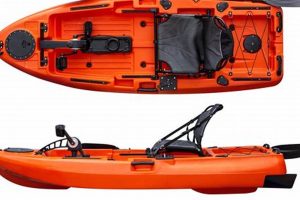
Replacing the original factory seat in a Lifetime brand fishing kayak with a more comfortable and supportive aftermarket option enhances the angling experience. This typically involves removing the existing seat and installing a new one designed for kayak fishing, often featuring improved back support, cushioning, and adjustability. For example, a high-back seat with added lumbar support and breathable fabric could replace a basic molded plastic seat.
Enhanced comfort and support contribute to longer, more enjoyable fishing trips by reducing fatigue and back pain. A better seat allows anglers to focus on fishing rather than discomfort, improving concentration and performance. Historically, kayak seats were rudimentary, offering minimal comfort. The evolution of kayak fishing as a popular sport has driven demand for specialized seating designed for long hours on the water, leading to innovations in materials, design, and adjustability.
Considerations for selecting and installing a replacement seat include compatibility with the kayak model, desired features, and budget. This information will help kayak anglers choose the best seating solution for their individual needs and improve their overall fishing experience.
Tips for Enhancing Kayak Fishing Seat Comfort
Upgrading a kayak’s seating system can significantly improve comfort and fishing performance. The following tips offer guidance for selecting and installing a replacement seat.
Tip 1: Compatibility: Verify compatibility between the replacement seat and the specific kayak model. Measurements and mounting points should align correctly to ensure a secure and stable fit. Consulting the kayak manufacturer’s specifications or contacting customer support can provide clarity.
Tip 2: Material and Construction: Consider materials offering durability, weather resistance, and breathability. High-density foam padding and UV-resistant fabrics are desirable for prolonged use and exposure to the elements.
Tip 3: Back Support and Adjustability: Prioritize seats offering adjustable backrests and lumbar support to maintain proper posture and reduce strain during long fishing trips. Adjustable straps or mechanisms allow customization for individual preferences.
Tip 4: Seat Height: Evaluate seat height relative to the kayak’s gunwales. Sufficient clearance between the seat and the gunwales allows for comfortable paddling and casting. Lower seats offer greater stability, while higher seats provide better visibility.
Tip 5: Installation: Follow the manufacturer’s instructions carefully during installation. Ensure all mounting hardware is securely fastened to prevent slippage or movement during use. Pre-drilling pilot holes may be necessary.
Tip 6: Additional Features: Consider additional features like storage pockets, rod holders, or accessory mounts to enhance convenience and functionality.
Tip 7: Budget: Replacement kayak seats range in price. Establish a budget beforehand to narrow down options and select a seat offering the best value for the desired features.
Investing in a suitable replacement kayak seat contributes to a more comfortable and enjoyable fishing experience, promoting better posture, reduced fatigue, and increased time on the water.
By considering these tips, anglers can make informed decisions about seating upgrades and maximize their comfort on the water.
1. Comfort

Comfort plays a crucial role in the enjoyment and effectiveness of kayak fishing. A comfortable seat allows anglers to focus on the activity rather than physical discomfort, leading to longer, more productive outings. Upgrading the standard seat on a Lifetime fishing kayak often dramatically improves comfort and overall fishing experience.
- Back Support
Adequate back support is essential for maintaining proper posture and preventing back pain, especially during long hours on the water. A well-designed kayak seat offers lumbar support and adjustable backrests to accommodate individual preferences and body types. Upgrading to a seat with improved back support can significantly reduce fatigue and discomfort, allowing for extended fishing sessions.
- Cushioning
Proper cushioning contributes significantly to overall comfort. High-density foam padding provides support and absorbs shock from waves and paddling movements, reducing pressure points and discomfort. Materials like closed-cell foam also resist water absorption, maintaining buoyancy and preventing mold growth. A well-cushioned seat enhances comfort and promotes better circulation.
- Breathability
Breathability is crucial, especially in warm climates. Materials that allow for air circulation help to regulate body temperature and prevent overheating and discomfort caused by perspiration. Breathable fabrics and mesh panels in the seat and backrest promote airflow and keep the angler cool and dry. This is particularly important during extended fishing trips in hot and humid conditions.
- Adjustability
Adjustability allows anglers to customize the seat to their individual needs and preferences. Features such as adjustable backrests, seat height, and leg length adjustments provide personalized support and optimal comfort. The ability to fine-tune the seat position enhances comfort and promotes proper posture, reducing strain and fatigue.
These facets of comfort collectively enhance the overall fishing experience. By upgrading to a seat that prioritizes these elements, anglers can maximize their time on the water, minimize discomfort, and improve their focus and performance. A comfortable angler is a more effective angler.
2. Durability
Durability is a critical factor in a lifetime fishing kayak seat upgrade. A durable replacement seat withstands the rigors of regular use, exposure to the elements, and the stresses inherent in kayak fishing. This translates to a longer lifespan for the seat, reducing the need for frequent replacements and representing a worthwhile investment. Materials play a significant role in determining durability. High-quality marine-grade fabrics and UV-resistant components are more resistant to fading, cracking, and mildew. Reinforced stitching and robust construction techniques further enhance the seat’s ability to withstand wear and tear. For example, a seat constructed with heavy-duty polyester fabric and reinforced stitching will typically outlast one made with lightweight nylon and single-stitched seams. The hardware, including buckles, straps, and mounting brackets, should also be corrosion-resistant to ensure long-term functionality in saltwater environments.
Choosing a durable seat minimizes the risk of failures or breakdowns during fishing trips. A broken seat can compromise safety and significantly detract from the fishing experience, potentially cutting a trip short. A durable seat provides reliable support and comfort, allowing anglers to focus on fishing without worrying about equipment malfunctions. Moreover, a durable seat contributes to the overall value of the kayak. A well-maintained kayak with durable components retains its resale value better than one with worn-out or broken parts. This is particularly important for anglers who may eventually upgrade their kayak or choose to sell it.
Selecting a durable replacement seat for a Lifetime fishing kayak represents a smart investment, ensuring long-term comfort, reliability, and value. Prioritizing durability maximizes the return on investment and enhances the overall fishing experience. Ultimately, a durable seat contributes to more enjoyable and productive time on the water, minimizing disruptions and maximizing the lifespan of the upgrade.
3. Compatibility

Compatibility is paramount when upgrading a Lifetime fishing kayak seat. A compatible replacement ensures a secure, stable fit and proper functionality, maximizing comfort and safety. Ignoring compatibility can lead to instability, discomfort, and potential damage to the kayak. Careful consideration of kayak model specifications and seat dimensions is essential for a successful upgrade.
- Mounting Systems
Lifetime kayaks utilize specific mounting systems for their seats. These systems vary by model and may include tracks, slides, or fixed mounting points. Replacement seats must be designed to integrate seamlessly with the existing mounting system. Attempting to modify a seat or the kayak’s mounting points can compromise structural integrity and void warranties. For example, a seat designed for a track-mounted system will not be compatible with a kayak that utilizes fixed mounting points.
- Seat Dimensions
The dimensions of the replacement seat must be appropriate for the kayak’s cockpit. The seat should fit comfortably within the cockpit without restricting movement or interfering with paddling. Overly large seats can hinder paddling and stability, while overly small seats may provide insufficient support. Consulting the kayak manufacturer’s specifications or measuring the existing seat can provide necessary dimensional information. For instance, a wide seat intended for a tandem kayak will likely be too wide for a solo kayak’s cockpit.
- Weight Capacity
The replacement seat should be rated for the angler’s weight. Exceeding the weight capacity of the seat can lead to structural failure and potential injury. Manufacturers provide weight capacity specifications for their seats. This information should be considered in conjunction with the kayak’s overall weight capacity. A heavy-duty seat designed for larger anglers may exceed the weight capacity of a smaller, lighter kayak.
- Attachment Hardware
The attachment hardware included with the replacement seat must be compatible with the kayak’s mounting system. Using incorrect hardware can damage the kayak and compromise the seat’s stability. Some seats require specific bolts, screws, or straps for proper installation. Verifying hardware compatibility beforehand prevents installation issues and ensures a secure, stable connection between the seat and the kayak. Using screws that are too long, for example, can penetrate the kayak’s hull.
Selecting a compatible replacement seat ensures proper integration with the Lifetime fishing kayak, maximizing comfort, stability, and safety. Careful consideration of these compatibility factors contributes to a successful upgrade and enhances the overall fishing experience. Overlooking compatibility can lead to a variety of issues, ranging from minor discomfort to significant safety hazards. Thorough research and careful planning are therefore essential for a successful and enjoyable upgrade.
4. Installation

Proper installation is crucial for a successful lifetime fishing kayak seat upgrade. A correctly installed seat ensures stability, safety, and optimal comfort, maximizing the benefits of the upgrade. Incorrect installation can lead to discomfort, instability, and potential damage to the kayak. Careful attention to detail and adherence to manufacturer instructions are essential for a secure and functional seat installation.
- Preparation
Thorough preparation simplifies the installation process. This includes gathering necessary tools, reading the manufacturer’s instructions, and ensuring compatibility between the seat and the kayak. Having all necessary components and tools readily available streamlines the process and prevents delays. Understanding the installation steps beforehand minimizes errors and ensures a smooth installation. For example, pre-drilling pilot holes, if required, should be completed during the preparation phase.
- Mounting Hardware
Using the correct mounting hardware is essential for a secure and stable installation. The hardware should be compatible with both the seat and the kayak’s mounting system. Using incorrect hardware can damage the kayak and compromise the seat’s stability. Over-tightening or under-tightening hardware can also lead to problems. Following the manufacturer’s torque specifications, if provided, ensures a secure connection without damaging the kayak or the seat. For instance, stainless steel hardware is typically recommended for saltwater environments to prevent corrosion.
- Seat Placement
Correct seat placement is crucial for comfort and balance. The seat should be positioned to allow for comfortable paddling and easy access to fishing gear. Consider the angler’s height and paddling style when determining optimal seat placement. Some seats offer adjustable positioning, allowing for customization after installation. Ensuring proper seat placement enhances comfort and improves overall fishing performance. For example, positioning the seat too far forward or backward can affect the kayak’s balance and paddling efficiency.
- Securing the Seat
Once the seat is positioned correctly, it must be securely fastened to the kayak. This typically involves tightening bolts, screws, or straps, depending on the specific mounting system. All hardware should be tightened to the manufacturer’s specifications to ensure a stable and secure connection. Double-checking all connections after installation confirms proper attachment and minimizes the risk of the seat shifting or detaching during use. Failure to securely attach the seat can lead to instability and potential injury.
Proper installation is the final step in a successful lifetime fishing kayak seat upgrade. Careful attention to these facets of installation ensures a secure, comfortable, and functional seat, maximizing the benefits of the upgrade and enhancing the overall fishing experience. A properly installed seat contributes to improved comfort, stability, and safety on the water, allowing anglers to focus on fishing rather than equipment issues.
5. Adjustability
Adjustability represents a critical factor in a lifetime fishing kayak seat upgrade, directly influencing comfort, performance, and overall fishing experience. A highly adjustable seat accommodates diverse body types and fishing styles, promoting proper posture and reducing fatigue during extended periods on the water. This adaptability contributes to a more customized and comfortable experience, crucial for maximizing fishing effectiveness and enjoyment. For example, an angler targeting bass in shallow water might prefer a higher seat position for improved visibility, while an angler trolling in deeper water might prioritize a lower, more stable position. An adjustable seat caters to these diverse needs.
Several key adjustability features enhance the fishing experience. Adjustable backrests provide crucial lumbar support and accommodate individual preferences for posture. Forward/backward adjustability allows anglers to fine-tune their position relative to the kayak’s center of gravity, impacting balance and paddling efficiency. Adjustable seat height influences visibility and casting mechanics, impacting fishing performance. For instance, an angler with longer legs might require a seat with greater forward/backward adjustability to ensure comfortable leg extension and prevent cramping. A shorter angler might prioritize height adjustability to achieve optimal paddle reach and boat control.
Investing in a seat with multiple adjustment options contributes significantly to long-term comfort and fishing success. Adjustability allows the seat to adapt to changing conditions and individual needs, ensuring consistent comfort throughout the fishing experience. This adaptability enhances the value of the seat upgrade, maximizing its long-term benefits and contributing to a more personalized and enjoyable fishing experience. Failure to consider adjustability can lead to discomfort, reduced fishing effectiveness, and a diminished return on investment in the upgraded seat.
6. Breathability
Breathability is a crucial factor to consider when upgrading a Lifetime fishing kayak seat, significantly impacting comfort and performance, particularly during warm weather conditions. A breathable seat promotes air circulation, reducing heat buildup and perspiration, allowing for longer, more comfortable fishing trips. This factor becomes especially relevant in hot and humid climates where prolonged exposure to moisture can lead to discomfort, skin irritation, and reduced fishing effectiveness.
- Moisture Management
Breathable fabrics facilitate moisture wicking, drawing perspiration away from the body and allowing it to evaporate. This process helps regulate body temperature and keeps the angler cool and dry, even during strenuous paddling or extended periods of sitting. Mesh panels incorporated into the seat and backrest further enhance ventilation and airflow. For example, a seat constructed with breathable mesh and moisture-wicking fabric will significantly outperform a non-breathable, solid material in hot, humid conditions, reducing discomfort from trapped perspiration.
- Thermal Comfort
Breathability directly impacts thermal comfort. By promoting air circulation, breathable seats prevent the buildup of heat and moisture that can lead to overheating and discomfort. This is particularly important during long hours on the water under direct sunlight. The ability to maintain a comfortable body temperature enhances focus and endurance, contributing to a more productive and enjoyable fishing experience. In contrast, a non-breathable seat can trap heat and moisture, leading to discomfort and potentially reducing fishing time due to overheating.
- Material Selection
The choice of materials significantly influences a seat’s breathability. Mesh fabrics, open-cell foams, and breathable synthetic materials offer superior ventilation compared to closed-cell foams and non-breathable fabrics like vinyl. When selecting a replacement seat, consider materials specifically designed for breathability and moisture management. For instance, a seat constructed with a combination of breathable mesh and quick-drying polyester fabric offers superior comfort compared to a seat made entirely of closed-cell foam, particularly in warm climates.
- Long-Term Performance
Breathability contributes to the long-term performance and lifespan of the seat. By preventing moisture buildup, breathable materials inhibit the growth of mold and mildew, common problems in damp environments. This extends the useful life of the seat and maintains its hygiene. Furthermore, breathable materials tend to dry quickly, minimizing the risk of unpleasant odors and maintaining the seat’s freshness. A seat with good breathability therefore represents a more hygienic and durable investment.
By prioritizing breathability in a lifetime fishing kayak seat upgrade, anglers can significantly enhance their comfort and overall fishing experience, particularly in warmer climates. The ability to regulate body temperature and manage moisture contributes to increased endurance, improved focus, and a more enjoyable time on the water. Choosing a breathable seat promotes long-term comfort and hygiene, maximizing the value of the upgrade.
7. Cost

Cost represents a significant factor influencing decisions regarding lifetime fishing kayak seat upgrades. Understanding the various cost components and their relationship to value, durability, and overall fishing experience is crucial for making informed purchasing decisions. Budgetary constraints and long-term cost considerations play a substantial role in selecting the most suitable replacement seat.
- Initial Investment
The initial investment encompasses the purchase price of the replacement seat itself. Prices vary widely based on features, materials, and brand reputation. A basic replacement seat may cost significantly less than a premium model with advanced features like lumbar support, adjustable height, and breathable fabrics. Researching different brands and models allows anglers to identify options within their budget. For example, a basic padded seat might cost between $50 and $100, while a high-end adjustable seat with premium materials could range from $150 to $300 or more. Understanding the features offered at different price points allows for informed decision-making.
- Long-Term Value
While initial cost is important, considering long-term value is essential. A more expensive, durable seat constructed with high-quality materials may offer better long-term value compared to a cheaper seat that requires frequent replacement. Durability factors into long-term cost considerations. A seat built to withstand regular use and exposure to the elements minimizes the need for replacements, ultimately saving money over time. For instance, investing in a durable seat made with UV-resistant and mildew-resistant materials might initially cost more but ultimately prove more economical than repeatedly replacing a less durable, cheaper seat.
- Installation Costs
While many replacement seats are designed for straightforward installation, some may require professional installation, adding to the overall cost. Factors like compatibility with the existing kayak mounting system and the complexity of the installation process can influence installation costs. In some cases, modifications to the kayak may be necessary, potentially incurring additional expenses. For example, if the replacement seat requires specialized mounting hardware or modifications to the kayak’s hull, professional installation might be necessary, adding to the overall cost of the upgrade.
- Additional Accessories
The cost of additional accessories, such as seat mounts, backrests, or storage pouches, should be factored into the overall budget. These accessories can enhance comfort and functionality but contribute to the total expense. Carefully consider which accessories are essential and which represent optional additions. Prioritizing essential accessories within the budget ensures the upgraded seat meets the angler’s core needs without unnecessary expenditure. For example, while a backrest might be essential for lumbar support, a seat-mounted cooler might represent a non-essential additional expense.
By carefully evaluating these cost components, anglers can make informed decisions about lifetime fishing kayak seat upgrades, balancing initial investment with long-term value, durability, and overall fishing experience. Understanding the interplay of these factors allows for a cost-effective upgrade that maximizes comfort and performance on the water. A well-planned and budgeted seat upgrade enhances the fishing experience without exceeding financial limitations, representing a worthwhile investment in comfort and enjoyment.
Frequently Asked Questions
Addressing common inquiries regarding Lifetime fishing kayak seat upgrades provides clarity and facilitates informed decision-making. The following questions and answers offer guidance for those considering a seat upgrade.
Question 1: Are Lifetime fishing kayak seats universally compatible with all kayak models?
Compatibility varies. Consulting the kayak manufacturer’s specifications or contacting customer support is recommended to verify compatibility between specific Lifetime kayak models and replacement seats. Variations in mounting systems and cockpit dimensions influence compatibility.
Question 2: What materials offer the best durability and comfort for a replacement seat?
High-density, closed-cell foam padding provides comfortable cushioning and resists water absorption. Marine-grade fabrics, such as UV-resistant polyester or solution-dyed acrylic, offer durability and resistance to fading and mildew. Breathable mesh panels enhance comfort in warm weather.
Question 3: How does one determine the correct seat height for optimal paddling and fishing?
Optimal seat height depends on individual preferences and kayak design. Sufficient clearance between the seat and the kayak’s gunwales is necessary for comfortable paddling. Higher seats generally offer improved visibility, while lower seats enhance stability. Consider factors such as angler height and fishing style.
Question 4: Can a lifetime fishing kayak seat upgrade compromise kayak stability?
Stability can be affected if the replacement seat significantly alters the kayak’s center of gravity. Choosing a seat compatible with the kayak’s design and ensuring proper installation minimizes the risk of impacting stability. Considering the seat’s weight and height relative to the kayak’s design is crucial.
Question 5: What maintenance is required for a replacement kayak seat?
Regular cleaning with mild soap and water removes dirt and grime. Allowing the seat to dry completely after each use prevents mildew growth. Storing the seat out of direct sunlight when not in use prolongs the lifespan of the materials. Specific maintenance requirements may vary depending on the seat’s materials and construction.
Question 6: How does one choose between a high-back seat and a low-back seat for a fishing kayak?
High-back seats generally provide better back support, which is beneficial for longer fishing trips and anglers prone to back pain. Low-back seats offer greater freedom of movement and may be preferred for activities requiring frequent torso rotation. Personal preference and fishing style influence this decision.
Careful consideration of these frequently asked questions facilitates informed decisions regarding Lifetime fishing kayak seat upgrades, maximizing comfort, performance, and overall fishing enjoyment. Addressing these common concerns ensures a successful and satisfying upgrade experience.
Further research into specific kayak models and seat options is recommended for optimal selection and installation.
Conclusion
Upgrading the standard seat on a Lifetime fishing kayak represents a significant opportunity to enhance on-the-water comfort, performance, and overall fishing experience. Careful consideration of factors like compatibility, durability, adjustability, breathability, and cost ensures a successful upgrade that meets individual angler needs and maximizes the benefits of this modification. Prioritizing these key elements contributes to a more comfortable, efficient, and enjoyable fishing experience.
Strategic seat selection and proper installation contribute significantly to long-term fishing satisfaction and success. An upgraded seat transforms the Lifetime fishing kayak into a personalized, high-performance fishing platform, enabling anglers to spend more time focusing on the sport and less time contending with discomfort. This investment in comfort and functionality translates to a more rewarding and productive time on the water, maximizing the potential of every fishing excursion.