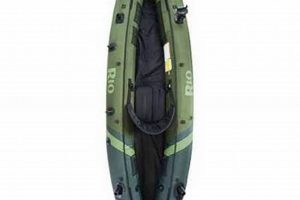
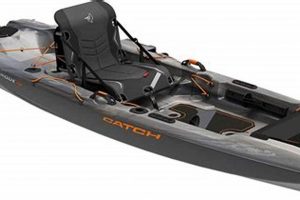
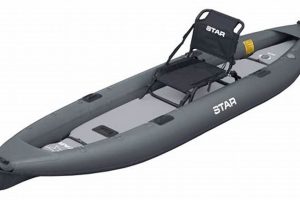
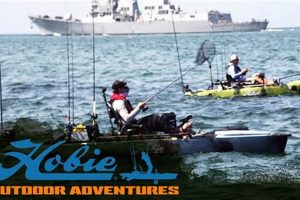
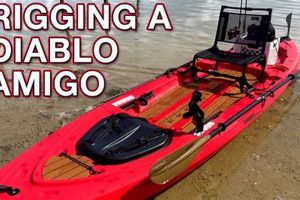
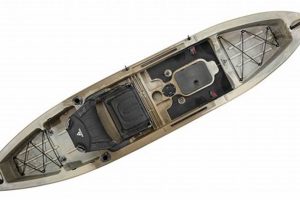
The cost of specialized kayaks designed for angling in the Indian market is influenced by several factors, including the kayak’s material (e.g., polyethylene, fiberglass), size, features (e.g., rod holders, storage compartments), and brand reputation. For example, a basic sit-on-top model might be more affordable than a high-end pedal-powered fishing kayak equipped with advanced electronics.
Understanding the range of costs associated with these vessels is crucial for informed purchasing decisions. This knowledge empowers consumers to select a kayak that aligns with both their budgetary constraints and angling requirements. The increasing popularity of recreational fishing in India has led to a growing demand for specialized equipment like fishing kayaks, making price awareness even more relevant.
This article delves into the various factors influencing kayak pricing in India, explores different kayak types available, and provides guidance on choosing the most suitable option. Further sections will cover popular brands, retail outlets, and tips for finding the best value for money.
Acquiring a fishing kayak requires careful consideration of various factors to ensure a worthwhile investment. The following tips offer guidance for navigating the Indian market and optimizing cost-effectiveness.
Tip 1: Define Angling Needs: Clearly establish fishing style (e.g., river fishing, stillwater angling) and target species. This clarity helps determine essential features and avoids unnecessary expenditure on unsuitable kayaks.
Tip 2: Research Kayak Types: Explore different kayak types sit-on-top, sit-in, inflatable, pedal-driven and evaluate their suitability for intended fishing locations and conditions.
Tip 3: Compare Materials: Understand the characteristics of various kayak materials, such as polyethylene, fiberglass, and composites. Consider durability, weight, and maintenance requirements alongside price differences.
Tip 4: Assess Features: Prioritize essential features like rod holders, storage compartments, and seating comfort. Avoid overspending on non-essential add-ons that may not enhance the fishing experience significantly.
Tip 5: Consider Brand Reputation: Research reputable brands known for quality and durability. While established brands might command higher prices, they often offer better warranties and after-sales service.
Tip 6: Explore Retail Options: Compare prices from various retailers, including online marketplaces and physical stores. Consider shipping costs and potential discounts when making online purchases.
Tip 7: Factor in Accessories: Budget for essential accessories like paddles, life vests, and anchors. These items contribute to overall cost and should be factored into the purchasing decision.
By following these tips, prospective buyers can make informed decisions, optimizing their investment and acquiring a fishing kayak well-suited to their individual needs and budget.
This guidance provides a framework for navigating the complexities of kayak pricing in India. The subsequent conclusion summarizes the key takeaways and offers final recommendations.
1. Brand

Brand reputation significantly influences fishing kayak pricing in India. Established brands, often recognized for quality, durability, and performance, typically command higher prices. This premium reflects factors such as advanced manufacturing techniques, superior materials, rigorous quality control, and established distribution networks. Conversely, lesser-known brands or newer entrants to the market might offer lower prices to gain market share. For example, a fishing kayak from a globally recognized brand like Perception or Wilderness Systems will likely carry a higher price tag than a comparable model from a smaller, local Indian manufacturer. This price difference reflects not only potential variations in quality and features but also the brand’s perceived value and market positioning.
Consumers often associate established brands with reliability and performance, justifying the higher cost. Furthermore, prominent brands frequently invest in research and development, leading to innovative designs and features that contribute to a premium price point. Practical implications of this brand-price relationship include the need for careful consideration of budget versus desired features and perceived quality. Opting for a less-established brand might offer cost savings but could entail compromises on performance, durability, or warranty support. Conversely, investing in a reputable brand often provides peace of mind and potential long-term value.
Understanding the influence of brand reputation on kayak pricing empowers consumers to make informed purchasing decisions. Evaluating brand reputation alongside factors like material, features, and size allows for a comprehensive assessment of value. This informed approach ensures that the chosen kayak aligns with both angling requirements and budgetary constraints. Ultimately, the decision often involves balancing the perceived benefits of a reputable brand against the potential cost savings offered by lesser-known alternatives.
2. Material
Kayak construction material directly impacts both price and performance. Understanding the properties of common materials allows informed decisions aligned with budget and angling needs.
- Polyethylene (HDPE)
High-density polyethylene offers durability and affordability, making it a popular choice for recreational kayaks. HDPE kayaks resist impact and abrasion, requiring minimal maintenance. Their lower cost makes them accessible to a wider range of consumers. However, HDPE is heavier than other materials, potentially impacting portability and maneuverability. This material is commonly used in entry-level and mid-range fishing kayaks in India due to its cost-effectiveness and resilience in diverse water conditions.
- Fiberglass
Fiberglass kayaks offer a balance of performance and cost. Lighter than HDPE, fiberglass allows for faster paddling and easier transport. Fiberglass construction enables more complex hull designs, enhancing tracking and speed. However, fiberglass is more susceptible to damage from impacts than HDPE, and repairs can be more complex. Fiberglass kayaks occupy a mid-to-high price range in the Indian market, appealing to anglers seeking improved performance without the premium cost of composite materials.
- Composites (Carbon Fiber, Kevlar)
Composite materials like carbon fiber and Kevlar offer superior performance characteristics but come at a premium price. These materials create lightweight, stiff, and highly responsive kayaks ideal for serious anglers. Composite kayaks excel in speed, efficiency, and maneuverability. However, their higher cost and susceptibility to damage make them a less common choice for recreational anglers. In the Indian market, composite kayaks are generally the most expensive option, catering to experienced anglers prioritizing top-tier performance.
- Inflatable kayaks
Inflatable kayaks, typically made from PVC or other durable synthetic materials, offer portability and affordability. These kayaks are easy to transport and store, making them suitable for anglers with limited space. While advancements in inflatable kayak technology have improved durability and performance, they generally do not match the rigidity and tracking of hard-shell kayaks. In India, inflatable fishing kayaks represent a budget-friendly option, particularly for anglers prioritizing portability and ease of storage.
Material selection significantly influences the final cost of a fishing kayak in India. Understanding the trade-offs between cost, performance, and durability empowers informed purchasing decisions. Choosing the appropriate material depends on individual angling needs, budget constraints, and storage considerations. While HDPE offers affordability and robustness, fiberglass and composites provide performance advantages at a higher price point. Inflatable kayaks cater to portability needs, representing a distinct segment within the market.
3. Features
Features significantly influence fishing kayak pricing in India. Specific additions cater to angling needs, impacting both functionality and cost. Rod holders, essential for hands-free fishing, vary in number, placement, and design, affecting price. Storage compartments, crucial for tackle and gear, range from basic hatches to integrated livewells, influencing overall cost. Specialized seating systems, designed for comfort during long fishing trips, impact pricing depending on adjustability and materials. Additional features like rudder systems, anchor trolleys, and mounting tracks for fish finders contribute to price variations. For example, a basic sit-on-top kayak with minimal features will have a lower price point than a similarly sized kayak equipped with multiple rod holders, a spacious storage hatch, and an adjustable seat.
The presence and quality of these features directly correlate with a kayak’s price. Basic models with essential features cater to budget-conscious anglers. Mid-range kayaks offer a balance of features and affordability. High-end models incorporate advanced features and premium materials, commanding higher prices. Understanding the relationship between features and price allows for informed decision-making. Prioritizing essential features based on individual fishing styles and needs optimizes cost-effectiveness. Opting for a feature-rich kayak may enhance the angling experience but requires careful consideration of budgetary constraints. For instance, an angler primarily fishing in calm lakes might prioritize a comfortable seat and ample storage over a rudder system designed for navigating strong currents.
Careful evaluation of features against angling requirements and budget ensures a suitable kayak choice. Unnecessary features add cost without enhancing the fishing experience. Prioritizing essential features maximizes value while staying within budget. Understanding the practical implications of feature selection contributes to informed purchasing decisions, aligning functionality with cost considerations. This approach ensures that the chosen kayak enhances the overall angling experience without exceeding financial limitations. Balancing desired features with budget constraints remains a central consideration when selecting a fishing kayak in the Indian market.
4. Size

Kayak size directly influences price in the Indian market. Larger kayaks, offering greater stability and carrying capacity, generally command higher prices due to increased material usage and manufacturing complexity. Smaller kayaks, designed for maneuverability and lighter weight, often come at a lower price point. This correlation stems from the fundamental relationship between size, material volume, and manufacturing effort. For example, a 10-foot kayak designed for solo fishing in calm waters will typically be less expensive than a 14-foot tandem kayak intended for offshore fishing expeditions. The larger kayak necessitates more material, increasing raw material costs and manufacturing time, ultimately contributing to a higher retail price.
The practical implications of this size-price relationship are substantial for consumers. Anglers must carefully consider their fishing style, target species, and typical water conditions when selecting a kayak size. Choosing an excessively large kayak for solo fishing in small lakes incurs unnecessary costs and potentially hinders maneuverability. Conversely, selecting a kayak too small for offshore fishing compromises stability and capacity, potentially jeopardizing safety and limiting fishing effectiveness. Consider a scenario where an angler intends to fish in larger rivers or coastal areas. A longer, wider kayak, typically more expensive, provides the necessary stability and storage capacity for extended trips and larger catches. Conversely, a smaller, more affordable kayak might suffice for anglers primarily fishing in small ponds or sheltered bays where stability and storage are less critical.
Understanding the impact of size on kayak pricing enables informed purchasing decisions. Balancing size requirements with budget constraints optimizes value and ensures a suitable kayak for individual angling needs. Careful consideration of fishing style, target species, and water conditions guides appropriate size selection. This informed approach prevents overspending on unnecessarily large kayaks while ensuring adequate capacity and stability for intended fishing environments. Ultimately, the relationship between size and price underscores the importance of careful planning and informed decision-making when selecting a fishing kayak in the Indian market.
5. Retailer

Retailer choice significantly influences fishing kayak pricing in India. Different retail channels offer varying pricing structures, impacting overall cost. Understanding the retail landscape empowers informed purchasing decisions, maximizing value and aligning with budgetary constraints.
- Online Marketplaces
Online marketplaces, like Amazon and Flipkart, often offer competitive pricing due to lower overhead costs and broader market reach. These platforms provide access to a wider selection of brands and models, facilitating price comparison. However, online purchases may entail shipping costs and limited opportunities for pre-purchase physical inspection. Evaluating seller ratings and reviews mitigates potential risks associated with online transactions.
- Specialized Kayak Stores
Specialized kayak stores, both physical and online, offer expert advice and curated product selections. These retailers often provide personalized guidance, assisting in kayak selection based on individual needs and experience levels. While specialized stores may offer higher prices than online marketplaces, they provide valuable expertise and potential access to specialized services like kayak fitting and maintenance.
- Local Sporting Goods Retailers
Local sporting goods retailers offer convenience and potential access to local expertise. These retailers may stock a limited selection of kayak brands and models, potentially restricting choice. However, they offer opportunities for in-person inspection and interaction with knowledgeable staff. Price competitiveness within this segment can vary significantly.
- Direct from Manufacturer
Purchasing directly from the manufacturer, often through their website or factory outlets, can offer potential cost savings. This approach eliminates intermediary markups, potentially lowering the final price. However, direct purchases may limit options for comparing different brands and models side-by-side. Warranty and after-sales support processes may also vary when purchasing directly from the manufacturer.
Retailer selection significantly impacts the final cost of a fishing kayak in India. Balancing factors like price, product selection, expertise, and convenience informs optimal purchasing decisions. Online marketplaces offer competitive pricing and broad selection. Specialized kayak stores provide expertise and curated choices. Local sporting goods retailers offer convenience and potential in-person interaction. Purchasing directly from the manufacturer can offer cost savings but may limit comparison opportunities. Understanding the nuances of each retail channel empowers informed choices, aligning purchasing decisions with individual needs and budget constraints.
6. Condition (New/Used)

The condition of a fishing kayakwhether new or usedplays a crucial role in determining its price within the Indian market. This factor significantly influences affordability and requires careful consideration alongside other aspects like brand, material, and features. Understanding the implications of purchasing a new versus used kayak empowers informed decisions aligned with budget and angling requirements.
- New Kayaks
New kayaks offer the advantage of pristine condition, full manufacturer warranties, and the latest features. They represent a higher initial investment but provide peace of mind regarding reliability and performance. Purchasing a new kayak ensures access to the full range of models offered by manufacturers, allowing selection based on specific angling preferences. Prices for new fishing kayaks in India vary significantly based on brand, material, features, and size. This option provides predictable performance and the assurance of manufacturer support.
- Used Kayaks
Used kayaks represent a cost-effective alternative, often available at significantly lower prices than new models. This option allows access to higher-tier kayaks within tighter budgets. However, purchasing a used kayak necessitates careful inspection for potential damage, wear, and tear. Assessing the kayak’s history and previous usage helps determine its remaining lifespan and potential maintenance needs. Warranty coverage may be limited or non-existent with used kayaks, requiring careful evaluation of potential repair costs. Used kayak availability varies depending on market dynamics and local seller networks.
- Factors Affecting Used Kayak Prices
Several factors influence used kayak pricing in India. Age significantly depreciates value, with older models generally commanding lower prices. Usage level, reflected in wear and tear, influences perceived value. Condition, including any damage or repairs, significantly impacts price. Included accessories, such as paddles, life vests, and rod holders, can influence the overall package price. Demand for specific models or brands within the used market affects pricing dynamics. Negotiation plays a role in finalizing used kayak transactions, potentially offering further cost savings.
- Evaluating Used Kayaks
Thorough inspection is essential when considering a used fishing kayak. Examining the hull for cracks, dents, and repairs assesses structural integrity. Checking for wear and tear on seating, hatches, and other components helps gauge usage levels. Evaluating the condition of included accessories determines their value and potential replacement needs. Inquiring about the kayak’s history, including usage frequency and storage conditions, provides valuable context. Ideally, testing the kayak on the water before purchase allows assessment of its performance and stability. These steps mitigate risks associated with purchasing used equipment.
The decision to purchase a new or used fishing kayak in India depends on individual budget constraints, risk tolerance, and desired features. New kayaks offer the assurance of pristine condition and warranty coverage, while used kayaks provide cost-effective alternatives requiring careful inspection and evaluation. Understanding the factors influencing pricing within both segments empowers informed decisions aligned with angling needs and financial resources. Ultimately, balancing cost, condition, and potential risks guides optimal kayak selection within the Indian market.
Frequently Asked Questions (FAQ)
This section addresses common inquiries regarding fishing kayak pricing in India, providing concise and informative responses.
Question 1: What is the typical price range for fishing kayaks in India?
Fishing kayak prices in India vary significantly, ranging from approximately 20,000 for basic recreational models to upwards of 200,000 for high-end, feature-rich kayaks. Factors influencing price include brand, material, size, features, and retailer.
Question 2: Are imported fishing kayaks more expensive than those manufactured in India?
Imported kayaks often carry higher price tags due to import duties, shipping costs, and brand premiums. However, several reputable Indian manufacturers offer competitively priced kayaks with features comparable to imported models.
Question 3: Do fishing kayaks require significant maintenance?
Maintenance requirements depend on the kayak’s material. Polyethylene kayaks generally require minimal maintenance, while fiberglass and composite kayaks may necessitate more specialized care. Regular cleaning and proper storage prolong kayak lifespan.
Question 4: What essential accessories should be factored into the overall budget?
Essential accessories include a paddle, personal flotation device (PFD), and appropriate safety gear. Additional accessories, such as rod holders, anchor trolleys, and fish finders, depend on individual angling preferences and can impact overall cost.
Question 5: Where can one purchase fishing kayaks in India?
Fishing kayaks are available through various retail channels, including online marketplaces, specialized kayak stores, local sporting goods retailers, and directly from manufacturers. Each channel offers distinct advantages and disadvantages regarding price, selection, and expertise.
Question 6: Is it advisable to purchase a used fishing kayak?
Purchasing a used kayak offers potential cost savings but requires careful inspection for damage, wear, and tear. Assessing the kayak’s history and condition mitigates potential risks. Warranty coverage and after-sales support may be limited with used kayaks.
Understanding these frequently asked questions empowers informed purchasing decisions. Careful consideration of individual angling needs, budget constraints, and available options ensures selection of a suitable fishing kayak within the Indian market.
This FAQ section concludes the discussion on fishing kayak pricing in India. The following section provides a summary of key takeaways and concluding remarks.
Conclusion
Navigating the Indian fishing kayak market requires careful consideration of various factors influencing price. Brand reputation, material choice, included features, kayak size, retailer selection, and condition (new/used) all contribute to the final cost. Understanding these factors empowers informed purchasing decisions, aligning angler needs with budget constraints. Thorough research, comparison shopping, and prioritizing essential features optimize value and ensure a suitable kayak choice. Balancing performance, durability, and affordability remains crucial for maximizing angling enjoyment and long-term satisfaction.
The Indian fishing kayak market continues to evolve, offering diverse options catering to various angling styles and budgets. Careful evaluation of individual needs and thorough market research remain essential for successful kayak acquisition. Prioritizing safety, functionality, and long-term value ensures a rewarding and sustainable fishing experience.