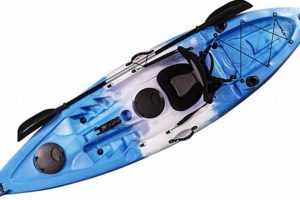
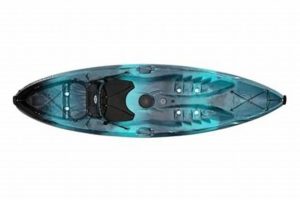
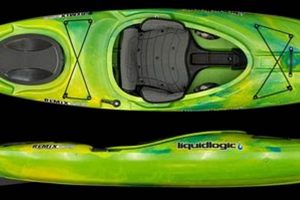
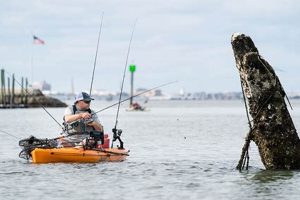
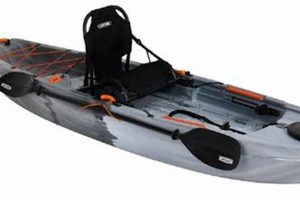
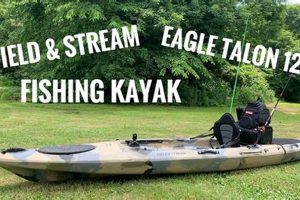
Tandem kayaking designed for angling offers a shared on-the-water experience. Two individuals paddle and fish from a single, larger, and often more stable vessel. This setup typically features specialized seating, rod holders, and storage for tackle and equipment. An example would be two anglers paddling a sit-on-top kayak equipped with rod holders and a livewell, fishing for bass in a freshwater lake.
This approach provides distinct advantages. Sharing a vessel fosters camaraderie and allows for collaborative fishing strategies. The increased stability of tandem kayaks compared to solo versions can be beneficial in challenging conditions, providing a safer platform for casting and landing fish. Historically, shared watercraft have played a role in subsistence fishing, demonstrating the practical and social benefits of cooperative angling. Tandem kayaks represent a modern adaptation of this concept, enhancing recreational fishing experiences.
This article will explore various aspects of this activity, including selecting appropriate equipment, effective paddling techniques for two people, popular fishing methods from a tandem kayak, and safety considerations for shared angling adventures.
Tips for Tandem Kayak Fishing
Effective tandem kayak fishing requires coordination and planning. These tips offer guidance for a successful and enjoyable shared angling experience.
Tip 1: Coordinate Paddling: Synchronized paddling is crucial for efficient movement and maneuverability. Establish clear communication before launching to designate a “lead” paddler who sets the pace and direction. Practice paddling together in calm water before venturing into more challenging conditions.
Tip 2: Distribute Weight Evenly: Proper weight distribution is essential for stability. Gear and anglers should be positioned to maintain balance and prevent tipping. Consider using dry bags or waterproof containers to organize equipment and optimize weight placement.
Tip 3: Choose Compatible Fishing Styles: Anglers with complementary fishing styles will find it easier to share a kayak. Discuss target species and preferred techniques before heading out to ensure a harmonious experience. For example, one angler might focus on trolling while the other casts lures.
Tip 4: Establish Clear Communication Protocols: Open communication is vital for safety and success. Develop a system of hand signals or verbal cues for indicating changes in direction, fish sightings, or potential hazards.
Tip 5: Practice Casting and Landing Techniques: Casting and landing fish from a tandem kayak requires careful coordination to avoid tangling lines or hooking a partner. Practice casting in open areas before fishing in tighter quarters, and establish clear procedures for handling landed fish.
Tip 6: Prioritize Safety: Always wear personal flotation devices (PFDs) and carry essential safety equipment, including a whistle, first-aid kit, and communication device. Check weather conditions before embarking and be prepared for changing conditions on the water.
Tip 7: Respect the Environment: Practice Leave No Trace principles by packing out all trash and avoiding disturbing wildlife. Be mindful of fishing regulations and adhere to catch limits.
Following these tips will contribute to a more enjoyable and productive tandem kayak fishing experience. These practices enhance safety, improve efficiency, and foster a spirit of cooperation on the water.
By implementing these strategies, anglers can maximize the benefits of shared fishing from a tandem kayak and create lasting memories on the water.
1. Tandem Kayak Selection

Appropriate tandem kayak selection is fundamental to a successful two-person fishing excursion. The vessel’s characteristics significantly impact stability, comfort, and overall fishing effectiveness. Choosing the right kayak model requires careful consideration of several key factors.
- Hull Design:
Hull design directly influences stability and maneuverability. Flat-bottomed hulls offer excellent primary stability, making them ideal for calm waters and stationary fishing. However, they can be less maneuverable in windy conditions. Rounded hulls provide better secondary stability, performing well in choppy water but potentially feeling less stable when stationary. Pontoon hulls offer exceptional stability but sacrifice maneuverability. A “tunnel” hull design improves tracking but may feel tippier. Selecting a hull design suited to the intended fishing environment is crucial.
- Length and Width:
Longer kayaks generally track better and offer more storage space, while shorter kayaks are more maneuverable. Wider kayaks provide increased stability but sacrifice speed. For two-person fishing, a balance between length and width is essential. A longer, wider kayak may be preferred for open water and larger fish, while a shorter, narrower kayak might be more suitable for navigating tight rivers or creeks.
- Weight Capacity:
Weight capacity dictates the maximum combined weight of anglers and gear the kayak can safely carry. Exceeding the weight capacity compromises stability and performance. Calculating the total weight of anglers, fishing gear, and any additional equipment is crucial before selecting a kayak. Choosing a kayak with a weight capacity that comfortably accommodates all anticipated cargo ensures safe and efficient operation.
- Features:
Specific features enhance the fishing experience. Built-in rod holders, storage compartments, and anchor trolleys improve functionality and convenience. Adjustable seating positions and footrests contribute to comfort during long fishing trips. Evaluating available features and selecting a kayak equipped to meet specific angling needs contributes significantly to overall enjoyment and success.
Careful consideration of these factors ensures the chosen tandem kayak aligns with the specific needs and preferences of the anglers. A well-chosen kayak contributes significantly to a comfortable, efficient, and ultimately successful two-person fishing adventure. The interplay between these elements optimizes performance and enjoyment on the water.
2. Weight Distribution

Weight distribution plays a critical role in tandem kayak stability, directly impacting safety and fishing effectiveness. Uneven weight distribution can lead to instability, making the kayak difficult to control and increasing the risk of capsizing. Proper weight distribution maximizes stability, improves tracking, and enhances maneuverability. This is particularly important in tandem kayaks due to the combined weight of two anglers and their gear. For example, placing heavier items, such as tackle boxes and batteries, low and centered in the kayak improves stability. Distributing angler weight evenly, particularly when one angler is casting or reeling in a fish, is essential for maintaining balance. Understanding the principles of weight distribution is crucial for a safe and successful two-person fishing trip.
The impact of weight distribution extends beyond basic stability. It influences how the kayak sits in the water, affecting its tracking (ability to maintain a straight course) and maneuverability. An unevenly loaded kayak may veer off course, requiring constant correction and increasing paddling effort. This can be particularly challenging in windy conditions or moving water. Optimal weight distribution minimizes drag, enhancing paddling efficiency and conserving energy for fishing. For instance, positioning anglers and gear closer to the centerline improves tracking, while distributing weight towards the stern can improve performance in rough water. Effective weight management enhances paddling efficiency and overall control of the vessel.
Proper weight distribution is a fundamental skill in tandem kayak fishing. It directly influences safety, maneuverability, and overall performance. Understanding the principles of weight distribution and applying them effectively is essential for maximizing fishing enjoyment and minimizing risks. Challenges related to uneven weight distribution can often be mitigated through careful planning, proper gear placement, and ongoing communication between anglers. This awareness and proactive management are crucial components of successful two-person kayak angling.
3. Paddling Coordination
Paddling coordination is paramount in tandem kayak fishing, directly impacting efficiency, maneuverability, and overall fishing success. Synchronized paddling propels the kayak smoothly and efficiently, conserving energy and allowing anglers to focus on fishing rather than constant course correction. A lack of coordination results in wasted energy, reduced boat speed, and difficulty maintaining a desired course. Consider a scenario where one angler paddles with more power than the other; the kayak will turn, potentially disrupting fishing efforts and frustrating both individuals. Conversely, coordinated paddling allows for precise maneuvering, enabling anglers to reach desired fishing spots quickly and quietly. This is especially critical in environments with currents or wind, where coordinated paddling maintains control and prevents drifting from the target area. Efficient movement and precise positioning, facilitated by synchronized paddling, optimize fishing opportunities.
Effective paddling coordination involves more than just simultaneous strokes. It requires communication, anticipation, and a shared understanding of paddling techniques. Non-verbal cues, such as a nod or a change in paddling rhythm, can signal turns or changes in speed. Anticipating the other angler’s movements and adjusting one’s own paddling accordingly maintains smooth, continuous movement. For instance, when approaching a fishing spot, the bow paddler might reduce stroke rate, signaling the stern paddler to do the same, allowing for a quiet approach. Mastering such coordination improves fishing effectiveness, minimizes disturbance to fish, and enhances the overall shared experience. These coordinated efforts translate into a more harmonious and productive fishing outing.
In conclusion, paddling coordination is a fundamental skill in tandem kayak fishing. It represents more than simply paddling at the same time; it embodies a partnership built on communication and shared purpose. Effective paddling coordination contributes significantly to fishing success by improving efficiency, maneuverability, and overall control of the kayak. Challenges posed by wind, currents, and navigating tight spaces can be overcome through practiced coordination. This synergy between paddlers is essential for maximizing enjoyment and achieving fishing objectives in a tandem kayak. The ability to move as a single unit enhances the angling experience and fosters a sense of teamwork on the water.
4. Fishing Techniques

Fishing techniques employed from a tandem kayak require adaptation and coordination compared to methods used in other fishing platforms. The confined space and shared nature of the vessel necessitate careful consideration of technique selection, casting mechanics, and fish handling. Effectiveness in a tandem kayak hinges on angler collaboration and an understanding of how specific techniques translate to this unique fishing environment.
- Trolling:
Trolling from a tandem kayak presents unique opportunities and challenges. The relatively quiet movement of a kayak can be advantageous, minimizing disturbance and attracting fish. However, coordinating trolling speeds and maintaining consistent depths requires communication between anglers. One angler might control the kayak’s movement while the other manages the fishing rods. Staggering lines at different depths or using different lure types allows for exploration of various sections of the water column. Successful trolling from a tandem kayak depends on synchronized action and efficient communication.
- Casting:
Casting from a tandem kayak requires careful consideration of space and the presence of a fishing partner. Anglers must communicate casting directions to avoid tangling lines or accidentally hooking each other. Shorter rods and controlled casting motions are often preferable. Techniques such as sidearm or underhand casting can minimize the risk of interference. Effective casting from a tandem kayak relies on spatial awareness, communication, and adapted casting techniques.
- Drift Fishing:
Drift fishing from a tandem kayak can be a productive approach, particularly in rivers or areas with moving water. The kayak’s natural drift covers water effectively, presenting bait or lures to a wider range of fish. Coordinating drift speed and direction through paddling adjustments maximizes coverage and presentation. Maintaining communication about fish activity and line management ensures efficiency and minimizes tangles. Successful drift fishing hinges on coordinated boat control and responsive line management.
- Landing and Handling Fish:
Landing and handling fish in a tandem kayak requires careful coordination and consideration of the limited space. Having a designated net person and clear communication about the fish’s position streamlines the process. Maintaining balance while landing a fish is paramount to prevent capsizing. Using appropriate tools, such as pliers and lip grips, ensures efficient and safe fish handling. Safe and efficient landing practices contribute to a successful and enjoyable fishing experience.
Adapting these fishing techniques to the tandem kayak environment amplifies the shared fishing experience. Successful tandem kayak fishing necessitates communication, cooperation, and a willingness to adapt traditional techniques. These considerations optimize fishing success and enhance the overall enjoyment of the shared on-the-water experience.
5. Communication Strategies
Effective communication forms the cornerstone of safe and productive tandem kayak fishing. The confined space and shared nature of the vessel necessitate clear and concise communication between anglers. This communication encompasses various aspects, from coordinating paddling strokes and navigating to discussing fishing strategies and handling unexpected situations. A lack of communication can lead to inefficient paddling, missed fishing opportunities, and potentially dangerous situations. For example, without clear communication, anglers might paddle against each other, reducing speed and maneuverability, or cast lines in conflicting directions, resulting in tangles and frustration. Conversely, clear communication facilitates smooth, synchronized paddling, efficient navigation, and coordinated fishing efforts, maximizing the chances of success and enjoyment.
Several communication strategies enhance tandem kayak fishing experiences. Establishing a system of hand signals before launching allows for non-verbal communication on the water, particularly useful in noisy environments or when maintaining stealth is crucial. These signals might indicate turning intentions, paddling speed adjustments, or the sighting of fish. Verbal communication remains essential for discussing fishing strategies, sharing observations about water conditions, or coordinating actions when landing a fish. For instance, one angler might alert the other to a submerged obstacle or a change in current, allowing for timely adjustments in paddling or fishing techniques. Open and continuous communication fosters a sense of teamwork and shared purpose, contributing significantly to a positive and productive fishing experience. Regularly checking in with one another ensures both anglers are comfortable and informed, enhancing overall safety and enjoyment.
Clear communication strategies are not merely beneficial but essential for successful and safe tandem kayak fishing. Communication mitigates potential challenges arising from the shared nature of the activity. It enables coordinated action, enhances safety, and maximizes fishing effectiveness. From navigating complex waterways to landing a trophy fish, clear communication underpins every aspect of a successful tandem kayak fishing trip. Investing time in establishing effective communication protocols before and during the trip pays significant dividends in safety, efficiency, and overall enjoyment. This proactive approach to communication transforms potential challenges into opportunities for collaboration and shared success on the water.
6. Safety Equipment

Safety equipment is paramount in tandem kayak fishing, holding significant implications for angler well-being. The inherent risks associated with on-the-water activities are amplified in a tandem kayak due to the presence of two individuals and the potential for capsizing. Appropriate safety equipment mitigates these risks, contributing significantly to accident prevention and emergency preparedness. For example, personal flotation devices (PFDs) are non-negotiable. They provide essential buoyancy in the event of capsizing, significantly increasing survival chances, especially in cold water. A communication device, such as a waterproof VHF radio or a charged mobile phone in a waterproof case, allows for contacting emergency services should the need arise. A first-aid kit equipped to handle common injuries like cuts, scrapes, and fishhook removals is essential. These examples highlight the practical significance of proper safety equipment in mitigating potential risks associated with tandem kayak fishing.
Further amplifying the importance of safety equipment are environmental factors. Weather conditions can change rapidly, creating potentially hazardous situations. A sudden squall or unexpected drop in temperature can pose significant risks to anglers without appropriate safety gear. Carrying extra layers of clothing in a dry bag provides protection against hypothermia in case of immersion. A bilge pump allows for quickly removing water from the kayak in the event of swamping. Navigational tools, such as a compass and charts, or a GPS device, are critical for maintaining orientation and avoiding disorientation, especially in unfamiliar waters or conditions of reduced visibility. Understanding and preparing for potential environmental challenges through appropriate safety equipment demonstrates prudent planning and contributes significantly to angler safety.
In summary, the connection between safety equipment and tandem kayak fishing represents a fundamental aspect of responsible angling practice. Adequate safety equipment transforms potential emergencies into manageable situations. The practical application of this understanding involves carrying and knowing how to use essential safety gear, including PFDs, communication devices, first-aid kits, and appropriate clothing. Recognizing potential environmental hazards and carrying equipment to address them demonstrates a commitment to safety and enhances the overall fishing experience. Challenges posed by unexpected situations are mitigated through preparedness, allowing anglers to focus on enjoying the shared experience of tandem kayak fishing with reduced risk.
7. Environmental Awareness

Environmental awareness represents a critical aspect of responsible tandem kayak fishing. The act of engaging with natural environments carries an inherent responsibility to minimize impact and preserve these spaces for future generations. This awareness translates into practical actions that safeguard aquatic ecosystems and contribute to their overall health. Cause and effect relationships are readily apparent: discarded fishing line entangles wildlife, discarded bait containers pollute waterways, and excessive noise disrupts natural behaviors. For instance, monofilament fishing line, if left behind, can persist in the environment for hundreds of years, posing a significant threat to birds, turtles, and other aquatic creatures. Similarly, improper disposal of lead sinkers introduces toxins into the food chain. Understanding these impacts fosters responsible behavior, ensuring the sustainability of the activity and the preservation of natural resources. Environmental awareness is not merely an abstract concept; it is an integral component of ethical and sustainable tandem kayak fishing.
Practical applications of environmental awareness in tandem kayak fishing are numerous and readily implemented. Practicing “Leave No Trace” principles, such as packing out all trash and minimizing disturbance to shorelines and vegetation, helps maintain the pristine nature of fishing locations. Using appropriate fishing practices, like employing barbless hooks and properly releasing caught fish, minimizes stress on fish populations and contributes to their long-term health. Choosing eco-friendly fishing tackle, such as biodegradable lures and lead-free sinkers, reduces the introduction of harmful substances into the environment. For example, switching to circle hooks reduces the incidence of deep hooking, increasing the survival rate of released fish. Supporting conservation efforts through participation in local cleanups or advocacy for responsible fishing regulations further amplifies individual impact. These practical actions demonstrate a tangible commitment to environmental stewardship and contribute to the overall health of aquatic ecosystems.
In summary, environmental awareness forms an inextricable link with sustainable and ethical tandem kayak fishing. Challenges related to pollution, habitat destruction, and declining fish populations can be mitigated through informed action and responsible practices. Understanding the interconnectedness of human actions and environmental consequences empowers anglers to become stewards of the waterways they enjoy. This awareness translates into concrete actions that minimize environmental impact and preserve the natural beauty and ecological integrity of fishing locations for future generations. Environmental awareness is not simply a component of responsible tandem kayak fishing; it is its foundation, ensuring the long-term viability and enjoyment of this activity.
Frequently Asked Questions about Tandem Kayak Fishing
This section addresses common inquiries regarding tandem kayak fishing, offering practical insights and clarifying potential misconceptions.
Question 1: What are the advantages of fishing from a tandem kayak compared to a solo kayak?
Tandem kayaks offer increased stability, particularly beneficial in challenging conditions or when fighting larger fish. They also facilitate collaborative fishing, allowing anglers to share expertise and assist each other. The shared experience enhances camaraderie and can make fishing more enjoyable.
Question 2: Is paddling a tandem kayak significantly more difficult than a solo kayak?
While paddling a tandem kayak requires coordination, it is not inherently more difficult. Effective communication and synchronized paddling strokes are key to efficient movement. Practice and open communication between paddlers are essential.
Question 3: What type of tandem kayak is best suited for fishing?
Sit-on-top kayaks are generally preferred for fishing due to their stability, self-bailing design, and ease of entry and exit. Look for features such as rod holders, storage compartments, and anchor trolleys. Consider hull design and weight capacity based on intended fishing locations and target species.
Question 4: How is weight distributed effectively in a tandem fishing kayak?
Heavier items should be placed low and centered in the kayak to maximize stability. Anglers should distribute their weight evenly, particularly when one angler is casting or reeling in a fish. Adjustments may be necessary based on water conditions and fishing activity.
Question 5: What safety precautions are essential for tandem kayak fishing?
Always wear personal flotation devices (PFDs). Carry a whistle, first-aid kit, communication device (VHF radio or mobile phone in a waterproof case), and navigation tools (compass, charts, or GPS). Check weather conditions before embarking and be prepared for changing conditions.
Question 6: What are some effective communication strategies for tandem kayak anglers?
Establish a system of hand signals for non-verbal communication on the water. Maintain open verbal communication for discussing fishing strategies, sharing observations, and coordinating actions. Regularly check in with each other to ensure comfort and shared understanding of plans and actions.
Understanding these fundamental aspects of tandem kayak fishing contributes to a safer, more efficient, and ultimately more rewarding experience on the water.
This concludes the frequently asked questions section. The following section will delve into advanced techniques for
Tandem Kayak Fishing
This exploration of tandem kayak fishing has highlighted key elements crucial for a successful and rewarding experience. From equipment selection and paddling coordination to fishing techniques and safety considerations, each aspect contributes significantly to maximizing enjoyment and minimizing potential risks. Proper weight distribution, effective communication strategies, and environmental awareness are integral components of responsible and productive tandem kayak angling. Understanding these elements empowers individuals to approach this activity with informed preparedness, fostering safe and sustainable practices on the water.
Tandem kayak fishing offers a unique blend of camaraderie, challenge, and connection with nature. Careful planning and execution, coupled with respect for the environment, ensure the sustainability of this activity and its continued enjoyment for future generations. The future of tandem kayak fishing hinges on responsible practices and informed participation. Individuals venturing into this rewarding pursuit are encouraged to embrace these principles, contributing to the preservation of both the sport and the natural environments it explores.