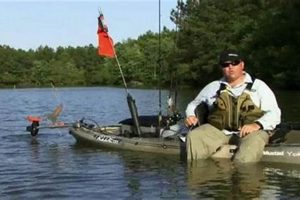
Fishing from a kayak using lures that vibrate is a specialized angling technique. These lures, often constructed from metal or hard plastic, generate attractive vibrations in the water, mimicking the movement of prey fish and enticing predatory species like bass, walleye, and trout. The compact nature of a kayak allows anglers to access shallow, weedy areas often unreachable by larger boats, enhancing the effectiveness of this approach.
This method offers a unique blend of stealth and mobility. The quiet movement of a kayak minimizes disturbance to the fish, increasing the chances of a successful catch. Furthermore, the angler’s low position on the water provides a closer connection to the environment and a more direct experience of the fight. This approach has gained popularity in recent years as anglers seek more active and engaging fishing experiences, combining the thrill of the sport with the tranquility of being on the water.
This article will delve deeper into specific techniques, equipment choices, and suitable locations for maximizing success with this style of fishing. Discussions on lure selection, retrieval methods, and kayak outfitting will provide readers with the knowledge to pursue this rewarding angling method.
Tips for Effective Vibrating Lure Kayak Fishing
Maximizing success with vibrating lures from a kayak requires attention to detail and an understanding of fish behavior. The following tips provide guidance for enhancing lure presentation and increasing catch rates.
Tip 1: Vary Retrieval Speed: Experiment with different retrieval speeds to determine what triggers strikes. A slow, steady retrieve can be effective in colder water, while a faster, more erratic retrieve may entice active fish in warmer conditions.
Tip 2: Consider Water Depth and Clarity: Lure selection should be influenced by water depth and clarity. Brighter colors or larger profiles are often effective in murky water, while more natural, subtle colors might be preferred in clear water. Deep-diving lures are necessary for targeting fish holding in deeper areas, while shallow-running lures are suitable for shallow flats or areas with submerged vegetation.
Tip 3: Utilize Pauses and Twitches: Incorporate pauses and twitches into the retrieve to mimic injured prey. A sudden pause followed by a quick twitch can trigger aggressive strikes.
Tip 4: Focus on Structure: Target areas with structure such as submerged logs, rocks, weed beds, or drop-offs. These locations often hold higher concentrations of fish. A kayak’s maneuverability allows precise lure placement around these structures.
Tip 5: Match the Hatch: Consider the prevalent forage in the target water body. Selecting lures that imitate the size, shape, and color of the local prey can significantly improve success.
Tip 6: Upgrade Treble Hooks: Sharp hooks are essential for secure hooksets. Consider upgrading to higher-quality treble hooks to improve hookup ratios.
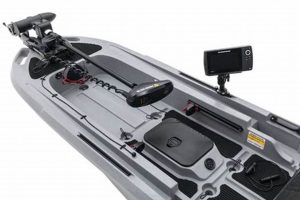
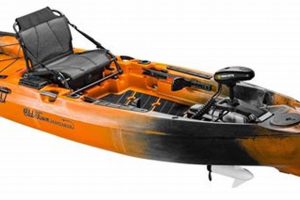
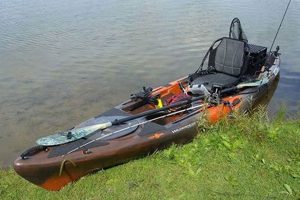
Tip 7: Choose the Right Kayak: Select a kayak designed for stability and maneuverability. A sit-on-top kayak offers easier access to gear and a more stable platform for casting and fighting fish.
By implementing these strategies, anglers can improve their chances of success and enjoy a more productive and rewarding kayak fishing experience.
The next section will offer concluding thoughts on the advantages and enjoyment derived from this style of fishing.
1. Stealthy Approach
A stealthy approach is paramount in vibe kayak fishing, directly influencing success rates. Minimizing disturbances allows anglers to approach fish undetected, maximizing the effectiveness of vibrating lures. This involves careful consideration of kayak movement, noise reduction, and environmental factors.
- Quiet Kayak Movement:
Kayaks offer inherent stealth advantages over motorized boats. However, minimizing paddle splashes and hull noise further reduces disturbance. Smooth, deliberate paddle strokes and avoiding contact with the kayak’s hull contribute significantly to a quiet approach. This is particularly crucial in shallow water or when targeting spooky fish.
- Minimizing Disturbances:
Beyond paddling quietly, minimizing other disturbances is essential. Avoiding sudden movements, loud conversations, and excessive gear shifting prevents alerting fish. Approaching target areas with the wind or current further reduces the kayak’s acoustic footprint.
- Camouflage and Concealment:
Kayak color and angler attire play a role in remaining undetected. Neutral colors that blend with the surrounding environment, such as greens, browns, and grays, are preferable. Avoiding bright colors or reflective surfaces minimizes visual disturbance. In clear water, polarized sunglasses allow anglers to see fish without being seen.
- Observation and Approach Strategy:
Careful observation before entering a fishing area is vital. Identifying fish activity, water clarity, and potential obstacles informs the approach strategy. Planning a route that minimizes disturbance and maximizes casting angles increases the likelihood of success.
By integrating these facets of a stealthy approach, anglers significantly enhance their chances of success in vibe kayak fishing. A quiet and unobtrusive presence allows the vibrating lures to work their magic, attracting fish without raising suspicion. This approach fosters a closer connection with the environment and contributes to a more rewarding and ethical fishing experience.
2. Targeted Lure Selection

Targeted lure selection is a critical component of successful vibe kayak fishing. Lure choice directly influences an angler’s ability to attract and catch target species. Several factors dictate appropriate lure selection, including water clarity, depth, target species, and forage base. Understanding these factors and their interplay is crucial for maximizing fishing success.
Water clarity dictates lure color and size. In murky water, vibrant colors and larger profiles increase lure visibility. Conversely, clear water necessitates more natural, subtle colors and smaller profiles to avoid spooking fish. Water depth influences lure diving depth. Deep-diving lures target fish holding in deeper water columns or near the bottom, while shallow-running lures are effective in shallow areas or over submerged vegetation. Target species possess varying preferences for lure size, shape, and action. Matching lure characteristics to the target species’ predatory instincts increases strike probability. For instance, bass often respond well to crankbaits and spinnerbaits that mimic the movement of baitfish, while walleye might be more susceptible to jigs tipped with live bait or soft plastic lures.
Matching the hatch, or selecting lures that imitate the prevalent forage in the target water body, is a fundamental principle. Observing the local ecosystem and identifying the primary food source of the target species informs lure choice. This might involve using lures that mimic crayfish, shad, or other common prey items. Furthermore, seasonal variations in forage availability influence lure selection. Adapting lure choices to the current forage base ensures lures remain relevant and attractive to the target species. Integrating these considerations into the lure selection process significantly enhances fishing effectiveness. A well-chosen lure, presented effectively, dramatically increases the likelihood of attracting and hooking the desired species, contributing to a more rewarding kayak fishing experience.
3. Precise Kayak Control
Precise kayak control is integral to effective vibe kayak fishing. The ability to maneuver a kayak accurately and efficiently directly impacts lure presentation, access to fishing zones, and overall angling success. This control allows anglers to position themselves optimally for casting, maintain desired depths and speeds for lure retrieval, and navigate complex environments such as shallow water, weed beds, and swift currents. Without precise control, maintaining proper lure action and reaching productive fishing spots becomes challenging, hindering the effectiveness of vibrating lures.
Consider a scenario where an angler targets bass holding near submerged logs in a shallow cove. Precise kayak control allows the angler to approach the structure quietly, position the kayak upstream or upwind for optimal casting angles, and maintain a stable platform while retrieving the vibrating lure alongside the logs. This level of control maximizes the lure’s effectiveness by keeping it within the strike zone for longer periods and minimizing disturbances that could spook the fish. Conversely, a lack of control might result in the kayak drifting too close to the logs, snagging the lure, or creating excessive noise, ultimately reducing the chances of a successful hookup. Similarly, in river fishing, maintaining precise kayak position within a current seam or eddy is crucial for presenting vibrating lures effectively to fish holding in these specific zones. The ability to hold position against the current, adjust drift speed, and make subtle maneuvers significantly enhances lure presentation and fish-catching opportunities.
Precise kayak control encompasses several skills, including efficient paddling techniques, understanding current and wind dynamics, and utilizing anchoring or positioning systems. Mastering these skills enhances an angler’s ability to navigate challenging environments, present vibrating lures effectively, and maximize their success on the water. The connection between precise kayak control and vibe fishing success is undeniable. It empowers anglers to exploit the full potential of vibrating lures, access productive fishing areas, and experience a more rewarding and efficient angling experience.
4. Optimal Retrieval Techniques

Optimal retrieval techniques are fundamental to maximizing the effectiveness of vibrating lures in kayak fishing. These techniques encompass the speed, rhythm, and cadence of lure retrieval, directly influencing the lure’s action and its attractiveness to target fish. The vibrating nature of these lures creates pressure waves and vibrations that fish detect through their lateral line system. Optimal retrieval techniques aim to mimic the movement and behavior of natural prey, triggering predatory instincts and inducing strikes. Varying retrieval speed is a core element. A slow, steady retrieve can be effective in colder water or when targeting lethargic fish. Conversely, a faster retrieve with erratic pauses and twitches can trigger reaction strikes from active fish. The integration of pauses is crucial, allowing the lure to flutter and sink momentarily, mimicking a wounded or struggling prey item, often enticing a following predator to strike. The specific retrieval technique employed depends on several factors, including target species, water temperature, and prevailing conditions.
Consider targeting walleye in deep water. A slow, steady retrieve, punctuated by occasional pauses near the bottom, can effectively present a vibrating lure, allowing the walleye ample opportunity to detect and ambush the lure. Conversely, when targeting aggressive species like bass in shallow water, a faster, more erratic retrieve, incorporating quick twitches and pauses, might prove more effective in triggering reaction strikes. Adapting retrieval techniques to the specific scenario is crucial for maximizing success. Understanding how different retrieval speeds, rhythms, and pauses influence lure action and fish behavior empowers anglers to tailor their approach for optimal results. Experimentation plays a key role in determining the most effective retrieval techniques for a given situation. Observing fish behavior and noting the types of retrieves that trigger strikes allows anglers to refine their approach and improve their catch rate.
Optimal retrieval techniques are not static; they require adaptation based on environmental factors and target species behavior. Mastering these techniques elevates vibe kayak fishing from simply casting and retrieving to a nuanced and engaging pursuit. The ability to manipulate lure action through precise retrieval control significantly enhances an angler’s ability to attract and catch fish, adding a layer of skill and finesse to this dynamic fishing style. This understanding translates to increased fishing success and a more fulfilling angling experience.
5. Understanding Fish Behavior
Understanding fish behavior is intrinsically linked to successful vibe kayak fishing. Fish behavior dictates habitat selection, feeding patterns, and responses to stimuli, all of which directly influence the effectiveness of vibrating lures. Anglers who grasp the underlying principles of fish behavior possess a significant advantage, enabling them to predict fish location, select appropriate lures, and employ effective retrieval techniques. Cause and effect relationships between fish behavior and angling success are readily apparent. For instance, understanding that bass often ambush prey from cover allows anglers to target areas with submerged logs, rocks, or vegetation, increasing the likelihood of encountering bass and triggering strikes with vibrating lures. Similarly, recognizing that walleye are often more active during low-light conditions or periods of cooler water temperatures informs the timing of fishing trips and influences lure selection.
Understanding fish behavior as a component of vibe kayak fishing extends beyond simple habitat recognition. It encompasses an appreciation of how fish respond to various stimuli, including water temperature, current flow, and changes in barometric pressure. For example, recognizing that fish metabolism slows in colder water informs the need for slower retrieval speeds and more subtle lure actions. Similarly, understanding how current breaks and eddies create areas of concentrated prey can guide lure placement and retrieval strategies. Real-life examples abound. An angler targeting trout in a clear, cold stream might select a smaller, more natural-colored vibrating lure and employ a slow, steady retrieve, understanding that trout in these conditions are likely to be wary and prefer smaller prey. Conversely, an angler targeting bass in a murky, warm lake might choose a larger, brightly colored lure and employ a faster, more erratic retrieve to trigger reaction strikes from active fish.
The practical significance of understanding fish behavior in vibe kayak fishing is undeniable. This understanding allows anglers to make informed decisions regarding location selection, lure choice, and retrieval techniques, significantly increasing their chances of success. It transforms the act of fishing from a passive pursuit into an active engagement with the aquatic environment. While challenges exist in predicting fish behavior with absolute certainty due to the dynamic nature of aquatic ecosystems, a foundational understanding of fish behavior provides a significant advantage. This knowledge empowers anglers to adapt their strategies to prevailing conditions and fish activity, maximizing their potential for a successful and rewarding kayak fishing experience.
6. Appropriate Location Choices

Appropriate location choices are paramount for successful vibe kayak fishing. Vibrating lures, while effective, require strategic placement to maximize their potential. Understanding how habitat, structure, and fish behavior intersect informs location selection, significantly influencing catch rates. Choosing the right location concentrates fishing effort in areas where fish are most likely to hold and respond to vibrating lures.
- Structure-Oriented Locations
Submerged logs, rock piles, weed beds, and drop-offs serve as prime locations. These structures provide cover, ambush points, and attract forage, concentrating predator fish. Kayaks excel in accessing shallow, weedy areas often inaccessible to larger boats, making them ideal for targeting structure-oriented fish with vibrating lures. Casting lures close to these structures increases the likelihood of triggering strikes from fish using the structure for cover or actively feeding on prey attracted to the area.
- Current Breaks and Eddies
Current breaks, formed by rocks, bends in the river, or other obstructions, create slower-moving water where fish conserve energy and ambush prey. Similarly, eddies, circular currents formed behind obstructions, trap food and provide a haven for fish. Positioning a kayak within or near these current breaks and eddies allows for precise lure presentation to fish holding in these zones, maximizing the effectiveness of vibrating lures.
- Depth and Temperature Transitions
Fish often congregate along depth contours or thermoclines, particularly during periods of changing weather or seasonal transitions. These zones represent optimal temperature and oxygen levels, attracting baitfish and subsequently, predator fish. Utilizing a kayak’s maneuverability to target these specific depth and temperature transitions maximizes the chances of encountering actively feeding fish and triggering strikes with vibrating lures.
- Forage Concentrations
Identifying areas with high concentrations of baitfish or other forage is crucial. Predator fish, including those targeted with vibrating lures, follow their food source. Locating schools of baitfish, insect hatches, or areas where crayfish are abundant significantly increases the probability of finding actively feeding predator fish and triggering strikes with lures that mimic the prevalent forage.
Strategic location selection optimizes vibe kayak fishing success. By understanding how habitat, structure, and fish behavior interact, anglers can pinpoint productive areas, maximizing their chances of encountering and catching target species. Combining appropriate location choices with effective lure presentation and retrieval techniques creates a synergistic approach that elevates vibe kayak fishing from a passive activity to a strategic pursuit, enhancing both efficiency and enjoyment on the water.
Frequently Asked Questions
This section addresses common inquiries regarding fishing with vibrating lures from a kayak, providing concise and informative responses.
Question 1: What are the primary advantages of using vibrating lures for kayak fishing?
Vibrating lures effectively attract various predatory fish species due to their lifelike vibration and versatility in different water conditions. Their compact size makes them ideal for kayak anglers.
Question 2: Are specialized kayaks required for this fishing style?
While any kayak can be used, models designed for stability and maneuverability enhance the experience. Sit-on-top kayaks are generally preferred for easier access to gear and a more stable casting platform.
Question 3: What are the key factors to consider when choosing vibrating lures?
Lure selection depends on factors like water clarity, depth, target species, and prevalent forage. Size, color, and diving depth should align with these factors.
Question 4: What retrieval techniques are most effective with vibrating lures?
Experimentation is key. Varying retrieval speed, incorporating pauses and twitches, and understanding how the lure behaves at different depths are crucial for enticing strikes.
Question 5: What safety precautions should kayak anglers observe when fishing with vibrating lures?
Standard kayak safety practices apply, including wearing a personal flotation device, carrying communication devices, and being aware of weather conditions and water hazards. Proper lure handling is also essential to prevent injuries from sharp hooks.
Question 6: Are there specific regulations regarding the use of vibrating lures in certain bodies of water?
Regulations vary by location. Consult local fishing regulations to ensure compliance with lure restrictions, size limits, and catch quotas.
Addressing these frequently asked questions provides a solid foundation for anglers exploring or refining their techniques with vibrating lures in a kayak fishing context. Understanding these aspects enhances both safety and angling success.
This concludes the FAQ section. The following section will provide concluding remarks on the overall topic of vibe kayak fishing.
Conclusion
Vibe kayak fishing represents a specialized angling approach, capitalizing on the unique properties of vibrating lures and the maneuverability of kayaks. This method effectively targets various predatory species by presenting lures that mimic natural prey, triggering instinctive feeding responses. Key elements explored include lure selection based on water conditions and target species, precise kayak control for optimal lure presentation, varied retrieval techniques to entice strikes, and an understanding of fish behavior to inform strategic location choices. Stealth, a hallmark of kayak fishing, further enhances the effectiveness of this approach by minimizing disturbance and maximizing opportunities for undetected presentations.
The synthesis of these elements positions vibe kayak fishing as a rewarding pursuit, offering anglers an engaging and efficient method for targeting predatory fish in diverse environments. Continued exploration and refinement of these techniques promise further enhancement of angling success while fostering a deeper appreciation for the interplay between angler skill, fish behavior, and the aquatic environment.