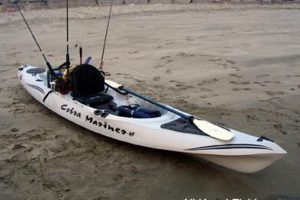
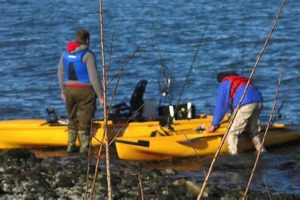
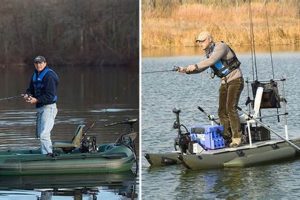
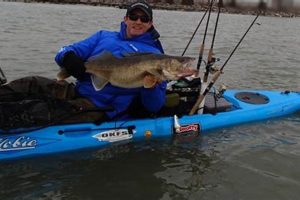
This phrase likely refers to a specific fishing kayak model, possibly incorporating “FeelFree” as a brand name, “Lure 10” as a model designation, and “fishing kayak” as the product type. It suggests a kayak designed for anglers, likely 10 feet in length, and possibly equipped or marketed with lures. This combination of terms acts as a product identifier for consumers searching online or in retail settings.
Choosing the right kayak for fishing can significantly impact the angler’s experience. A well-designed fishing kayak offers stability, maneuverability, and features tailored to the needs of anglers, such as rod holders, storage compartments, and comfortable seating. The length of a kayak affects its tracking and speed, with 10-foot models often providing a good balance for various fishing environments. Selecting appropriate fishing gear, including lures, further enhances the angling experience. Understanding the specifications of a targeted model, such as its dimensions, weight capacity, and features, allows for informed purchasing decisions.
This discussion will explore the key aspects of selecting a fishing kayak, considering factors such as length, stability, features, and the intended fishing environment. Further topics will include essential gear, popular fishing techniques, and responsible kayaking practices.
Tips for Selecting and Using a Fishing Kayak
Careful consideration of several factors contributes to a successful and enjoyable kayak fishing experience. These tips offer guidance on selecting and effectively utilizing a fishing kayak.
Tip 1: Research Kayak Specifications: Thoroughly examine the specifications of prospective kayak models. Pay close attention to length, width, weight capacity, and included features. Ensure compatibility with the intended fishing environment and angler’s physical characteristics.
Tip 2: Prioritize Stability: Stability is crucial, particularly for activities like casting and reeling. Consider wider kayaks or those with enhanced stability features for improved balance and safety.
Tip 3: Evaluate Storage Options: Adequate storage is essential for fishing gear, safety equipment, and personal belongings. Assess the type, size, and accessibility of storage compartments.
Tip 4: Consider Seating Comfort: Extended fishing trips require a comfortable seating arrangement. Look for adjustable seating and ample back support.
Tip 5: Choose Appropriate Paddles: Select paddles appropriate for the kayak’s width and the angler’s physical attributes. Consider factors like blade shape, shaft length, and material.
Tip 6: Practice Essential Safety Measures: Always wear a personal flotation device (PFD) and carry essential safety equipment, including a whistle, signaling device, and first-aid kit.
Tip 7: Respect the Environment: Adhere to Leave No Trace principles. Pack out all trash, avoid disturbing wildlife, and respect other water users.
By following these tips, anglers can significantly enhance their kayak fishing experiences. Proper preparation and equipment selection contribute to both safety and enjoyment on the water.
This information provides a solid foundation for successful kayak fishing. Further research and practice will refine skills and enhance appreciation for this rewarding activity.
1. Kayak Brand

The “FeelFree” brand plays a crucial role in understanding the “feel free lure 10 fishing kayak” concept. “FeelFree” serves as the manufacturer identifier, establishing the kayak’s origin and associating it with specific design philosophies, manufacturing standards, and brand reputation. This connection provides context for evaluating the kayak’s features, quality, and potential performance.
- Brand Identity and Reputation
FeelFree’s brand identity likely influences the design and marketing of the Lure 10. Established brands often emphasize particular attributes, such as stability, performance, or affordability. FeelFree’s reputation for quality and innovation directly impacts consumer perception of the Lure 10. A strong brand reputation builds trust and can influence purchasing decisions.
- Design and Manufacturing
FeelFree’s design and manufacturing processes directly influence the Lure 10’s characteristics. This includes the kayak’s hull design, material selection, and construction techniques. These factors determine the kayak’s stability, maneuverability, durability, and overall performance on the water. Manufacturing processes also influence quality control and consistency.
- Target Market and Product Line
FeelFree’s target market and broader product line offer insights into the Lure 10’s intended use and positioning within the market. A brand specializing in recreational kayaks may prioritize stability and comfort, while a brand focused on fishing kayaks might emphasize features like rod holders and storage. The Lure 10’s placement within FeelFree’s product line provides context regarding its intended purpose and target audience.
- Warranty and Customer Support
FeelFree’s warranty and customer support policies influence the long-term ownership experience. A comprehensive warranty provides assurance against defects and malfunctions. Reliable customer support offers assistance with technical questions, maintenance, and repairs. These factors contribute to customer satisfaction and brand loyalty.
By understanding FeelFree’s brand identity, manufacturing practices, target market, and customer support policies, consumers can better evaluate the “feel free lure 10 fishing kayak” and its suitability for their specific needs. These factors provide a framework for understanding the kayak’s features, performance, and overall value proposition within the competitive landscape of fishing kayaks.
2. Model

Within the “feel free lure 10 fishing kayak” phrase, “Lure 10” denotes the specific model within the FeelFree brand’s lineup. This designation provides crucial information differentiating this particular kayak from others offered by the manufacturer. Understanding the implications of the “Lure 10” designation provides a more complete picture of the kayak’s intended purpose, features, and target audience.
- Intended Use and Target Audience
The “Lure” in “Lure 10” strongly suggests a focus on fishing, specifically lure fishing. This implies features designed to facilitate angling, such as rod holders, tackle storage, and potentially even specialized mounting points for fish finders or other angling accessories. The “10” likely refers to the kayak’s length, typically measured in feet. This provides insight into the kayak’s size and potential performance characteristics, such as stability and maneuverability.
- Features and Design Elements
The model designation often reflects key features and design choices. “Lure 10” may indicate a hull design optimized for stability in calm to moderate waters, ideal for casting and retrieving lures. It may also suggest specific seating configurations, storage solutions, and other features tailored to the needs of anglers. This could include standing platforms for sight fishing, recessed rod holders for trolling, or integrated tackle management systems.
- Performance Characteristics and Suitability
Understanding the “Lure 10” model designation allows for inferences regarding its performance characteristics and suitability for various fishing environments. A 10-foot kayak generally offers a balance of stability and maneuverability, making it suitable for lakes, ponds, and slow-moving rivers. However, its size might limit its suitability for challenging conditions, such as open ocean or fast-flowing rivers.
- Market Positioning and Price Point
The “Lure 10” designation also contributes to the kayak’s market positioning and price point. Within FeelFree’s product line, it likely occupies a specific niche, differentiated from entry-level recreational kayaks or high-end fishing platforms. Understanding its market position provides context for evaluating its value proposition relative to competing models from other manufacturers.
By analyzing the “Lure 10” model designation, prospective buyers gain valuable insight into the kayak’s intended use, features, and suitability for their specific fishing needs. This information, combined with research on the FeelFree brand and the broader context of “feel free lure 10 fishing kayak,” facilitates informed purchasing decisions and contributes to a more satisfying kayaking experience.
3. Activity

The “fishing” component within “feel free lure 10 fishing kayak” establishes the kayak’s primary intended purpose and significantly influences its design, features, and target audience. This designation distinguishes it from recreational kayaks or those designed for other water sports. The connection between “fishing” and the kayak’s other attributes directly impacts its suitability and overall effectiveness for angling activities. A fishing kayak prioritizes stability, storage for tackle and equipment, and specialized features like rod holders and mounting points for fish finders. For instance, a stable hull design allows anglers to cast and reel without compromising balance, while ample storage accommodates rods, reels, tackle boxes, and other essential gear. Without the explicit “fishing” designation, these specialized features might be absent, rendering the kayak less suitable for angling.
Consider an angler targeting bass in a freshwater lake. A fishing kayak, like the implied “feel free lure 10 fishing kayak,” provides the necessary platform for this activity. Its stability allows for casting and retrieving lures, while integrated rod holders secure rods when not in use. Storage compartments protect tackle from the elements and provide easy access. Conversely, a recreational kayak lacking these features would present significant challenges for the angler. The lack of stability could hinder casting accuracy, while the absence of rod holders and storage would necessitate awkward and potentially unsafe handling of fishing gear. The practical implications of the “fishing” designation become readily apparent in such real-world scenarios.
In summary, “fishing” within the keyword phrase defines the kayak’s core function. This understanding directly impacts feature expectations, suitability assessments, and ultimately, the angler’s experience on the water. Challenges may arise when kayaks marketed for fishing lack essential features or possess inadequate design elements. Therefore, careful evaluation of a kayak’s features against the specific demands of intended fishing activities remains crucial. The interplay between “fishing” and the other components of “feel free lure 10 fishing kayak” ultimately determines its effectiveness as a dedicated fishing platform.
4. Length
The “10 feet” component within “feel free lure 10 fishing kayak” specifies the kayak’s length, a crucial factor influencing its performance characteristics and suitability for various fishing environments. This dimension directly impacts maneuverability, tracking, speed, and overall stability, shaping the angler’s experience on the water. Understanding the implications of a 10-foot length provides essential context for evaluating this specific kayak model.
- Maneuverability and Tracking
A 10-foot kayak generally offers a balance between maneuverability and tracking. Shorter kayaks typically turn more easily, making them suitable for navigating tight spaces and complex waterways. Longer kayaks tend to track straighter, maintaining their course with less effort. A 10-foot length represents a compromise, offering reasonable maneuverability while retaining acceptable tracking performance.
- Speed and Efficiency
Kayak length influences speed and paddling efficiency. Longer kayaks often glide more efficiently, covering greater distances with each paddle stroke. Shorter kayaks may require more frequent paddling to maintain speed. A 10-foot kayak falls within a moderate range, offering reasonable speed and efficiency without sacrificing maneuverability.
- Stability and Capacity
Length contributes to a kayak’s stability, particularly initial stability, which refers to resistance to tipping when at rest. While width plays a larger role, a longer kayak generally offers greater stability. Length also influences weight capacity; longer kayaks typically accommodate heavier loads. A 10-foot kayak provides reasonable stability and capacity for a single angler and their gear.
- Transportation and Storage
A kayak’s length presents practical considerations for transportation and storage. Shorter kayaks are easier to transport on car roof racks or in truck beds. They also require less storage space. A 10-foot kayak presents moderate challenges for transportation and storage, requiring appropriate equipment and space allocation.
The 10-foot length of the “feel free lure 10 fishing kayak” positions it as a versatile option suitable for various fishing environments, balancing maneuverability, stability, and transportability. While potentially less maneuverable than shorter kayaks and less efficient than longer ones, its length offers a practical compromise for anglers seeking a balanced platform for diverse fishing experiences. This length, combined with the other elements of “feel free lure 10 fishing kayak,” provides a comprehensive picture of its intended use and target audience.
5. Target

The “Target: Anglers” component within the context of “feel free lure 10 fishing kayak” defines the intended user group and significantly influences design, features, and marketing strategies. This focus on anglers directly impacts the kayak’s suitability and effectiveness as a fishing platform. A kayak designed for anglers prioritizes features essential for fishing activities, often excluding or minimizing features relevant to other water sports. This specialized design approach enhances usability and overall fishing experience. Consider rod holders, strategically placed to secure rods while paddling or preparing tackle. A kayak designed with anglers in mind might incorporate flush-mounted rod holders to minimize interference with casting, while a recreational kayak might lack such specialized features.
The impact of “Target: Anglers” becomes evident when comparing a fishing kayak to a recreational kayak. An angler targeting trout in a flowing river requires a stable platform with easy access to fishing gear. A fishing kayak provides this stability and specialized storage for rods, reels, and tackle boxes. Conversely, a recreational kayak, lacking these features, presents challenges for the angler. The absence of rod holders necessitates awkward handling of rods, increasing the risk of tangling lines or losing gear. Limited storage options restrict the amount of tackle an angler can carry, potentially hindering fishing success. The practical implications of “Target: Anglers” are readily apparent in such scenarios.
In summary, “Target: Anglers” within the framework of “feel free lure 10 fishing kayak” establishes the kayak’s core purpose and dictates its design philosophy. This focus directly impacts feature selection, performance characteristics, and overall suitability for fishing activities. Challenges arise when kayaks marketed for fishing lack essential angler-specific features or prioritize aesthetics over functionality. Therefore, careful evaluation of a kayak’s design and features against the specific needs of anglers remains crucial. The explicit identification of “Target: Anglers” provides valuable context for evaluating the kayak’s suitability and effectiveness as a dedicated fishing platform.
Frequently Asked Questions
This FAQ section addresses common inquiries regarding kayaks designed for fishing, focusing on key aspects such as stability, features, maintenance, and suitability for various fishing environments.
Question 1: How does the length of a fishing kayak affect its performance?
Kayak length influences several performance characteristics. Shorter kayaks (under 10 feet) offer enhanced maneuverability, making them suitable for navigating tight spaces like creeks and small rivers. Longer kayaks (over 12 feet) excel in tracking and speed, making them preferable for open water or covering larger distances. Mid-sized kayaks (around 10-12 feet) offer a balance between maneuverability and tracking.
Question 2: What features should one look for in a fishing kayak?
Essential features include rod holders, ample storage for tackle and gear, a comfortable seat designed for extended periods, and a stable hull design. Additional features like anchor trolleys, paddle holders, and mounting points for fish finders enhance the fishing experience. Specific needs vary based on the target species and fishing environment.
Question 3: How does kayak stability impact fishing activities?
Stability is crucial for casting, reeling, and landing fish. A stable kayak allows anglers to stand and fish, providing better visibility and leverage. Wider kayaks generally offer greater stability than narrower ones. Consider kayaks with enhanced stability features like outriggers or pontoon hulls for added security.
Question 4: What maintenance is required for a fishing kayak?
Regular maintenance ensures optimal performance and longevity. Rinse the kayak with fresh water after each use to remove salt, sand, and other debris. Inspect and lubricate moving parts, such as rudder cables and hatch hinges. Store the kayak properly, protected from direct sunlight and extreme temperatures, to prevent material degradation.
Question 5: Are fishing kayaks suitable for all bodies of water?
Fishing kayaks are suitable for a variety of environments, but certain models excel in specific conditions. Shorter, more maneuverable kayaks perform well in rivers and creeks. Longer, more stable kayaks are better suited for lakes, bays, and open ocean. Consider the intended fishing environment when selecting a kayak.
Question 6: How does one choose the right paddle for a fishing kayak?
Paddle selection depends on kayak width and individual paddling style. Wider kayaks require longer paddles. Paddle blade shape and material also influence performance. Lightweight, high-angle blades are suitable for short bursts of speed, while heavier, low-angle blades offer greater efficiency for longer distances. Consult with experienced kayakers or retailers for personalized recommendations.
Understanding these fundamental aspects facilitates informed decision-making when selecting and utilizing a fishing kayak. Consider individual needs and preferences, target species, and fishing environment to optimize the kayaking experience.
Further resources, such as expert reviews and online forums, can provide additional insights and assist in making informed purchase decisions. The next section will delve into specific kayak models and their respective features.
Conclusion
Analysis of the “feel free lure 10 fishing kayak” keyword reveals a targeted approach to kayak design, emphasizing features relevant to angling activities. The FeelFree brand, combined with the “Lure 10” model designation, suggests a focus on fishing functionality. The 10-foot length offers a balance between maneuverability and stability, while the explicit targeting of anglers indicates specialized features such as rod holders, ample storage, and a stable hull design. Understanding these elements allows potential buyers to evaluate the kayak’s suitability for their specific fishing needs and preferences. Considerations regarding kayak length, stability features, and brand reputation contribute to informed purchasing decisions.
Careful evaluation of fishing kayak features remains paramount for optimizing angling experiences. Understanding the interplay between kayak design, intended use, and target audience empowers informed choices and enhances enjoyment on the water. Continued exploration of specialized fishing kayak features and emerging technologies promises further advancements in kayak angling. The future of fishing kayak design likely involves further integration of technology, enhanced customization options, and materials optimized for performance and sustainability. The evolution of fishing kayaks will undoubtedly continue to shape the angling landscape.