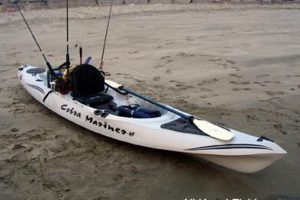
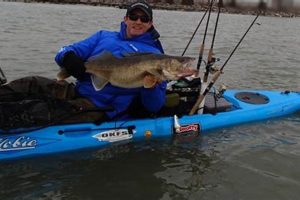
A two-person kayak designed for angling, prioritizing stability above other performance characteristics, is highly sought after by anglers. Such vessels typically feature wider hulls, flatter bottoms, and potentially outriggers for enhanced balance, enabling comfortable fishing even in choppy waters or when casting and reeling. These designs often incorporate specialized features like rod holders, gear tracks, and livewells.
Enhanced stability in a fishing kayak built for two occupants allows anglers to focus on the activity itself rather than precarious balance. This is particularly valuable for anglers who prefer stand-up fishing, sight casting, or engaging with larger fish. The increased capacity for gear and an angling partner also enhances the overall fishing experience. Historically, tandem kayaks prioritized passenger capacity and tracking, with stability emerging as a primary design focus more recently in response to evolving angler needs and preferences.
The factors influencing kayak stability are multifaceted and understanding them is crucial for selecting the right watercraft. Hull design, weight capacity, and added features all play a significant role, which will be examined in detail. Additionally, considering the intended fishing environment calm lakes, flowing rivers, or open ocean further refines the selection process.
Tips for Choosing a Stability-Focused Tandem Fishing Kayak
Selecting a tandem kayak optimized for fishing and stability requires careful consideration of various factors. The following tips provide guidance for making an informed decision.
Tip 1: Prioritize Hull Design: Consider a pontoon-style hull or a wide, flat-bottom design. These hull shapes offer enhanced primary stability, crucial for minimizing rocking and tipping.
Tip 2: Evaluate Weight Capacity: Ensure the kayak’s weight capacity comfortably accommodates the combined weight of anglers, gear, and potential catches. Exceeding the limit compromises stability and performance.
Tip 3: Assess Seating Configurations: Opt for adjustable seating positions that allow for optimal weight distribution and personalized comfort, contributing to improved balance.
Tip 4: Inspect Built-in Features: Prioritize features like rod holders, gear tracks, and storage compartments specifically designed for fishing. These additions streamline angling activities without compromising stability.
Tip 5: Consider Outriggers or Stabilizers: For added stability, particularly in challenging conditions, explore kayaks with integrated outriggers or the option to add aftermarket stabilizers.
Tip 6: Test Before Purchasing: If possible, test the kayak on the water before purchasing. This allows for practical assessment of its stability and handling characteristics in a real-world environment.
Tip 7: Factor in Intended Use Case: Consider the typical fishing environmentcalm lakes, rivers, or open oceanwhen selecting a kayak. Different environments demand varying degrees of stability.
Tip 8: Research and Compare: Thoroughly research available models and compare their specifications, features, and user reviews. Gather insights from reputable sources before making a final decision.
By carefully considering these factors, anglers can select a tandem fishing kayak that offers optimal stability, enhancing safety, comfort, and overall fishing success.
Ultimately, choosing the right kayak is an investment in enjoyable and productive fishing experiences.
1. Hull Design

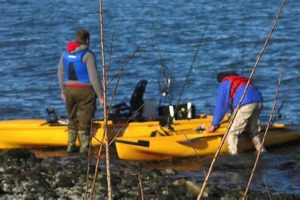
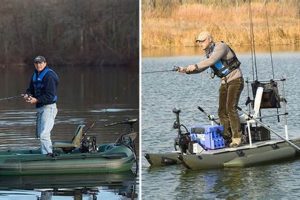
Hull design plays a critical role in tandem fishing kayak stability. A wider hull inherently provides greater initial stability, resisting tipping. Flatter bottoms enhance stability on calm water, ideal for stationary fishing. Conversely, a hull with a slight V-shape or defined keel improves tracking and handling in moving water but may sacrifice some initial stability. Pontoon hulls, featuring two separate hulls connected by a platform, offer exceptional stability, particularly beneficial for stand-up fishing, but may be less maneuverable. For example, a wide, flat-bottomed kayak provides a stable platform for casting in calm lakes, while a kayak with a moderate V-hull offers a balance of stability and performance in rivers or coastal waters. Choosing between a catamaran-style (twin-hulled) design, a tunnel hull, or a more traditional displacement hull involves trade-offs between stability, speed, and maneuverability. The interplay of these factors significantly impacts overall performance.
Specific hull features further influence stability. Chines, the angled edges where the hull sides meet the bottom, contribute to secondary stability the resistance to tipping once the kayak is leaned. Hard chines provide greater secondary stability, valuable in rougher conditions. Rounded chines offer smoother turning but less resistance to capsizing. The rocker, or curvature of the hull from bow to stern, also impacts performance. A higher rocker (more curve) improves maneuverability but reduces tracking and can feel less stable. A lower rocker enhances tracking and stability in calm water but hinders turning. Understanding these design elements allows informed decisions tailored to specific fishing environments and preferences.
Ultimately, hull design is paramount in achieving optimal stability in a tandem fishing kayak. Balancing initial and secondary stability, tracking, and maneuverability requires careful consideration of hull shape, chines, and rocker. Selecting a design appropriate for intended use calm lakes, flowing rivers, or open ocean is crucial. Evaluating these factors ensures a safe and enjoyable fishing experience.
2. Weight Capacity

Weight capacity is a critical factor influencing the stability of a tandem fishing kayak. It represents the maximum combined weight of passengers, gear, and any potential catch the kayak can safely support. Exceeding this limit significantly compromises stability, increasing the risk of capsizing. A kayak operating near its maximum capacity sits lower in the water, reducing freeboard and making it more susceptible to swamping. Furthermore, excessive weight can negatively impact maneuverability and responsiveness, making it challenging to navigate, especially in challenging conditions. For instance, a tandem kayak with a weight capacity of 500 lbs carrying two 200 lb anglers, plus 150 lbs of gear, surpasses its safe limit. This overload significantly reduces stability and increases the risk of an accident.
Understanding the relationship between weight capacity and stability is crucial for safe and enjoyable kayaking. Choosing a kayak with ample weight capacity ensures comfortable and safe operation. Calculations should include not only the weight of the anglers but also all gear, including fishing rods, tackle boxes, coolers, and potential catches. Distributing weight evenly within the kayak also contributes to optimal stability. Placing heavier items lower and towards the center of the kayak helps maintain balance. For example, storing tackle boxes and coolers near the center of the kayak rather than at the bow or stern contributes to enhanced stability. Furthermore, understanding the manufacturer’s specified weight capacity and adhering to it is paramount for safety.
In conclusion, selecting a tandem fishing kayak with appropriate weight capacity is essential for maintaining stability and ensuring a safe experience. Overloading a kayak jeopardizes stability, maneuverability, and overall safety. Careful consideration of the combined weight of passengers and gear, along with even weight distribution within the vessel, are crucial elements in selecting the right kayak and enjoying a successful fishing trip. Disregarding weight capacity can lead to hazardous situations, underscoring its importance in choosing a suitable tandem fishing kayak.
3. Seat Positioning
Seat positioning significantly influences the stability of a tandem fishing kayak. Optimal seat placement contributes to balanced weight distribution, a critical factor in maximizing stability. Incorrect positioning can create uneven weight distribution, leading to instability and potentially capsizing. Adjustable seating systems offer flexibility in optimizing weight distribution based on the combined weight and individual positioning preferences of the anglers. For example, positioning heavier individuals closer to the kayak’s center of gravity enhances stability. Conversely, concentrating weight at either end reduces stability and compromises maneuverability. Moreover, the ability to adjust seat positions facilitates customized comfort and balance, improving the overall fishing experience. Proper seat positioning also plays a vital role in enhancing paddling efficiency and reducing fatigue during longer excursions.
Consider a scenario with two anglers of significantly different weights. Positioning the heavier angler closer to the center and the lighter angler towards the stern helps balance the kayak and maintain optimal trim. Alternatively, if both anglers are of similar weight, positioning them equidistant from the center generally provides the best balance. Kayaks with adjustable seating systems allow for fine-tuning these positions to achieve optimal weight distribution and personalized comfort. The ability to slide seats forward and backward or adjust their height provides flexibility in accommodating individual preferences and varying fishing conditions. Some tandem kayaks also feature stadium-style seating, where the rear seat is positioned slightly higher than the front, enhancing visibility for the rear angler while maintaining balanced weight distribution.
In summary, seat positioning is a crucial element in achieving maximum stability in a tandem fishing kayak. Appropriate adjustments, tailored to the combined weight and individual preferences of the anglers, ensure balanced weight distribution and enhance overall stability. Adjustable seating systems provide the flexibility to optimize these positions, contributing to a safer and more comfortable fishing experience. Understanding the impact of seat positioning empowers informed decisions that enhance both performance and enjoyment on the water. Failure to consider proper weight distribution through seat positioning can create instability, hinder performance, and potentially lead to unsafe situations, highlighting its importance in maximizing stability and safety.
4. Added Stability Features

Stability features beyond the core hull design significantly contribute to a tandem fishing kayak’s overall performance and angler experience. These additions enhance inherent stability, enabling anglers to focus on fishing rather than precarious balance. They are crucial for activities like stand-up fishing, sight casting, or navigating choppy water. Understanding these features is essential for informed decision-making when selecting a kayak prioritizing stability.
- Outriggers
Outriggers, extending laterally from the hull, provide exceptional stability by increasing the kayak’s effective width. They function similarly to training wheels on a bicycle, significantly reducing the likelihood of tipping. Deployable outriggers offer the flexibility of enhanced stability when needed, such as during fishing activities, while retracting for improved maneuverability during transit. Fixed outriggers provide constant stability but may limit access to tight spaces. Anglers fishing in open water or those who require a highly stable platform often benefit from the added security outriggers offer.
- Stabilizers
Stabilizers, similar to outriggers but typically smaller and more streamlined, offer additional stability without significantly impacting maneuverability. Inflatable stabilizers provide a lightweight, portable option, easily deployed when needed. Rigid stabilizers, often integrated into the kayak’s design, provide consistent stability but add weight and may slightly hinder maneuverability in tight spaces. They are particularly advantageous in moderate conditions or for anglers transitioning to kayak fishing.
- Weight Distribution Systems
Weight distribution systems facilitate optimized placement of gear and equipment, maximizing stability. These systems often involve strategically placed storage compartments and gear tracks, enabling even weight distribution throughout the kayak. Loading heavier items lower and closer to the center of gravity minimizes the risk of tipping. A well-designed weight distribution system contributes to a stable and balanced platform, enhancing safety and performance.
- Hull Modifications
Certain hull modifications can enhance stability. These modifications might include extended keels, deepened chines, or specialized hull extensions designed to displace water and enhance stability. For example, a kayak with pronounced chines offers increased secondary stability, resisting tipping even when leaned. While such modifications may impact speed or maneuverability, they significantly contribute to stability, making them advantageous for anglers prioritizing a secure and steady platform.
These added stability features contribute significantly to the overall performance and safety of a tandem fishing kayak. While a well-designed hull provides a foundation for stability, these additional features enhance that foundation, providing increased security and enabling anglers to fish with confidence in varied conditions. Carefully considering these features, alongside core hull design and weight capacity, ensures selection of a tandem fishing kayak optimized for stability and tailored to specific needs and intended use.
5. Intended Water Conditions
Intended water conditions are paramount when selecting a tandem fishing kayak prioritizing stability. The environment in which the kayak will be usedcalm lakes, slow-moving rivers, or open oceandirectly influences the optimal design characteristics for stability. Calm, flat water allows for kayaks with wider, flatter hulls optimized for maximum primary stability, ideal for stationary fishing or stand-up casting. However, such designs may perform poorly in moving water, susceptible to wind drift and challenging to maneuver. Conversely, kayaks designed for open ocean or choppy conditions often feature narrower hulls with a V-shape or defined keel for improved tracking and wave handling, potentially sacrificing some initial stability for enhanced performance in dynamic conditions. Matching hull design to anticipated water conditions is therefore crucial for optimal performance and safety.
Consider the example of two anglers planning separate fishing trips. One intends to fish a small, sheltered lake, while the other plans to fish a large, exposed bay known for choppy conditions. The lake angler might prioritize a wide, flat-bottomed kayak for maximum stability while stationary fishing. This design facilitates stand-up casting and provides a stable platform for reeling in fish. However, the bay angler requires a kayak capable of handling waves and wind. A narrower hull with a V-shape or defined keel, potentially combined with added stability features like outriggers, becomes essential for maintaining stability and control in rougher water. Choosing the wrong design for the conditions can compromise safety and negatively impact the fishing experience.
Understanding the interplay between intended water conditions and kayak stability is essential for informed decision-making. Matching design characteristics to anticipated conditions ensures both safety and optimal performance. Prioritizing stability in calm water necessitates a different design approach than prioritizing stability in dynamic, open-water conditions. Recognizing this connection allows anglers to select the most appropriate kayak for their specific needs and intended use, maximizing both safety and enjoyment on the water. Neglecting to consider the intended water conditions can lead to an unsuitable kayak choice, compromising stability, performance, and overall safety.
Frequently Asked Questions
This section addresses common inquiries regarding tandem fishing kayaks designed for enhanced stability.
Question 1: How does hull design impact stability in a tandem fishing kayak?
Wider, flatter hulls generally provide greater initial stability, while those with a V-shape or defined keel offer better tracking and performance in moving water, sometimes at the expense of initial stability. Specialized designs like pontoon hulls maximize stability but can sacrifice maneuverability.
Question 2: What role does weight capacity play in stability?
Weight capacity dictates the maximum combined weight a kayak can safely support. Exceeding this limit significantly compromises stability and increases the risk of capsizing. Accurate assessment of combined angler weight, gear, and potential catch is crucial.
Question 3: How does seat positioning affect stability?
Proper seat positioning ensures balanced weight distribution. Adjustable seating systems allow for optimization based on individual angler weights and preferences, contributing significantly to overall stability and comfort.
Question 4: What additional features enhance stability in these kayaks?
Features like outriggers, stabilizers, and specialized weight distribution systems contribute to enhanced stability. Outriggers provide significant stability enhancement, while stabilizers offer a more compact option. Effective weight distribution systems optimize balance by facilitating proper gear placement.
Question 5: How do intended water conditions influence kayak selection?
Calm, flat water allows for kayaks prioritizing primary stability, while rougher conditions necessitate designs that balance stability with tracking and wave handling. Matching the kayak to the intended environment is crucial for safety and performance.
Question 6: What are the key considerations when choosing a stable tandem fishing kayak?
Key considerations include hull design, weight capacity, seating adjustments, added stability features, and the intended fishing environment. Careful evaluation of these factors ensures selection of a kayak optimized for stability and individual needs.
Understanding these aspects ensures informed decisions, leading to a safe and enjoyable fishing experience. Prioritizing stability not only enhances safety but also allows anglers to focus on the activity itself, maximizing enjoyment on the water.
For further exploration of specific kayak models and detailed reviews, continue to the next section.
Conclusion
Finding the most stable tandem fishing kayak requires careful consideration of several interconnected factors. Hull design, weight capacity, seat positioning, supplementary stability features, and intended water conditions all play crucial roles. Wider, flatter hulls generally offer greater initial stability, while designs incorporating a V-shape or defined keel enhance tracking in moving water. Weight capacity must accommodate the combined weight of anglers, gear, and potential catch. Adjustable seating facilitates balanced weight distribution, while features like outriggers and stabilizers provide additional support. Ultimately, aligning these elements with the intended fishing environmentcalm lakes, rivers, or open oceanis paramount.
Choosing a stable tandem fishing kayak directly impacts not only safety and on-the-water performance but also overall fishing enjoyment. Prioritizing stability empowers anglers to focus on the sport, enhancing comfort and confidence, particularly in challenging conditions or when engaging in activities like stand-up fishing. Informed decision-making, guided by a comprehensive understanding of these factors, ensures selection of a vessel optimized for individual needs and intended use, ultimately leading to a more rewarding and secure fishing experience.