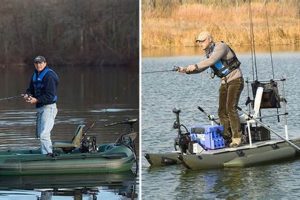
Compact, portable vessels designed for angling on the water, these boats combine the stability and specialized features of a fishing kayak with the convenience of inflation and deflation. They offer a practical solution for anglers with limited storage space or those seeking easy transportation to remote fishing locations in the United Kingdom. For example, an angler might choose this type of watercraft for a weekend fishing trip to a Scottish loch, easily transporting it in the boot of their car.
The portability and affordability of these craft have increased their popularity among fishing enthusiasts. They provide access to diverse waterways, from canals and rivers to coastal waters, without the need for roof racks or trailers. This ease of use contributes to a growing interest in angling throughout the UK, making the sport more accessible to individuals with varying levels of experience and resources. Historically, fishing kayaks were rigid and cumbersome to transport, limiting their use to those with specialized equipment. The emergence of inflatable technology has democratized the sport, opening up new possibilities for anglers nationwide.
This discussion will delve further into key aspects of selecting and using these specialized watercraft, including considerations for different fishing styles, essential accessories, and safety guidelines for navigating UK waters.
Tips for Selecting and Using Inflatable Fishing Kayaks in the UK
Choosing and utilizing an inflatable fishing kayak requires careful consideration of several factors to ensure safety and maximize the angling experience.
Tip 1: Consider Water Conditions: Different models are designed for specific water conditions. Calm lakes and canals require less robust vessels compared to coastal waters or fast-flowing rivers. Choose a kayak appropriate for the intended fishing environment.
Tip 2: Prioritize Stability and Capacity: Stability is crucial for casting and reeling. Look for wider kayaks with a lower center of gravity. Consider weight capacity, including gear, to ensure safe and balanced performance.
Tip 3: Evaluate Material Durability and Construction: Opt for durable, puncture-resistant materials like PVC or Nitrylon. Reinforced seams and multiple air chambers enhance safety and longevity.
Tip 4: Inspect Included Accessories and Features: Essential features may include rod holders, adjustable seats, storage compartments, and D-rings for attaching gear. Consider the practicality and placement of these features.
Tip 5: Understand Inflation and Deflation Procedures: Practice inflation and deflation before reaching the water. Familiarize yourself with the pump system and valves for efficient setup and pack-down.
Tip 6: Research and Comply with UK Regulations: Be aware of waterway regulations and licensing requirements for specific fishing locations. Check for any restrictions on motorized or non-motorized vessels.
Tip 7: Prioritize Safety Equipment: Always wear a personal flotation device (PFD). Carry a whistle, signaling device, and a waterproof bag for essential items like a phone and first-aid kit.
Tip 8: Practice Basic Kayaking Skills: Before venturing out, practice basic paddling techniques and maneuvering in a controlled environment. This enhances confidence and safety on the water.
By considering these tips, anglers can make informed decisions, enhance their fishing experience, and ensure safety on UK waterways.
This information provides a foundation for successful inflatable fishing kayak adventures. The next section will discuss recommended accessories and maintenance procedures to further enhance on-the-water experiences.
1. Portability

Portability is a defining characteristic of inflatable fishing kayaks, particularly relevant in the UK where diverse waterways, often accessed via challenging terrain, necessitate convenient transportation. This attribute significantly broadens angling opportunities, enabling access to remote locations previously inaccessible with traditional, rigid kayaks.
- Compact Storage:
Deflated, these kayaks occupy minimal storage space. This compact form allows for convenient storage in vehicles, flats, or garages, eliminating the need for specialized storage solutions or large vehicles, crucial in the often space-constrained UK environment. This ease of storage increases accessibility for individuals with limited space.
- Simplified Transportation:
The lightweight nature of inflatable kayaks, coupled with their compact packed size, simplifies transportation to and from fishing locations. Carrying bags or backpacks facilitate transport over varied terrain, including public transport, hiking trails, and uneven banksides, opening up access to secluded waters across the UK.
- Ease of Inflation/Deflation:
Rapid inflation and deflation systems using high-efficiency pumps contribute to the overall portability. Quick setup and pack-down times minimize preparation and streamline the fishing experience, allowing for spontaneous trips and efficient use of angling time, a significant advantage considering the often unpredictable UK weather.
- Versatile Deployment:
Inflatable kayaks can be launched from virtually any accessible shoreline, unlike rigid kayaks which often require designated launch sites or slipways. This versatility expands fishing possibilities across the diverse range of UK waters, from small streams and lochs to coastal areas.
The portability of inflatable fishing kayaks directly addresses the challenges of navigating and accessing the diverse and sometimes remote waterways of the UK. This feature expands fishing opportunities for a broader audience, fostering greater participation in the sport by removing logistical barriers associated with traditional kayak ownership and transport.
2. Stability

Stability is a paramount consideration when selecting an inflatable fishing kayak for use in UK waters. A stable platform is essential for casting, reeling, landing fish, and navigating varying water conditions. Compromised stability can lead to capsizing, equipment loss, and potentially dangerous situations, especially in challenging environments like coastal waters or fast-flowing rivers.
- Hull Design and Width:
Wider hulls generally offer greater primary stability, resisting initial tipping. Inflatable kayaks often feature wide, flat bottoms or catamaran-style hulls, providing enhanced stability compared to narrower, V-shaped hulls found in some recreational kayaks. A broader base provides a more secure platform, particularly important when standing to cast or reel, a common practice in certain fishing styles.
- Center of Gravity:
A lower center of gravity contributes significantly to stability. Inflatable kayaks often sit lower in the water than rigid kayaks, naturally lowering the center of gravity and increasing resistance to tipping. Proper weight distribution within the kayak, placing heavier items lower and centrally, further enhances stability, crucial for maintaining balance in unpredictable conditions or when engaging with larger fish.
- Air Chamber Configuration:
Multiple air chambers contribute to both stability and safety. Should one chamber be punctured, the remaining chambers provide sufficient buoyancy to maintain stability and prevent complete deflation. This redundancy is crucial for safety, especially in remote locations or challenging weather conditions common in UK waters.
- Impact of Water Conditions:
Water conditions significantly influence the perceived stability of any kayak. Calm lakes and canals offer a stable environment, while coastal areas or fast-flowing rivers present greater challenges. Choosing an inflatable kayak with a higher stability rating, considering wider hulls and robust construction, is crucial for navigating these more demanding UK environments.
Ultimately, stability significantly influences the safety and effectiveness of an inflatable fishing kayak in UK waters. Careful consideration of hull design, center of gravity, air chamber configuration, and anticipated water conditions is crucial for selecting a suitable vessel that provides a secure and reliable platform for a successful and safe fishing experience.
3. Durability
Durability is a critical factor influencing the lifespan and performance of inflatable fishing kayaks, particularly in the demanding environments often encountered in UK waters. The materials used, construction techniques, and overall design contribute significantly to a kayak’s ability to withstand abrasion, impacts, UV exposure, and the general wear and tear associated with regular use. Investing in a durable inflatable kayak ensures long-term value and reliable performance in diverse conditions.
Abrasion from rocks, submerged branches, and even gravelly shorelines poses a constant threat to inflatable kayaks. Durable materials, such as heavy-duty PVC or Nitrylon, offer enhanced resistance to punctures and tears, extending the kayak’s lifespan. Reinforced seams, multiple layers of material, and protective coatings further enhance abrasion resistance, crucial for navigating rocky rivers or coastal areas in the UK. For instance, a kayak constructed with multiple layers of reinforced PVC will be better equipped to withstand scraping against rocks on a shallow riverbed compared to a single-layer model.
UV exposure can degrade materials over time, causing weakening and eventual failure. Choosing a kayak constructed with UV-resistant materials is vital, especially in the UK where kayaks may be exposed to prolonged sunlight during transport or storage. Similarly, resistance to fluctuating temperatures and varying water conditions contributes to overall durability. Kayaks designed to withstand both fresh and saltwater environments, along with varying temperature extremes, are more versatile and offer extended longevity. Understanding the material composition and construction techniques employed in manufacturing is crucial for assessing long-term durability and making an informed purchase decision, ensuring a reliable and lasting investment for navigating the diverse and sometimes challenging waterways of the UK.
4. Storage Capacity
Storage capacity is a crucial factor to consider when selecting an inflatable fishing kayak for use in the UK. The ability to carry essential fishing gear, safety equipment, and personal items directly impacts the practicality and enjoyment of fishing expeditions. Insufficient storage can limit the range of fishing techniques employed, restrict access to remote locations, and compromise safety by necessitating overloaded conditions. Understanding the storage options available in various inflatable kayak models allows anglers to choose a vessel suited to their specific needs and fishing style.
Dedicated storage compartments, such as integrated tackle boxes, dry bags, and bungee cord systems, contribute significantly to organized and efficient gear management. These features keep essential items readily accessible while maintaining a clutter-free cockpit environment. For example, a dedicated tackle box allows anglers to quickly switch lures or rigs without rummaging through a larger storage bag, optimizing fishing time and minimizing disruption. Similarly, dry bags protect sensitive electronics and personal items from water damage, essential in the often unpredictable UK weather. The capacity and placement of storage compartments should be carefully evaluated considering the intended fishing style and typical gear requirements. Anglers targeting larger species, for example, might prioritize kayaks with ample storage for heavier tackle and specialized equipment.
Sufficient storage capacity contributes directly to safety and comfort. Overloading a kayak compromises stability and maneuverability, increasing the risk of capsizing, especially in challenging conditions. Adequate storage allows for proper weight distribution, enhancing stability and promoting efficient paddling. Moreover, convenient access to essential safety gear, like a first-aid kit or signaling device, becomes critical in emergency situations. Careful consideration of storage capacity ensures that anglers can carry all necessary equipment without compromising safety or comfort, facilitating a more enjoyable and productive fishing experience in the diverse waterways of the UK.
5. UK Waterways
The diverse network of rivers, canals, lakes, and coastal waters across the United Kingdom presents a rich tapestry of angling opportunities. Inflatable fishing kayaks, with their inherent portability and adaptability, offer a unique means of exploring and experiencing these diverse environments. Understanding the characteristics of UK waterways and their implications for inflatable kayak usage is crucial for safe and successful fishing excursions.
- River Systems:
Rivers, ranging from gentle meandering streams to powerful, fast-flowing currents, require careful consideration of kayak stability and maneuverability. Inflatable kayaks designed for river use often feature reinforced construction and tracking fins for enhanced control in moving water. Navigating rivers like the Wye or the Tay demands an understanding of water flow, potential hazards like submerged obstacles, and appropriate safety precautions. Choosing a kayak with robust construction and excellent tracking capabilities is essential for tackling river environments.
- Canal Networks:
Canals offer calmer waters ideal for leisurely paddling and fishing. The often restricted access points and limited bankside space make inflatable kayaks a practical choice due to their portability and ease of launching. Canals like the Kennet and Avon or the Grand Union provide tranquil fishing experiences, readily accessible with inflatable kayaks due to their ease of transport and deployment. However, awareness of canal regulations and user etiquette remains important.
- Lakes and Lochs:
Stillwater environments like lakes and lochs present excellent opportunities for diverse fishing techniques. Inflatable kayaks provide a stable platform for casting and retrieving, allowing anglers to explore different areas and target various species. Larger lakes, such as Windermere or Loch Lomond, offer ample space for inflatable kayak fishing, providing access to deeper waters and diverse fish populations. Wind and weather conditions, however, should be carefully considered when venturing onto larger bodies of water.
- Coastal Waters:
Coastal regions offer unique fishing opportunities, but require specialized kayak selection and safety considerations. Inflatable kayaks designed for coastal use typically feature robust construction, self-bailing systems, and higher weight capacities to handle challenging sea conditions. Navigating coastal areas demands careful attention to tides, currents, and weather forecasts. Launching and landing in surf zones requires skill and experience, and appropriate safety gear, including a personal flotation device and communication equipment, is essential.
The diverse nature of UK waterways presents unique challenges and opportunities for inflatable fishing kayak enthusiasts. Understanding the specific characteristics of each environment, from the gentle currents of canals to the demanding conditions of coastal waters, informs appropriate kayak selection, essential safety precautions, and ultimately, a more rewarding and successful fishing experience.
6. Fishing Features

Specialized fishing features distinguish inflatable fishing kayaks from recreational models, optimizing their performance for angling in UK waters. These features enhance functionality, improve angler efficiency, and contribute to a more productive and enjoyable fishing experience. The integration of these features directly addresses the specific needs of anglers, allowing for seamless integration of fishing techniques and equipment into the kayak’s design.
Rod holders, for example, secure fishing rods, freeing hands for paddling, baiting hooks, or landing fish. Multiple rod holders allow anglers to employ diverse fishing techniques simultaneously. Adjustable rod holders accommodate various rod lengths and angling styles. Similarly, integrated tackle storage systems, such as compartments or pouches, keep essential fishing gear organized and readily accessible. This eliminates the need for external storage solutions, streamlining the fishing process and reducing clutter within the kayak’s cockpit. Furthermore, features like anchor trolleys or integrated anchor systems facilitate controlled positioning in specific fishing locations, crucial for techniques like drift fishing or anchoring in current. These specialized features, when thoughtfully designed and integrated into the kayak, directly enhance fishing effectiveness and overall enjoyment on the water.
Careful consideration of fishing features when selecting an inflatable fishing kayak ensures compatibility with individual angling preferences and targeted species. Kayaks designed for specific fishing styles, such as trolling or fly fishing, may incorporate specialized features tailored to those techniques. The availability and configuration of these features influence the kayak’s versatility and suitability for diverse fishing scenarios across the UK’s varied waterways. Ultimately, the integration of well-designed fishing features transforms an inflatable kayak from a simple recreational vessel into a dedicated fishing platform, optimized for performance, efficiency, and enjoyment on the water.
7. Safety Considerations

Operating an inflatable fishing kayak in the diverse waters of the UK requires careful attention to safety considerations. These precautions mitigate inherent risks associated with on-water activities and ensure enjoyable, incident-free fishing experiences. Neglecting safety protocols can lead to serious consequences, ranging from equipment damage to life-threatening situations. A proactive approach to safety planning is paramount for all inflatable kayak anglers.
- Personal Flotation Devices (PFDs):
Wearing a properly fitted PFD is non-negotiable. PFDs provide essential buoyancy in the event of capsizing, significantly increasing the chances of survival in cold UK waters. Different PFD types exist, each with varying buoyancy and features. Selecting a PFD appropriate for the intended fishing environment and personal preferences is crucial. Inflatable PFDs offer greater comfort for extended wear, while inherently buoyant PFDs provide immediate flotation. Regular inspection and maintenance of PFDs ensure their effectiveness in emergency situations.
- Weather Awareness and Forecasting:
Checking weather forecasts before embarking on any kayaking trip is essential. Sudden changes in weather conditions, common in the UK, can create hazardous situations on the water. Strong winds, heavy rain, and fog can significantly impact visibility and kayak control. Monitoring weather updates during the trip allows for proactive adjustments to plans and timely decisions regarding returning to shore. Portable weather radios or smartphone apps provide real-time weather information, crucial for informed decision-making.
- Communication Equipment:
Carrying a reliable means of communication is essential for summoning assistance in emergencies. Mobile phones, stored in waterproof cases, offer a convenient communication method. However, mobile phone coverage can be unreliable in remote areas. Dedicated marine radios provide a more robust communication solution, enabling direct contact with coast guard services or other vessels. Signaling devices, such as flares or whistles, offer a means of attracting attention in situations where radio communication is unavailable. A well-defined communication plan, including emergency contact information, enhances preparedness and response effectiveness.
- Navigation and Waterway Familiarity:
Understanding navigational markers, charts, and local waterway regulations is crucial for safe navigation. Prior research and planning, including identification of potential hazards like submerged obstacles or strong currents, minimize risks. Carrying navigational charts, especially in unfamiliar waters, aids in accurate positioning and route planning. Awareness of tidal patterns and currents is essential for coastal kayaking, preventing unexpected drifts and ensuring safe passage. Local knowledge from experienced anglers or waterway authorities provides valuable insights into specific hazards and recommended routes, enhancing overall safety and navigation confidence.
Prioritizing these safety considerations reinforces a responsible approach to inflatable fishing kayaking in the UK. Careful planning, combined with appropriate safety equipment and adherence to established safety protocols, significantly mitigates risks and contributes to enjoyable and safe fishing experiences. These precautions, while essential for all kayaking activities, become particularly crucial in the context of inflatable kayaks given their inherent vulnerability to certain environmental factors and the often unpredictable nature of UK waterways. A proactive approach to safety ensures the long-term enjoyment and sustainability of this popular recreational activity.
Frequently Asked Questions
This section addresses common queries regarding inflatable fishing kayaks suitable for use in UK waters. Clear, concise information is provided to assist consumers in making informed purchasing decisions and understanding key aspects of ownership and operation.
Question 1: How durable are inflatable fishing kayaks compared to traditional hard-shell kayaks?
Modern inflatable fishing kayaks utilize durable materials like PVC and Nitrylon, often incorporating reinforced layers and seam construction. While not as inherently rigid as hard-shell kayaks, they offer excellent puncture resistance and can withstand typical encounters with rocks, submerged branches, and other potential hazards encountered in UK waters. Proper care and maintenance contribute significantly to their longevity.
Question 2: Are inflatable fishing kayaks suitable for use in coastal waters around the UK?
Specific models designed for coastal use are available, featuring reinforced construction, self-bailing systems, and higher weight capacities to handle challenging sea conditions. However, careful consideration of weather forecasts, tidal patterns, and local regulations remains essential for safe coastal kayaking. Certain coastal areas may present conditions unsuitable for inflatable kayaks.
Question 3: How stable are inflatable fishing kayaks, particularly when casting or reeling?
Inflatable kayaks designed for fishing often feature wider hulls and lower centers of gravity, contributing to enhanced stability. Proper weight distribution within the kayak further enhances stability. While stability can vary between models, many inflatable fishing kayaks offer a stable platform for casting, reeling, and even standing, particularly in calm water conditions.
Question 4: What safety precautions are essential when using an inflatable fishing kayak in the UK?
Wearing a personal flotation device (PFD), checking weather forecasts, carrying communication equipment, and understanding local waterway regulations are crucial safety precautions. Further safety measures include carrying a first-aid kit, signaling devices, and informing someone of planned routes and estimated return times. Thorough pre-trip planning enhances safety and preparedness.
Question 5: How easy are inflatable fishing kayaks to transport and store?
Portability and ease of storage are key advantages of inflatable kayaks. When deflated, they pack down into compact sizes easily transported in carrying bags or stored in vehicles, cupboards, or garages. Inflation and deflation processes are typically straightforward, involving readily available hand pumps or electric pumps. This ease of transport and storage significantly expands access to diverse fishing locations.
Question 6: What essential accessories should be considered when purchasing an inflatable fishing kayak for use in the UK?
Essential accessories include a suitable PFD, a high-efficiency pump for inflation/deflation, a repair kit for minor punctures, and appropriate paddles. Further accessories, based on individual fishing styles and needs, may include rod holders, anchor systems, dry bags for storing valuables, and fish finders. Careful selection of accessories enhances safety, functionality, and overall fishing enjoyment.
Investing in a quality inflatable fishing kayak opens up a world of angling opportunities across the diverse waterways of the UK. Careful research, informed decision-making, and prioritization of safety considerations ensure enjoyable and productive fishing experiences.
The next section will offer detailed reviews of several popular inflatable fishing kayak models suitable for use in UK waters.
Conclusion
Inflatable fishing kayaks present a compelling option for anglers seeking versatile and accessible watercraft for navigating the diverse waterways of the United Kingdom. Their portability, coupled with increasingly durable construction and specialized fishing features, positions them as a viable alternative to traditional hard-shell kayaks, particularly for those with limited storage space or transportation constraints. Careful consideration of factors like stability, storage capacity, and intended fishing environment remains crucial for selecting the appropriate model. Prioritizing safety precautions, including the use of personal flotation devices and adherence to waterway regulations, ensures responsible and enjoyable fishing experiences.
The evolving landscape of inflatable kayak technology continues to yield improvements in durability, performance, and specialized features. As advancements continue, inflatable fishing kayaks will likely play an increasingly prominent role in the future of angling across the UK, offering accessible and versatile platforms for experiencing the rich tapestry of the nation’s waterways. Informed decision-making, coupled with a commitment to safe and responsible practices, will empower anglers to fully capitalize on the potential of these innovative watercraft and contribute to the continued growth and enjoyment of fishing within the UK.