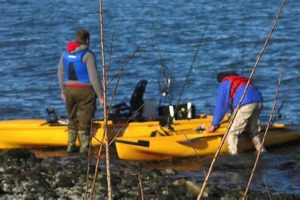
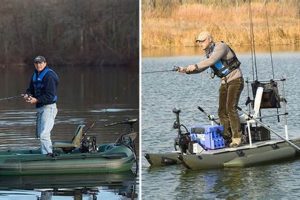
Selecting the right kayak for fishing involves careful consideration of various factors to ensure optimal performance and enjoyment on the water. This process requires an understanding of individual needs and preferences, including the intended fishing environment, target species, and desired level of comfort and stability. For example, a calm lake angler might prioritize stability and storage capacity, while an ocean kayaker might focus on speed and maneuverability.
A well-chosen vessel enhances the fishing experience by providing a stable platform for casting, retrieving, and landing fish. It allows anglers to access secluded fishing spots often unreachable by larger boats, increasing opportunities for success. Historically, kayaks have played a significant role in fishing cultures worldwide, evolving from traditional hunting tools to specialized sporting equipment designed for diverse aquatic environments. This evolution reflects the inherent value of kayaks for close-contact angling.
This article will delve into the crucial aspects of kayak selection, including hull design, propulsion systems, storage options, and essential features, providing readers with the knowledge to make informed decisions tailored to their specific fishing requirements.
Tips for Kayak Selection
Choosing a fishing kayak requires careful consideration of several key factors to ensure the vessel aligns with individual angling needs and preferences. The following tips offer guidance through this selection process.
Tip 1: Define the Fishing Environment: Consider the intended fishing location, whether calm lakes, rivers, or open ocean. Different environments demand specific hull designs and features. Ocean kayaks, for instance, prioritize speed and tracking, while lake kayaks often emphasize stability.
Tip 2: Evaluate Stability Needs: Anglers seeking a stable platform for casting and reeling should consider wider, flatter hulls. Those prioritizing maneuverability and speed might opt for narrower designs, accepting a trade-off in stability.
Tip 3: Assess Storage Capacity: Evaluate the amount of gear typically carried, including rods, tackle boxes, and safety equipment. Kayaks offer various storage options, from open compartments to sealed hatches, catering to different needs.
Tip 4: Consider Propulsion Systems: Paddle kayaks offer a traditional, eco-friendly approach. Pedal-driven systems provide hands-free fishing, while motorized kayaks offer greater range and speed. Each system presents advantages and disadvantages based on fishing style and physical capabilities.
Tip 5: Examine Seating and Comfort: Long fishing trips require comfortable seating. Adjustable seats with back support and ample legroom contribute to a more enjoyable experience. Consider factors like seat material and adjustability for optimal comfort.
Tip 6: Explore Additional Features: Rod holders, anchor trolleys, and fish finders enhance the angling experience. Evaluate the necessity of these features based on individual fishing preferences and target species.
Tip 7: Establish a Budget: Kayak prices vary significantly based on features, materials, and propulsion systems. Setting a realistic budget helps narrow down options and prevents overspending.
By carefully considering these factors, anglers can select a kayak that optimizes performance, comfort, and overall fishing success. A well-chosen vessel enhances enjoyment on the water and provides access to prime fishing locations.
The subsequent sections will delve further into specific features and considerations, providing a comprehensive guide to informed kayak selection.
1. Hull Type
Hull type significantly influences a fishing kayak’s performance characteristics, impacting stability, maneuverability, and speed. Choosing the correct hull type is crucial for optimizing the on-the-water experience and aligning the vessel with specific fishing needs and environments.
- Pontoon Hulls:
Characterized by two separate hulls connected by a platform, pontoon hulls offer exceptional stability, making them ideal for calm waters and stand-up fishing. Their wide stance resists tipping, providing a secure platform for casting. However, pontoon hulls sacrifice maneuverability and speed compared to other designs, making them less suitable for navigating tight spaces or covering long distances.
- Flat Bottom Hulls:
These hulls provide excellent primary stability, meaning they resist initial tipping. This stability is advantageous for beginners and anglers prioritizing a stable casting platform. Flat bottom hulls are often found in recreational kayaks used on calm lakes and rivers. However, they can be less maneuverable and may feel tippy in rougher conditions due to reduced secondary stability the ability to remain stable after initial tilting.
- V-Shaped Hulls:
Designed for speed and efficient tracking, V-shaped hulls excel in open water and choppy conditions. They cut through waves effectively, minimizing rocking and maximizing forward momentum. Kayaks with V-shaped hulls are favored by anglers covering long distances or fishing in currents. The trade-off for speed and tracking is reduced primary stability, making them less suitable for beginners or those prioritizing a completely stationary platform.
- Rounded Hulls:
Offering a balance of stability and maneuverability, rounded hulls are versatile options for various fishing environments. They provide moderate primary and secondary stability, making them suitable for both calm and moderately choppy waters. Rounded hulls track reasonably well while maintaining responsiveness for maneuvering in tighter areas.
Selecting the appropriate hull type requires careful consideration of the intended fishing environment, desired stability level, and preferred paddling style. Understanding the strengths and weaknesses of each hull design ensures anglers choose a kayak that maximizes performance and enjoyment on the water, ultimately contributing to a successful and comfortable fishing experience.
2. Propulsion Method

Propulsion method forms a critical component of kayak selection for fishing. The chosen method directly impacts an angler’s experience, influencing speed, maneuverability, fatigue, and overall fishing effectiveness. Understanding the various propulsion systems and their respective advantages and disadvantages is essential for informed decision-making.
Traditional paddle propulsion offers a quiet, cost-effective approach, allowing access to shallow waters and intricate waterways. However, paddling requires physical exertion, potentially limiting fishing time and causing fatigue. Pedal-powered kayaks provide hands-free operation, enabling anglers to focus on casting and reeling. These systems offer increased speed and range compared to paddling, but come at a higher price point and may restrict access to very shallow areas. Motorized kayaks offer the greatest speed and range, facilitating travel to distant fishing spots and trolling. However, motors introduce noise and require fuel or battery management, adding complexity and cost. Choosing between these methods necessitates careful consideration of fishing style, physical capabilities, target fishing grounds, and budget.
For instance, an angler targeting shallow-water species in a secluded marsh might find a paddle kayak ideal for its stealth and maneuverability. An angler fishing larger bodies of water, covering significant distances, or trolling might prefer a pedal or motor-driven system for efficiency and reduced physical strain. Furthermore, anglers with physical limitations might benefit from the reduced exertion offered by pedal or motor propulsion. Selecting the right propulsion method requires balancing individual needs and preferences with the demands of the fishing environment. Ultimately, the chosen propulsion system significantly contributes to overall fishing success and enjoyment.
3. Storage Capacity

Storage capacity plays a vital role in fishing kayak selection. Adequate storage space directly impacts organization, efficiency, and overall fishing success. A well-designed storage system allows anglers to carry essential gear, including rods, tackle boxes, safety equipment, and personal items, ensuring easy access and a clutter-free fishing experience. Insufficient storage can lead to frustration, disorganization, and compromised safety. Therefore, carefully evaluating storage options is crucial when choosing a fishing kayak.
- Types of Storage Compartments:
Fishing kayaks offer various storage compartments designed for specific purposes. Open compartments, often located behind the seat, provide quick access to frequently used items like tackle boxes and pliers. Sealed hatches offer waterproof protection for sensitive electronics, food, and extra clothing. Recessed storage wells, commonly found in the deck, secure items like rods and paddles, preventing loss overboard. Understanding the different compartment types and their intended uses is key to effective gear organization.
- Capacity and Weight Limits:
Kayaks have specific weight capacities, including the combined weight of the angler, gear, and the kayak itself. Exceeding this limit compromises stability and safety. Storage compartments also have individual weight limits. Distributing weight evenly throughout the kayak maintains balance and optimal performance. Considering both overall and compartment-specific weight limits is essential for safe and efficient operation.
- Accessibility and Organization:
Easy access to gear is paramount during a fishing trip. Storage compartments located within easy reach minimize disruption and maximize fishing time. Features like integrated organizers, tackle trays, and gear tracks enhance organization and prevent items from shifting during transit. Prioritizing accessibility and organization streamlines the fishing process and contributes to a more enjoyable experience.
- Material and Durability:
Storage compartments are constructed from various materials, each with its own durability and maintenance requirements. Hard plastic hatches offer excellent protection and are easy to clean, while mesh or fabric pockets provide breathability for wet gear but may require more frequent cleaning and maintenance. Considering the material and its long-term durability ensures the storage system withstands the rigors of regular fishing trips.
By carefully assessing storage capacity, anglers can select a kayak that effectively accommodates all essential gear while maintaining balance, stability, and accessibility. A well-organized and readily accessible storage system contributes significantly to a successful and enjoyable fishing experience. This consideration, alongside hull design and propulsion method, completes a comprehensive approach to choosing the right fishing kayak.
4. Stability and Tracking

Stability and tracking are critical performance characteristics influencing kayak selection, particularly for fishing. These factors directly impact an angler’s ability to cast, reel, and navigate effectively, contributing significantly to both safety and fishing success. Understanding the interplay between stability and tracking is crucial for choosing a kayak that meets specific angling needs and intended water conditions.
- Primary Stability:
Primary stability refers to a kayak’s initial resistance to tipping. Wider, flatter hulls generally offer greater primary stability, providing a secure platform for casting and reeling, particularly in calm water. This stability is crucial for anglers who prefer to stand while fishing or require a stable base for fighting larger fish. However, kayaks with high primary stability may sacrifice maneuverability.
- Secondary Stability:
Secondary stability describes a kayak’s ability to remain stable after initial tilting. Kayaks with rounded or V-shaped hulls often exhibit greater secondary stability, allowing them to lean into turns and handle rougher water conditions without capsizing. This characteristic is essential for anglers fishing in currents, waves, or open water. However, these kayaks might feel less stable initially for those accustomed to wider, flatter hulls.
- Tracking:
Tracking refers to a kayak’s ability to maintain a straight course with minimal paddling adjustments. Longer, narrower kayaks with pronounced keels or fins generally track better, making them efficient for covering long distances. Good tracking conserves energy and allows anglers to focus on fishing rather than constantly correcting course. However, kayaks optimized for tracking can be less maneuverable in tight spaces.
- Maneuverability:
Maneuverability describes a kayak’s responsiveness to turning and changing direction. Shorter, wider kayaks with flatter hulls tend to be more maneuverable, allowing for quick turns and adjustments in tight spaces, such as navigating through vegetation or around obstacles. Enhanced maneuverability benefits anglers fishing in rivers, creeks, or areas requiring frequent course adjustments. However, highly maneuverable kayaks may sacrifice tracking performance in open water.
Choosing a fishing kayak requires careful consideration of the balance between stability and tracking based on the intended fishing environment and personal preferences. Anglers fishing calm lakes or rivers might prioritize primary stability, while those fishing open water or currents might prioritize secondary stability and tracking. Understanding the interplay of these factors empowers anglers to select a kayak that optimizes performance, safety, and overall fishing success.
5. Seating Comfort

Seating comfort forms an integral component of fishing kayak selection, directly impacting angler endurance and overall fishing experience. Extended periods on the water necessitate a comfortable and supportive seating system to minimize fatigue and maximize focus on fishing. Choosing the right seat involves considering factors like adjustability, material, and back support to ensure optimal comfort and prevent discomfort or pain during long fishing trips. A properly fitted and comfortable seat enhances enjoyment and contributes to a more productive and satisfying angling experience.
- Adjustability:
Adjustable seating systems allow anglers to customize the seat position to suit individual body types and preferences. Features like adjustable backrests, foot braces, and seat height contribute to optimal posture and weight distribution, minimizing strain and maximizing comfort. The ability to fine-tune the seat position is crucial for accommodating different fishing styles and ensuring long-term comfort on the water.
- Material and Breathability:
Seat materials impact both comfort and durability. Breathable fabrics, such as mesh or padded nylon, enhance airflow and prevent overheating, especially in warm weather. High-quality, UV-resistant materials ensure long-term durability and resistance to fading and wear. Choosing a seat material that balances comfort, breathability, and durability is crucial for extended use.
- Back Support and Ergonomics:
Adequate back support is essential for preventing fatigue and discomfort during long hours on the water. Ergonomically designed seats with lumbar support promote proper posture and reduce strain on the back and spine. A supportive seat back enhances comfort and allows anglers to maintain focus and enjoyment throughout the fishing trip.
- Elevated Seating:
Elevated seating positions offer improved visibility and casting leverage. Higher seating positions can facilitate easier casting and retrieval, particularly in shallow water or when targeting specific species. However, elevated seats can also raise the center of gravity, potentially impacting stability. Choosing the appropriate seat height involves balancing visibility and leverage advantages with stability considerations.
Selecting a fishing kayak with a comfortable and supportive seating system directly contributes to a positive and productive fishing experience. Careful consideration of adjustability, material, back support, and seat height ensures optimal comfort and minimizes fatigue, allowing anglers to fully enjoy their time on the water and maximize their fishing success. This aspect, alongside considerations of hull type, propulsion, and storage, contributes to a comprehensive understanding of how to choose the right fishing kayak.
6. Fishing Features

Specialized fishing features differentiate fishing kayaks from recreational models, significantly influencing kayak selection. These features directly impact angling efficiency, convenience, and overall success. Rod holders, for example, secure rods while paddling or preparing tackle, preventing loss and freeing hands for other tasks. Integrated fish finders offer real-time underwater insights, aiding in locating fish and understanding bottom structure. Understanding the purpose and utility of these features is crucial for choosing a kayak tailored to specific fishing needs.
Consider an angler targeting pelagic species in open water. Features like rod holders positioned for trolling, a transducer mount for a fish finder, and ample storage for tackle boxes become essential. Conversely, an angler fishing in shallow rivers might prioritize maneuverability and a compact design, potentially valuing flush-mounted rod holders and a minimalist setup to navigate tight spaces effectively. The presence and design of these features directly impact the kayak’s suitability for specific fishing scenarios. Evaluating these features relative to the intended fishing style and environment becomes a critical component of informed kayak selection.
Selecting a fishing kayak requires careful evaluation of available features. Prioritizing essential features aligned with individual fishing styles and target species maximizes efficiency and enjoyment on the water. While some features enhance convenience, others directly impact fishing success. Understanding this distinction empowers informed decisions, ensuring the chosen kayak effectively supports angling goals. This understanding, alongside considerations of hull design, propulsion, stability, and comfort, culminates in a comprehensive approach to informed kayak selection.
7. Budget Considerations

Budget considerations play a crucial role in the kayak selection process, influencing available options and ultimately shaping the fishing experience. Kayak prices vary significantly based on features, materials, and propulsion systems. Establishing a realistic budget before beginning the selection process allows for focused research and prevents overspending. A clear budget framework helps narrow the field of potential kayaks, streamlining the decision-making process and ensuring alignment between desired features and financial constraints. For example, a basic paddle kayak might fall within a lower price range, while a fully equipped, pedal-driven fishing kayak with advanced electronics could represent a significantly higher investment. Recognizing this price range allows for realistic goal setting and informed trade-offs.
The relationship between budget and kayak choice often involves compromise. A limited budget might necessitate prioritizing essential features over luxury add-ons. For instance, an angler on a tight budget might choose a kayak with a basic seat and fewer rod holders, allocating funds towards a higher-quality hull or a more efficient propulsion system. Conversely, a larger budget allows for greater flexibility in selecting features, materials, and customization options. Understanding this dynamic empowers informed decision-making, allowing anglers to maximize their investment and select a kayak that aligns with both fishing needs and financial resources. Failing to establish a budget can lead to disappointment, potentially resulting in a kayak that compromises essential features due to cost overruns or necessitates sacrificing preferred functionalities to stay within financial limitations. Practical application of budget considerations involves researching prices, comparing features, and evaluating the long-term costs associated with ownership, such as maintenance, storage, and transportation.
In summary, budget considerations form an integral component of the kayak selection process. Establishing a realistic budget prior to researching and comparing models ensures informed decision-making, facilitates prioritized feature selection, and ultimately contributes to a satisfying and financially responsible purchase. A well-defined budget serves as a guiding principle throughout the selection process, enabling anglers to choose a kayak that balances desired features, performance characteristics, and financial constraints, ultimately enhancing the overall fishing experience.
Frequently Asked Questions
This section addresses common inquiries regarding fishing kayak selection, providing concise and informative responses to facilitate informed decision-making.
Question 1: What hull type is best suited for ocean fishing?
Longer kayaks with V-shaped hulls generally perform well in ocean conditions due to their enhanced tracking and ability to handle chop. Sit-on-top designs are often preferred for their self-bailing capabilities.
Question 2: How important is stability in a fishing kayak?
Stability is crucial for casting, reeling, and landing fish, especially for anglers who prefer to stand. Wider, flatter hulls offer greater initial stability, while rounded hulls provide better secondary stability for rougher conditions.
Question 3: What are the advantages of pedal-powered kayaks?
Pedal kayaks offer hands-free propulsion, allowing anglers to focus on fishing. They provide greater speed and range compared to paddling, but can be more expensive and less maneuverable in shallow water.
Question 4: How much storage space is needed in a fishing kayak?
Storage needs depend on individual fishing styles and gear requirements. Consider the amount of tackle, rods, safety equipment, and personal items typically carried to determine appropriate storage capacity.
Question 5: What safety features should one consider when choosing a fishing kayak?
Essential safety features include a personal flotation device (PFD), a whistle, a bilge pump (for sit-inside kayaks), and a paddle leash. Navigation lights and reflective gear enhance visibility in low-light conditions.
Question 6: How does budget impact kayak selection?
Budget constraints influence available features, materials, and propulsion systems. Establishing a realistic budget helps narrow options and prioritize essential features over luxury add-ons.
Careful consideration of these frequently asked questions, along with the information provided throughout this article, empowers informed decisions and contributes to a successful and enjoyable fishing kayak experience.
This concludes the comprehensive guide to selecting a fishing kayak. By carefully evaluating the discussed factors, anglers can confidently choose a vessel that aligns with their specific needs and preferences, maximizing on-the-water performance and overall fishing enjoyment.
How to Choose a Fishing Kayak
Selecting a fishing kayak requires careful consideration of various interconnected factors. Hull design influences stability and maneuverability, impacting performance in different water conditions. Propulsion choice affects speed, range, and physical exertion. Storage capacity dictates gear organization and overall efficiency. Seating comfort directly impacts endurance and enjoyment during long fishing trips. Specialized fishing features, such as rod holders and fish finders, enhance angling effectiveness. Finally, budget considerations shape available options and necessitate prioritizing essential features. A comprehensive understanding of these elements empowers informed decision-making.
Successful kayak selection hinges on aligning these factors with individual angling needs and preferences. A well-chosen vessel enhances on-the-water experiences, expands fishing opportunities, and ultimately contributes to greater success and enjoyment. Careful evaluation, informed by the principles outlined in this guide, ensures a rewarding and fulfilling fishing kayak experience for years to come.