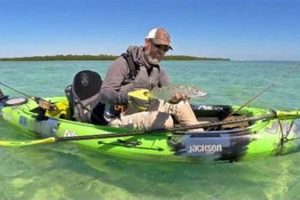
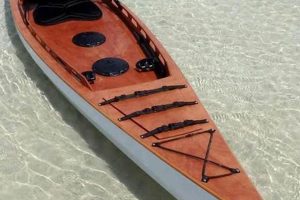
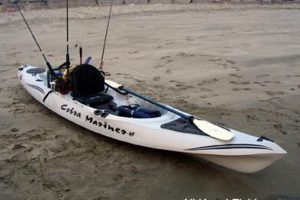
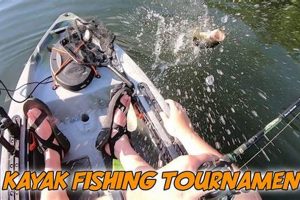
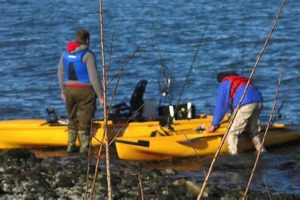
Tandem kayaks designed for angling provide a stable platform for two individuals to enjoy the sport. These vessels typically feature specialized storage for rods, tackle, and often include other amenities such as adjustable seating and mounting points for fish finders or other accessories. An example would be a sit-on-top model equipped with two recessed rod holders and a rear cargo well.
Shared angling experiences offer companionship and enhanced safety in remote locations. The increased stability and capacity of these watercraft allow for larger catches and the combined effort can be advantageous when navigating challenging waters or landing sizable fish. Furthermore, the evolution of kayak design has led to purpose-built tandem fishing kayaks, incorporating features that were previously unavailable in earlier models, improving both comfort and functionality.
This article will explore various aspects of tandem fishing kayaks, including selecting the appropriate hull design, essential gear and accessories, popular fishing techniques, and important safety considerations.
Tips for Tandem Kayak Fishing
Proper planning and execution contribute significantly to a successful and enjoyable tandem kayak fishing excursion. The following tips offer guidance for optimizing the experience.
Tip 1: Distribute Weight Evenly: Balanced weight distribution is crucial for stability and efficient paddling. Gear should be distributed evenly throughout the kayak, considering both the weight of anglers and their equipment.
Tip 2: Coordinate Paddling Strokes: Synchronized paddling is essential for efficient movement and maneuverability. Practicing paddling rhythms prior to fishing trips can significantly improve coordination.
Tip 3: Establish Communication Protocols: Clear and concise communication between anglers is vital, particularly when navigating challenging waters or landing fish. Pre-determined signals or verbal cues can prevent confusion and enhance safety.
Tip 4: Designate Roles and Responsibilities: Assigning specific tasks, such as navigation, anchor deployment, or fish handling, can streamline the fishing process and avoid redundancy.
Tip 5: Choose Appropriate Fishing Techniques: Certain fishing techniques are better suited for tandem kayaks than others. Trolling and still fishing are often preferred due to the stability offered by the larger platform.
Tip 6: Prioritize Safety: Wearing personal flotation devices is paramount. Carrying essential safety equipment, such as a first-aid kit, whistle, and communication device, is also highly recommended. Awareness of weather conditions and water traffic is critical.
Implementing these strategies can significantly enhance the enjoyment and effectiveness of tandem kayak fishing trips, allowing anglers to focus on the sport and create memorable experiences.
By incorporating these tips into fishing practices, individuals can maximize their time on the water and create a safe and rewarding experience.
1. Stability

Stability represents a critical factor in tandem fishing kayak design. Its importance stems from the need to maintain balance while performing activities such as casting, reeling, and landing fish. A stable platform minimizes the risk of capsizing, particularly crucial when two individuals are onboard. Furthermore, increased stability enhances comfort and reduces fatigue, allowing for longer fishing trips. A less stable kayak can create anxiety and limit movement, hindering the overall fishing experience. For instance, a wide, flat-bottomed hull design offers greater initial stability, making it ideal for calm waters and stand-up fishing. However, this design might be less suitable for rougher conditions where secondary stability, the ability to resist tipping at greater angles, becomes more important.
The relationship between stability and kayak design involves a series of trade-offs. Design choices that maximize stability often impact other performance characteristics, such as speed and maneuverability. A wider hull provides more initial stability but generates increased drag, reducing speed and requiring greater effort to paddle. Conversely, a longer, narrower hull improves tracking and speed but sacrifices initial stability. Therefore, selecting a tandem fishing kayak requires careful consideration of intended use and water conditions. Anglers frequently fishing in sheltered bays or lakes might prioritize initial stability, while those tackling rivers or open water might opt for a design offering better secondary stability and tracking.
Understanding the nuances of stability in tandem kayak design empowers informed decision-making. Considering factors such as hull design, weight capacity, and intended use allows anglers to select a kayak that maximizes both safety and performance. This informed approach contributes to a more enjoyable and productive fishing experience, ultimately fostering greater appreciation for the sport. Neglecting stability considerations can lead to uncomfortable, and potentially dangerous, situations on the water, highlighting the practical significance of understanding this key aspect of tandem fishing kayak design.
2. Storage Capacity
Storage capacity plays a vital role in the functionality of a two-person fishing kayak. Adequate storage facilitates organized transport of essential fishing gear, including rods, reels, tackle boxes, and safety equipment. Insufficient storage can lead to cluttered decks, hindering movement and potentially compromising safety. For example, a dedicated compartment for rods prevents tangling and breakage, while dry storage protects sensitive electronic devices and personal items from water damage. Ample storage also allows for longer expeditions by accommodating provisions and additional gear for varied fishing conditions.
The relationship between storage capacity and fishing success is significant. Organized storage promotes efficient access to necessary equipment, reducing time spent searching and maximizing time spent fishing. Dedicated compartments for specific items, such as lures or bait, further enhance efficiency. Moreover, sufficient storage allows anglers to carry a wider variety of gear, increasing adaptability to different fish species and fishing techniques. Consider a scenario where an angler needs to quickly switch from trolling to bottom fishing; easily accessible tackle boxes within designated compartments enable a seamless transition, maximizing fishing opportunities. Conversely, limited storage can restrict gear choices, potentially impacting fishing success.
In summary, sufficient and well-designed storage contributes significantly to a successful and enjoyable fishing experience in a tandem kayak. Prioritizing storage capacity during kayak selection empowers anglers to carry all essential gear safely and efficiently. This contributes to not only increased fishing success but also enhanced safety and overall enjoyment on the water. Challenges associated with limited storage, such as tangled lines and inaccessible equipment, underscore the practical importance of adequate storage solutions in tandem fishing kayak design.
3. Maneuverability
Maneuverability in a tandem fishing kayak directly impacts its effectiveness and suitability for specific fishing environments. Navigating tight waterways, swiftly changing directions to follow fish, and positioning the kayak optimally for casting require precise control. Restricted maneuverability limits access to prime fishing locations and hinders responsiveness to changing conditions.
- Hull Design:
Hull design significantly influences a kayak’s maneuverability. Shorter, wider hulls generally offer greater initial stability but turn more slowly. Longer, narrower hulls track straighter and turn more quickly but may feel less stable. A kayak with a pronounced keel enhances tracking but sacrifices turning responsiveness. For example, a short, flat-bottomed hull excels in calm ponds but struggles in windy conditions or moving water. Conversely, a V-shaped hull tracks well in currents but requires more effort to turn quickly.
- Water Conditions:
Maneuverability is significantly affected by prevailing water conditions. Strong currents, wind, and waves can challenge even the most maneuverable kayak. In such conditions, a kayak with superior tracking capabilities is preferable. For instance, a tandem kayak fishing in a fast-flowing river requires precise maneuvering to avoid obstacles and maintain position. A kayak with poor tracking may be swept downstream, requiring constant correction and hindering fishing effectiveness.
- Paddler Coordination:
In a tandem kayak, synchronized paddling significantly impacts maneuverability. Mismatched strokes create drag and impede efficient turning. Practicing coordinated paddling techniques, such as sweep strokes and draws, improves the kayak’s responsiveness and reduces wasted effort. For example, a tandem kayak with well-synchronized paddlers can execute tight turns and quickly reposition for optimal casting angles. Conversely, uncoordinated paddling leads to frustration and decreased fishing efficiency.
- Rudder or Skeg:
The presence and type of steering system influence maneuverability. A rudder provides active control for precise turning, while a skeg enhances directional stability, particularly in windy or current-driven environments. Deploying a skeg improves tracking in challenging conditions but can limit turning radius. A rudder offers greater control but adds complexity and potential points of failure. Choosing between a rudder and a skeg depends on the intended fishing environment and individual preferences.
The interplay of these factors determines a tandem fishing kayak’s overall maneuverability. Selecting a kayak with appropriate characteristics for the intended fishing environment and angler skill level maximizes fishing effectiveness and enjoyment. Considering maneuverability alongside other key features, such as stability and storage capacity, ensures a well-rounded and suitable vessel for tandem fishing adventures.
4. Comfort Features
Comfort features in tandem fishing kayaks directly influence angler endurance and overall enjoyment. Extended fishing trips necessitate supportive seating, ample legroom, and convenient adjustability. Discomfort can curtail fishing time, diminish focus, and negatively impact the overall experience. Adjustable seating positions, for example, accommodate varying body types and fishing styles. Adequate legroom allows for comfortable stretching and shifting, reducing fatigue and promoting circulation. Padded seating and backrests provide crucial support, mitigating strain during long hours on the water. A poorly designed seat can lead to back pain and stiffness, significantly impacting fishing enjoyment and potentially leading to premature departure from the water.
The relationship between comfort features and fishing success is often overlooked. A comfortable angler is a more focused and patient angler. Reduced discomfort allows for sustained attention to fishing, increasing the likelihood of success. For example, adjustable footrests contribute to a stable paddling position, improving paddling efficiency and reducing fatigue. This allows anglers to cover more water and maintain focus on fishing, rather than battling discomfort. Similarly, well-placed cup holders and storage compartments keep essential items within easy reach, minimizing disruptive movements and maximizing fishing time. Consider a scenario where an angler experiences numb legs due to inadequate legroom; this discomfort can distract from fishing and ultimately decrease chances of a successful catch.
In conclusion, prioritizing comfort features in a tandem fishing kayak significantly enhances the overall fishing experience. Features such as adjustable seating, ample legroom, and supportive padding contribute to sustained comfort, reducing fatigue and promoting focus. This translates to increased fishing time, enhanced enjoyment, and ultimately, greater potential for fishing success. Disregarding comfort features can lead to a diminished experience, highlighting the importance of ergonomic design in maximizing the enjoyment and effectiveness of tandem kayak fishing.
5. Weight Capacity

Weight capacity represents a critical factor in tandem fishing kayak selection. It dictates the total combined weight of anglers, gear, and any additional cargo the vessel can safely support. Exceeding the specified weight capacity compromises stability, reduces freeboard (the distance between the waterline and the top edge of the hull), and increases the risk of capsizing. Understanding weight capacity and its implications ensures safe and effective operation of the kayak.
- Combined Angler Weight:
The combined weight of both anglers constitutes a significant portion of the total load. Manufacturers specify maximum weight capacities, and exceeding this limit significantly impacts performance and safety. For example, two anglers weighing a combined 250 pounds in a kayak with a 400-pound capacity leaves 150 pounds for gear and other items. Choosing a kayak with ample weight capacity ensures sufficient allowance for gear and provides a margin of safety.
- Fishing Gear and Equipment:
Fishing gear, including rods, reels, tackle boxes, and coolers, contributes significantly to the overall weight. Estimating the weight of all intended gear is crucial for determining the appropriate kayak weight capacity. For instance, adding a motorized fish finder, battery, and mounting hardware can easily add 20-30 pounds. Failing to account for these items can lead to overloading the kayak and compromising stability.
- Impact on Performance:
Operating a tandem kayak near its maximum weight capacity affects performance characteristics. Reduced freeboard increases susceptibility to waves and splashing, potentially leading to water entering the cockpit. Additionally, a heavily loaded kayak sits lower in the water, increasing drag and requiring greater paddling effort. Maneuverability is also affected, as a fully loaded kayak responds more sluggishly to turning inputs.
- Safety Considerations:
Exceeding the specified weight capacity poses significant safety risks. A heavily loaded kayak is less stable and more prone to capsizing, particularly in challenging conditions such as wind or waves. Reduced freeboard increases the risk of swamping, and a lower profile makes the kayak less visible to other boaters. Adhering to the manufacturer’s weight capacity guidelines is essential for ensuring a safe and enjoyable fishing experience.
Careful consideration of weight capacity, angler weight, gear weight, and performance implications is paramount when selecting a tandem fishing kayak. Choosing a kayak with appropriate weight capacity ensures safe operation, optimal performance, and ultimately, a more enjoyable and productive fishing experience. Neglecting this critical aspect can compromise safety and detract from the overall enjoyment of the sport.
Frequently Asked Questions
This section addresses common inquiries regarding tandem fishing kayaks, providing concise and informative responses to facilitate informed decision-making.
Question 1: What are the primary advantages of a tandem fishing kayak over two single kayaks?
Tandem kayaks offer increased stability, enhanced load capacity, and often prove more economical than purchasing two single kayaks. They also facilitate shared experiences and can be advantageous for anglers of differing skill levels.
Question 2: How does one choose the right size tandem fishing kayak?
Appropriate size depends on the combined weight of anglers and gear, intended fishing environment, and desired performance characteristics. Manufacturers provide weight capacity specifications that must be adhered to for safety and optimal performance. Longer kayaks typically track better, while wider kayaks offer increased stability.
Question 3: What are essential safety considerations for tandem kayak fishing?
Essential safety measures include wearing personal flotation devices, carrying a first-aid kit, signaling devices (whistle, mirror), and a communication device. Checking weather forecasts before embarking and informing someone of the planned route are also crucial.
Question 4: What fishing techniques are best suited for tandem kayaks?
Tandem kayaks are well-suited for trolling, still fishing, and drifting. Their stability provides a platform for casting and reeling, and their capacity allows for carrying a variety of tackle and equipment.
Question 5: How does one transport a tandem fishing kayak?
Transportation requires a vehicle with adequate roof rack capacity or a trailer. Specialized kayak trailers and roof rack systems are available, facilitating safe and secure transport. Proper securing techniques prevent damage to the kayak and ensure safe road travel.
Question 6: What maintenance is required for a tandem fishing kayak?
Regular maintenance includes rinsing with fresh water after each use, especially in saltwater environments. Periodic inspection for damage, proper storage out of direct sunlight, and occasional application of UV protectant prolong the kayak’s lifespan.
Addressing these frequently asked questions provides a comprehensive overview of key considerations for tandem fishing kayak ownership and operation. A thorough understanding of these aspects ensures a safer and more enjoyable fishing experience.
The subsequent section will delve into specific features and options available within the realm of tandem fishing kayaks.
Conclusion
Tandem fishing kayaks offer a unique approach to angling, providing a stable and spacious platform for shared experiences on the water. Careful consideration of factors such as stability, storage capacity, maneuverability, comfort features, and weight capacity is crucial for selecting the appropriate vessel. Understanding these elements, alongside proper safety protocols and effective fishing techniques, ensures a rewarding and secure fishing experience.
The selection of a suitable tandem fishing kayak empowers anglers to explore diverse waterways and pursue a variety of fishing styles. This informed approach fosters a deeper appreciation for the sport and encourages responsible enjoyment of aquatic environments.