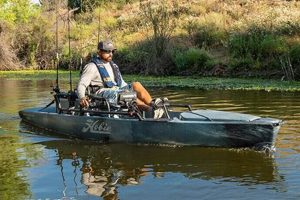
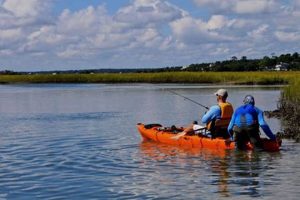
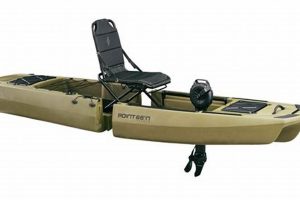
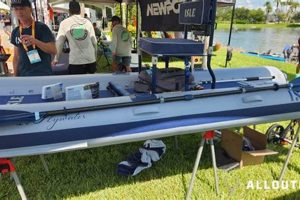
This specific model of watercraft is designed for angling in various aquatic environments. It combines the stability and maneuverability of a kayak with features tailored to the needs of anglers, such as rod holders, storage compartments, and often, specialized seating. This type of vessel offers a unique blend of functionality and recreation, allowing users to explore waterways while engaging in their favorite pastime.
The combination of stability, specialized features, and maneuverability allows for efficient and enjoyable fishing experiences. Historically, fishing kayaks have evolved from basic, utilitarian designs to highly sophisticated vessels incorporating advanced materials and technology. This progression has broadened their appeal and made them accessible to a wider range of anglers, from casual hobbyists to seasoned professionals. The impact on the fishing community has been significant, providing an alternative method for accessing fishing grounds and enjoying the sport.
Further exploration of specific design elements, materials, and performance characteristics will provide a more comprehensive understanding of this specialized type of watercraft and its role in modern angling. Considerations for selecting the appropriate model based on individual needs and intended use will also be addressed.
Tips for Angling Kayak Selection and Use
Careful consideration of several factors contributes to a successful and enjoyable fishing kayak experience. Selecting the right vessel and understanding its proper use are crucial for maximizing performance and safety on the water.
Tip 1: Stability Considerations: Hull design significantly impacts stability. Wider, flatter hulls offer greater initial stability, ideal for calmer waters and stand-up fishing. Longer, narrower hulls provide better tracking and speed, suited for covering larger distances.
Tip 2: Feature Assessment: Evaluate built-in features like rod holders, storage compartments, and anchor trolleys. Consider their placement and usability for specific fishing styles and gear requirements.
Tip 3: Propulsion Choices: Paddle propulsion offers maneuverability and quiet operation, beneficial in shallow water or areas with vegetation. Pedal-driven systems provide hands-free fishing and increased speed over longer distances. Motorized kayaks offer the greatest range and speed but require additional maintenance and considerations.
Tip 4: Material Selection: Polyethylene kayaks are durable and affordable, while composites offer lighter weight and improved performance, albeit at a higher cost. Consider the trade-offs between durability, weight, and budget.
Tip 5: Safety Precautions: Always wear a personal flotation device (PFD) and carry essential safety equipment, including a whistle, signaling device, and first-aid kit. Check weather conditions before embarking and inform someone of your intended route and return time.
Tip 6: Transportation and Storage: Factor in the kayak’s size and weight when considering transportation and storage options. Roof racks, trailers, or dedicated storage solutions may be necessary.
Tip 7: Practice and Skill Development: Practice paddling and maneuvering the kayak in calm water before venturing into more challenging conditions. Familiarize yourself with its handling characteristics and stability limits.
By carefully considering these factors, anglers can choose a fishing kayak that meets their individual needs and enhances their overall fishing experience. Appropriate selection and responsible use contribute to both enjoyment and safety on the water.
The subsequent conclusion will summarize the key aspects discussed and offer final recommendations for those seeking to embark on kayak fishing adventures.
1. Stability

Stability is a paramount consideration in fishing kayak design, directly impacting angler safety, comfort, and fishing effectiveness. The Old Town Loon series addresses this critical aspect through careful hull design and construction, providing a secure and balanced platform for various fishing activities.
- Primary Stability:
Primary stability refers to the kayak’s initial resistance to tipping when at rest. The Loon’s wider hull design and lower center of gravity contribute to a high degree of primary stability, allowing anglers to feel secure and balanced while casting, reeling, and landing fish. This is particularly beneficial for activities like still-water fishing or stand-up casting.
- Secondary Stability:
Secondary stability describes the kayak’s ability to remain stable when leaned or tilted, as might occur during turning or encountering waves. While the Loon prioritizes primary stability, its hull design also provides a reasonable degree of secondary stability, offering a predictable and manageable response to leaning movements. This balance allows for controlled maneuvering while maintaining a sense of security.
- Hull Design and Construction:
The Loon’s hull design incorporates features that enhance stability, such as a flat bottom, chines, and a defined keel line. These elements work in concert to provide a stable platform while maintaining maneuverability. Robust construction using high-quality materials further enhances stability by ensuring structural rigidity and resistance to flexing under load.
- Impact on Fishing Activities:
The enhanced stability offered by the Loon series benefits various fishing activities. It allows anglers to confidently stand and cast in calmer waters, provides a stable platform for fighting fish, and facilitates easier entry and exit from the kayak. This increased stability contributes to a more comfortable and enjoyable fishing experience, allowing anglers to focus on the task at hand without compromising safety.
The careful consideration of stability in the design and construction of the Old Town Loon series contributes significantly to its suitability for a range of fishing applications. The balance between primary and secondary stability, combined with thoughtful hull design and durable construction, creates a platform that enhances angler confidence, comfort, and overall fishing effectiveness. Choosing the appropriate Loon model based on intended use and fishing style further optimizes stability and performance on the water.
2. Maneuverability

Maneuverability is a critical performance attribute in fishing kayaks, directly influencing the angler’s ability to navigate diverse waterways and access prime fishing locations. The Old Town Loon series addresses this need through a combination of hull design features and thoughtful engineering, enabling efficient and controlled movement in various aquatic environments.
The Loon’s hull design typically incorporates a moderate rocker profile, balancing maneuverability with tracking performance. A moderate rocker allows for easier turning and navigation in tight spaces, such as narrow creeks or areas with dense vegetation. This design element is crucial for accessing shallow-water fisheries or maneuvering around obstacles. Additionally, the Loon’s length and width contribute to its maneuverability. Shorter models generally offer enhanced turning capabilities, while longer models provide better tracking in open water. The specific dimensions of each Loon model are tailored to strike a balance between maneuverability and stability, catering to different fishing styles and environments.
Practical applications of the Loon’s maneuverability become evident in real-world fishing scenarios. Navigating through tight channels in mangrove forests, accessing secluded coves in rocky shorelines, or precisely positioning the kayak in flowing rivers are all facilitated by the Loon’s responsive handling. The ability to quickly and efficiently change direction or hold position in challenging conditions enhances fishing effectiveness and allows anglers to explore a wider range of fishing opportunities. Understanding the relationship between hull design, kayak dimensions, and maneuverability empowers anglers to select the appropriate Loon model based on their specific needs and target fishing environments. This informed selection process ultimately contributes to a more successful and enjoyable angling experience.
3. Fishing Features
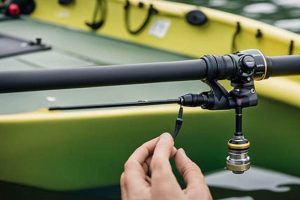
Specialized fishing features distinguish the Old Town Loon series from recreational kayaks, optimizing its utility for anglers. These integrated design elements enhance efficiency, organization, and overall fishing performance. Flush-mounted rod holders provide secure storage and quick access during angling. Multiple rod holders accommodate diverse fishing techniques and allow for carrying spare rods. Recessed tackle storage compartments keep essential gear organized and protected from the elements. These compartments are often strategically positioned for easy access while seated. Integrated mounting platforms accommodate fish finders and other electronic accessories, enhancing situational awareness and fishing strategy.
The practical significance of these features becomes apparent during actual fishing excursions. Secure rod storage prevents loss or damage during transit and allows for quick transitions between fishing techniques. Organized tackle storage reduces clutter and streamlines the process of changing lures or rigs, maximizing fishing time. Integrated mounting platforms provide a stable base for electronics, ensuring accurate readings and facilitating effective use of fish-finding technology. These combined features contribute to a more efficient and productive fishing experience.
The strategic incorporation of fishing-specific features in the Old Town Loon series underscores its purpose-built design. These features not only enhance functionality but also contribute to angler comfort and success on the water. Understanding the utility and practical application of these features empowers anglers to maximize their fishing potential and fully appreciate the specialized design of the Loon series kayaks.
4. Durability
Durability is a critical factor in fishing kayak selection, directly impacting the vessel’s lifespan and resilience against the rigors of on-water use. In the context of the Old Town Loon fishing kayak, durability translates to long-term performance and reliable service in diverse environments, from calm lakes to challenging coastal waters. Understanding the factors contributing to the Loon’s durability is essential for informed purchase decisions and proper maintenance practices.
- Material Selection:
The choice of construction material significantly influences a kayak’s durability. Old Town utilizes single-layer or three-layer polyethylene in the Loon series. Single-layer polyethylene offers a balance of affordability and impact resistance, suitable for general recreational use. Three-layer polyethylene provides enhanced rigidity and durability, making it better suited for challenging conditions and heavier use. The inherent properties of polyethylene, such as UV resistance and impact strength, contribute to the Loon’s overall robustness.
- Construction Process:
The construction process plays a crucial role in ensuring the kayak’s structural integrity. Old Town employs rotational molding, a process that creates a seamless, one-piece hull with uniform thickness. This eliminates weak points often found in kayaks constructed with multiple pieces joined together. The result is a more durable and impact-resistant hull capable of withstanding impacts and abrasions encountered in various fishing environments.
- Hardware and Fittings:
The quality and durability of hardware and fittings, such as carry handles, rod holders, and hatch covers, contribute to the overall lifespan of the kayak. Corrosion-resistant materials and robust designs ensure long-term functionality and resistance to wear and tear. Properly installed and maintained hardware further enhances durability and prevents premature failure.
- Maintenance and Care:
While the Loon is inherently durable, proper maintenance practices further extend its lifespan. Regular cleaning, proper storage, and timely repairs of any damage contribute to preserving the kayak’s structural integrity and preventing premature wear. Following manufacturer recommendations for care and maintenance ensures optimal performance and longevity.
The durability of the Old Town Loon fishing kayak is a product of material selection, construction techniques, hardware quality, and ongoing maintenance. These factors combine to create a resilient vessel capable of withstanding the demands of regular fishing use in diverse environments. Understanding these aspects empowers owners to make informed decisions regarding maintenance and care, maximizing the kayak’s lifespan and ensuring long-term enjoyment on the water.
5. Comfort

Comfort significantly influences the overall fishing kayak experience, impacting both enjoyment and endurance on the water. In the context of the Old Town Loon fishing kayak, comfort translates to sustained focus and reduced fatigue, allowing anglers to maximize their time on the water. Several key design elements contribute to the Loon’s comfort-focused approach.
- Seat Design:
The seat design plays a crucial role in angler comfort, particularly during extended fishing trips. The Loon series typically features adjustable seating systems, allowing for customization based on individual preferences and body types. Features like adjustable backrests, lumbar support, and breathable fabrics contribute to enhanced comfort and reduced fatigue. The ability to fine-tune the seat position optimizes paddling efficiency and reduces strain on the back and legs.
- Legroom and Positioning:
Adequate legroom and comfortable leg positioning are essential for maintaining circulation and preventing discomfort during long hours on the water. The Loon’s cockpit design provides ample legroom and allows for adjustable footrests or thigh braces, ensuring proper leg support and reducing fatigue. This ergonomic design contributes to overall comfort and allows anglers to maintain a comfortable and stable position throughout the fishing trip.
- Deck Layout and Accessibility:
A well-designed deck layout contributes to both comfort and efficiency. Easy access to essential gear, such as tackle boxes, rods, and electronics, minimizes awkward reaching and stretching, reducing strain and maximizing fishing time. The Loon’s deck layout is designed with angler convenience in mind, providing strategically placed storage compartments and mounting platforms for easy access to essential equipment.
- Stability and Ride Quality:
While not directly related to seating or ergonomics, stability and ride quality indirectly influence comfort. A stable and predictable kayak reduces anxiety and allows the angler to relax and focus on fishing. The Loon’s stable hull design and smooth ride contribute to a more comfortable and enjoyable experience on the water, minimizing fatigue and maximizing fishing enjoyment.
The comfort features integrated into the Old Town Loon fishing kayak series demonstrate a thoughtful design approach focused on enhancing the angler’s overall experience. By addressing key comfort considerations such as seating, legroom, deck layout, and stability, the Loon series allows anglers to focus on fishing, minimizing fatigue and maximizing enjoyment on the water. This emphasis on comfort contributes significantly to the Loon’s popularity and its suitability for extended fishing adventures.
Frequently Asked Questions
This section addresses common inquiries regarding the Old Town Loon fishing kayak series, providing concise and informative responses to assist potential buyers and current owners.
Question 1: What differentiates the various models within the Old Town Loon series?
Model variations within the Loon series often pertain to size, features, and intended use. Differences may include hull length, width, weight capacity, propulsion systems (paddle, pedal, or motor), and integrated features such as rod holders, storage compartments, and seating configurations. Selecting the appropriate model depends on individual angler preferences, fishing style, and target fishing environment.
Question 2: What is the weight capacity of a typical Loon kayak, and how does this impact performance?
Weight capacity varies across the Loon series but generally ranges from 300 to 450 pounds. Exceeding the specified weight capacity can negatively impact stability, maneuverability, and performance. It is crucial to consider the combined weight of the angler, gear, and any potential catch when selecting a model.
Question 3: Are Loon kayaks suitable for use in both freshwater and saltwater environments?
Yes, Loon kayaks are designed for use in both freshwater and saltwater environments. The polyethylene construction resists corrosion and damage from UV exposure, making them suitable for diverse aquatic ecosystems. However, regular rinsing with fresh water after saltwater use is recommended to maintain the kayak’s condition and prolong its lifespan.
Question 4: What maintenance is required for a Loon kayak?
Routine maintenance includes rinsing with fresh water after each use, especially in saltwater environments. Periodic inspection of hardware, fittings, and the hull for signs of wear or damage is also recommended. Proper storage, protected from prolonged sun exposure and extreme temperatures, further contributes to the kayak’s longevity.
Question 5: Can Loon kayaks be outfitted with aftermarket accessories?
Yes, Loon kayaks offer compatibility with various aftermarket accessories, enhancing customization options and functionality. Common additions include anchor trolleys, rod holders, fish finders, GPS units, and storage solutions. Ensuring compatibility and proper installation is essential for maintaining stability and performance.
Question 6: What safety precautions should be taken when using a Loon fishing kayak?
Always wear a personal flotation device (PFD) and carry essential safety equipment, including a whistle, signaling device, and first-aid kit. Check weather conditions before embarking and inform someone of the intended route and return time. Understanding basic paddling techniques and self-rescue procedures is also highly recommended.
Addressing these frequently asked questions provides valuable insights into the Old Town Loon fishing kayak series. Careful consideration of these points empowers potential buyers and current owners to make informed decisions regarding model selection, usage, and maintenance, ultimately contributing to a safe and enjoyable kayaking experience.
Further exploration of specific Loon models and their respective features will provide a more granular understanding of the available options and their suitability for diverse fishing applications.
Old Town Loon Fishing Kayak
Exploration of the Old Town Loon fishing kayak series reveals a thoughtfully designed watercraft tailored to the needs of anglers. Key attributes such as stability, maneuverability, specialized fishing features, durability, and comfort contribute to its efficacy on the water. The range of models within the Loon series caters to diverse fishing styles and environments, from calm lakes to flowing rivers and coastal waters. Careful consideration of individual needs, intended use, and specific model characteristics ensures optimal selection and maximized performance. Understanding the nuances of hull design, material selection, and integrated features empowers informed decision-making and enhances the overall fishing experience.
The Old Town Loon series represents a significant advancement in fishing kayak design, offering anglers a specialized platform for pursuing their passion. Its enduring presence in the angling community underscores its value and contribution to the sport. Continued innovation and refinement within the kayak fishing industry promise further advancements, enhancing the angling experience and fostering a deeper connection with the aquatic environment.