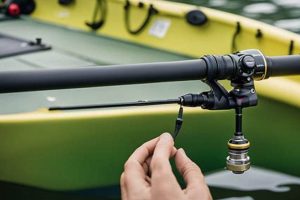
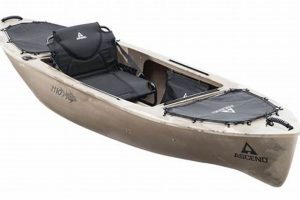
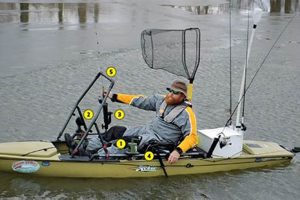
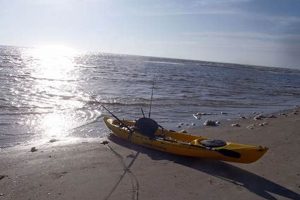
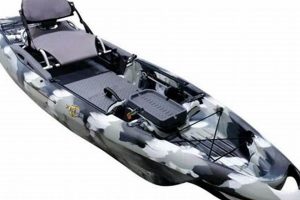
This specialized vessel, designed for navigating shallow, calm bodies of water, typically features a shallow draft, a stable hull, and often a stand-up platform for improved visibility. These watercraft are commonly used in pursuit of bonefish, tarpon, permit, and other species inhabiting these environments. The design prioritizes stealth and maneuverability in shallow waters, often just inches deep.
The shallow draft allows anglers to access areas unreachable by deeper-hulled boats, maximizing fishing opportunities in these productive ecosystems. Stability is paramount, enabling anglers to cast and land fish effectively while standing. The evolution of these specialized boats reflects a growing understanding of fish behavior in these unique habitats and a desire for a more immersive and effective fishing experience. Their use contributes significantly to the success of anglers targeting species that thrive in these delicate environments.
Further exploration will delve into specific design features, popular models, essential accessories, and techniques for effective use in these shallow-water environments.
Tips for Shallow Water Kayak Fishing
Effective shallow water kayak fishing requires careful planning and execution. The following tips offer guidance for a successful and enjoyable experience.
Tip 1: Prioritize Stability: Select a kayak designed for stability, especially when standing. Consider a wider hull and a lower center of gravity for optimal balance.
Tip 2: Master Shallow Water Propulsion: Practice using a paddle or specialized propulsion system designed for shallow water, minimizing disturbance and maximizing stealth.
Tip 3: Utilize Polarized Sunglasses: Polarized lenses reduce glare and allow for better visibility of fish and underwater structures in shallow, sunlit environments.
Tip 4: Employ Stealth Tactics: Approach fishing areas slowly and quietly, minimizing noise and sudden movements to avoid spooking fish.
Tip 5: Understand Tidal Influences: Fish behavior in shallow water is often dictated by tides. Research tidal patterns and plan fishing trips accordingly.
Tip 6: Choose Appropriate Tackle and Gear: Select lightweight rods, reels, and lines suited for the target species and the shallow water environment.
Tip 7: Practice Catch and Release Techniques: Proper handling and release methods minimize stress on fish and contribute to the conservation of these valuable resources.
By adhering to these guidelines, anglers can significantly enhance their chances of success and contribute to a sustainable and enjoyable shallow water fishing experience.
These tips provide a foundation for successful shallow water kayak fishing. Continued learning and adaptation to specific conditions will further refine one’s skills and maximize enjoyment on the water.
1. Stability

Stability is paramount in a flats fishing kayak, directly influencing angling success and safety. These vessels are frequently used in shallow, often calm waters where anglers commonly stand to sight fish. A stable platform allows for accurate casting, effective fish fighting, and safe maneuvering in these delicate environments. Without sufficient stability, the angler risks capsizing, particularly when battling strong currents or large fish. Consider the scenario of hooking a large tarpon in shallow water; a stable kayak provides the necessary platform to manage the fight effectively and safely land the fish. Conversely, an unstable kayak could easily lead to a capsize, losing the fish and potentially endangering the angler.
Several factors contribute to kayak stability, including hull design, width, and the angler’s center of gravity. Wider hulls generally offer greater initial stability, while hull designs incorporating features like outriggers or pontoons can enhance secondary stability (resistance to tipping). The angler’s position and weight distribution also play a critical role; maintaining a low center of gravity significantly improves stability. For example, a kayak with a wide, flat bottom will provide more initial stability than a narrower, V-shaped hull. Understanding these factors empowers anglers to choose a vessel appropriate for their needs and skill level.
Prioritizing stability in a flats fishing kayak directly translates to increased angling effectiveness and safety. The ability to stand and cast accurately, fight fish effectively, and maneuver safely in shallow water are essential components of a successful flats fishing experience. Considering stability alongside other factors like draft, propulsion, and storage capacity ensures a well-rounded and informed purchasing decision.
2. Shallow Draft

Shallow draft is a defining characteristic of flats fishing kayaks, intrinsically linked to their effectiveness in specific environments. These specialized vessels are designed to navigate extremely shallow waters, often mere inches deep, where other watercraft cannot venture. This minimal draft allows access to the shallow flats inhabited by target species like bonefish, permit, and redfish. These fish often feed in shallow areas, making a shallow draft essential for reaching these productive zones. Consider the classic Florida Keys flats, vast expanses of shallow water where bonefish cruise. Without a shallow draft, accessing these prime fishing grounds would be impossible.
The practical implications of shallow draft extend beyond mere access. A shallow draft minimizes disturbance of the seabed, reducing noise and turbidity that could spook wary fish. This stealth advantage is critical in clear, shallow water where fish are easily alerted to the presence of predators or potential threats. Imagine poling across a crystal-clear flat; a deep-draft vessel would stir up sediment and send vibrations through the water, alerting fish long before the angler reaches casting range. A shallow-draft kayak, however, glides silently across the surface, maximizing the chances of a successful approach. This advantage is particularly crucial when sight-fishing, a common practice in flats fishing where anglers spot their quarry before casting.
A shallow draft, therefore, is not merely a desirable feature but a fundamental requirement for effective flats fishing. It unlocks access to prime fishing grounds, enhances stealth, and increases the likelihood of successful encounters with target species. The understanding of this connection between shallow draft and flats fishing kayak efficacy is crucial for anglers seeking to maximize their success in these unique and challenging environments. Balancing shallow draft with stability and other performance characteristics remains a key consideration in kayak design and selection, highlighting its importance as a defining feature.
3. Propulsion
Propulsion systems in flats fishing kayaks play a crucial role, directly impacting an angler’s effectiveness and overall experience. These kayaks operate in shallow, often expansive environments, requiring efficient and adaptable propulsion methods. Traditional paddle propulsion, while offering simplicity and affordability, can limit an angler’s reach and present challenges when sight-fishing or navigating currents and wind. The constant motion of paddling can also spook wary fish in clear, shallow water. Consider a scenario where an angler spots a tailing redfish at a distance; paddling towards it creates surface disturbances and potentially alerts the fish, diminishing the chances of a successful cast.
Consequently, alternative propulsion systems have gained significant traction in flats fishing. Pedal-powered systems, for instance, offer hands-free operation, allowing anglers to maintain a fishing-ready posture and react quickly to opportunities. This advantage is particularly valuable when sight-fishing, enabling anglers to maintain focus on spotting fish while simultaneously maneuvering the kayak into position. Furthermore, pedal drives often provide greater speed and efficiency over long distances, expanding the angler’s range and access to more fishing grounds. Electric motors offer similar benefits, providing even greater speed and the ability to navigate challenging currents or winds with ease. An angler fishing a large, windswept flat can utilize an electric motor to cover vast distances quickly and efficiently, conserving energy for fishing. The practical implications of these advancements translate directly to increased fishing opportunities and reduced physical strain.
The evolution of propulsion systems in flats fishing kayaks underscores the importance of adapting to specific environmental demands. Matching the propulsion system to the angler’s fishing style, target species, and prevailing conditions significantly enhances performance and overall enjoyment. While traditional paddle propulsion remains a viable option, alternative systems like pedal drives and electric motors offer significant advantages in terms of efficiency, stealth, and hands-free operation. Understanding these advantages empowers anglers to make informed decisions when selecting a flats fishing kayak best suited to their individual needs and maximizing their success on the water.
4. Maneuverability
Maneuverability is a critical attribute of flats fishing kayaks, directly influencing an angler’s ability to navigate shallow, often complex environments. These kayaks operate in areas characterized by shallow water, variable currents, and obstacles like oyster beds or mangrove roots. Precise and responsive handling is essential for approaching fish stealthily, navigating tight spaces, and maintaining optimal positioning in dynamic conditions. A highly maneuverable kayak allows anglers to exploit these challenging environments effectively, maximizing their fishing opportunities.
- Tracking and Turning
Tracking refers to a kayak’s ability to maintain a straight course, while turning efficiency dictates how quickly and responsively it changes direction. In flats fishing, precise tracking is essential for covering distance efficiently, while sharp turning capabilities are crucial for navigating obstacles and adjusting to changing currents or fish movements. A kayak that tracks well minimizes wasted effort paddling against course corrections, while responsive turning allows for quick adjustments to pursue fish or avoid shallow spots. For example, tracking is valuable when traversing long stretches of open water to reach a distant flat, whereas nimble turning is essential when maneuvering through a maze of mangrove roots.
- Hull Design Influence
Hull design plays a significant role in maneuverability. Shorter kayaks generally turn more quickly, while longer kayaks offer better tracking. The hull’s shape also influences performance; a flatter hull provides greater initial stability but may sacrifice maneuverability, while a more rounded or V-shaped hull enhances maneuverability but may be less stable. For instance, a shorter, V-shaped hull might be ideal for navigating tight creeks and making quick turns, whereas a longer, flatter hull might be preferred for stability in open water.
- Wind and Current Impact
Wind and current significantly impact maneuverability, particularly in shallow water. A kayak’s ability to maintain position and direction in these dynamic conditions is crucial. Features like rudders or skegs can enhance tracking and control in windy conditions, while a well-designed hull minimizes the impact of currents. Consider fishing in a strong crosswind; a rudder can help maintain a desired course, while a shallow draft minimizes the effect of the wind pushing the kayak sideways. Understanding these factors allows anglers to choose a kayak suited to the prevailing conditions in their target fishing areas.
- The Role of Propulsion
The chosen propulsion system also influences maneuverability. Paddle propulsion offers direct control and allows for quick adjustments, while pedal drives or electric motors may require more space for turning. However, these powered options can free up the angler’s hands for rod manipulation and other tasks, indirectly enhancing maneuverability by allowing for quicker reactions. For instance, an angler using a pedal drive can steer with their feet while simultaneously preparing a cast, allowing for a more efficient and responsive approach to fishing opportunities.
Maneuverability, therefore, is a multifaceted aspect of flats fishing kayak design and performance. Balancing tracking, turning efficiency, hull design, and the effects of wind and current are essential considerations. Understanding these interconnected factors empowers anglers to select a kayak that optimizes maneuverability for their specific fishing style and target environment, ultimately enhancing their ability to navigate shallow waters effectively and maximize their fishing success.
5. Storage Capacity

Storage capacity in a flats fishing kayak directly impacts an angler’s preparedness and effectiveness. These specialized vessels are often used in remote locations, requiring anglers to carry essential gear, safety equipment, and provisions for extended trips. Adequate storage facilitates organized transport of rods, reels, tackle boxes, safety gear, and personal items. Insufficient storage can lead to a cluttered deck, hindering movement and potentially compromising safety. Consider an angler navigating shallow, mangrove-lined channels; a cluttered deck increases the risk of entanglement or losing balance, potentially leading to a capsize. Conversely, well-organized storage allows for efficient access to essential gear, maximizing fishing time and minimizing distractions.
Several factors influence storage needs. The duration of fishing trips, target species, and prevailing conditions all contribute to storage demands. Longer expeditions necessitate more provisions and gear, while specific fishing techniques may require specialized equipment. Weather conditions also play a role; foul-weather gear takes up valuable space, highlighting the importance of adaptable storage solutions. For instance, an angler planning an overnight trip to a remote island chain requires significantly more storage capacity than an angler fishing a local flat for a few hours. Understanding these variables allows anglers to select a kayak with appropriate storage for their specific needs.
Practical storage solutions often incorporate features such as hatches, tank wells, and bungee systems. Watertight hatches protect sensitive items from the elements, while tank wells provide secure storage for larger items like coolers or tackle crates. Bungee systems offer quick access to frequently used items like pliers or sunscreen. Evaluating these features in relation to anticipated storage demands is crucial for optimizing organization and efficiency on the water. Ultimately, adequate and well-designed storage contributes significantly to a safe, organized, and productive flats fishing experience. Balancing storage capacity with other essential features like stability, maneuverability, and propulsion ensures a well-rounded and effective vessel tailored to the specific demands of flats fishing.
6. Comfort
Comfort is a crucial factor influencing performance and enjoyment in flats fishing kayaks. These vessels are often used for extended periods, demanding sustained physical exertion under varying weather conditions. Discomfort can lead to fatigue, reduced focus, and a diminished overall fishing experience. Consider an angler spending hours under the scorching sun on a shallow flat; an uncomfortable seating position can lead to back pain and decreased concentration, hindering their ability to spot fish and execute accurate casts. Conversely, a comfortable and supportive seating system allows anglers to maintain focus and energy levels throughout the day, maximizing their fishing potential.
Several factors contribute to kayak comfort. The seat design, including cushioning, back support, and adjustability, plays a significant role. Ergonomic considerations, such as legroom and footrest placement, also influence comfort, particularly during prolonged use. Furthermore, features like adjustable backrests and breathable seat materials enhance comfort in varying weather conditions. For example, a kayak with a well-padded, adjustable seat and ample legroom allows anglers to customize their position for optimal comfort, minimizing fatigue and maximizing enjoyment. Similarly, breathable seat materials enhance airflow, reducing heat buildup and discomfort in warm climates. The practical significance of these features becomes evident during long fishing trips, where comfort directly impacts performance and enjoyment.
Prioritizing comfort in a flats fishing kayak directly translates to enhanced endurance, focus, and overall satisfaction on the water. A comfortable angler is a more effective angler, capable of spending longer hours on the water, making precise casts, and reacting quickly to fishing opportunities. Balancing comfort with other essential features like stability, maneuverability, and storage capacity ensures a well-rounded and effective vessel tailored to the specific demands of flats fishing. Failing to consider comfort can compromise the overall fishing experience, underscoring its importance as a key factor in kayak selection.
Frequently Asked Questions about Flats Fishing Kayaks
This section addresses common inquiries regarding flats fishing kayaks, providing concise and informative responses to facilitate informed decision-making.
Question 1: What differentiates a flats fishing kayak from a recreational kayak?
Flats fishing kayaks prioritize stability, shallow draft, and specialized features like stand-up platforms and rod holders. Recreational kayaks generally prioritize comfort and versatility for casual paddling.
Question 2: How important is stability in a flats fishing kayak?
Stability is paramount. It allows anglers to stand safely while casting and fighting fish, a common practice in flats fishing.
Question 3: What propulsion methods are suitable for flats fishing kayaks?
Paddle propulsion offers simplicity and affordability. Pedal drives and electric motors provide hands-free operation and increased range, respectively, but often come at a higher cost.
Question 4: How does hull design influence performance in shallow water?
Hull design impacts stability, maneuverability, and draft. Wider, flatter hulls enhance stability but may compromise maneuverability, while narrower hulls often track and turn more efficiently.
Question 5: What are the essential safety considerations for flats fishing kayak anglers?
Essential safety measures include wearing a personal flotation device, carrying communication devices, informing someone of fishing plans, and being aware of weather conditions and tidal changes.
Question 6: What factors influence the price of a flats fishing kayak?
Factors influencing price include materials, features (like propulsion systems and advanced seating), construction quality, and brand reputation.
Careful consideration of these factors ensures an informed purchase aligned with individual needs and intended fishing environments. Investing time in research and understanding specific requirements leads to a more rewarding flats fishing kayak experience.
For further information, consult specialized retailers or experienced flats fishing guides for personalized recommendations and practical advice.
Conclusion
Specialized vessels designed for flats fishing represent a significant advancement in angling technology, enabling access to previously inaccessible shallow-water ecosystems. The careful consideration of stability, shallow draft, propulsion, maneuverability, storage capacity, and comfort ensures optimal performance and a rewarding fishing experience. Understanding the interconnectedness of these elements empowers anglers to select the most effective craft for their individual needs and target environments. Furthermore, responsible angling practices, including catch-and-release techniques and respect for delicate habitats, contribute to the sustainability of these valuable resources.
The ongoing evolution of flats fishing kayak design promises continued improvements in efficiency and performance, further enhancing the angler’s ability to explore and interact with these unique environments. A deep understanding of these specialized vessels and a commitment to responsible angling practices ensures the continued enjoyment and preservation of these valuable shallow-water fisheries for future generations.