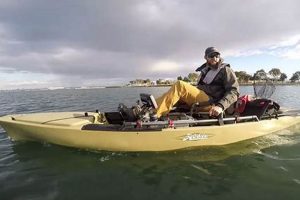
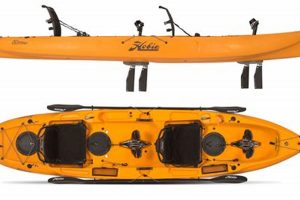
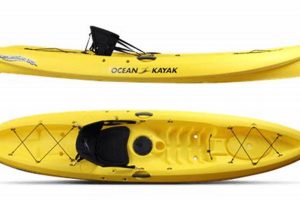
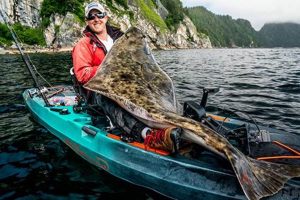
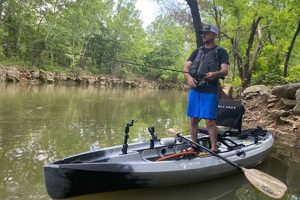
This specific model of personal watercraft is a sit-on-top style vessel designed for angling. Its twelve-foot length offers a balance of stability and maneuverability, while the “sit-on-top” design allows for easier entry and exit, along with enhanced casting freedom. Specialized features often include built-in rod holders, tackle storage, and other amenities catering to anglers’ needs.
Such vessels provide a stable and versatile platform for fishing in various aquatic environments, from calm lakes to slow-moving rivers. Their relatively compact size facilitates transport and storage compared to larger boats. The evolution of these specialized kayaks has mirrored advancements in materials and design, resulting in lighter, more durable, and feature-rich options for anglers seeking enhanced on-the-water experiences.
This discussion will further explore the design elements, performance characteristics, and potential applications of this type of fishing kayak, offering a detailed analysis for both novice and experienced anglers.
Tips for Utilizing a Twelve-Foot Sit-On-Top Fishing Kayak
Optimizing the use of this type of watercraft involves understanding its capabilities and employing appropriate techniques. The following tips offer guidance for enhancing fishing success and overall experience.
Tip 1: Weight Distribution and Balance: Proper distribution of weight within the vessel is crucial for stability. Gear should be evenly distributed, with heavier items positioned low and centrally. Regularly assess balance, especially when changing positions or adding equipment.
Tip 2: Paddle Selection and Technique: Choosing a paddle of appropriate length and utilizing efficient paddling techniques maximizes propulsion and minimizes fatigue. Consider a paddle leash to prevent loss.
Tip 3: Safety Precautions: Wearing a personal flotation device is paramount. Carrying a whistle, signaling device, and basic safety kit is also recommended. Checking weather forecasts and informing someone of planned fishing locations enhances safety measures.
Tip 4: Anchor and Drift Control: Employing an anchor or drift sock aids in maintaining position in desired fishing areas, particularly in currents or windy conditions.
Tip 5: Effective Fish Handling Techniques: Practicing appropriate fish handling techniques minimizes stress on the catch and ensures proper release or retention.
Tip 6: Navigation and Trip Planning: Planning routes and familiarizing oneself with navigational aids, charts, and local regulations ensures a safe and productive outing.
Tip 7: Kayak Maintenance: Regularly rinsing the kayak with fresh water and storing it properly prolongs its lifespan and maintains performance. Inspecting and addressing any damage promptly is essential.
By adhering to these guidelines, anglers can significantly enhance their safety, efficiency, and enjoyment while using this specialized fishing platform.
These practical tips offer valuable insights for optimizing performance and safety. The subsequent conclusion will summarize key takeaways and reiterate the benefits of leveraging this specific type of kayak for a successful fishing experience.
1. Stability

Stability is a critical factor influencing the performance and safety of a fishing kayak, particularly in the context of angling activities that require casting, reeling, and potentially landing fish. For a twelve-foot sit-on-top model, stability directly impacts the angler’s ability to maintain balance and effectively fish from the vessel. This analysis explores the key facets contributing to stability in such kayaks.
- Hull Design:
The hull design plays a significant role in determining stability. Wider hulls generally offer greater initial stability, resisting tipping more effectively. A flatter hull provides a stable platform, especially in calm waters, while a more rounded or V-shaped hull may offer enhanced performance in choppy conditions but potentially less initial stability. The specific hull design of a twelve-foot fishing kayak influences its suitability for different water environments and fishing styles.
- Center of Gravity:
The center of gravity, influenced by the distribution of weight within the kayak, is crucial for maintaining balance. Positioning heavier items lower and centrally within the hull lowers the center of gravity, enhancing stability. Anglers also contribute to the center of gravity; shifting body weight can affect the kayak’s stability, particularly when standing or reaching. Understanding weight distribution is essential for safe and effective operation.
- Water Conditions:
Prevailing water conditions significantly influence kayak stability. Calm, flat water generally presents fewer stability challenges. Wind, waves, and currents can impact stability, requiring adjustments in angler positioning and paddling technique. Understanding how different water conditions affect stability is vital for safe navigation and successful fishing.
- Kayak Features:
Specific features integrated into the kayak can influence its stability. Outriggers or stabilizers provide additional support, enhancing stability, particularly for anglers who prefer to stand while fishing. Wider, flatter platforms or integrated standing pads also contribute to stability while standing. The presence and design of these features play a role in the overall stability of the kayak in various fishing scenarios.
By understanding these interconnected facets of stability hull design, center of gravity, water conditions, and kayak features anglers can make informed decisions about kayak selection and operation. Choosing a kayak with appropriate stability characteristics for the intended fishing environment and style enhances safety, improves fishing effectiveness, and contributes to a more enjoyable on-the-water experience. Consider, for instance, how a wider, flatter hull designed for calm lake fishing may offer less stability in rough ocean conditions compared to a kayak with a more specialized hull design.
2. Maneuverability

Maneuverability is a critical performance attribute for fishing kayaks, directly influencing the angler’s ability to navigate various water environments and access desired fishing locations. In the context of a twelve-foot sit-on-top fishing kayak, maneuverability plays a crucial role in overall fishing effectiveness and ease of use. This exploration delves into the key facets that contribute to maneuverability in such kayaks.
- Hull Design:
Hull design significantly impacts maneuverability. A shorter, wider hull generally provides greater stability but may sacrifice some maneuverability. Longer, narrower hulls tend to track straighter and glide more efficiently, enhancing speed and covering distance more easily, but may be less maneuverable in tight spaces. The specific hull design of a twelve-foot fishing kayak represents a balance between stability and maneuverability, influencing its suitability for different fishing environments.
- Length and Width:
The twelve-foot length of this kayak type offers a compromise between maneuverability and tracking. Shorter kayaks are generally more agile, allowing for quicker turns and navigation through tight spaces, such as narrow creeks or mangrove tunnels. Longer kayaks, while potentially less nimble, offer better tracking and speed over longer distances. The width of the kayak also plays a role; narrower kayaks tend to be more maneuverable than wider ones.
- Water Conditions:
Prevailing water conditions can significantly influence maneuverability. Calm, flat water generally allows for greater maneuverability. Wind, currents, and waves can impact tracking and steering, requiring adjustments in paddling technique and potentially affecting the kayak’s responsiveness. Understanding how different water conditions impact maneuverability is essential for effective navigation and safe operation.
- Rudder or Skeg:
The presence and type of rudder or skeg system can significantly enhance maneuverability and tracking. A rudder allows for precise steering adjustments, particularly in windy or current-prone environments. A skeg improves tracking and reduces the need for corrective strokes, enhancing efficiency in open water. The inclusion of a rudder or skeg system on a twelve-foot fishing kayak can significantly improve its handling characteristics and overall performance.
By understanding these interconnected facets of maneuverability hull design, length and width, water conditions, and rudder/skeg systems anglers can make informed decisions about kayak selection and operation. Choosing a kayak with appropriate maneuverability characteristics for the intended fishing environment and style enhances efficiency, improves access to fishing spots, and contributes to a more productive and enjoyable on-the-water experience. For example, a kayak designed for river fishing may prioritize maneuverability over straight-line tracking, while a kayak intended for open-water lake fishing might emphasize tracking and speed.
3. Storage Capacity

Adequate storage capacity is a defining feature of a purpose-built fishing kayak, directly impacting its practicality and the angler’s ability to carry essential gear. A twelve-foot sit-on-top fishing kayak, designed for angling excursions, requires sufficient storage to accommodate tackle boxes, rods, safety equipment, and potentially catch. The design and volume of storage compartments directly influence the organization, accessibility, and security of these items.
Dedicated storage compartments, such as waterproof hatches, recessed wells, and bungee cord systems, contribute to the overall storage solution. Waterproof hatches protect sensitive items from water damage, while recessed wells secure larger items like tackle boxes. Bungee systems offer quick access to frequently used gear. Consider, for instance, how a dedicated compartment for a tackle box enhances organization and accessibility compared to simply stowing it loosely in the tankwell. The capacity and arrangement of these storage features contribute significantly to the kayak’s utility for fishing expeditions.
Sufficient storage capacity in a fishing kayak enables anglers to carry necessary equipment, enhancing preparedness and fishing effectiveness. A well-designed storage system promotes organization and accessibility, contributing to a more efficient and enjoyable fishing experience. Evaluating storage capacity alongside other kayak features, such as stability and maneuverability, is crucial for selecting a suitable vessel tailored to specific fishing needs and environments. The practical implications of storage solutions directly influence the angler’s ability to transport gear, maintain organization, and ultimately focus on the fishing experience.
4. Fishing Features
Specialized features distinguish fishing kayaks from recreational models, enhancing angling effectiveness and overall experience. These features, integral to the design of a Manta Ray 12 fishing kayak, contribute directly to its utility as a dedicated fishing platform. Flush-mounted rod holders, for example, secure rods while paddling or trolling, freeing the angler’s hands for other tasks. Integrated tackle storage compartments keep essential gear organized and readily accessible, minimizing time spent searching for lures or tools. These dedicated features represent a departure from standard kayak designs, reflecting the specific needs of anglers.
Consider the impact of adjustable footrests on casting stability and comfort. They allow anglers to customize their position, optimizing balance and leverage while casting and retrieving. Similarly, the inclusion of a fish finder mount facilitates the integration of electronic fish-finding technology, enhancing the angler’s ability to locate fish and structure. These examples illustrate the practical significance of fishing-specific features in enhancing on-the-water performance and overall fishing success. The design and implementation of these features are crucial considerations for anglers evaluating the suitability of a fishing kayak for their specific needs.
The integration of fishing features into a kayak like the Manta Ray 12 transforms it from a general-purpose watercraft into a specialized fishing platform. This specialization enhances efficiency, improves organization, and contributes to a more focused and productive fishing experience. Understanding the design, purpose, and effective utilization of these features is essential for maximizing the kayak’s fishing potential. The practical benefits of these features ultimately translate to increased angling success and a more streamlined and enjoyable time on the water. This understanding informs equipment choices and on-the-water strategies, contributing to a more fulfilling and successful angling experience.
5. Durability

Durability is a critical factor influencing the lifespan and overall value of a fishing kayak, especially considering the demanding environments they often endure. For a model like the Manta Ray 12, durability directly impacts its resistance to impacts, abrasion, UV exposure, and general wear and tear. The materials used in construction and the manufacturing process significantly influence the kayak’s ability to withstand these challenges. For example, high-density polyethylene (HDPE) is a common material known for its impact resistance and durability, contributing to a kayak’s ability to withstand collisions with rocks, submerged logs, or other obstacles encountered in various aquatic environments. Similarly, robust construction techniques, such as reinforced seams and molded-in features, enhance the kayak’s structural integrity and resistance to stress cracking or deformation over time.
The practical implications of durability extend beyond simply resisting damage. A durable kayak requires less maintenance and repair, reducing long-term ownership costs and minimizing downtime. Furthermore, a robust construction instills confidence in the angler, allowing them to navigate challenging environments and focus on fishing without concerns about potential damage to the vessel. Consider, for instance, the impact of UV resistance on the kayak’s appearance and structural integrity over time. A kayak constructed with UV-resistant materials retains its color and strength, minimizing fading and material degradation caused by prolonged sun exposure. This contributes to the kayak’s aesthetic appeal and extends its functional lifespan.
Durability, therefore, represents a significant investment in the long-term value and performance of a fishing kayak. Choosing a kayak constructed with durable materials and employing robust manufacturing techniques ensures its ability to withstand the rigors of regular use in diverse environments. This contributes to a more reliable and enjoyable fishing experience, minimizing maintenance concerns and maximizing the kayak’s useful lifespan. Understanding the factors influencing durability empowers informed purchasing decisions and contributes to a greater appreciation for the long-term benefits of a well-constructed fishing kayak.
6. Portability
Portability significantly influences the practical usability of a fishing kayak, affecting its transport, storage, and deployment. The Manta Ray 12 fishing kayak, while offering features beneficial for angling, must also consider portability as a key design element. Its twelve-foot length presents inherent transport challenges compared to shorter kayaks. The weight of the kayak, influenced by its construction materials and integrated features, further impacts portability. Consider the practical implications: a heavier kayak requires more effort to load onto a vehicle, carry to a launch site, and maneuver in and out of storage. This can limit accessibility for individuals with physical limitations or those lacking appropriate transport solutions. The kayak’s dimensions and weight, therefore, directly influence its portability and overall ease of use.
Several factors contribute to enhancing portability within the context of a twelve-foot fishing kayak. Integrated carrying handles, strategically placed for balance and ergonomic lifting, facilitate transport. The availability of purpose-built kayak carts or trailers further simplifies movement, particularly over longer distances. The choice between a lighter-weight construction material, potentially sacrificing some durability, and a heavier, more robust material presents a trade-off between portability and long-term resilience. For instance, choosing a kayak with integrated wheels can significantly reduce the physical strain associated with transporting it from a vehicle to the water’s edge. Understanding these design considerations and available accessories empowers informed purchasing decisions aligned with individual needs and physical capabilities.
Portability, therefore, represents a crucial factor influencing the overall practicality and accessibility of a Manta Ray 12 fishing kayak. Balancing portability with other desirable features, such as stability and storage capacity, requires careful consideration. Understanding the interplay between these factors empowers anglers to select a kayak best suited to their specific needs and logistical constraints. This ultimately enhances the overall fishing experience by minimizing transport challenges and maximizing ease of use. A thorough assessment of portability, considering factors like weight, dimensions, and available accessories, ensures that the chosen kayak aligns with the angler’s physical capabilities and logistical realities, ultimately contributing to a more enjoyable and accessible fishing experience.
Frequently Asked Questions
This section addresses common inquiries regarding twelve-foot sit-on-top fishing kayaks, providing concise and informative responses to assist prospective buyers and current owners.
Question 1: What is the typical weight capacity of this type of kayak?
Weight capacity varies depending on the specific model and manufacturer, but typically ranges from 300 to 500 pounds. Consulting manufacturer specifications is crucial for accurate information.
Question 2: Are these kayaks suitable for ocean use?
While some models are designed for protected coastal waters or bays, open ocean use requires careful consideration of kayak design, water conditions, and angler experience. Specific ocean-worthy kayaks prioritize stability and tracking in rougher waters.
Question 3: What essential safety gear is recommended for kayak fishing?
Essential safety gear includes a personal flotation device (PFD), a whistle, a visual signaling device, and a basic first-aid kit. A communication device, such as a VHF radio or waterproofed cell phone, is also highly recommended.
Question 4: How does one transport a twelve-foot kayak?
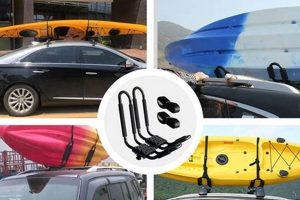
Transport options include roof racks, trailers, and truck beds. Securing the kayak properly during transport is crucial to prevent damage or loss. Specialized kayak carts facilitate movement from vehicle to launch site.
Question 5: What maintenance is required for a fishing kayak?
Regular rinsing with fresh water after each use helps prevent saltwater corrosion and removes debris. Periodic inspection of hull, fittings, and hardware is essential for identifying and addressing potential issues promptly. Proper storage, protected from prolonged sun exposure, also contributes to longevity.
Question 6: How does one choose the right paddle length for a fishing kayak?
Paddle length depends on factors such as torso height, kayak width, and paddling style. Consulting paddle sizing charts or seeking expert advice from a kayak retailer can assist in determining the appropriate length.
Addressing these common questions provides a foundation for informed decision-making regarding the selection, use, and maintenance of these specialized fishing platforms. Careful consideration of individual needs and intended usage scenarios remains crucial for maximizing the benefits and enjoyment of kayak fishing.
This concludes the frequently asked questions section. The following section will offer a comprehensive summary of the key aspects discussed throughout this overview.
Conclusion
This exploration of the Manta Ray 12 fishing kayak encompassed key aspects relevant to prospective buyers and current owners. Analysis included discussions of stability and maneuverability, highlighting the interplay between hull design, length, and width in influencing on-water performance. Storage capacity and the integration of fishing-specific features, such as rod holders and tackle storage, were examined in relation to their impact on angling efficiency and overall user experience. Furthermore, the crucial role of durability and portability in long-term value and practical usability was underscored, emphasizing the importance of material selection and design considerations in balancing performance and logistical convenience.
Careful consideration of these interconnected factors empowers informed decision-making regarding kayak selection, utilization, and maintenance. An understanding of the Manta Ray 12’s design characteristics and performance attributes allows anglers to maximize its potential as a specialized fishing platform, contributing to enhanced on-the-water experiences and ultimately, greater angling success. The informed selection and effective utilization of such specialized equipment remains crucial for responsible enjoyment of aquatic environments and the pursuit of angling endeavors.