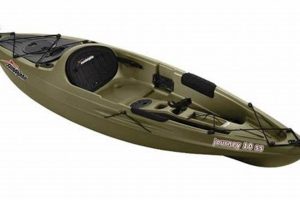
Lightweight yet robust paddles crafted from woven carbon fibers are increasingly popular for kayak angling. These implements propel kayaks efficiently through the water, allowing anglers to navigate diverse aquatic environments, from calm lakes to flowing rivers. Their composition provides exceptional strength and stiffness, translating to powerful strokes with minimal energy expenditure.
The inherent lightness of these advanced paddles reduces fatigue during long fishing trips, enabling anglers to focus on the sport. Their stiffness contributes to precise maneuvering and efficient power transfer, critical for navigating challenging currents or quickly reaching desired fishing spots. Historically, kayak paddles were constructed from heavier materials like wood or aluminum. The advent of carbon fiber technology revolutionized paddle design, offering a significant performance upgrade.
This article will further explore the advantages of this material in paddle construction, examining factors such as durability, design variations, and appropriate selection for different fishing styles and kayak types. It will also delve into proper care and maintenance to ensure long-lasting performance.
Tips for Selecting and Maintaining High-Performance Paddles
Choosing and caring for a paddle significantly impacts kayaking performance and longevity. Careful consideration of several factors ensures optimal selection and prolonged lifespan.
Tip 1: Blade Shape Considerations: Paddle blade shape influences performance. Asymmetrical blades, with one side longer than the other, are designed for smooth, efficient strokes. Shorter, wider blades provide greater power for quicker acceleration, while longer, narrower blades excel in long-distance paddling.
Tip 2: Shaft Selection: Straight shafts are generally less expensive and offer a direct connection to the blade. Bent shafts, ergonomically designed, reduce wrist strain and improve paddling efficiency, particularly beneficial for long trips.
Tip 3: Appropriate Length: Paddle length depends on factors such as kayaker height, kayak width, and paddling style. Proper length ensures efficient strokes and minimizes fatigue. Consulting sizing charts or experienced retailers can prove invaluable.
Tip 4: Understanding Carbon Fiber Grades: Different grades of carbon fiber exist, each offering varying levels of stiffness and durability. Higher modulus carbon fiber results in a lighter, stiffer paddle, albeit at a higher price point. Balancing performance needs with budget is crucial.
Tip 5: Proper Storage: Avoid storing paddles in direct sunlight or extreme temperatures, as this can degrade the carbon fiber over time. Storing horizontally, rather than vertically, minimizes stress on the blade and shaft.
Tip 6: Regular Inspection and Cleaning: Regularly inspect the paddle for any signs of damage, such as cracks or chips. Clean the paddle with mild soap and water after each use to remove salt, sand, or other debris that can accelerate wear.
Adhering to these guidelines ensures optimal performance and extends the lifespan of the paddle, contributing to a more enjoyable and efficient kayaking experience.
By understanding the nuances of selection and maintenance, kayakers can maximize the benefits of their equipment and fully appreciate the advantages these specialized paddles offer.
1. Lightweight

Lightweight construction is a defining characteristic of carbon fiber fishing kayak paddles and a key driver of their popularity. The low density of carbon fiber, coupled with advanced manufacturing techniques, allows for paddles significantly lighter than those made from traditional materials like aluminum or wood. This reduction in weight translates directly to reduced fatigue, particularly during extended fishing trips. Less energy expended on paddling means more energy available for casting, reeling, and other fishing activities. This advantage becomes even more pronounced in challenging conditions such as strong currents or wind, where heavier paddles can quickly lead to exhaustion. For example, paddling against a headwind for several hours with a heavier paddle can significantly strain muscles, while a carbon fiber paddle minimizes this exertion, allowing for longer and more productive fishing sessions.
The lightweight nature of these paddles also contributes to improved maneuverability. A lighter paddle is easier to control and requires less effort to change direction, allowing for quicker adjustments in dynamic fishing scenarios. This agility is crucial for navigating tight spaces, such as maneuvering around submerged logs or pursuing fish in shallow water. Furthermore, the reduced swing weight of a carbon fiber paddle facilitates faster stroke rates, enabling quicker acceleration and more efficient paddling overall. This can be particularly advantageous when needing to reposition quickly to follow a school of fish or reach a promising fishing spot.
The benefits of a lightweight paddle extend beyond physical performance. Reduced fatigue contributes to improved focus and concentration, which are essential for successful angling. A less strenuous paddling experience allows anglers to remain alert and responsive, increasing their chances of hooking and landing fish. While the initial investment in a carbon fiber paddle might be higher, the long-term benefits of reduced fatigue, enhanced maneuverability, and improved focus contribute significantly to a more enjoyable and productive fishing experience. The challenge lies in balancing the desired lightness with necessary strength and durability, a factor addressed by varying carbon fiber grades and manufacturing processes.
2. Durable

Durability is a critical attribute of carbon fiber fishing kayak paddles, directly influencing their lifespan and overall value. The inherent strength of carbon fiber, derived from its tightly woven structure, provides exceptional resistance to impact, stress, and fatigue. This resilience is essential for withstanding the rigors of kayak fishing, including accidental collisions with rocks, submerged obstacles, or other hard surfaces. Furthermore, carbon fiber demonstrates excellent resistance to environmental factors such as UV radiation, saltwater corrosion, and temperature fluctuations. This durability ensures the paddle maintains its structural integrity and performance characteristics over extended periods, even in harsh marine environments. For example, a carbon fiber paddle is less likely to crack or break upon impact with a rock compared to a fiberglass or plastic paddle, reducing the risk of equipment failure during a fishing trip. This robust construction translates to a reliable and long-lasting piece of equipment, justifying the higher initial investment often associated with these paddles.
The durability of a carbon fiber fishing kayak paddle contributes significantly to angler confidence and safety. Knowing the paddle can withstand demanding conditions allows anglers to focus on fishing without concern for equipment failure. This peace of mind is particularly valuable in remote locations or challenging weather, where a broken paddle could compromise safety. Furthermore, the long-term durability of these paddles reduces the need for frequent replacements, minimizing both cost and environmental impact. While initial costs might be higher, the extended lifespan and reduced replacement frequency often result in lower overall cost of ownership compared to less durable alternatives. Selecting a paddle with appropriate durability for the intended fishing environment ensures reliable performance and contributes to a safer and more enjoyable kayaking experience.
The combination of strength, impact resistance, and environmental resilience makes carbon fiber a premium material for fishing kayak paddles. This inherent durability contributes significantly to the paddle’s longevity, reliability, and overall performance in demanding fishing environments. While the initial investment might be higher, the long-term benefits of durability, including reduced maintenance, fewer replacements, and enhanced safety, justify the cost for serious anglers. Understanding the importance of durability in paddle selection empowers anglers to make informed decisions and choose equipment that will provide reliable performance for years to come. However, it’s important to acknowledge that even carbon fiber paddles have limits. Extreme impacts or improper care can still cause damage, highlighting the importance of responsible use and maintenance.
3. Efficient Power Transfer

Efficient power transfer is a crucial performance characteristic of carbon fiber fishing kayak paddles, directly impacting paddling efficiency and overall kayaking experience. The stiffness inherent in carbon fiber construction minimizes energy loss during the paddling stroke. Unlike more flexible materials that can bend or flex under pressure, carbon fiber maintains its shape, ensuring that the force applied by the paddler translates directly into forward momentum. This rigidity minimizes energy dissipation and maximizes propulsion, allowing kayakers to cover greater distances with less effort. For example, in a race scenario, a carbon fiber paddle’s efficient power transfer can provide a competitive edge, enabling faster speeds and quicker acceleration. This efficient transfer is equally crucial for fishing, as it allows anglers to reach desired locations quickly and with less fatigue, conserving energy for the actual fishing activity.
The efficient power transfer of these paddles contributes significantly to overall paddling performance. Reduced energy loss translates to increased speed, improved acceleration, and enhanced maneuverability. This efficiency is particularly beneficial in challenging conditions such as strong currents or headwinds, where maximizing power output is essential for maintaining control and making progress. Consider a scenario where an angler needs to paddle against a strong current to reach a specific fishing spot. A carbon fiber paddle, with its efficient power transfer, will allow the angler to reach the target location with less effort and in less time compared to using a paddle made from a less rigid material. This enhanced performance can be the difference between reaching a prime fishing spot and being forced to settle for a less desirable location.
The combination of stiffness and lightweight construction in carbon fiber paddles contributes to their exceptional power transfer efficiency. This efficiency translates to tangible benefits for kayakers, including increased speed, reduced fatigue, and enhanced maneuverability. Understanding the relationship between material properties, paddle design, and power transfer empowers kayakers to make informed decisions and select equipment optimized for their specific needs and paddling style. While factors like blade shape and paddle length also influence performance, the inherent stiffness of carbon fiber plays a fundamental role in maximizing power transfer and overall paddling efficiency. This efficiency can be a decisive factor in various kayaking scenarios, from competitive racing to recreational fishing, highlighting the importance of this characteristic in paddle selection.
4. Corrosion Resistance
Corrosion resistance is a critical factor in the longevity and performance of fishing kayak paddles, particularly in saltwater environments. Exposure to saltwater can degrade many materials, leading to structural weakening, surface pitting, and ultimately, equipment failure. Carbon fiber, however, exhibits exceptional resistance to saltwater corrosion, making it an ideal material for paddles used in marine environments. This inherent resistance contributes significantly to the paddle’s long-term durability and performance, ensuring reliable operation over extended periods.
- Material Integrity:
Carbon fiber’s inherent resistance to saltwater corrosion preserves the material’s integrity, preventing the weakening and deterioration that can occur with other materials like aluminum or steel. This resistance ensures the paddle maintains its structural strength and performance characteristics even after prolonged exposure to saltwater. For example, an aluminum paddle used regularly in saltwater may exhibit pitting and corrosion over time, weakening the structure and potentially leading to failure. A carbon fiber paddle, on the other hand, remains unaffected by saltwater, ensuring consistent performance and longevity.
- Reduced Maintenance:
The corrosion resistance of carbon fiber translates to reduced maintenance requirements. Unlike metal paddles that require regular cleaning and protective coatings to prevent corrosion, carbon fiber paddles require minimal upkeep. Simply rinsing the paddle with fresh water after use is typically sufficient to remove salt residue and maintain its condition. This ease of maintenance saves time and effort, allowing anglers to focus on fishing rather than equipment upkeep. For instance, while an aluminum paddle might require regular applications of corrosion-resistant coatings, a carbon fiber paddle eliminates this need, simplifying maintenance and reducing long-term costs.
- Extended Lifespan:
By resisting the detrimental effects of saltwater corrosion, carbon fiber paddles boast an extended lifespan compared to paddles made from more susceptible materials. This longevity translates to long-term value, as anglers can rely on their carbon fiber paddles for years of reliable performance without the need for frequent replacements. This durability contributes to cost savings over time and reduces the environmental impact associated with discarded equipment. For example, a well-maintained carbon fiber paddle can last for many years of regular saltwater use, while an aluminum paddle might require replacement due to corrosion within a shorter timeframe.
- Performance Consistency:
Corrosion can negatively impact a paddle’s performance by altering its shape, weight, and surface texture. Carbon fiber’s corrosion resistance ensures consistent performance over time, as the paddle retains its original design and characteristics even after prolonged exposure to saltwater. This consistent performance provides anglers with predictable and reliable handling, contributing to a more enjoyable and efficient kayaking experience. For instance, corrosion on a metal paddle can create rough surfaces that impede smooth strokes, while a carbon fiber paddle maintains its smooth surface, ensuring consistent and efficient power transfer.
The corrosion resistance of carbon fiber fishing kayak paddles is a significant advantage, particularly for anglers who frequently fish in saltwater environments. This characteristic contributes to the paddle’s durability, reduces maintenance requirements, extends its lifespan, and ensures consistent performance. By resisting the detrimental effects of saltwater, these paddles offer a reliable and long-lasting solution for kayak anglers, allowing them to focus on fishing without concern for equipment degradation. Choosing a corrosion-resistant paddle is an investment in long-term performance and enjoyment on the water.
5. Customization Options

The inherent properties of carbon fiber, combined with advanced manufacturing processes, lend themselves to a high degree of customization in fishing kayak paddle design. This allows manufacturers to tailor paddles to specific paddling styles, kayak types, and individual angler preferences. Customization options often include blade shape, shaft length, and grip style. Blade shape variations cater to different paddling techniques and water conditions. For example, a dihedral blade, characterized by a slightly concave shape, offers smooth and stable strokes, while an asymmetrical blade provides efficient power transfer with reduced flutter. Shaft length is crucial for ergonomic paddling and efficient power delivery. Adjustable-length shafts allow fine-tuning for optimal performance based on individual body dimensions and kayak width. Grip customization further enhances comfort and control, with options ranging from standard T-grips to ergonomic palm grips.
The ability to customize carbon fiber fishing kayak paddles significantly enhances paddling efficiency and overall comfort. A properly customized paddle minimizes fatigue, maximizes power transfer, and improves control, allowing anglers to focus on fishing rather than struggling with ill-suited equipment. For instance, a kayak angler fishing in tight quarters might prefer a shorter paddle with a more aggressive blade shape for enhanced maneuverability, while an angler paddling long distances might opt for a longer paddle with a narrower blade for efficient cruising. Furthermore, customization options extend to aesthetic details, allowing anglers to personalize their paddles with colors, patterns, or other visual elements. This level of personalization enhances the overall ownership experience and can contribute to angler satisfaction. However, customization adds complexity to the selection process. Anglers must carefully consider their individual needs and preferences to choose the optimal combination of features.
Customization options represent a significant advantage of carbon fiber fishing kayak paddles. This flexibility allows for a precise fit between the paddle, the paddler, and the intended use, maximizing performance and comfort. While standard paddle configurations cater to a broad range of users, customized options allow for fine-tuning and optimization, benefiting anglers seeking peak performance or those with specific physical requirements. The ability to tailor blade shape, shaft length, and grip style empowers anglers to choose a paddle perfectly suited to their individual needs and paddling style. This customized approach enhances the overall kayaking experience, contributing to greater efficiency, comfort, and enjoyment on the water. However, leveraging the full potential of customization requires careful consideration of individual factors and often necessitates consultation with experienced retailers or paddle manufacturers.
6. Enhanced Performance
Enhanced performance represents a culmination of the advantages offered by carbon fiber in fishing kayak paddle construction. The material’s inherent propertieslightweight, stiffness, and durabilitytranslate directly into improved paddling efficiency, reduced fatigue, and greater control on the water. This enhanced performance is not merely a theoretical concept but a tangible outcome experienced by anglers. The lighter weight reduces exertion, allowing for longer paddling durations and conserving energy for fishing. The stiffness of the paddle maximizes power transfer, translating each stroke into efficient forward momentum. This efficiency is particularly noticeable when paddling against currents or wind, where the rigid paddle maintains its shape and delivers consistent power. For example, an angler navigating through swift currents can maintain better control and position with a stiff, lightweight carbon fiber paddle, compared to struggling with a heavier, more flexible paddle that bends under pressure. The enhanced control afforded by a carbon fiber paddle also translates to improved maneuverability, enabling quick adjustments in direction and precise boat positioning for optimal casting and fish retrieval.
The practical significance of this enhanced performance is evident in various fishing scenarios. Reaching distant fishing spots becomes less strenuous and quicker, maximizing time spent fishing rather than traveling. Maneuvering in tight spaces, such as around submerged logs or vegetation, becomes easier and more precise, increasing access to prime fishing locations. Furthermore, the reduced fatigue associated with using a carbon fiber paddle allows anglers to maintain focus and responsiveness throughout the fishing trip, increasing their chances of success. Consider a scenario where an angler needs to make a quick maneuver to avoid a submerged obstacle or to follow a moving school of fish. The enhanced performance of a carbon fiber paddle, characterized by its light weight and stiffness, allows for swift and decisive action, which can be crucial for both safety and fishing success. Furthermore, the enhanced performance of these paddles contributes to an overall more enjoyable kayaking experience, reducing physical strain and allowing anglers to fully appreciate their time on the water.
In conclusion, the enhanced performance offered by carbon fiber fishing kayak paddles stems directly from the material’s unique properties. This enhanced performance translates to tangible benefits for anglers, including increased efficiency, reduced fatigue, and improved control, ultimately contributing to a more productive and enjoyable fishing experience. While factors such as paddle design and individual paddling technique also influence performance, the inherent advantages of carbon fiber play a fundamental role in maximizing efficiency and control on the water. However, achieving optimal performance requires careful consideration of paddle selection, including blade shape, shaft length, and overall paddle weight, in relation to individual needs and paddling style. Understanding these factors empowers anglers to make informed decisions and choose equipment that maximizes their potential on the water.
Frequently Asked Questions
This section addresses common inquiries regarding carbon fiber fishing kayak paddles, providing concise and informative responses.
Question 1: Are carbon fiber paddles significantly lighter than other materials?
Yes, carbon fiber paddles are notably lighter than those constructed from aluminum, fiberglass, or wood. This weight reduction minimizes fatigue during extended paddling.
Question 2: Do carbon fiber paddles require special care and maintenance?
While durable, rinsing with fresh water after use and avoiding extreme temperatures or prolonged sun exposure prolongs their lifespan.
Question 3: How does the stiffness of a carbon fiber paddle impact performance?
Stiffness maximizes power transfer, translating paddle strokes into efficient forward momentum with minimal energy loss due to flex.
Question 4: Are all carbon fiber paddles the same quality?
No, quality varies depending on the grade of carbon fiber and manufacturing techniques. Higher modulus carbon fiber typically indicates a lighter and stiffer, albeit more expensive, paddle.
Question 5: What are the key advantages of a carbon fiber paddle for fishing?
Key advantages include reduced fatigue, efficient power transfer, enhanced maneuverability, and corrosion resistance, contributing to a more productive and enjoyable fishing experience.
Question 6: How do I choose the correct length carbon fiber paddle?
Appropriate paddle length depends on factors including kayaker height, kayak width, and paddling style. Consulting sizing charts or experienced retailers is recommended.
Understanding these key aspects assists in making informed decisions when selecting a carbon fiber fishing kayak paddle.
For further information on specific paddle models and features, please consult the detailed product reviews and comparisons in the following section.
Conclusion
This exploration of carbon fiber fishing kayak paddles has highlighted their significant advantages in the realm of kayak angling. From the enhanced efficiency derived from lightweight construction and stiffness to the long-term reliability ensured by durability and corrosion resistance, these paddles represent a substantial advancement in kayak fishing equipment. The ability to customize blade shape, shaft length, and grip style further refines performance, catering to individual paddling styles and fishing preferences. The reduced fatigue, enhanced maneuverability, and efficient power transfer offered by these paddles contribute directly to a more productive and enjoyable fishing experience. Investing in a high-quality paddle is an investment in performance, comfort, and long-term satisfaction on the water.
As kayak fishing continues to evolve, advancements in materials and design will likely further refine paddle technology. Continued exploration of material properties, construction techniques, and ergonomic design holds the potential to unlock even greater performance benefits. Anglers seeking to optimize their on-the-water experience should carefully consider the advantages offered by carbon fiber fishing kayak paddles and how these tools can contribute to enhanced efficiency, comfort, and ultimately, fishing success. The informed selection of a paddle is an investment in maximizing potential and enjoyment in the sport.