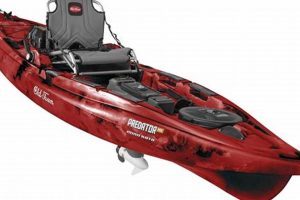
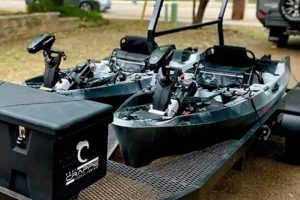
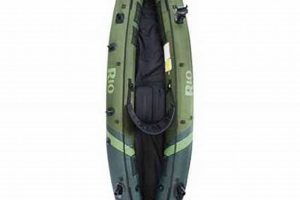
Visual representations of kayaks designed for angling provide a wealth of information. These can range from simple photographs to detailed diagrams and even three-dimensional renderings, showcasing various features such as rod holders, storage compartments, and hull designs. A picture of a kayak outfitted for fishing, for instance, might illustrate how specific gear can be mounted or stored, giving potential buyers a practical understanding of the kayak’s layout.
Such visuals are invaluable for consumers researching kayak options. They offer a quick way to compare different models, assess their suitability for various fishing styles and environments, and visualize how they might be used. Historically, potential buyers relied on catalog descriptions and limited imagery. However, the advent of digital photography and the internet has revolutionized how information is accessed, making high-quality visuals readily available and significantly impacting purchasing decisions.
This accessibility allows for deeper exploration of kayak features, fishing techniques, and related equipment. The following sections will delve into specific kayak designs, essential accessories, and popular fishing locations, providing comprehensive guidance for both novice and experienced anglers.
Tips for Utilizing Fishing Kayak Imagery
Effective use of visual representations of fishing kayaks can significantly enhance research and decision-making. The following tips offer guidance on leveraging these resources.
Tip 1: Focus on Specific Features: Scrutinize images for details relevant to individual fishing needs, such as rod holders, storage capacity, and hull design. Consider the type of fishing pursued and the environment in which it will occur.
Tip 2: Compare Multiple Models: Viewing images of various kayaks side-by-side allows for direct comparison of features and aesthetics. This facilitates informed decisions based on specific requirements and preferences.
Tip 3: Assess Stability and Capacity: Look for visual cues that indicate a kayak’s stability, such as hull width and design. Examine images showcasing weight capacity and storage space to ensure compatibility with gear and angler size.
Tip 4: Visualize Usage Scenarios: Imagine oneself using the kayak based on the imagery. Consider how gear will be stored and accessed, how the kayak will maneuver in different water conditions, and the overall comfort level.
Tip 5: Seek Images in Diverse Environments: Look for pictures of the kayak in various water conditions, such as calm lakes, rivers, and ocean surf. This provides insights into its performance and suitability across different environments.
Tip 6: Examine Seating and Comfort Features: Pay attention to the seat design, adjustability, and any additional comfort features depicted in the images. A comfortable seating arrangement is crucial for long fishing trips.
Tip 7: Verify Compatibility with Accessories: Look for images illustrating how specific accessories, such as fish finders, anchors, and rod holders, can be mounted and integrated with the kayak.
By following these tips, prospective buyers can gain valuable insights from visual resources, leading to more informed choices and ultimately a more enjoyable fishing experience. Careful consideration of these factors ensures optimal selection of a fishing kayak tailored to individual needs and preferences.
These practical considerations form a foundation for selecting the ideal fishing kayak. The concluding section will summarize key takeaways and offer final recommendations for a successful purchasing process.
1. Visual Detail

Visual detail in depictions of fishing kayaks plays a crucial role in conveying information effectively to prospective buyers. High-quality visuals allow for thorough examination of features, construction, and potential usage scenarios, facilitating informed purchasing decisions. Understanding the nuances of visual detail provides consumers with the tools to critically evaluate different kayak models and select the optimal vessel for their individual needs.
- Resolution and Clarity
Sharp, high-resolution images provide crucial details about a kayak’s construction, features, and finish. Close-ups showcasing the texture of the hull, the stitching on the seat, and the precision of hardware installations allow potential buyers to assess quality and durability. Conversely, blurry or low-resolution images obscure these important details, hindering accurate evaluation.
- Lighting and Color Accuracy
Proper lighting and accurate color representation ensure realistic portrayal of the kayak’s appearance. Images taken in natural lighting conditions provide the most accurate representation of color and finish. Inaccurate color representation or poorly lit photos can mislead buyers about the kayak’s true aesthetics and potentially impact satisfaction with the final product.
- Perspective and Angles
Multiple viewing anglesincluding overhead, side, and front viewsoffer a comprehensive understanding of the kayak’s dimensions and layout. Images showcasing the kayak from different perspectives allow potential buyers to visualize its size and shape, facilitating accurate assessment of its suitability for individual needs and preferences.
- Contextual Elements
Including contextual elements, such as the surrounding environment and relevant accessories, enhances the viewer’s understanding of the kayak’s intended use. Images depicting the kayak in a natural setting, equipped with fishing gear, provide a realistic representation of its functionality and potential applications, aiding buyers in visualizing their own fishing experience.
By carefully considering these facets of visual detail, prospective buyers can gain a comprehensive understanding of a fishing kayak’s features, construction, and potential performance. This informed approach empowers individuals to make confident purchasing decisions, ensuring selection of a kayak perfectly suited to their specific fishing style and requirements.
2. Kayak Features

Visual representations of fishing kayaks serve as crucial tools for conveying key features to potential buyers. Careful examination of these images allows for assessment of a kayak’s suitability for specific fishing styles and individual preferences. Understanding how these features are visually presented provides valuable insights for informed decision-making.
- Hull Design
Kayak hull design directly impacts stability, maneuverability, and tracking. Images showcasing the hull’s shape, width, and profile provide crucial information about its performance characteristics. For instance, a wider, flatter hull suggests enhanced stability, while a longer, narrower hull indicates improved tracking and speed. Visual assessment of hull design allows anglers to select a kayak optimized for their target fishing environment.
- Storage and Organization
Ample storage space and efficient organization are essential for carrying fishing gear and personal items. Images of storage compartments, hatches, and bungee systems allow potential buyers to evaluate storage capacity and accessibility. Visualizations of how rods, tackle boxes, and other equipment can be stored within the kayak contribute significantly to informed purchasing decisions.
- Seating and Comfort
Comfort and adjustability are paramount for long hours on the water. Images showcasing seat design, padding, and adjustability features enable evaluation of long-term comfort. Visualizations of seating positions and backrests provide insights into ergonomic considerations and potential strain reduction during extended fishing trips.
- Specialized Features
Fishing kayaks often incorporate specialized features such as rod holders, paddle clips, and anchor trolleys. Images highlighting these features allow anglers to assess their functionality and convenience. Visualizations of how these features integrate with the overall kayak design and contribute to the fishing experience enhance understanding and inform purchasing choices.
Through careful observation of these features in images, prospective buyers gain valuable insights into a kayak’s functionality, suitability for different fishing styles, and overall design. This comprehensive understanding facilitates confident decision-making, ensuring alignment between kayak features and individual angling requirements.
3. Environmental Context

Environmental context, as depicted in images of fishing kayaks, significantly influences purchasing decisions. Accurately portraying the intended environment allows potential buyers to assess a kayak’s suitability and visualize its performance in real-world scenarios. This visual context provides crucial information about a kayak’s capabilities and how it interacts with its surroundings.
- Water Conditions
Images showcasing kayaks in diverse water conditionscalm lakes, flowing rivers, or ocean surfprovide valuable insights into their performance characteristics. A kayak designed for calm waters may not perform optimally in rough ocean conditions. Visualizing the kayak in the intended environment allows buyers to assess its stability, maneuverability, and overall suitability.
- Fishing Location
Depicting kayaks in various fishing locations, such as near-shore environments, open water, or secluded coves, aids potential buyers in visualizing their own fishing experiences. For example, an image of a kayak navigating through mangroves suggests its suitability for shallow-water fishing. This visual context enhances understanding of a kayak’s intended application.
- Natural Elements
The presence of natural elements like rocks, vegetation, or wildlife in images provides a realistic representation of the fishing environment. This context can illustrate a kayak’s camouflage capabilities or its ability to navigate challenging terrain. Visualizing these elements allows buyers to assess a kayak’s suitability for their target fishing locations.
- Weather Conditions
Images depicting kayaks in different weather conditions, such as sunny days, overcast skies, or light rain, provide a realistic perspective on their potential usage. This visualization allows buyers to consider factors like sun protection, visibility, and overall comfort in various weather scenarios. Understanding a kayak’s suitability for different weather conditions contributes to informed purchasing decisions.
By accurately portraying environmental context, images of fishing kayaks provide crucial insights beyond basic product specifications. This contextual information empowers potential buyers to envision themselves using the kayak in their target environment, leading to more informed purchasing choices and a greater likelihood of a successful fishing experience.
4. Angler Positioning

Angler positioning within fishing kayak imagery significantly impacts viewer perception and understanding of vessel functionality. Proper positioning showcases practical usage, stability characteristics, and the integration of various features. Effective visuals demonstrate how an angler interacts with the kayak during different fishing activities, such as casting, reeling, and landing fish. For example, an image depicting an angler comfortably casting from a seated position emphasizes stability and ease of use, while an image showcasing an angler standing and sight-fishing highlights the kayak’s stability and platform capabilities.
Furthermore, angler positioning can illustrate the ergonomic design of the kayak, highlighting features like adjustable seating, footrests, and rod holder placement. Visuals demonstrating proper body mechanics and posture while fishing contribute to an understanding of comfort and long-term usability. For instance, an image showing an angler with proper back support while paddling emphasizes the kayak’s ergonomic design and potential to reduce strain during extended trips. Conversely, awkward or unstable positioning within the kayak can raise concerns about comfort and safety, negatively influencing potential buyers.
In summary, careful consideration of angler positioning within fishing kayak imagery elevates visual communication and enhances viewer comprehension of the kayak’s practical application. Accurate and realistic portrayals of angler interaction provide valuable insights into stability, ergonomics, and overall functionality. This understanding allows potential buyers to make informed decisions based on their individual fishing styles and preferences, ultimately leading to a more satisfactory kayaking experience.
5. Accessory Integration
Accessory integration plays a crucial role in the visual representation of fishing kayaks. Depicting how various fishing accessories seamlessly integrate with the kayak provides potential buyers with valuable insights into functionality and customization options. Effective visualization of accessory integration enhances understanding of a kayak’s versatility and suitability for specific fishing styles.
- Rod Holders
Rod holders are essential for hands-free fishing and safe rod storage. Images showcasing various rod holder configurations, including flush-mounted, adjustable, and rotating models, allow anglers to assess their practicality and convenience. Visualizations of rod placement and accessibility during different fishing scenarios, such as trolling or casting, contribute to informed purchasing decisions.
- Fish Finders and Electronics
Integrating fish finders, GPS units, and other electronics enhances fishing efficiency. Images illustrating how these devices are mounted and powered within the kayak provide valuable insights into their usability and integration with the overall setup. Visualizations of transducer placement and wiring solutions contribute to a comprehensive understanding of the kayak’s electronic capabilities.
- Storage Solutions
Accessory integration extends to storage solutions like tackle boxes, crates, and dry bags. Images showcasing how these items fit within designated storage compartments or utilize bungee systems illustrate efficient organization and gear accessibility. Visualizations of different storage configurations allow anglers to assess capacity and suitability for their specific gear requirements.
- Anchor Systems
Anchor systems are crucial for maintaining position in specific fishing locations. Images depicting anchor trolley setups, anchor cleats, and deployment mechanisms provide insights into their functionality and ease of use. Visualizations of how anchor systems integrate with the kayak’s design and impact maneuverability contribute to informed decision-making.
Effective visualization of accessory integration in images of fishing kayaks empowers potential buyers to assess a kayak’s versatility and adaptability to individual fishing preferences. Understanding how these accessories enhance functionality and contribute to a customized fishing experience leads to more informed purchasing decisions and ultimately a more successful and enjoyable time on the water.
6. Image Quality

Image quality significantly impacts the effectiveness of fishing kayak visuals. High-quality images convey crucial details about the kayak’s features, construction, and intended use, facilitating informed purchasing decisions. Conversely, low-quality images can obscure important information, potentially leading to misinterpretations and ultimately dissatisfaction with the product. Understanding the components of image quality empowers consumers to critically evaluate visual representations and make well-informed choices.
- Resolution
Resolution refers to the level of detail captured in an image. High-resolution images showcase intricate details like hull texture, hardware components, and seat stitching, allowing potential buyers to assess the kayak’s quality and craftsmanship. Low-resolution images lack clarity, potentially obscuring defects or misrepresenting the kayak’s true appearance. For example, a high-resolution image clearly reveals the weave of a carbon fiber kayak hull, while a low-resolution image renders the same hull as a blurry, indistinct shape. This difference significantly impacts a buyer’s ability to evaluate the kayak’s construction and materials.
- Lighting
Proper lighting is crucial for accurately representing a kayak’s color, shape, and features. Well-lit images capture the nuances of the kayak’s design, allowing viewers to appreciate its aesthetics and assess its functionality. Poor lighting, on the other hand, can create shadows that obscure details or distort colors, leading to misinterpretations. For example, an image taken in direct sunlight may accurately portray the kayak’s color and finish, while an image taken in dim lighting may make the same kayak appear dull or discolored.
- Focus
Sharp focus ensures that all elements of the kayak are clearly visible. In-focus images allow viewers to examine specific features, such as rod holders, storage compartments, and seating arrangements, in detail. Out-of-focus images make it difficult to discern important details, hindering accurate evaluation of the kayak’s features and functionality. For example, a sharp image clearly depicts the mechanisms of a rod holder, while a blurry image makes it difficult to understand how the rod holder operates.
- Composition
Effective composition enhances visual appeal and clarifies the kayak’s features and intended use. Well-composed images highlight key details, minimize distractions, and provide context through the inclusion of relevant background elements. Poor composition can clutter the image, making it difficult to focus on the kayak itself. For example, an image that showcases the kayak against a clean background emphasizes its design, while an image cluttered with distracting elements makes it difficult to appreciate the kayak’s aesthetics and features.
These facets of image quality collectively influence how potential buyers perceive and evaluate fishing kayaks. High-quality images provide a comprehensive and accurate representation of the product, facilitating informed purchasing decisions. By understanding these elements, consumers can effectively utilize visual information to select the fishing kayak best suited to their individual needs and preferences.
Frequently Asked Questions about Fishing Kayak Imagery
This section addresses common inquiries regarding the utilization and interpretation of fishing kayak visuals. Clear and accurate visual information plays a vital role in the kayak selection process, and these FAQs aim to clarify potential uncertainties.
Question 1: How can images assist in determining kayak stability?
Visual cues, such as hull width and shape, offer insights into stability. Wider hulls generally indicate greater stability. Images depicting anglers in various positions, including standing, can further demonstrate stability characteristics.
Question 2: What should one look for in images to assess storage capacity?
Images showcasing storage compartments, hatches, and bungee systems provide a visual representation of storage capacity. Look for images depicting gear storage to gauge practicality for individual needs.
Question 3: How can images help evaluate seating comfort?
Images of the seat design, padding, and adjustability features provide insights into potential comfort. Look for images depicting anglers seated in the kayak to assess ergonomic design and posture support.
Question 4: What are key visual indicators of kayak quality in images?
High-resolution images allow for close examination of construction details, such as hull material, hardware, and finishing. Look for clear images showcasing these details to assess overall quality and craftsmanship.
Question 5: How can images aid in understanding accessory compatibility?
Images illustrating the integration of accessories like rod holders, fish finders, and anchor systems demonstrate compatibility and potential customization options. Look for images showcasing these integrations to assess their practicality and functionality.
Question 6: What role does environmental context play in kayak imagery?
Images depicting kayaks in various environments, such as lakes, rivers, or oceans, provide context for intended use. This visualization aids in assessing a kayak’s suitability for specific fishing locations and conditions.
Careful consideration of these visual aspects contributes significantly to informed decision-making during kayak selection. Understanding how to interpret visual cues allows for effective assessment of kayak features, suitability, and overall quality.
The subsequent section will offer concluding remarks and summarize key considerations for choosing the optimal fishing kayak.
Conclusion
Careful examination of fishing kayak imagery provides invaluable insights for prospective buyers. Visual representations offer a comprehensive understanding of key features, including hull design, storage capacity, seating arrangements, and accessory integration. Furthermore, environmental context within imagery showcases a kayak’s suitability for specific fishing locations and conditions. Image quality, encompassing resolution, lighting, and focus, plays a crucial role in accurately conveying these details. Thorough analysis of these visual elements empowers informed decision-making and ensures alignment between kayak selection and individual angling requirements.
Effective utilization of visual resources transforms the kayak selection process from a potentially daunting task into an engaging and informative experience. Critical evaluation of fishing kayak imagery equips individuals with the knowledge necessary to choose the optimal vessel for a successful and enjoyable fishing experience. This informed approach fosters confidence in purchasing decisions and ultimately enhances time spent on the water.