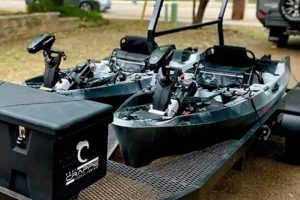
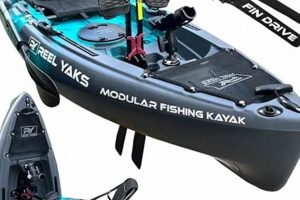
A fishing kayak altered for improved performance or specialized functionality represents a significant evolution in the sport of angling. These adaptations can range from simple additions, such as rod holders or anchor trolleys, to more complex modifications like integrated sonar systems, live wells, or even outriggers for enhanced stability. A standard recreational kayak transformed with a trolling motor and specialized seating demonstrates the concept.
Customized watercraft provide anglers with a distinct advantage, allowing them to access challenging fishing grounds, personalize their setup for specific species or techniques, and ultimately enhance their overall fishing experience. This trend reflects a broader movement toward specialization within recreational fishing, enabling anglers to maximize their effectiveness and enjoyment on the water. The historical development of such craft demonstrates the enduring human drive to innovate and adapt tools for improved results, mirroring advancements seen in other areas of fishing technology, from rod design to electronics.
This exploration will delve further into the diverse world of personalized fishing watercraft, examining popular modifications, their associated benefits, and the factors to consider when undertaking such projects.
Tips for Customizing Fishing Kayaks
Careful planning and execution are crucial for successful kayak customization. The following tips offer guidance for enhancing on-the-water experiences.
Tip 1: Stability Enhancements: Adding outriggers or widening the hull can significantly improve stability, particularly beneficial for stand-up fishing or challenging water conditions. Consider the trade-off between stability and maneuverability.
Tip 2: Propulsion Options: Integrating a trolling motor or pedal drive system offers hands-free fishing and expands the range of accessible fishing spots. Battery capacity and motor power should align with intended use.
Tip 3: Fish Finder Integration: Mounting a fish finder provides crucial underwater insights. Transducer placement and cable management are key considerations for optimal performance.
Tip 4: Storage Solutions: Incorporating rod holders, tackle storage, and dry compartments maximizes organization and efficiency. Prioritize accessibility and secure storage to prevent gear loss.
Tip 5: Comfort and Ergonomics: Upgrading seating, adding footrests, and strategically positioning accessories enhance comfort during long fishing trips. Proper posture and support contribute to reduced fatigue.
Tip 6: Safety First: Ensure all modifications adhere to safety standards. Include essential safety equipment, such as a personal flotation device, signaling devices, and a bilge pump.
Tip 7: Weight Capacity: Assess the impact of modifications on the kayak’s weight capacity. Exceeding the limit compromises stability and performance.
By considering these factors, anglers can create a customized watercraft optimized for individual needs and fishing styles, ultimately leading to more productive and enjoyable fishing trips.
These tips provide a starting point for customizing a fishing kayak. Further research and planning are essential for creating a safe and effective personalized vessel.
1. Enhanced Stability

Stability represents a critical factor in fishing kayak performance, significantly influencing angler safety and effectiveness. Modifications targeting stability dramatically improve the fishing experience, particularly in challenging conditions or when employing techniques requiring greater freedom of movement. This exploration delves into key facets contributing to enhanced stability in modified fishing kayaks.
- Hull Design Modifications:
Wider hulls and pontoon-style additions increase primary stability, reducing the likelihood of tipping. A broader base provides a more secure platform, especially beneficial for stand-up fishing or maneuvering in rough water. While these modifications enhance stability, they can impact maneuverability and speed. Consider the trade-offs based on intended fishing styles and water conditions.
- Outriggers and Stabilizers:
Deployable outriggers or fixed stabilizers provide secondary stability, significantly reducing rocking and tipping. These additions create a wider effective beam, offering increased resistance to lateral forces. Outriggers are particularly valuable in offshore or open-water environments where conditions can change rapidly. Folding or removable options offer versatility for navigating tighter spaces.
- Weight Distribution and Ballast:
Strategic placement of gear and the addition of ballast systems lower the center of gravity, improving stability. Distributing weight evenly within the hull minimizes rocking and enhances overall balance. Integrated ballast tanks or strategically placed weight bags can further optimize stability, particularly in windy conditions or when carrying heavy loads.
- Angler Positioning and Technique:
Proper body positioning and paddling techniques contribute significantly to kayak stability. Maintaining a low center of gravity and smooth, controlled movements minimize rocking. Anglers should practice techniques specific to their modified kayak, considering factors like added width or the presence of outriggers. Understanding the kayak’s behavior in various conditions is crucial for maintaining balance and safety.
By addressing these facets, modifications can transform a standard fishing kayak into a stable and secure platform, enabling anglers to confidently explore diverse fishing environments and employ a wider range of techniques. This enhanced stability ultimately expands fishing opportunities and contributes to a safer and more enjoyable experience on the water. The specific modifications chosen should align with individual fishing styles and anticipated water conditions.
2. Improved Propulsion

Improved propulsion represents a significant advantage in modified fishing kayaks, directly impacting range, access, and fishing effectiveness. Modifications in this area address the inherent limitations of paddle-powered kayaks, enabling anglers to cover greater distances, navigate challenging currents, and conserve energy for fishing. This enhancement fundamentally alters how anglers interact with their environment, opening up new possibilities and refining existing approaches.
Integrating a propulsion system influences several aspects of the fishing experience. Motorized kayaks, whether powered by electric trolling motors or gasoline outboards, offer significantly increased speed and range. This allows anglers to reach distant fishing grounds previously inaccessible by paddle power alone. Furthermore, motorized propulsion proves invaluable when navigating strong currents or windy conditions, allowing for precise boat control and reducing angler fatigue. Pedal-powered systems provide a hands-free approach, allowing anglers to maintain constant speed and maneuverability while simultaneously fishing. This integration of propulsion and fishing action streamlines the process and improves overall efficiency. For example, anglers targeting offshore species can leverage motorized kayaks to reach deeper waters, while those fishing rivers can utilize pedal drives to maintain position and precisely present lures. Understanding the capabilities and limitations of each propulsion type is critical for selecting the appropriate modification.
Selecting an appropriate propulsion system depends on several factors, including fishing style, target species, and the typical environment. Electric trolling motors offer quiet operation and precise control, ideal for stealthy approaches in shallow water or protected areas. Gasoline outboards provide greater power and range, suitable for larger bodies of water or offshore excursions. Pedal drives offer a balance of speed, control, and hands-free operation, particularly advantageous for techniques requiring frequent adjustments or precise boat positioning. Consideration must also be given to factors such as battery life for electric motors, fuel capacity for gasoline engines, and the impact of added weight and complexity on the kayak’s overall performance and stability. Successfully integrating improved propulsion requires careful planning and execution, ensuring the chosen system aligns with the angler’s specific needs and enhances the overall fishing experience without compromising safety or maneuverability.
3. Advanced Electronics

Integration of advanced electronics significantly enhances the capabilities of modified fishing kayaks, transforming them into sophisticated angling platforms. These technological advancements provide anglers with real-time data and enhanced control, leading to increased fishing success and a more informed, engaging experience. The following facets illustrate the crucial role of electronics in modern kayak fishing.
- Fish Finders and Chartplotters
Fish finders utilize sonar technology to provide underwater imagery, revealing fish location, bottom structure, and depth. Chartplotters offer GPS navigation, mapping capabilities, and waypointing for precise location tracking and route planning. Combining these tools allows anglers to identify promising fishing areas, navigate efficiently, and mark productive spots for future visits. Modern units often integrate both functionalities into a single display, streamlining the user experience. For example, a kayak angler might use a chartplotter to navigate to a specific reef marked on a nautical chart, then utilize the fish finder to identify fish holding near the structure.
- Trolling Motor Integration and GPS Autopilot
Connecting a trolling motor to a chartplotter or fish finder enables advanced features such as GPS autopilot and anchor lock. Autopilot allows the angler to set a course and maintain heading automatically, freeing their hands for fishing. Anchor lock utilizes GPS to maintain position over a specific spot, even in wind or current. These features enhance fishing efficiency, particularly in challenging conditions or when precise boat control is critical. For instance, an angler fishing a river can utilize anchor lock to hold position in a promising eddy without constantly adjusting the motor.
- Communication and Safety Devices
Integrating VHF radios and personal locator beacons (PLBs) enhances safety and communication on the water. VHF radios provide direct communication with other vessels and shore stations, enabling calls for assistance or weather updates. PLBs transmit emergency signals in case of distress, alerting rescue services to the angler’s location. These devices are particularly important for anglers venturing offshore or into remote areas where cellular service may be unreliable.
- Power Management Systems
Managing electrical power efficiently is crucial for extended trips or when utilizing multiple electronic devices. Battery monitors provide real-time information on remaining power, while solar panels or onboard generators offer supplemental charging capabilities. Proper power management ensures critical systems remain operational throughout the fishing trip, maximizing the benefits of integrated electronics. For extended expeditions, anglers might utilize a combination of battery monitoring, solar charging, and efficient power usage strategies to ensure sufficient power for navigation, fish finding, and communication.
The strategic integration of advanced electronics transforms a modified fishing kayak into a high-tech angling platform. These tools provide crucial information, enhance boat control, and improve safety, ultimately leading to a more productive and enjoyable fishing experience. The choice of specific electronics depends on individual fishing styles, target species, and the anticipated environment. Careful consideration of these factors, combined with proper installation and usage, ensures that these advancements contribute meaningfully to the angler’s success and safety on the water.
4. Customized Storage
Effective storage solutions are integral to a well-equipped modified fishing kayak. Organized and accessible gear enhances efficiency, reduces clutter, and maximizes fishing time. Customized storage addresses the specific needs of kayak anglers, allowing for the secure and convenient transport of rods, tackle, and other essential equipment. This examination explores key facets of customized storage within the context of modified fishing kayaks.
- Rod Storage and Management
Dedicated rod holders, both flush-mounted and adjustable, secure rods during transit and while fishing. These specialized holders prevent rod tangling and damage, while keeping them readily accessible for quick deployment. Recessed rod storage within the hull maximizes deck space and minimizes interference with paddling or other activities. For example, angled rod holders positioned behind the seat allow for easy access without obstructing the angler’s casting motion.
- Tackle Organization and Accessibility
Modular tackle trays, waterproof boxes, and customized compartments keep lures, hooks, and other small items organized and protected from the elements. Strategically placed storage within easy reach of the angler minimizes disruption during fishing. Examples include tackle boxes integrated into the seat or side-mounted storage compartments accessible without standing up. Efficient tackle organization streamlines lure changes and maximizes fishing time.
- Dry Storage and Gear Protection
Waterproof hatches, sealed compartments, and dry bags protect sensitive electronics, clothing, and other gear from water damage. These storage solutions maintain the integrity of essential items, ensuring functionality and extending their lifespan. Examples include large bow hatches for storing dry bags or smaller, sealed compartments for electronics like phones and cameras. Effective dry storage is crucial for maintaining safety and comfort during extended trips or unexpected weather changes.
- Space Optimization and Weight Distribution
Maximizing storage capacity while maintaining balanced weight distribution is crucial for kayak performance and stability. Custom storage solutions utilize available space efficiently, minimizing clutter and optimizing weight distribution for optimal balance. Examples include under-seat storage compartments or strategically placed weight pockets to counterbalance heavier items. Proper weight distribution contributes to stability and maneuverability, enhancing the overall kayaking experience.
Customized storage solutions represent a critical aspect of modified fishing kayaks. By addressing the specific storage needs of kayak anglers, these modifications enhance efficiency, organization, and overall fishing enjoyment. Well-designed storage systems contribute to a streamlined and productive fishing experience, allowing anglers to focus on the task at hand and maximize their time on the water.
5. Increased Comfort

Comfort plays a crucial role in maximizing fishing kayak functionality. Extended periods on the water necessitate ergonomic design and adaptable features to mitigate fatigue and enhance focus on the activity. Modifications aimed at increasing comfort directly impact an angler’s endurance, concentration, and overall enjoyment. An uncomfortable seating arrangement, for instance, can lead to back pain and reduced fishing effectiveness. Conversely, a well-designed seating system, combined with adjustable footrests and strategically placed accessories, allows for prolonged, comfortable fishing sessions, maximizing time on the water and enhancing the overall experience. This principle applies equally to other comfort-enhancing modifications, from padded backrests to strategically placed grab handles.
Several modifications contribute directly to increased comfort. Upgraded seating systems with enhanced lumbar support and adjustable features cater to individual body types and preferences. Ergonomically designed footrests provide crucial support and stability, reducing leg fatigue and improving posture. The strategic placement of accessories, such as rod holders and cup holders, minimizes reaching and stretching, promoting efficient movement and reducing strain. These modifications, though seemingly minor, cumulatively contribute to a significantly more comfortable and enjoyable fishing experience. For example, an angler targeting pelagic species might spend hours at sea; a comfortable and supportive seating arrangement is essential for maintaining focus and effectively battling large fish. Similarly, an angler fishing in cold weather benefits from insulated seating and wind protection to maintain core body temperature and extend fishing time. The specific modifications chosen should align with individual needs and the anticipated fishing environment.
Prioritizing comfort in a modified fishing kayak translates directly to improved performance and enjoyment. By reducing fatigue and promoting proper posture, comfort-focused modifications allow anglers to concentrate on fishing, maximizing their effectiveness and enjoyment on the water. Furthermore, a comfortable environment contributes to safety by reducing distractions and improving situational awareness. While performance-enhancing modifications often take precedence, the importance of comfort should not be underestimated. A well-designed, comfortable kayak enables anglers to fully engage in the activity, fostering a deeper appreciation for the sport and promoting long-term participation. Investing in comfort-focused modifications represents an investment in the overall quality of the fishing experience.
6. Prioritized Safety
Safety considerations are paramount when modifying a fishing kayak. Alterations to the vessel’s structure, weight distribution, and added equipment can introduce new risks if not carefully addressed. Prioritizing safety ensures modifications enhance the fishing experience without compromising angler well-being. A comprehensive understanding of potential hazards and appropriate mitigation strategies is crucial for responsible kayak modification.
- Stability Considerations
Modifications impacting stability, such as adding elevated seating or outriggers, require careful evaluation. Changes in the kayak’s center of gravity and handling characteristics can increase the risk of capsizing. Thorough testing in controlled environments and gradual acclimation to the modified kayak’s behavior are essential. For example, an angler adding a raised fishing platform should practice entering and exiting the kayak in shallow water before venturing into deeper areas.
- Propulsion System Safety
Integrating propulsion systems introduces potential hazards related to fuel handling, electrical systems, and moving parts. Proper installation, regular maintenance, and adherence to manufacturer guidelines are essential for safe operation. Electric trolling motors require secure battery connections and appropriate wiring to prevent fires or electrical shocks. Gasoline outboards necessitate careful fuel storage and handling to minimize fire risk and environmental impact.
- Navigation and Visibility
Modifications can impact a kayak’s visibility to other boaters, especially in low-light conditions or congested waterways. Adding navigation lights, reflective tape, and high-visibility flags enhances visibility and reduces the risk of collisions. Regularly inspecting and maintaining these safety features ensures their effectiveness. For example, an angler fishing at night should equip the kayak with navigation lights conforming to local regulations.
- Emergency Preparedness
Carrying essential safety equipment, such as a personal flotation device (PFD), signaling devices, and a first-aid kit, remains crucial regardless of modifications. Modifications might necessitate additional safety measures, such as a bilge pump for self-bailing or a communication device for remote areas. Regularly inspecting and updating safety equipment ensures readiness in emergencies. An angler venturing offshore in a modified kayak might carry a satellite communication device for emergency contact in areas beyond cellular range.
Prioritizing safety in modified fishing kayaks requires careful consideration of potential risks and proactive implementation of mitigation strategies. A comprehensive approach encompassing stability assessment, propulsion system safety, enhanced visibility, and emergency preparedness ensures modifications contribute to a more enjoyable and secure fishing experience. Neglecting safety considerations can lead to accidents and compromise the benefits of a modified kayak. A responsible approach to modification ensures the pursuit of enhanced fishing capabilities does not come at the expense of angler safety.
Frequently Asked Questions
Addressing common inquiries regarding customized fishing kayaks provides clarity and guidance for anglers considering modifications or seeking to optimize their existing setups. The following questions and answers offer valuable insights into key aspects of this specialized area of kayak fishing.
Question 1: Does modifying a fishing kayak void its warranty?
Modifications can potentially void manufacturer warranties, particularly structural alterations. Consulting the warranty terms and contacting the manufacturer directly before undertaking modifications is advisable. Some manufacturers offer approved modification options or partner with certified installers.
Question 2: What are the most important safety considerations when modifying a fishing kayak?
Stability, propulsion system safety, visibility, and emergency preparedness are paramount. Modifications should be carefully evaluated for their impact on these factors. Thorough testing and adherence to safety guidelines are crucial.
Question 3: How does adding a trolling motor affect a fishing kayak’s performance?
Trolling motors increase speed and range, but also add weight and complexity. Battery life, motor power, and impact on maneuverability should be considered. Proper installation and weight distribution are essential for maintaining performance and stability.
Question 4: Are there specific regulations regarding modified fishing kayaks?
Regulations vary by jurisdiction. Requirements for navigation lights, registration, and permitted modifications should be researched and adhered to. Consulting local authorities or boating organizations provides clarification on specific rules and regulations.
Question 5: What are the most common mistakes to avoid when customizing a fishing kayak?
Common mistakes include exceeding weight capacity, neglecting stability considerations, improper installation of electronics, and inadequate safety precautions. Careful planning, research, and thorough testing minimize the risk of errors.
Question 6: How can one determine the best modifications for their individual fishing style and needs?
Assessing fishing style, target species, typical fishing environment, and budget helps determine suitable modifications. Researching different options, consulting experienced anglers, and prioritizing essential features over non-essential upgrades contribute to an effective and personalized setup.
Understanding the implications of modifications, prioritizing safety, and aligning customizations with individual fishing needs ensures a rewarding and secure experience on the water. Careful planning and execution are essential for maximizing the benefits of a modified fishing kayak.
Further exploration of specific modification types and their associated benefits provides a deeper understanding of this dynamic aspect of kayak fishing.
Modified Fishing Kayaks
Exploration of adapted fishing kayaks reveals significant advancements in angler capabilities. Enhanced stability, improved propulsion, integrated electronics, customized storage, increased comfort, and prioritized safety collectively redefine the on-the-water experience. These modifications offer access to previously inaccessible fishing grounds, optimize angling techniques, and enhance overall enjoyment. However, responsible modification requires careful consideration of stability implications, adherence to safety regulations, and a thorough understanding of individual needs and environmental conditions. A balanced approach maximizes benefits while mitigating potential risks.
The evolution of specialized fishing watercraft reflects an ongoing pursuit of improved angling effectiveness and a deeper connection with the aquatic environment. Continued innovation promises further advancements, empowering anglers to explore new possibilities and refine their approach to this enduring pursuit. The careful integration of technology and design will continue to shape the future of fishing kayaks, driving the sport forward while upholding the principles of safety and responsible engagement with the natural world.