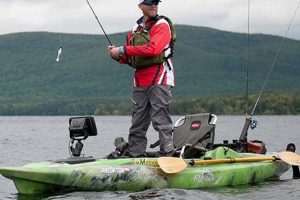
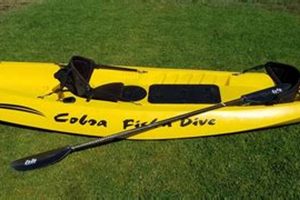
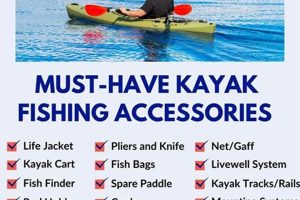
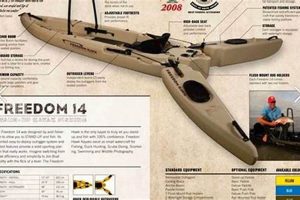
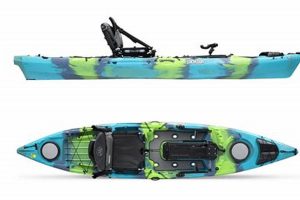
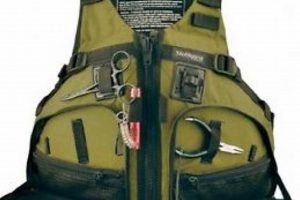
Specialized equipment enhances the experience and effectiveness of angling from a kayak. This includes items designed for both the kayak itself and the angler, impacting stability, comfort, and fishing success. For example, rod holders, anchors, and specialized paddles contribute to a stable and efficient fishing platform, while personal flotation devices and appropriate clothing ensure angler safety and comfort.
Effective equipment selection directly influences fishing success and safety. Historically, kayak fishing relied on adapted gear from other angling disciplines. However, the growing popularity of this sport has driven innovation in specialized equipment, leading to significant improvements in functionality and performance. Choosing the right tools can maximize an angler’s time on the water, improve catch rates, and contribute to a more enjoyable experience overall.
A closer examination reveals the diverse range of equipment available for kayak anglers. This includes considerations for kayak selection, paddle choices, essential safety gear, rod and reel setups, fish finders, and tackle storage solutions. Each aspect plays a vital role in creating a successful and enjoyable kayak fishing experience.
Essential Equipment Tips for Kayak Anglers
Optimizing equipment choices significantly enhances safety and fishing success in kayak angling. The following tips provide guidance for selecting appropriate gear.
Tip 1: Prioritize Stability. Kayak selection should prioritize stability, particularly for beginners. Wider kayaks offer greater stability, while shorter models enhance maneuverability in tight spaces. Consider inflatable kayaks for portability and storage convenience.
Tip 2: Choose the Right Paddle. A lightweight, appropriately sized paddle reduces fatigue and improves efficiency. Adjustable-length paddles accommodate varying water conditions and paddling styles.
Tip 3: Safety First. A personal flotation device (PFD) is essential and should be worn at all times. A whistle, signaling device, and first-aid kit are also crucial safety components.
Tip 4: Rod and Reel Selection. Shorter rods (6-7 feet) are generally preferred for kayak fishing due to limited space. Spinning reels and baitcasting reels are both popular choices, depending on angler preference and target species.
Tip 5: Fish Finder Technology. A fish finder can significantly improve angling success by locating fish and identifying underwater structures. Compact, portable fish finders are ideally suited for kayaks.
Tip 6: Tackle Organization. Effective tackle organization is crucial in a confined kayak space. Tackle boxes with secure latches and waterproof compartments protect gear and maintain order.
Tip 7: Anchor Appropriately. A lightweight anchor with sufficient holding power is essential for maintaining position in desired fishing locations. Consider an anchor trolley system for efficient anchor deployment and retrieval.
Tip 8: Dress for Success. Appropriate clothing protects against the elements and enhances comfort. Consider quick-drying fabrics, sun protection, and rain gear as necessary.
Careful equipment selection contributes to a safer, more productive, and enjoyable kayak fishing experience. These tips offer a starting point for assembling the necessary gear, allowing anglers to focus on the thrill of the catch.
Ultimately, informed equipment choices contribute significantly to a successful kayak fishing outing.
1. Kayak Selection

Kayak selection represents a foundational element of effective gear for kayak fishing. The vessel itself dictates the angler’s capacity to navigate waters, manage equipment, and ultimately, succeed in angling. Appropriate selection hinges on understanding the interplay between kayak design and intended fishing environment.
- Hull Design and Stability
Hull design significantly impacts stability, maneuverability, and tracking. Wider, flatter hulls offer enhanced stability, ideal for calmer waters and stand-up fishing. Narrower hulls, conversely, provide increased speed and efficiency for covering greater distances. A “V” shaped hull slices through chop more efficiently, while a flatter hull offers superior stability in calm conditions. Stability considerations directly impact equipment choices; a stable platform allows for more varied fishing techniques and equipment deployment.
- Length and Storage Capacity
Kayak length influences both speed and storage. Longer kayaks typically track straighter and glide more efficiently, while shorter kayaks excel in maneuverability within tighter spaces, such as creeks or mangrove tunnels. Storage capacity directly affects gear management; sufficient space allows for organized tackle storage, rods, and other essential equipment. A longer kayak might accommodate larger storage compartments or dedicated rod holders, whereas a shorter kayak requires more strategic gear placement.
- Sit-on-Top vs. Sit-Inside
Sit-on-top kayaks offer superior stability and ease of re-entry, making them popular choices for fishing. Their open design allows for easier movement and equipment access. Sit-inside kayaks, while offering greater protection from the elements and potentially increased speed, can present challenges for re-entry after a water landing. This design distinction impacts gear choices related to water intrusion and accessibility.
- Material and Weight Considerations
Kayak material affects durability, weight, and portability. Polyethylene kayaks offer excellent durability and impact resistance. Composite materials, such as fiberglass or Kevlar, reduce weight and increase performance, but often come at a higher price. Weight considerations impact transportation and launch accessibility. A lighter kayak simplifies transport and handling, crucial for solo anglers.
Careful consideration of these facets yields a kayak selection optimized for individual angling needs and preferences. The selected kayak subsequently informs decisions regarding other gear choices, creating a cohesive and effective system for kayak fishing. Proper kayak selection, therefore, lays the foundation for a successful and enjoyable fishing experience, directly influencing the functionality and effectiveness of all other equipment choices.
2. Paddle Choice

Paddle choice represents a critical component within the broader context of kayak fishing equipment. Paddle characteristics directly influence paddling efficiency, fatigue levels, and overall maneuverability on the water. These factors, in turn, impact angling success, as efficient paddling conserves energy for fishing and precise maneuvering positions the angler effectively for casting and retrieving. Consider the scenario of navigating a swift current; a high-angle paddle with a powerful blade design provides the necessary control and propulsion, whereas a low-angle paddle designed for calmer waters would prove inefficient and tiring. The connection between paddle choice and fishing success manifests in the angler’s ability to maintain position, cover water effectively, and conserve energy.
Several key factors contribute to effective paddle selection. Blade shape, paddle length, and shaft material all play significant roles. A shorter, wider blade generates more power per stroke, suitable for short bursts of speed or maneuvering against currents. Conversely, a longer, narrower blade facilitates efficient cruising over longer distances. Paddle length should correspond to angler height and kayak width; a longer paddle generates more leverage but requires greater reach. Shaft material influences both weight and performance; lightweight materials, such as carbon fiber, reduce fatigue during extended paddling sessions, while more affordable materials, like aluminum or fiberglass, offer durability and cost-effectiveness. Selecting a paddle appropriate for individual needs and the intended fishing environment directly impacts performance and enjoyment.
Effective paddle selection optimizes kayak control, conserves energy, and enhances the overall fishing experience. Understanding the interplay between paddle characteristics and on-the-water performance empowers anglers to make informed equipment choices. Challenges such as fatigue, inefficient paddling, and compromised maneuverability can be mitigated through careful paddle selection, ultimately contributing to a more successful and enjoyable kayak fishing outing. This underscores the critical role of paddle choice within the comprehensive framework of gear selection for kayak angling.
3. Safety Equipment

Safety equipment constitutes a non-negotiable component of gear for kayak fishing. The inherent risks associated with on-water activities, amplified by the often-remote nature of kayak fishing locations, necessitate meticulous attention to safety provisions. Cause and effect relationships underscore this importance; neglecting safety precautions can directly lead to adverse outcomes, ranging from minor inconveniences to life-threatening situations. For instance, an unexpected capsize without a personal flotation device (PFD) can result in tragic consequences, particularly in cold water or strong currents. Conversely, deploying a readily accessible signaling device can expedite rescue in such scenarios. Integrating safety equipment into the broader framework of kayak fishing gear elevates it beyond mere accessory status; it becomes an integral part of the angling system, directly influencing the angler’s well-being and long-term enjoyment of the sport.
Practical considerations dictate specific safety equipment choices. A properly fitted PFD stands as the most crucial item, providing essential buoyancy in the event of a capsize. A whistle, readily accessible and attached to the PFD, enables signaling for assistance. A waterproof VHF radio allows direct communication with emergency services and other boaters, crucial in remote locations beyond cellular service range. Visual distress signals, such as flares or a signal mirror, further enhance the ability to attract attention in emergency situations. A first-aid kit equipped to address common fishing-related injuries, including cuts, hooks, and stings, represents another essential component. Carrying these items consistently, understanding their proper usage, and maintaining them in good working order translates preparedness into effective risk mitigation.
Prioritizing safety equipment transforms kayak fishing from a potentially hazardous activity into a manageable and enjoyable pursuit. Challenges associated with open water environments, including changing weather conditions, unexpected encounters with wildlife, and the potential for equipment malfunctions, are effectively addressed through comprehensive safety measures. Integrating these considerations into the broader context of gear selection underscores the inseparable link between safety and successful kayak angling. This approach ensures not only immediate safety but also contributes to the long-term sustainability of the sport by minimizing preventable incidents and promoting responsible angling practices.
4. Fishing Rods/Reels
Rods and reels represent integral components of kayak fishing gear, directly influencing angling effectiveness and overall experience. Their selection hinges upon understanding the interplay between kayak limitations and target species. Cause and effect relationships dictate this selection process; choosing inappropriate gear directly impacts fishing success. For example, a heavy, long rod designed for offshore fishing becomes cumbersome and inefficient within a kayak’s confined space, hindering casting accuracy and fish fighting capability. Conversely, a shorter, lighter rod designed for freshwater bass fishing proves ideal for kayak angling, allowing for precise casts and effective control over hooked fish. This underscores the practical significance of selecting appropriate rods and reels; they serve as the angler’s primary interface with the target species, mediating the success of each cast and retrieval.
Practical considerations further refine rod and reel selection. Shorter rods, typically ranging from 6 to 7 feet, are generally preferred in kayaks due to space constraints and maneuverability requirements. Spinning reels, known for their ease of use and versatility, often serve as the preferred choice for kayak anglers targeting a variety of species. Baitcasting reels, while offering greater casting distance and accuracy, require more expertise and may present challenges in windy conditions. Line selection, too, plays a critical role; braided line, with its high tensile strength and low stretch, offers advantages in detecting subtle bites and setting hooks effectively in heavy cover. Fluorocarbon leader material, due to its low visibility and abrasion resistance, enhances presentation and durability. These choices, tailored to specific fishing scenarios and target species, optimize the effectiveness of the rod and reel combination.
The selection of appropriate fishing rods and reels within the broader context of kayak fishing gear directly impacts angling success. Addressing the challenges inherent in a kayak’s limited space and maneuverability requires careful equipment choices. Understanding the interplay between rod length, reel type, line selection, and target species empowers anglers to create effective tackle systems. This targeted approach maximizes fishing potential, transforming the challenges of kayak fishing into opportunities for a rewarding and successful angling experience.
5. Fish Finders/GPS

Fish finders and GPS units represent essential technological tools within the context of kayak fishing gear. These devices enhance angling effectiveness by providing crucial information about underwater terrain, fish location, and navigation. Their integration into a kayak fishing setup directly impacts angling success; the ability to locate fish and understand underwater structures fundamentally alters the angler’s approach and increases the likelihood of a successful catch. Consider the scenario of locating a submerged reef or drop-off; without a fish finder, this structure remains hidden, but with the device, it becomes a clearly defined target zone, significantly increasing the odds of finding fish.
- Locating Fish and Structure
Fish finders utilize sonar technology to generate images of the underwater environment, revealing fish, vegetation, and bottom contours. This information enables anglers to target specific areas holding fish, increasing efficiency and reducing time spent searching unproductive water. Distinguishing between a school of baitfish and a larger predatory fish lurking beneath, for example, allows for more targeted lure or bait presentation.
- Navigation and Safety
GPS units provide precise location information, crucial for navigating unfamiliar waters and ensuring safe return to launch points. This functionality becomes especially important in conditions of reduced visibility, such as fog or darkness. Marking waypoints on a GPS allows anglers to return to productive fishing spots or navigate safely through hazardous areas. In an emergency, GPS coordinates can expedite rescue operations.
- Mapping and Chartplotting
Many fish finders integrate GPS and mapping capabilities, providing detailed charts of waterways, including depth contours, navigation markers, and points of interest. This information allows anglers to plan routes, identify potential fishing hotspots, and navigate safely within complex waterways. Understanding the layout of a river system or identifying submerged hazards enhances both fishing success and overall safety.
- Integration and Portability
Modern fish finders and GPS units designed for kayak fishing emphasize portability and ease of integration. Compact units with waterproof designs and versatile mounting options seamlessly incorporate into a kayak’s limited space. Battery-powered operation ensures independence from external power sources, enhancing portability and flexibility. This integration streamlines the use of technology on the water, allowing anglers to focus on fishing without cumbersome setups or complicated interfaces.
Integrating fish finders and GPS units into kayak fishing gear elevates angling effectiveness and enhances overall safety. These tools transform the angler’s understanding of the underwater environment, providing crucial insights that inform decision-making and increase the likelihood of success. From locating fish and navigating safely to mapping waterways and planning routes, these technologies represent essential components of modern kayak fishing gear, bridging the gap between angler and environment.
6. Tackle Storage
Effective tackle storage represents a critical component within the broader framework of gear for kayak fishing. The limited space inherent in a kayak’s design necessitates meticulous organization and efficient storage solutions. Cause and effect relationships directly link tackle storage to fishing success; a disorganized or inaccessible tackle system leads to wasted time, frustration, and ultimately, diminished fishing opportunities. Consider the scenario of a fish striking a lure, only for the angler to fumble through a tangled mess of hooks and lines searching for a replacement. The opportunity is lost, highlighting the practical significance of efficient tackle storage. Organized storage enables quick access to essential gear, maintaining fishing momentum and maximizing time spent with a line in the water. This underscores the integral role of tackle storage within the kayak fishing system; it directly impacts the angler’s ability to respond effectively to changing fishing conditions and capitalize on opportunities.
Practical considerations drive tackle storage solutions for kayak angling. Waterproof tackle boxes with secure latches and customizable compartments protect gear from the elements and maintain organization. Tray systems designed specifically for kayaks maximize space utilization and provide easy access to frequently used items. Smaller utility boxes or pouches attached to the kayak or angler’s PFD offer convenient storage for essential tools, such as pliers, line cutters, and knot tying tools. Rod holders integrated into the kayak’s design secure rods and prevent entanglement, further enhancing efficiency and organization. These solutions, tailored to the specific demands of kayak fishing, transform a potentially chaotic environment into an efficient and productive workspace. The strategic placement of tackle boxes within easy reach, for instance, minimizes disruption during critical fishing moments, allowing for seamless lure changes and adjustments.
Optimizing tackle storage within the context of kayak fishing gear significantly impacts angling success. Addressing the challenges posed by limited space and the dynamic nature of the fishing environment requires careful planning and appropriate storage solutions. The ability to quickly locate and deploy necessary gear enhances efficiency, reduces frustration, and ultimately maximizes fishing time. This translates directly into increased opportunities for successful catches and a more enjoyable angling experience. Effective tackle storage, therefore, represents more than just organization; it embodies a strategic approach to gear management, enabling anglers to focus on the essential elements of fishing and maximize their potential on the water.
Frequently Asked Questions about Kayak Fishing Equipment
This section addresses common inquiries regarding equipment selection and utilization for kayak fishing. Understanding these aspects contributes to informed purchasing decisions and enhances on-water experiences.
Question 1: What type of kayak is best suited for fishing?
Sit-on-top kayaks are generally preferred for their stability, ease of entry and exit, and open design, which facilitates casting and equipment management. However, specific needs and fishing styles may influence this choice; inflatable kayaks offer portability advantages, while sit-inside kayaks provide protection from the elements.
Question 2: What is the ideal length for a fishing kayak?
Kayak length involves a trade-off between stability and maneuverability. Shorter kayaks (under 12 feet) excel in maneuverability within tight spaces, while longer kayaks (over 12 feet) offer increased speed and tracking. Angler preference and intended fishing environment dictate the optimal length.
Question 3: What essential safety gear should be carried on a fishing kayak?
Essential safety gear includes a personal flotation device (PFD), a whistle, a visual distress signal (flare or mirror), a first-aid kit, and a communication device (VHF radio or waterproof cell phone). Local regulations and specific fishing environments may necessitate additional safety items.
Question 4: What type of rod and reel is recommended for kayak fishing?
Shorter rods (6-7 feet) are generally preferred due to space constraints. Spinning reels offer versatility and ease of use, while baitcasting reels provide greater casting distance and accuracy. Rod and reel selection should align with target species and fishing techniques.
Question 5: How important is a fish finder for kayak fishing?
Fish finders significantly enhance angling success by providing real-time information about underwater structures and fish locations. While not strictly essential, they greatly improve efficiency and the likelihood of locating fish, particularly in unfamiliar waters.
Question 6: How can tackle be effectively organized in a kayak?
Waterproof tackle boxes with secure latches and customizable compartments offer efficient storage solutions. Tray systems designed for kayaks maximize space utilization, while smaller utility boxes or pouches provide convenient access to essential tools. Strategic placement of tackle within easy reach enhances on-water efficiency.
Careful consideration of these frequently asked questions facilitates informed equipment choices and enhances both safety and fishing success on the water. Individual needs and preferences should ultimately guide equipment selection, optimizing the overall kayak fishing experience.
Further exploration of specific gear categories and advanced techniques provides a deeper understanding of kayak fishing equipment.
Gear for Kayak Fishing
Effective equipment selection remains paramount for successful and safe kayak angling. From the foundational stability provided by the kayak itself to the precision offered by specialized rods and reels, each component contributes to a cohesive and efficient system. Prioritizing safety equipment ensures responsible enjoyment of the sport, while technological tools such as fish finders and GPS enhance both angling effectiveness and navigational safety. Efficient tackle storage maximizes limited space, optimizing on-the-water efficiency and fishing success.
Informed decisions regarding specialized equipment empower anglers to navigate the challenges and capitalize on the unique opportunities inherent in kayak fishing. Continuous exploration of evolving technologies and refined techniques further enhances this dynamic interplay between angler and environment, promising continued evolution and refinement within the specialized realm of kayak fishing gear.