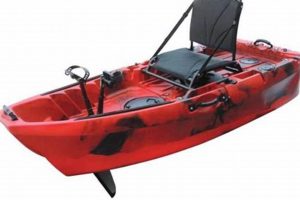
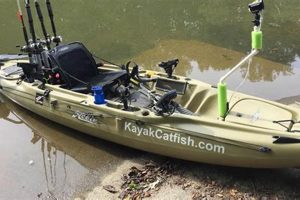
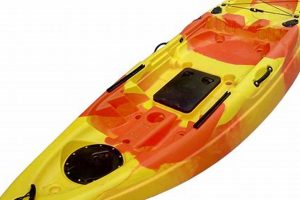
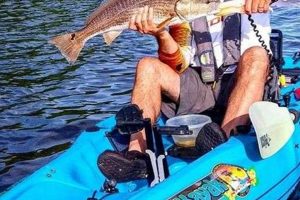
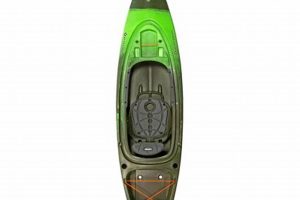
Compact, portable watercraft designed for anglers offer convenient transport and storage, transforming the accessibility of angling locations. These vessels typically incorporate specialized features such as rod holders, gear tracks, and ample storage compartments. An angler might choose such a vessel to access a remote mountain lake or easily store the craft in a small apartment.
The development of these specialized boats has broadened angling opportunities, permitting access to previously difficult-to-reach fishing grounds. This innovation reduces the limitations imposed by traditional kayak transportation and storage, enhancing the overall fishing experience. The increasing popularity reflects a growing demand for efficient and adaptable fishing equipment.
The subsequent sections will delve into specific aspects of these innovative vessels, including material construction, design variations, essential accessories, and recommended fishing techniques tailored to their unique characteristics.
Tips for Utilizing Compact, Portable Fishing Kayaks
Effective utilization of portable fishing kayaks requires careful consideration of various factors to maximize angling success and ensure safety. The following tips offer guidance for anglers of all experience levels.
Tip 1: Prioritize Stability: Select a model with a wider hull or outriggers for enhanced stability, especially in challenging conditions or when standing to cast.
Tip 2: Optimize Weight Distribution: Distribute gear evenly throughout the vessel to maintain balance and prevent tipping. Heavier items should be placed low and centrally.
Tip 3: Practice Deployment and Packing: Familiarize oneself with the assembly and disassembly process before reaching the fishing destination to minimize preparation time and potential frustration.
Tip 4: Choose Appropriate Paddles: Select paddles appropriate for the kayak’s width and the angler’s physical attributes. Consider lightweight, adjustable paddles for enhanced efficiency and comfort.
Tip 5: Invest in Essential Safety Gear: Carry essential safety equipment, including a personal flotation device (PFD), a whistle, a first-aid kit, and a communication device.
Tip 6: Respect Water Conditions: Assess water conditions before launching and avoid venturing out in adverse weather or strong currents, especially in less stable models.
Tip 7: Consider Fishing-Specific Accessories: Explore accessories designed for angling, such as rod holders, anchor trolleys, and fish finders, to enhance fishing efficiency and enjoyment.
Adherence to these guidelines will enhance safety, improve fishing performance, and contribute to a more enjoyable experience on the water.
By understanding and implementing these tips, anglers can fully appreciate the advantages offered by compact, portable fishing kayaks and maximize their potential on the water. The subsequent concluding section will reiterate key takeaways and offer further resources for exploration.
1. Portability

Portability represents a defining characteristic of foldable kayaks designed for angling, significantly impacting accessibility and convenience. Reduced transport bulk and weight facilitate access to remote fishing locations previously challenging to reach with traditional kayaks. This section explores key facets of portability within this context.
- Reduced Transport Bulk:
The ability to fold and pack these kayaks into a compact form simplifies transportation. Unlike rigid kayaks requiring roof racks or trailers, foldable models fit within standard vehicle trunks or even public transport, expanding fishing location possibilities. For example, an angler can easily transport a folded kayak on a train to access a river system otherwise inaccessible by car.
- Lightweight Construction:
Lightweight materials contribute significantly to portability. Reduced weight simplifies carrying the packaged kayak over short distances, such as from a parking area to a launch point. This proves especially beneficial when navigating uneven terrain or accessing secluded shorelines. Consider an angler carrying a foldable kayak through dense woods to reach a hidden lake.
- Ease of Storage:
Compact storage requirements benefit anglers with limited space. Folded kayaks occupy minimal storage area within apartments, garages, or even closets, unlike rigid kayaks demanding dedicated storage racks. This allows individuals in urban environments to conveniently own and utilize fishing kayaks without requiring significant storage capacity.
- Rapid Deployment:
While portability focuses on transport and storage, the relative speed of assembly and deployment also influences accessibility. Efficient setup and breakdown procedures minimize preparation time at the fishing destination, allowing anglers to maximize time on the water. For instance, quickly deploying a kayak at a remote riverside location allows an angler to capitalize on optimal fishing conditions.
These interconnected facets of portability contribute significantly to the appeal and practicality of foldable kayaks for angling. By minimizing transportation and storage constraints, these vessels enhance accessibility and convenience, broadening fishing opportunities and enriching the overall angling experience. The compact nature of these kayaks allows for seamless integration into various travel and living situations, empowering anglers to pursue their passion across a wider range of environments.
2. Durability
Durability constitutes a critical factor influencing the long-term viability and performance of foldable fishing kayaks. These vessels endure substantial stress from repeated folding, unfolding, transport, and exposure to diverse environmental conditions. A thorough understanding of durability considerations informs appropriate selection and ensures sustained performance over extended use. This section explores key facets of durability within this context.
- Material Selection:
Material choice significantly impacts a foldable kayak’s resilience. High-quality polymers, such as PVC or Hypalon, offer robust resistance to abrasion, punctures, and UV degradation. Inferior materials may compromise structural integrity and shorten lifespan. For example, a kayak constructed from heavy-duty PVC will likely withstand rocky shorelines better than one made from a thinner, less durable material. The material’s ability to resist UV degradation also directly impacts its longevity, particularly in regions with intense sunlight.
- Construction Quality:
Construction techniques and quality control measures influence a kayak’s ability to withstand stress. Reinforced seams, robust stitching, and high-frequency welding contribute to structural integrity. Substandard construction can lead to premature wear, leakage, and eventual failure. A well-constructed kayak will exhibit tight, even seams and consistent material thickness throughout. Close inspection of these details during purchase helps assess overall construction quality.
- Frame Robustness:
The frame provides structural support and dictates the kayak’s overall rigidity. Durable aluminum or composite frames offer greater resistance to bending and breakage compared to less robust materials. A strong frame maintains the kayak’s shape under load and contributes to efficient paddling performance. Frame design also influences assembly and disassembly ease; robust, well-engineered frames typically feature intuitive locking mechanisms for secure and efficient setup.
- Maintenance Requirements:
While material and construction quality determine inherent durability, proper maintenance practices play a crucial role in preserving a foldable kayak’s lifespan. Regular cleaning, proper drying, and careful storage minimize wear and tear. Neglecting these practices can accelerate material degradation and compromise structural integrity. For instance, rinsing a kayak with fresh water after each use removes saltwater residue, which can corrode metal components and degrade certain materials over time.
Evaluating these facets of durability provides crucial insights into a foldable fishing kayak’s long-term performance potential. Prioritizing durable materials, robust construction, and diligent maintenance ensures a reliable vessel capable of withstanding the rigors of regular use in diverse environments. Investing in a durable kayak represents a long-term commitment to angling enjoyment and minimizes the risk of disruptive equipment failures during fishing excursions.
3. Stability
Stability forms a cornerstone of a successful and safe fishing experience, particularly within the context of foldable kayaks. A stable platform allows anglers to focus on fishing techniques, cast effectively, and confidently navigate various water conditions. Compromised stability detracts from angling performance and potentially jeopardizes safety. This section explores key facets contributing to stability in foldable fishing kayaks.
- Hull Design:
Hull design significantly influences stability. Wider hulls generally provide greater initial stability, resisting tipping more effectively than narrower designs. Flat-bottomed hulls offer enhanced stability at rest, while V-shaped hulls prioritize tracking and maneuverability, potentially compromising stability. Consider a wide, flat-bottomed hull providing a stable platform for standing casts in calm water, compared to a narrower, V-shaped hull better suited for navigating currents but less stable for standing.
- Center of Gravity:
A low center of gravity enhances stability. Keeping weight low within the kayak, particularly heavier items, minimizes the risk of tipping. High seating positions raise the center of gravity, potentially compromising stability. An angler sitting low in the kayak with gear stowed beneath the seat enjoys greater stability than an angler sitting on a raised seat with gear positioned higher up.
- Outriggers and Stabilizers:
Outriggers or stabilizers provide additional stability, particularly beneficial in challenging conditions or when standing to cast. These extensions increase the kayak’s effective width, enhancing resistance to tipping. Deploying outriggers in rough water or while sight fishing provides significantly greater stability compared to relying solely on hull design.
- Water Conditions:
While hull design and weight distribution influence inherent stability, water conditions play a significant role in real-world stability. Calm water presents fewer challenges compared to choppy water or strong currents. Understanding the limitations of a specific kayak design in varying water conditions is crucial for safe and effective angling. A foldable kayak stable in calm lake conditions may exhibit reduced stability in windy or choppy coastal waters.
Careful consideration of these facets contributes significantly to informed kayak selection and safe angling practices. Prioritizing stability through appropriate hull design, weight management, and awareness of water conditions enhances fishing performance and ensures angler safety, maximizing enjoyment on the water. Understanding the interplay between these factors allows anglers to effectively evaluate stability characteristics and select a foldable kayak appropriate for their intended fishing environments and techniques.
4. Storage Capacity
Storage capacity represents a critical consideration for foldable fishing kayaks, directly impacting angling practicality and overall experience. Adequate storage accommodates essential fishing gear, safety equipment, and personal items, enabling extended and self-sufficient fishing excursions. Insufficient storage compromises organization, limits gear choices, and potentially necessitates multiple trips or inconvenient external storage solutions. This section explores key facets of storage capacity within the context of foldable fishing kayaks.
- Dedicated Storage Compartments:
Purpose-built compartments designed for specific gear, such as tackle boxes, rods, and dry bags, enhance organization and accessibility. Dedicated compartments protect sensitive equipment from water damage and prevent gear from shifting during transport or paddling. A dedicated waterproof compartment for electronics, for instance, ensures valuable devices remain dry and functional, while designated rod holders prevent entanglement and damage during transit.
- Deck Space and Bungee Systems:
Ample deck space, often augmented with bungee cord systems, provides readily accessible storage for frequently used items. This facilitates quick retrieval of essential gear, such as pliers, lures, or a landing net, minimizing disruption to the fishing process. Securely stowing a dry bag containing extra layers of clothing under deck bungees ensures accessibility while maintaining a clutter-free cockpit.
- Weight Capacity and Distribution:
Understanding a foldable kayak’s weight capacity is crucial for safe and efficient operation. Exceeding the specified weight limit compromises stability and performance. Distributing weight evenly within the kayak maintains balance and prevents undue stress on the hull. Proper weight distribution, achieved by balancing gear fore and aft, ensures optimal tracking and maneuverability, particularly in challenging conditions.
- Accessibility and Ergonomics:
Storage compartments should be readily accessible from the seated position to minimize disruption and maintain stability. Ergonomic design considerations, such as hatch placement and size, contribute to efficient gear retrieval and stowage. A conveniently located hatch within easy reach allows anglers to access tackle boxes without compromising balance or requiring awkward maneuvering.
Careful consideration of these storage capacity facets ensures anglers can carry essential gear comfortably and efficiently. Adequate and well-designed storage enhances fishing practicality, extends trip duration, and contributes to a more organized and enjoyable angling experience. Balancing storage capacity with portability and performance requirements allows anglers to select a foldable kayak optimally suited to their individual fishing style and target species.
5. Fishing Features

Specialized features distinguish fishing-oriented foldable kayaks from recreational models, enhancing angling effectiveness and overall experience. These features directly impact an angler’s ability to target specific species, manage fishing gear efficiently, and adapt to diverse on-the-water scenarios. Understanding the purpose and functionality of these specialized features informs appropriate kayak selection and maximizes angling potential.
- Rod Holders:
Integrated rod holders secure fishing rods, freeing hands for other tasks such as paddling, landing fish, or adjusting tackle. Flush-mounted rod holders minimize interference with paddling strokes, while adjustable rod holders accommodate various fishing techniques. A kayak equipped with multiple rod holders allows an angler to troll multiple lines or switch between different rod and reel setups quickly. This enhances fishing versatility and efficiency compared to holding a rod constantly.
- Tackle Storage and Organization:
Dedicated tackle storage compartments within easy reach maintain organization and facilitate efficient lure or bait changes. Specialized compartments for tackle boxes, leader spools, and tools prevent tangling and protect sensitive equipment from water damage. A well-organized tackle storage system allows anglers to quickly locate and deploy specific lures or rigs, maximizing fishing time and minimizing disruptions caused by searching through disorganized gear bags.
- Anchor Trolleys and Systems:
Anchor trolleys control kayak position in moving water, allowing anglers to maintain a desired fishing location despite current or wind drift. These systems enable precise positioning and prevent anchor entanglement, enhancing fishing effectiveness in rivers or tidal flows. An angler using an anchor trolley system can effectively fish a specific seam in a river, maintaining optimal presentation despite the current, an advantage not readily achievable without precise anchor control.
- Mounting Tracks and Gear Compatibility:
Integrated mounting tracks provide versatile platforms for attaching fish finders, GPS units, camera mounts, and other accessories. These tracks facilitate customization, allowing anglers to tailor their kayak setup to specific fishing styles and target species. A kayak equipped with mounting tracks allows an angler to easily install and reposition a fish finder, providing real-time depth and underwater structure information, significantly enhancing fish-finding capability compared to relying solely on experience or visual cues.
These specialized fishing features significantly enhance the functionality and effectiveness of foldable kayaks in angling contexts. Careful consideration of these features during kayak selection empowers anglers to choose a vessel optimized for their specific fishing needs, target species, and preferred techniques, ultimately maximizing on-the-water success and enjoyment.
Frequently Asked Questions
This section addresses common inquiries regarding foldable kayaks designed for angling, providing concise and informative responses to facilitate informed decision-making and address potential concerns.
Question 1: How durable are foldable kayaks compared to traditional rigid kayaks?
Durability depends on material and construction quality. High-quality foldable kayaks constructed from robust materials like PVC or Hypalon rival the durability of rigid kayaks, particularly with proper care and maintenance. However, lower-quality models may exhibit reduced lifespan and resilience.
Question 2: Are foldable kayaks stable enough for fishing, especially in challenging conditions?
Stability varies depending on hull design, weight capacity, and water conditions. Wider, flat-bottomed hulls generally offer greater stability. Adhering to weight limits and utilizing outriggers or stabilizers enhances stability in challenging conditions. Anglers should select models appropriate for their intended fishing environments.
Question 3: How much storage space do foldable kayaks typically offer?
Storage capacity varies significantly between models. Anglers should assess storage needs based on intended trip duration and gear requirements. Consider dedicated compartments, deck space, and weight capacity when evaluating storage adequacy. Prioritize models offering sufficient storage for essential gear and personal items.
Question 4: Are foldable kayaks difficult to assemble and disassemble?
Most foldable kayaks utilize relatively straightforward assembly and disassembly procedures. Practice prior to on-the-water deployment minimizes setup time. While initial assembly may take longer than launching a rigid kayak, practice typically reduces setup time significantly. Consult manufacturer instructions for specific assembly guidance.
Question 5: What are the typical weight and portability characteristics of foldable kayaks?
Weight and portability vary considerably depending on materials and design. Many foldable kayaks weigh between 20 and 50 pounds and pack down into manageable sizes suitable for transport in standard vehicles or public transportation. Specific weight and packed dimensions should be confirmed based on individual model specifications.
Question 6: What are the primary advantages of choosing a foldable kayak specifically designed for fishing?
Fishing-specific features such as rod holders, tackle storage compartments, anchor trolleys, and mounting tracks enhance angling efficiency and convenience. These features differentiate fishing kayaks from recreational models, optimizing on-the-water performance and maximizing angling success. These specialized features cater directly to the needs of anglers, providing advantages not typically found in standard recreational kayaks.
Addressing these common questions provides a foundational understanding of foldable fishing kayaks. Thorough research and careful consideration of individual needs and intended usage ensure informed purchasing decisions and maximize long-term angling satisfaction.
For a comprehensive analysis of specific models and further insights into foldable kayak selection, consult the subsequent section dedicated to detailed product reviews and comparisons.
Conclusion
Exploration of foldable kayaks designed for angling reveals significant advantages regarding portability, accessibility, and specialized functionality. Careful consideration of factors such as durability, stability, storage capacity, and integrated fishing features informs appropriate model selection. Balancing these attributes against individual angler needs and intended fishing environments optimizes on-the-water performance and maximizes long-term satisfaction.
Continued innovation within the foldable kayak sector promises further refinement of these specialized vessels, enhancing angling experiences and broadening access to diverse fishing locations. Thorough research and informed decision-making empower anglers to leverage the unique advantages offered by foldable kayaks, fostering deeper connections with the aquatic environment and enhancing angling pursuits.