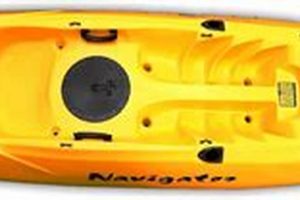
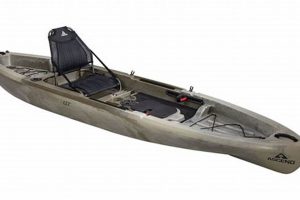
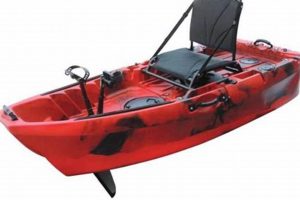
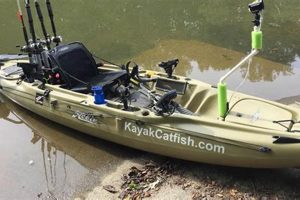
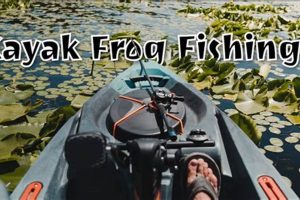
A recreational watercraft designed for angling, typically constructed of durable polyethylene for extended usability, measures approximately ten feet in length. This compact size offers maneuverability ideal for navigating smaller bodies of water like ponds, lakes, and slow-moving rivers. Its specialized design often incorporates features like rod holders, storage compartments, and a comfortable seat to enhance the fishing experience.
Compact, durable, and purpose-built, this type of vessel provides an accessible entry point into kayak fishing. The shorter length contributes to ease of transport and storage, while the inherent stability of these kayaks makes them suitable for anglers of varying skill levels. Historically, fishing from small, human-powered watercraft has been a common practice across cultures. Modern materials and manufacturing processes have evolved these traditional vessels into specialized platforms optimized for sport fishing.
The following sections will delve deeper into key aspects of selecting, outfitting, and utilizing this type of watercraft, covering topics such as material selection, essential accessories, paddling techniques, and popular fishing locations.
Tips for Kayak Fishing
Effective angling from a compact kayak requires preparation and technique. These tips offer guidance for maximizing success and safety on the water.
Tip 1: Prioritize Stability: Distribute weight evenly within the kayak. Avoid sudden movements and keep a low center of gravity, especially when casting or reeling.
Tip 2: Master Basic Paddling Strokes: Efficient paddling conserves energy and allows precise maneuvering. Practice forward, reverse, and sweep strokes for optimal control.
Tip 3: Utilize Appropriate Anchoring Techniques: A properly set anchor prevents drifting and maintains position in desired fishing areas. Consider anchor types suitable for various bottom conditions.
Tip 4: Choose Location Wisely: Select fishing spots accessible by kayak and appropriate for the targeted species. Research local regulations and water conditions beforehand.
Tip 5: Pack Essential Gear Efficiently: Organize tackle, safety equipment, and personal items within easy reach while maintaining balance and stability. Utilize waterproof storage solutions.
Tip 6: Practice Catch and Release Techniques: Minimize stress on caught fish by using appropriate handling methods and releasing them quickly and safely. Familiarize oneself with local regulations regarding catch limits and protected species.
Tip 7: Dress for the Environment: Wear appropriate clothing for anticipated weather conditions. Consider layering for adaptability and prioritize sun protection.
Tip 8: Prioritize Safety: Always wear a personal flotation device (PFD). Carry a whistle or other signaling device and inform someone of planned fishing locations and estimated return times.
By adhering to these guidelines, anglers can enhance their fishing experience while ensuring safety and promoting responsible angling practices.
These insights provide a solid foundation for planning and executing a successful kayak fishing trip. Further research and practice will contribute to continued improvement and enjoyment on the water.
1. Durability

Durability represents a critical factor in the overall value proposition of a 10-foot fishing kayak, directly influencing its lifespan and resilience against the rigors of regular use. This characteristic determines the kayak’s ability to withstand impacts, abrasions, and exposure to various environmental conditions, ensuring long-term performance and user satisfaction.
- Material Composition
High-density polyethylene (HDPE) is commonly employed in the construction of these kayaks due to its inherent impact resistance, UV stability, and overall robustness. HDPE can endure impacts from rocks, submerged obstacles, and general wear and tear, contributing to the kayak’s longevity. This material choice reflects a prioritization of long-term structural integrity.
- Construction Process
The manufacturing process significantly influences a kayak’s durability. Rotational molding, a common technique used in HDPE kayak production, creates a seamless, uniform hull with consistent wall thickness, minimizing weak points susceptible to cracking or deformation. This single-piece construction enhances structural strength compared to multi-piece designs.
- UV Resistance
Prolonged exposure to sunlight can degrade certain materials, leading to brittleness and reduced lifespan. HDPEs inherent UV resistance mitigates this degradation, preserving the kayak’s structural integrity and colorfastness over extended periods of outdoor use, even in harsh sunlight.
- Maintenance Requirements
While inherently durable, proper maintenance further extends the lifespan of a kayak. Regular cleaning, rinsing with fresh water after saltwater use, and appropriate storage practices minimize wear and tear. Minimal maintenance requirements contribute to the overall convenience and long-term cost-effectiveness of the product.
The combination of material selection, construction methods, and inherent resistance to environmental factors contributes significantly to the overall durability of a 10-foot fishing kayak. This durability translates to a longer lifespan, reduced maintenance needs, and enhanced value for the user, ultimately contributing to a more reliable and enjoyable on-the-water experience.
2. Stability

Stability represents a critical performance attribute in a 10-foot fishing kayak, directly influencing user confidence, safety, and overall fishing efficacy. A stable platform allows anglers to focus on fishing rather than maintaining balance, enabling comfortable casting, reeling, and landing fish. This characteristic becomes particularly crucial when navigating challenging water conditions or engaging with larger fish. Stability contributes significantly to a positive and productive fishing experience.
Several design elements contribute to kayak stability. A wider hull generally provides greater initial stability, reducing the likelihood of tipping. A flatter bottom enhances secondary stability, allowing the kayak to recover more readily from tilting motions. The placement of the seat and the distribution of weight within the kayak also influence stability. Lower seating positions and even weight distribution contribute to a more stable center of gravity. Understanding these design factors allows for informed selection and utilization based on individual needs and preferences.
Practical implications of stability extend beyond basic balance. Increased stability allows anglers to stand up in certain kayak models, offering a wider casting range and improved visibility. It enables safer maneuvering in currents or windy conditions. Enhanced stability also facilitates activities like photography or birdwatching, broadening the kayak’s utility beyond fishing. The degree of stability directly influences the kayak’s suitability for various water conditions and intended uses. A stable kayak contributes significantly to a safe, comfortable, and enjoyable experience on the water.
3. Portability
Portability significantly impacts the usability and overall appeal of a lifetime 10 ft fishing kayak. Ease of transport and storage directly influence access to various fishing locations and the convenience of ownership. Reduced weight and compact dimensions simplify loading, unloading, and maneuvering the kayak, expanding fishing opportunities and minimizing logistical constraints.
Several factors contribute to the portability of this type of kayak. The relatively short length, typically around 10 feet, simplifies handling and reduces storage space requirements. Lightweight construction, often achieved through high-density polyethylene (HDPE), makes the kayak manageable for a single person to lift and carry. Integrated handles or carrying straps further aid in transport. The ability to easily transport the kayak expands access to remote or less accessible fishing spots, broadening angling opportunities and enhancing the overall fishing experience. Compact storage dimensions allow for convenient storage in garages, sheds, or even smaller apartments, maximizing space utilization and eliminating the need for specialized storage solutions. This convenience enhances the kayak’s practicality for individuals with limited storage capacity.
Enhanced portability translates to increased access to diverse fishing environments, reduced logistical challenges, and simplified storage solutions. These advantages broaden the kayak’s appeal, making it a practical and convenient option for anglers seeking versatile and accessible fishing platforms. The combination of manageable size and weight contributes significantly to a seamless and enjoyable fishing experience, from transport to storage and ultimately on the water.
4. Compact Design

Compact design represents a defining characteristic of the lifetime 10 ft fishing kayak, significantly influencing its suitability for specific angling environments and user preferences. The shorter length, compared to larger kayak models, directly impacts maneuverability and portability, making it well-suited for smaller bodies of water, such as ponds, lakes, and slow-moving rivers. This design choice prioritizes agility and access within confined spaces often encountered in these environments. Navigating narrow channels, maneuvering through dense vegetation, and accessing shallow-water fishing spots are facilitated by the kayak’s compact dimensions. Larger kayaks might struggle in these scenarios, highlighting the practical advantages of a smaller, more nimble design. For example, accessing secluded coves or navigating tight mangrove tunnels becomes significantly easier with a shorter kayak.
The compact design also influences transport and storage logistics. Shorter kayaks are generally lighter and easier to handle, simplifying loading and unloading from vehicles. Reduced storage space requirements allow for convenient storage in garages, sheds, or even smaller apartments. This ease of transport and storage expands fishing opportunities, enabling access to remote locations and minimizing storage constraints. Consider an angler with limited storage space or a smaller vehicle. A compact kayak enables them to participate in the sport without the logistical challenges posed by larger, more cumbersome models. This practicality expands access to kayak fishing for a wider range of individuals.
In summary, the compact design of the 10-foot fishing kayak directly addresses the need for maneuverability in confined spaces and simplifies transport and storage logistics. This design choice expands fishing opportunities within specific environments and makes kayak fishing more accessible to a wider range of users. While larger kayaks might offer advantages in terms of speed and storage capacity, the compact design of the 10-foot model prioritizes agility, portability, and accessibility, catering to specific angling needs and user preferences within its intended application domain. This understanding informs appropriate kayak selection based on individual priorities and intended usage scenarios.
5. Fishing Features
Dedicated fishing features distinguish specialized fishing kayaks from recreational models. These integrated elements enhance angling efficiency and overall on-the-water experience. Within the context of a lifetime 10 ft fishing kayak, these features contribute significantly to its practicality and value proposition for anglers.
- Rod Holders
Flush-mounted or adjustable rod holders secure fishing rods, freeing hands for paddling, baiting, and other tasks. Multiple rod holders accommodate diverse fishing techniques. Secure rod storage prevents loss or damage during transport and maneuvering. Anglers can troll, cast, or simply relax with lines in the water, optimizing fishing time and versatility.
- Storage Compartments
Dedicated storage compartments accommodate tackle boxes, gear, and personal items. Dry storage protects sensitive electronics and other essentials from water damage. Strategically placed compartments maximize space utilization and accessibility. Anglers can organize gear efficiently, maintaining a clutter-free deck and ensuring essential items are readily available. Dry storage safeguards valuables, contributing to peace of mind during outings.
- Paddle Holders/Clips
Secure paddle parks or clips keep the paddle out of the way while fishing, preventing loss and minimizing interference with casting. Easy access to the paddle allows for quick repositioning or maneuvering when needed. Anglers can focus on fishing without the paddle obstructing movement or creating entanglement hazards. Secure paddle storage ensures it remains readily accessible for immediate use.
- Other Features
Additional features, such as anchor trolleys, mounting plates for fish finders, and integrated coolers, further enhance the fishing experience. These specialized additions cater to specific angling needs and preferences. An anchor trolley allows controlled drifting, while fish finders aid in locating fish. Integrated coolers maintain catch freshness or provide beverage storage. These features demonstrate a focus on angler-specific functionality, further enhancing the kayak’s value as a dedicated fishing platform.
The integration of these fishing-specific features positions the lifetime 10 ft fishing kayak as a purpose-built angling platform, enhancing efficiency, organization, and overall fishing success. These features distinguish it from recreational kayaks, demonstrating a clear focus on angler needs and optimizing the overall on-the-water experience. The thoughtful inclusion of these features underscores the kayak’s value proposition within its intended application domain.
6. Affordability
Affordability frequently plays a decisive role in kayak selection, particularly for newcomers or budget-conscious individuals. The lifetime 10 ft fishing kayak often occupies a competitive price point within the entry-level segment, broadening accessibility to the sport. Lower manufacturing costs associated with its compact size and common material choices (like high-density polyethylene) contribute to this affordability. This accessibility fosters participation by reducing financial barriers to entry, potentially expanding the kayak fishing community.
Lower initial investment allows for allocation of remaining budget towards essential accessories, such as paddles, personal flotation devices (PFDs), and basic fishing gear. This cost-effectiveness facilitates a complete fishing setup without excessive financial strain. For example, an angler with a limited budget can acquire a functional kayak and necessary safety equipment without compromising quality or safety. This practicality contributes to the lifetime 10 ft fishing kayak’s popularity among beginners and recreational anglers.
Consider the long-term cost of ownership. Durable construction, inherent in many lifetime kayaks, reduces the likelihood of frequent repairs or replacements, contributing to long-term cost savings. Minimal maintenance requirements, such as occasional cleaning and storage, further minimize ongoing expenses. These factors contribute to the overall value proposition, ensuring the initial investment translates to sustained, cost-effective enjoyment over the kayak’s lifespan.
Affordability, combined with functional design and durable construction, positions the lifetime 10 ft fishing kayak as an accessible and practical entry point into kayak angling. This affordability facilitates broader participation in the sport and allows for allocation of resources towards other essential equipment. Understanding the interplay of affordability, functionality, and durability provides a comprehensive perspective on the kayak’s value proposition within the broader context of kayak fishing.
7. Maneuverability

Maneuverability represents a critical performance attribute, directly influencing a kayak’s suitability for specific fishing environments. Within the context of a lifetime 10 ft fishing kayak, maneuverability dictates its effectiveness in navigating tight spaces, reacting to changing currents, and positioning precisely for optimal fishing presentations. This characteristic becomes paramount in environments characterized by confined waterways, dense vegetation, or complex shorelines. Understanding the factors contributing to maneuverability informs appropriate kayak selection and enhances on-the-water performance.
- Hull Design
Shorter kayak lengths generally correlate with increased maneuverability. The 10-foot length facilitates tighter turning radii and quicker directional changes compared to longer kayaks. A shallower hull design further enhances maneuverability in shallow water, allowing access to areas inaccessible to deeper-draft vessels. Consider navigating a narrow, winding creek or approaching a shallow-water fishing spot discreetly. A shorter, shallower hull design excels in these situations, providing distinct advantages over longer, deeper kayaks.
- Water Conditions
Maneuverability interacts dynamically with prevailing water conditions. Calm, flat water generally allows for optimal maneuverability across various kayak designs. However, in moving water or windy conditions, the shorter length of a 10-foot kayak can become more susceptible to wind drift and current influence. Understanding these dynamics informs appropriate paddle stroke utilization and strategic positioning within the waterway. For example, compensating for wind drift requires more frequent corrective strokes in a shorter kayak compared to a longer one. Effective maneuvering in challenging conditions relies on anticipating and adapting to these forces.
- Paddling Technique
Efficient paddling technique significantly influences maneuverability. Proper execution of forward, reverse, and sweep strokes enables precise control and directional changes. Sweep strokes, in particular, facilitate sharp turns and quick adjustments in position. Consider the scenario of needing to quickly turn the kayak to follow a moving fish or avoid an obstacle. Proficient paddling technique becomes crucial for executing these maneuvers effectively. Practice and refinement of these skills enhance overall kayak control and maneuverability.
- Weight Capacity and Distribution
Weight capacity and distribution within the kayak also influence maneuverability. Exceeding the recommended weight capacity can reduce responsiveness and hinder maneuverability. Uneven weight distribution can create imbalances, affecting tracking and turning performance. Proper loading and weight distribution optimize the kayak’s responsiveness to paddle input, enhancing overall maneuverability. Distributing gear evenly and staying within the recommended weight limits contribute significantly to maintaining optimal performance on the water.
Maneuverability in a lifetime 10 ft fishing kayak represents a complex interplay of design, environmental conditions, and user skill. Understanding these factors and their respective influences empowers anglers to choose appropriately sized kayaks for intended fishing locations and optimize on-the-water performance. While longer kayaks might offer advantages in speed and tracking across open water, the maneuverability of a 10-foot kayak excels in confined environments, contributing significantly to its effectiveness as a specialized fishing platform. This targeted functionality positions it as a valuable tool for anglers seeking access and precision within specific fishing scenarios.
Frequently Asked Questions
Addressing common inquiries regarding 10-foot fishing kayaks provides clarity for informed decision-making and optimal utilization.
Question 1: What weight capacity should one anticipate in a 10-foot fishing kayak?
Weight capacities vary by model, but generally range from 250 to 350 pounds. Consulting manufacturer specifications provides precise figures for specific models. Exceeding weight capacity can compromise stability and performance.
Question 2: How does the length influence stability, particularly for beginners?
Shorter kayaks, while generally more maneuverable, can exhibit less initial stability than longer models. However, wider hull designs within the 10-foot category can compensate for this, offering a balance of maneuverability and stability suitable for beginners. Prioritizing stability features during selection benefits less experienced users.
Question 3: What materials are typically used in constructing these kayaks, and how do they impact durability?
High-density polyethylene (HDPE) stands as the prevalent construction material due to its durability, impact resistance, and UV stability. This material contributes to the kayak’s ability to withstand regular use and environmental exposure, ensuring long-term performance.
Question 4: What key features should one consider when choosing a 10-foot fishing kayak?
Essential features include rod holders, storage compartments, and a comfortable seat. Additional features, such as an anchor trolley system, adjustable footrests, and mounting points for fish finders, enhance fishing functionality and customization based on individual preferences and fishing styles.
Question 5: Are 10-foot kayaks suitable for ocean use, or are they better suited for calmer waters?
While capable of handling calm coastal waters or protected bays, 10-foot kayaks are generally better suited for calmer inland waters like lakes, ponds, and slow-moving rivers. Ocean use requires careful consideration of weather conditions and water currents. Longer kayaks with higher weight capacities typically handle ocean conditions more effectively.
Question 6: How does one transport a 10-foot kayak, given vehicle limitations?
Roof racks represent the most common transport method. Alternatively, smaller vehicles with sufficient cargo space can accommodate a 10-foot kayak internally. Securing the kayak during transport, regardless of the method, prevents damage and ensures safe transit.
Careful consideration of these frequently asked questions clarifies key aspects of 10-foot fishing kayak selection, usage, and maintenance. Informed decision-making ensures optimal kayak selection aligned with individual needs and intended usage scenarios.
Further exploration of specific kayak models and their respective features provides more granular insights for optimized selection.
Conclusion
Exploration of the lifetime 10 ft fishing kayak reveals a specialized vessel designed for accessibility, maneuverability, and affordability within specific angling contexts. Compact dimensions facilitate navigation in confined waterways, while integrated fishing features enhance on-the-water functionality. Durable construction and straightforward maintenance contribute to long-term value. Understanding these core attributes empowers informed purchasing decisions aligned with individual angler requirements.
Successful angling transcends equipment selection; mastery of paddling techniques, strategic location selection, and adherence to safety protocols remain paramount for a rewarding experience. Consideration of these factors, coupled with informed kayak selection, contributes to productive and enjoyable fishing excursions. Continuous refinement of skills and exploration of diverse waterways enhance angler expertise and appreciation for the sport.