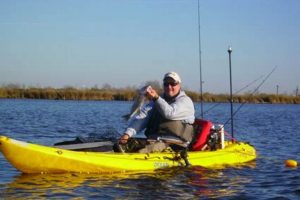
Specialized angling equipment designed for use in kayaks typically consists of a shorter, more robust rod paired with a compact, durable reel. This combination offers maneuverability and strength essential for confined spaces and challenging conditions often encountered in kayak fishing. An example would be a 7-foot medium-heavy rod coupled with a 3000-size spinning reel, suitable for various freshwater and inshore saltwater species.
This specialized equipment provides numerous advantages. Shorter rods offer better control and reduce the risk of entanglement in the kayak’s rigging. Robust construction withstands the rigors of kayak fishing, including accidental bumps and drops. Compact reels offer balance and ease of use in a limited space. Historically, anglers adapted existing tackle for kayak use. However, the increasing popularity of this fishing style has driven the development of purpose-built equipment that significantly enhances performance and enjoyment.
The following sections delve into rod selection, reel choices, line and lure considerations, and techniques specific to this angling discipline.
Tips for Effective Kayak Fishing Tackle Selection
Choosing appropriate tackle is crucial for a successful and enjoyable kayak fishing experience. The following tips offer guidance for selecting the right equipment:
Tip 1: Prioritize shorter rod lengths. Rods between 6 and 7.5 feet offer optimal control and maneuverability within the confines of a kayak.
Tip 2: Consider a medium to medium-heavy power rod. This range provides sufficient backbone for battling larger fish while maintaining sensitivity for detecting bites.
Tip 3: Opt for a fast action rod. Fast action rods offer improved hooksetting power and greater control over fish during the fight.
Tip 4: Select a durable spinning reel. Spinning reels are generally preferred for their ease of use and versatility in kayak fishing. A size 2500 to 4000 reel offers a good balance of capacity and weight.
Tip 5: Choose braided fishing line. Braided line offers superior strength and sensitivity compared to monofilament, allowing for better hooksets and fish control in challenging conditions.
Tip 6: Select lures appropriate for the target species and fishing environment. Consider factors such as water depth, clarity, and structure when choosing lures. Smaller, more compact lures are often preferred in kayak fishing.
Tip 7: Employ a rod leash. A rod leash secures the rod to the kayak, preventing loss in case of an accidental drop or strong fish strike.
Adhering to these guidelines ensures a balanced and efficient setup, maximizing angling success and overall enjoyment on the water.
By understanding these core elements of tackle selection, anglers can confidently equip themselves for a productive and enjoyable experience on the water.
1. Length

Rod length significantly impacts maneuverability and effectiveness in kayak fishing. Confined spaces and the need for precise casting necessitate careful consideration of rod length when selecting equipment.
- Casting Accuracy:
Shorter rods (typically 6-7.5 feet) offer greater control during casting, crucial in tight quarters. Longer rods, while offering increased casting distance in open water, become cumbersome and less accurate from a kayak. Precise placement of lures near structure becomes significantly easier with a shorter rod.
- Fish Fighting:
Shorter rods offer enhanced leverage and control when battling fish in close proximity. The angler can exert more direct pressure, crucial for quickly subduing strong fish near the kayak. Longer rods can create awkward angles and reduce control in such situations.
- Storage and Transport:
Kayak storage space is limited. Shorter rods are easier to stow securely and transport, minimizing the risk of damage or entanglement. Longer rods present storage challenges and can be more susceptible to breakage during transport.
- Kayak Stability:
Longer rods can shift the kayak’s center of gravity, potentially compromising stability, especially during casting or fighting fish. Shorter rods minimize this effect, contributing to a more stable and secure fishing platform.
The optimal rod length for kayak fishing represents a balance between casting distance and maneuverability. While longer rods offer advantages in open water, the constraints of kayak fishing often prioritize shorter rods for increased control, precision, and overall ease of use within the confined space of a kayak cockpit.
2. Power
Rod power, often described as light, medium, medium-heavy, or heavy, denotes the rod’s ability to lift weight and handle the stress of fighting fish. Choosing the correct power is crucial for successful kayak angling. Lighter power rods are suited for smaller species and lighter lines, while heavier power rods handle larger fish and heavier lines. Matching rod power to target species and fishing conditions is paramount. For instance, targeting panfish in a small pond requires a lighter power rod than wrestling a large striped bass in the ocean surf. An improperly matched rod power can lead to line breakage when fighting larger fish or an inability to detect subtle bites from smaller species.
Kayak fishing often necessitates medium to medium-heavy power rods. This range balances the need for strength to handle larger fish encountered unexpectedly with the sensitivity required for finesse fishing. A medium-heavy power rod allows anglers to effectively target a wider range of species commonly encountered in kayak fishing scenarios, from bass and walleye to smaller saltwater species. This versatility is essential given the dynamic nature of kayak angling and the potential encounters with diverse fish species. Furthermore, medium to medium-heavy power rods provide the necessary backbone to manage heavier lures and lines often employed in windy or current-prone environments common in kayak fishing.
Selecting the appropriate rod power directly impacts angling success and overall enjoyment. Careful consideration of target species, fishing conditions, and lure weight ensures a balanced and effective setup. A well-matched rod and reel combination empowers anglers to confidently handle various fishing scenarios and maximize their chances of landing desired catches. Understanding rod power is foundational to informed equipment selection and successful kayak fishing experiences.
3. Action

Rod action, referring to the point along the blank where the rod flexes, plays a crucial role in kayak fishing effectiveness. Understanding action categoriesfast, moderate, and slowinforms equipment selection and technique optimization. Matching rod action to fishing style and target species significantly impacts casting distance, lure presentation, and hookset power.
- Fast Action:
Fast action rods bend primarily in the top third of the blank. This characteristic translates to increased sensitivity, enhanced hooksetting power, and greater accuracy with shorter casts. Beneficial for techniques requiring precise lure control and immediate hooksets, such as jigging or fishing topwater lures, fast action proves advantageous in kayak fishing’s confined spaces. The quick responsiveness allows for efficient hooksets in close quarters, maximizing landing ratios.
- Moderate Action:
Moderate action rods flex in the top half of the blank, offering a balance between power and sensitivity. Suitable for a wider range of techniques and species, these rods provide good casting distance and cushioning during the fight, reducing the risk of pulling hooks. Their versatility makes them well-suited for kayak anglers targeting various species with diverse techniques, from crankbaits to soft plastics.
- Slow Action:
Slow action rods bend throughout most of the blank, providing maximum flex and shock absorption. Ideal for casting lighter lures long distances and battling hard-fighting fish, they offer a forgiving feel, minimizing line breakage. However, slow action can be less responsive for techniques requiring quick hooksets. In kayak fishing, their extended bend might prove cumbersome in tight spaces.
- Action and Kayak Fishing:
The confined nature of kayak fishing often favors fast to moderate action rods. Their enhanced responsiveness and maneuverability in close quarters contribute to efficient lure presentation and hooksets. While slow action rods offer advantages in specific open-water scenarios, their wider bending arc can prove challenging to manage within a kayak’s limited space. Choosing the appropriate action depends on the specific techniques employed and target species pursued. For example, a fast action rod excels in jigging for bottom-dwelling fish, while a moderate action rod proves more versatile for casting a range of lures.
Rod action selection significantly influences kayak fishing success. Understanding the nuances of each action type allows anglers to optimize their tackle to specific techniques and target species, leading to improved casting accuracy, lure presentation, and hookset effectiveness. A well-chosen rod action enhances the overall fishing experience and contributes to increased success on the water.
4. Reel Type

Reel selection significantly impacts performance and efficiency in kayak fishing. Specific reel types offer advantages and disadvantages within the context of a kayak’s confined space and the demands of this fishing style. Choosing the appropriate reel contributes to casting accuracy, fish-fighting control, and overall angling success. Several key factors influence reel selection, including target species, fishing techniques, and environmental conditions.
- Spinning Reels:
Spinning reels are widely favored in kayak fishing for their ease of use, versatility, and suitability for lighter lines and lures. Their open-face design simplifies line management and reduces the risk of tangles, a crucial factor in a kayak’s limited space. Spinning reels accommodate various fishing techniques, from casting light lures to jigging, making them a versatile choice for kayak anglers. They excel with lighter lines, facilitating longer casts and more nuanced presentations. Examples include sizes 2500-4000, ideal for targeting a wide range of species commonly encountered in kayak fishing.
- Baitcasting Reels:
Baitcasting reels offer greater accuracy and control, particularly with heavier lures and lines. However, their increased complexity and potential for backlash can pose challenges for novice anglers. In kayak fishing, their advantages become apparent when targeting larger species or employing techniques requiring precise lure placement. Baitcasting reels provide enhanced cranking power, beneficial when retrieving lures against strong currents or battling powerful fish. Examples include low-profile baitcasting reels, preferred for their compact size and ergonomic design, suitable for the confined space of a kayak.
- Spincast Reels:
Spincast reels, known for their simplicity and ease of use, are suitable for beginners or those targeting smaller species. While less versatile than spinning or baitcasting reels, they offer a straightforward operation that minimizes tangles. In kayak fishing, their compact size and simple design can be advantageous for younger anglers or those new to the sport. Their enclosed design protects the line from external elements, beneficial in challenging conditions. However, spincast reels may lack the power and line capacity required for larger species or more demanding fishing techniques.
- Fly Reels:
Fly fishing from a kayak presents unique challenges and rewards. Fly reels, specifically designed for fly fishing techniques, are chosen based on line weight and target species. In kayak fishing, fly reels become essential for targeting species like trout or panfish in calm waters. The specialized design of fly reels facilitates casting and managing fly lines, crucial for successful fly fishing. Selecting the appropriate fly reel depends on the type of fly fishing pursued, from dry fly fishing to streamer fishing. Their specialized application and technique requirements make fly reels a niche choice within the broader context of kayak fishing.
Each reel type offers distinct advantages and disadvantages in kayak fishing. Spinning reels dominate due to their versatility and ease of use, while baitcasting reels cater to more specialized techniques and larger species. Spincast reels offer simplicity for beginners, whereas fly reels cater to a specific angling style. Selecting the appropriate reel hinges on angler experience, target species, fishing techniques, and the overall kayak fishing environment. A well-chosen reel, paired with the right rod, significantly contributes to a successful and enjoyable angling experience on the water.
5. Durability
Durability is paramount in kayak fishing equipment. The demanding environment, characterized by exposure to water, impacts, and variable weather conditions, necessitates robust gear capable of withstanding rigorous use. A durable rod and reel combination ensures consistent performance, longevity, and a positive angling experience, minimizing disruptions due to equipment failure. This section explores key facets of durability in kayak fishing rods and reels.
- Material Selection:
Rod blanks constructed from high-modulus graphite or composite materials offer a balance of strength, sensitivity, and resistance to corrosion. Reel components crafted from marine-grade aluminum or stainless steel withstand saltwater exposure, preventing rust and degradation. For example, a rod featuring a graphite blank and stainless steel guides demonstrates superior durability compared to one made with lower-grade materials. This robust construction ensures the rod withstands repeated casting, fish fighting, and exposure to the elements without compromising performance.
- Construction Techniques:
Reinforced ferrules and joints strengthen the rod’s structure, reducing the risk of breakage under stress. Sealed drag systems and waterproof reel housings prevent water intrusion, maintaining smooth operation and extending reel lifespan. A reel featuring a sealed drag system exemplifies enhanced durability, as it prevents water and debris from compromising the drag’s performance. This protection ensures consistent and reliable drag performance, crucial for battling strong fish in challenging environments.
- Protective Coatings:
Specialized coatings applied to rod blanks and reel components enhance resistance to scratches, UV damage, and corrosion. These coatings safeguard against wear and tear from regular use and environmental exposure. A rod coated with a corrosion-resistant finish provides enhanced protection against saltwater and other corrosive elements, ensuring its longevity and maintaining its aesthetic appeal. Similarly, a reel with a protective coating resists scratches and chipping, preserving its functionality and appearance over time.
- Maintenance Practices:
Regular cleaning and lubrication of reels, along with proper rod storage, contribute significantly to equipment longevity. Rinsing reels with freshwater after each use removes saltwater residue, preventing corrosion. Storing rods in protective cases minimizes the risk of damage during transport and storage. These practices preserve the integrity of the equipment, ensuring optimal performance over an extended period. Neglecting maintenance can lead to premature wear and tear, ultimately shortening the lifespan of valuable fishing gear.
Durability is a critical consideration in kayak fishing rod and reel selection. Investing in well-constructed equipment built with durable materials and incorporating robust design features ensures reliable performance and longevity in the demanding kayak fishing environment. Prioritizing durability minimizes equipment failure, allowing anglers to focus on the fishing experience and maximize their time on the water.
Frequently Asked Questions
This section addresses common inquiries regarding kayak fishing rod and reel selection, aiming to provide clear and concise information for informed decision-making.
Question 1: What rod length is optimal for kayak fishing?
Rods between 6 and 7.5 feet generally offer the best balance between castability and maneuverability within a kayak’s confined space. Longer rods can become cumbersome, while shorter rods sacrifice casting distance.
Question 2: Which reel type is best suited for kayak angling?
Spinning reels are generally preferred for their ease of use, versatility, and suitability for lighter lines and lures commonly used in kayak fishing. Baitcasting reels offer advantages for experienced anglers targeting larger species or using heavier tackle.
Question 3: What rod power is recommended for kayak fishing?
Medium to medium-heavy power rods provide a versatile balance of strength and sensitivity, suitable for a range of species and fishing conditions typically encountered in kayak angling.
Question 4: Why is rod action important in kayak fishing?
Rod action dictates where the rod flexes, influencing casting distance, lure presentation, and hook-setting power. Fast action rods are often preferred for their responsiveness and accuracy in close-quarters kayak fishing scenarios.
Question 5: What materials and construction features contribute to rod and reel durability?
High-modulus graphite or composite rod blanks, marine-grade aluminum or stainless-steel reel components, sealed drag systems, and protective coatings enhance durability and resistance to corrosion in demanding kayak fishing environments.
Question 6: How does one maintain kayak fishing rods and reels?
Regular cleaning, especially rinsing reels with freshwater after saltwater exposure, and proper storage in protective cases contribute significantly to equipment longevity and performance.
Selecting appropriate kayak fishing equipment significantly influences angling success and enjoyment. Careful consideration of these frequently asked questions empowers informed decisions, leading to a more productive and satisfying experience on the water.
The subsequent section delves into specific techniques employed in kayak fishing, building upon the foundational knowledge of equipment selection established here.
Kayak Fishing Rod and Reel
Effective kayak angling hinges on selecting appropriate equipment. This exploration has highlighted the critical aspects of choosing a suitable kayak fishing rod and reel combination, emphasizing the importance of length, power, action, reel type, and durability. Maneuverability in confined spaces necessitates shorter rods, while the potential for encountering diverse species requires a balanced power and action. Reel choice hinges on target species and preferred fishing techniques. Durability, given the demanding environment, remains paramount. Selecting equipment optimized for these factors ensures a productive and enjoyable experience.
The insights provided here serve as a foundation for informed decision-making regarding kayak fishing equipment acquisition and utilization. Continued exploration of specific techniques and advancements in tackle technology will further enhance angling proficiency and success on the water. Ultimately, the careful consideration of these factors contributes significantly to a rewarding and productive kayak fishing experience.