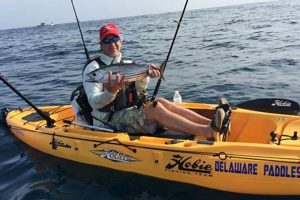
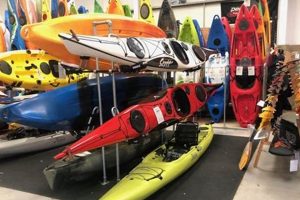
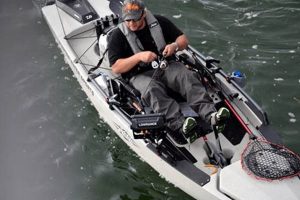
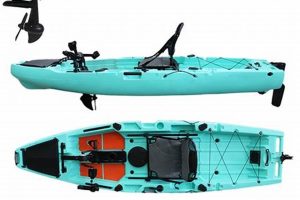
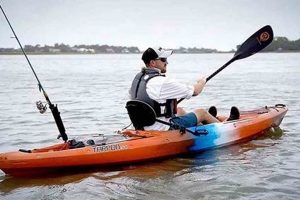
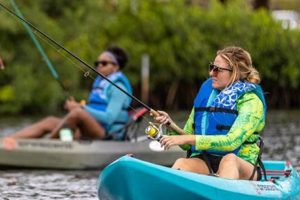
Specialized watercraft designed for competitive angling offer distinct advantages over recreational models. These vessels typically feature enhanced stability, speed, and storage capacity, often incorporating specialized equipment like livewells, rod holders, and fish finders. A typical example might be a sit-on-top design constructed from lightweight, durable materials with ample deck space for maneuverability.
The evolution of competitive angling has driven demand for these high-performance vessels, allowing anglers to cover more water efficiently, stay on prime fishing spots longer, and maintain the health of their catch. This has led to advancements in design and technology, improving angler performance and contributing to the growth of competitive fishing. The increased focus on ergonomics and comfort also reduces angler fatigue during long tournaments.
This discussion will further explore the key features, selection criteria, and maintenance requirements that contribute to successful competitive angling from these specialized platforms. Topics will include hull design, propulsion systems, essential accessories, and considerations for specific fishing environments.
Tips for Competitive Kayak Angling
Strategic preparation and equipment selection are essential for success in tournament settings. The following tips offer guidance for maximizing performance and efficiency on the water.
Tip 1: Stability is Paramount: Prioritize vessels designed for stability, especially in challenging conditions. Wider hulls and lower centers of gravity enhance balance and reduce the risk of capsizing, crucial when battling strong currents or large fish.
Tip 2: Optimize Storage and Organization: Efficient tackle organization is crucial for quick access to lures and equipment. Utilize tackle boxes, trays, and storage compartments to maintain order and minimize wasted time searching for gear.
Tip 3: Leverage Technology: Integrate fish finders, GPS units, and other electronics to locate fish, navigate effectively, and monitor environmental conditions. Proper installation and utilization of these tools provide a significant competitive advantage.
Tip 4: Prioritize Comfort and Ergonomics: Adjustable seating, footrests, and strategically placed rod holders contribute to angler comfort and reduce fatigue during long tournament hours. Proper posture and support maximize endurance and focus.
Tip 5: Practice Efficient Boat Control: Mastering paddling techniques and rudder control is essential for maneuvering effectively in various water conditions. Practice precise boat positioning for optimal casting and fish fighting.
Tip 6: Master Catch and Release Techniques: Proper handling and release practices ensure fish survival and contribute to the sustainability of the fishery. Utilize appropriate tools and techniques to minimize stress on the fish.
Tip 7: Pre-fish and Scout Locations: Exploring potential fishing spots prior to the tournament provides valuable insights into fish behavior and habitat. Identify key areas and develop a strategic plan based on pre-fishing observations.
By implementing these strategies, anglers can significantly improve their performance, maximize efficiency, and enhance their competitive edge on the water. Consistent practice and attention to detail are essential for translating these tips into tournament success.
The following section will conclude with a summary of key takeaways and recommendations for further exploration of competitive kayak angling.
1. Stability

Stability stands as a cornerstone of effective tournament fishing kayak design. A stable platform is crucial not only for angler safety but also for maximizing fishing performance. The dynamic nature of competitive angling, which often involves casting, reeling, and landing fish from a seated position, necessitates a kayak that resists tipping or rocking. Loss of balance can compromise accuracy, hinder fish fighting, and even lead to equipment loss or angler immersion. Consider a scenario where an angler hooks a large fish in challenging conditions. A stable kayak provides the secure foundation needed to effectively manage the fight, minimizing the risk of capsizing and maximizing the chances of landing the catch. Conversely, an unstable kayak can amplify the challenges, increasing the likelihood of losing the fish and potentially jeopardizing the angler’s safety.
The importance of stability becomes even more pronounced in specific tournament environments. Open-water conditions, strong currents, and windy weather can exacerbate instability, making a stable hull design paramount. Kayak features that enhance stability include wider hulls, flatter bottoms, and lower centers of gravity. Specialized designs like pontoon hulls or outriggers offer exceptional stability, particularly in demanding conditions. Choosing a kayak with appropriate stability features for the anticipated tournament environment significantly influences angling success and overall safety. For instance, anglers competing in calm, protected waters might prioritize speed and maneuverability over extreme stability, while those fishing in rougher conditions would likely favor a more stable, albeit potentially slower, platform.
In summary, stability is an indispensable element in tournament fishing kayak design. It directly impacts angler safety, fishing effectiveness, and the ability to handle challenging conditions. Understanding the relationship between stability and performance, alongside consideration of specific tournament environments, empowers anglers to choose the most suitable kayak for their needs and maximize their competitive edge. Careful evaluation of hull design, stability features, and potential trade-offs with other performance characteristics ensures a safe and productive tournament experience.
2. Speed
Speed plays a critical role in tournament fishing kayak performance, directly influencing an angler’s ability to cover water efficiently and maximize fishing time. In competitive settings, where time is a finite resource, reaching productive fishing spots quickly can significantly impact results. A faster kayak allows anglers to explore more areas, locate fish concentrations, and respond rapidly to changing conditions, such as shifting tides or feeding patterns. Consider a tournament scenario where prime fishing grounds are dispersed across a large lake. An angler with a faster kayak can reach these locations ahead of competitors, securing access to potentially higher concentrations of fish and gaining a valuable advantage.
Several factors contribute to kayak speed, including hull design, length, and propulsion systems. Longer, narrower kayaks generally offer higher potential speeds due to reduced water resistance. Hull shapes optimized for gliding through the water, such as displacement hulls or modified V-hulls, also enhance speed. Propulsion systems, ranging from traditional paddles to pedal-driven systems and even electric motors, further influence speed. Pedal drives, for example, allow anglers to maintain a consistent pace over longer distances while keeping their hands free for fishing, a crucial advantage in tournament situations. Similarly, electric motors offer significant speed boosts, enabling anglers to cover vast distances quickly and conserve energy for fishing. For instance, an angler utilizing a pedal-driven kayak can maintain a higher average speed throughout the day compared to a paddler, allowing them to explore more potential fishing spots and increase their chances of success.
While speed is a valuable asset in tournament fishing, it’s crucial to consider the trade-offs with other performance characteristics. Highly specialized speed-optimized kayaks might sacrifice stability or maneuverability, potentially hindering performance in specific conditions. The ideal balance between speed and other factors depends on the specific tournament environment, target species, and individual angling style. A thorough understanding of these interconnected elements allows anglers to select the most suitable kayak for their needs and maximize their competitive edge. Focusing solely on speed without considering stability, for example, could lead to difficulties in rough water or when fighting larger fish, potentially negating the speed advantage. Therefore, a balanced approach to kayak selection, considering speed alongside stability, maneuverability, and storage capacity, is essential for overall tournament success.
3. Storage Capacity

Ample and well-organized storage is paramount in tournament fishing kayaks, directly impacting an angler’s efficiency and preparedness on the water. Efficient access to tackle, tools, and safety gear allows for seamless transitions between fishing techniques and maximizes time spent actively fishing. Insufficient storage can lead to cluttered decks, hindering movement and potentially compromising safety. Furthermore, the ability to transport adequate supplies of water, food, and other essentials enhances endurance and overall performance during long tournament hours.
- Tackle Organization:
Dedicated compartments for lures, hooks, weights, and other terminal tackle are essential. Modular storage systems, tackle trays, and waterproof boxes facilitate quick access to specific items, minimizing time spent searching for gear. Efficient organization also contributes to a clutter-free deck, maximizing casting space and maneuverability. For example, having readily accessible soft plastics rigged and organized by color and type allows for swift adjustments to changing fishing conditions, a crucial advantage in competitive scenarios.
- Rod Management:
Secure rod holders, both vertical and horizontal, are essential for safe and efficient rod storage. Integrated rod management systems prevent tangling and damage while keeping rods within easy reach. This is especially important in tournament situations where multiple rods rigged with different lures or lines are often employed. The ability to quickly switch between techniques without fumbling with rods enhances angling efficiency. Recessed rod holders, for instance, minimize the risk of rods snagging on overhanging branches or other obstacles while navigating through tight spaces.
- Gear Storage:
Dry storage compartments protect essential gear, such as electronics, batteries, and first-aid kits, from water damage. Ample dry storage allows anglers to carry necessary safety equipment, extra clothing, and other essential items for prolonged periods on the water. Consider a scenario where unexpected weather conditions arise during a tournament. Having access to dry clothing and essential safety gear can significantly impact angler comfort and safety. Waterproof hatches and sealed compartments ensure that these vital items remain dry and functional, regardless of external conditions.
- Livewell Capacity:
For tournaments requiring livewell usage, adequate capacity and efficient aeration systems are crucial for maintaining the health of caught fish. Well-designed livewells minimize stress on the fish, ensuring they remain in optimal condition for weigh-in. Proper livewell management contributes to conservation efforts and reflects responsible angling practices. For example, insulated livewells with adjustable aeration settings maintain optimal water temperature and oxygen levels, maximizing fish survival rates, especially during hot weather conditions. This is not only ethically sound but also crucial for tournament compliance, as many competitions enforce strict fish care regulations.
In the context of tournament fishing kayaks, storage capacity is not merely about carrying more items; it’s about optimizing organization and accessibility to enhance angling efficiency and preparedness. Strategic storage solutions directly translate to more time spent actively fishing, contributing to overall success in competitive environments. By carefully considering these various facets of storage capacity, anglers can tailor their kayak setup to their specific needs and maximize their competitive edge. A well-organized and efficient storage system allows anglers to focus on the core aspects of fishing, such as lure presentation and fish fighting, rather than grappling with gear or searching for misplaced items, ultimately increasing their chances of success in tournament settings.
4. Maneuverability
Maneuverability is a critical performance attribute in tournament fishing kayaks, directly impacting an angler’s ability to navigate diverse water conditions and effectively target fish. Precise boat control is essential for navigating tight quarters, approaching fish stealthily, and maintaining optimal positioning for casting and fighting fish. In competitive scenarios, where efficient boat handling can significantly influence success, maneuverability becomes a key differentiator.
- Hull Design and Maneuverability
Hull design significantly influences kayak maneuverability. Shorter kayaks with flatter bottoms generally offer greater maneuverability in tight spaces, allowing for quick turns and precise adjustments in position. Longer kayaks with more pronounced keels or V-shaped hulls track better in open water but may sacrifice some maneuverability in confined areas. For example, a shorter, wider kayak excels in navigating shallow creeks and maneuvering around submerged structure, while a longer, narrower kayak is better suited for covering distance quickly in open lakes. The choice of hull design depends on the specific tournament environment and target species.
- Rudder Systems and Tracking
Rudder systems enhance tracking and directional control, particularly in windy conditions or strong currents. A rudder allows anglers to maintain a straight course with minimal effort, conserving energy and maximizing fishing time. Adjustable rudders offer further control, enabling fine-tuned adjustments to course corrections and maneuvering in challenging environments. For instance, in a river tournament, a rudder can be crucial for maintaining position and precise boat control while drifting downstream or holding position near structure.
- Propulsion and Maneuverability
The choice of propulsion system also affects maneuverability. Paddle kayaks offer excellent maneuverability due to the direct control over paddling strokes, allowing for quick turns and adjustments. Pedal-driven kayaks provide hands-free propulsion, enhancing fishing efficiency but may require slightly wider turning radii. Electric motors offer powerful propulsion and straight-line speed but might sacrifice some maneuverability in tight spaces. Consider a scenario where an angler needs to quickly reposition the kayak to avoid an obstacle or follow a moving school of fish. A paddle kayak offers the most immediate and precise control for such maneuvers.
- The Impact of Water Conditions
Water conditions significantly influence kayak maneuverability. Calm, flat water provides optimal conditions for precise boat control, while wind, currents, and waves can create challenges. Kayaks with higher stability and tracking capabilities perform better in rougher conditions, while highly maneuverable kayaks might excel in calmer environments. Understanding the interplay between kayak design and prevailing water conditions is crucial for maximizing maneuverability and optimizing fishing performance. For example, a kayak designed for stability in open water might be less maneuverable in shallow, vegetation-choked areas.
In the context of tournament fishing, maneuverability is not merely about turning quickly; it’s about precise boat control that enables anglers to effectively target fish and navigate diverse environments. A well-balanced approach to kayak selection, considering maneuverability alongside stability, speed, and storage capacity, is essential for maximizing performance and achieving competitive success. The optimal balance of these characteristics depends on the specific demands of the tournament environment, target species, and individual angling style. By carefully evaluating these factors, anglers can select a kayak that enhances their ability to navigate efficiently, position effectively, and ultimately increase their chances of success on the water.
5. Customization

Customization plays a pivotal role in optimizing tournament fishing kayaks for individual angler needs and preferences. Adapting a kayak to specific fishing styles, target species, and tournament environments significantly enhances performance and efficiency. Modifying various aspects of the kayak, from rod placement to electronics integration, allows anglers to create a personalized fishing platform tailored to their specific requirements. This level of customization can be a deciding factor in competitive scenarios where small advantages often translate to significant results.
- Rod Holder Placement and Configuration
Strategic placement of rod holders is crucial for efficient rod management and technique versatility. Anglers often customize rod holder positions to accommodate specific fishing styles, such as trolling, jigging, or fly fishing. Adjustable rod holders allow for further customization, enabling anglers to fine-tune rod angles and positions based on changing conditions or target species. For example, a tournament angler specializing in trolling might configure multiple rod holders along the gunwales for optimal rod spacing and lure presentation. Conversely, an angler focusing on vertical jigging might prioritize rod holders positioned near the cockpit for easier access and control.
- Electronics Integration and Mounting
Integrating electronics, such as fish finders, GPS units, and transducers, significantly enhances angling effectiveness. Customizing mounting locations and configurations optimizes screen visibility and transducer performance. Flush-mounted electronics minimize interference with fishing lines and reduce drag, while adjustable mounts allow for optimal viewing angles in varying light conditions. Consider a tournament scenario where precise depth readings and accurate GPS navigation are crucial. Customizing electronics installations ensures that these tools provide the necessary information efficiently and without hindering fishing operations.
- Tackle Storage Solutions and Customization
Efficient tackle storage is essential for maintaining order and maximizing fishing time. Customizing tackle storage solutions allows anglers to tailor their kayak setup to their specific tackle needs and preferences. Modular storage systems, customizable tackle trays, and specialized compartments for specific lure types optimize organization and accessibility. For instance, an angler specializing in bass fishing might customize their storage with dedicated compartments for various soft plastics, jigs, and topwater lures, ensuring quick access to the appropriate tackle based on prevailing conditions or target depths.
- Comfort and Ergonomics Enhancements
Customizing seating, footrests, and other comfort features enhances endurance and focus during long tournament hours. Adjustable seating systems allow anglers to fine-tune their posture and support, minimizing fatigue and maximizing comfort. Custom-fitted foot braces provide secure footing and enhance paddling efficiency. Consider a tournament requiring extended periods on the water. Customized seating and ergonomic adjustments ensure that the angler remains comfortable and focused, maximizing their ability to perform at their best throughout the competition.
In the context of tournament fishing kayaks, customization goes beyond mere personalization; it represents a strategic approach to optimizing performance and gaining a competitive edge. By tailoring their kayaks to specific fishing styles, target species, and tournament environments, anglers enhance their efficiency, comfort, and overall effectiveness on the water. The ability to customize rod placement, electronics integration, tackle storage, and comfort features allows anglers to create a truly personalized fishing platform that maximizes their potential for success in competitive angling. This strategic approach to customization reflects a deep understanding of the sport and a commitment to maximizing performance in demanding tournament settings.
Frequently Asked Questions about Tournament Fishing Kayaks
This section addresses common inquiries regarding specialized kayaks designed for competitive angling.
Question 1: How do these specialized kayaks differ from recreational models?
Key distinctions include enhanced stability for improved fish fighting, increased storage capacity for tackle and gear, and specialized features like livewells and rod holders designed for tournament needs. Hull designs often prioritize speed and maneuverability, crucial for covering water efficiently in competitive settings.
Question 2: What factors should be considered when selecting a kayak for tournament fishing?
Factors include target species, typical fishing environment (rivers, lakes, open ocean), desired propulsion system (paddle, pedal, motor), and required storage capacity for tackle and equipment. Stability and maneuverability should be carefully balanced based on individual angling style and anticipated water conditions.
Question 3: Are there specific regulations regarding kayak modifications for tournaments?
Regulations vary by tournament organization and governing body. It’s crucial to consult specific tournament rules regarding permitted modifications, such as motor restrictions, livewell requirements, and permitted electronics. Failure to comply with regulations can result in disqualification.
Question 4: What maintenance procedures are recommended for these specialized kayaks?
Regular cleaning, especially after saltwater exposure, prevents corrosion and extends the lifespan of the kayak. Inspecting and lubricating moving parts, such as rudder systems and pedal drives, ensures smooth operation. Proper storage, protected from UV exposure and extreme temperatures, preserves the kayak’s structural integrity.
Question 5: What safety precautions are essential for tournament kayak angling?
Essential precautions include wearing a personal flotation device (PFD), carrying appropriate safety equipment (whistle, flares, communication device), and informing someone of fishing plans and expected return time. Understanding weather conditions and water currents is crucial for safe navigation. Adhering to tournament-specific safety guidelines is paramount.
Question 6: What advantages do these specialized kayaks offer in a competitive setting?
Advantages include increased speed and efficiency in reaching fishing grounds, enhanced stability for improved fish fighting, optimized storage for tackle organization, and specialized features designed for tournament requirements. These factors contribute to maximizing fishing time and improving overall performance in competitive angling.
Understanding these key aspects of tournament fishing kayaks ensures informed decision-making and contributes to a safe and successful competitive angling experience.
The following section will offer concluding remarks on the subject.
Tournament Fishing Kayaks
Specialized kayaks designed for competitive angling represent a significant advancement in fishing technology. This discussion explored key aspects of these vessels, emphasizing the critical roles of stability, speed, storage, maneuverability, and customization in tournament success. The interplay of these factors, tailored to specific fishing styles and tournament environments, dictates optimal kayak selection and configuration. Understanding these elements allows anglers to maximize efficiency, optimize performance, and enhance their competitive edge on the water. From hull design considerations to the strategic integration of electronics and specialized equipment, the pursuit of competitive advantage drives continuous innovation in kayak design and technology.
The evolution of competitive angling continues to shape the future of kayak design, pushing the boundaries of performance and efficiency. As tournament demands intensify, ongoing advancements in materials, construction techniques, and integrated technologies will further refine the capabilities of these specialized vessels. This continuous evolution underscores the dedication to performance optimization within the competitive angling community and reinforces the importance of informed decision-making when selecting and configuring these high-performance fishing platforms. The pursuit of competitive excellence, combined with a commitment to responsible angling practices, will continue to drive innovation and shape the future of tournament fishing kayaks.