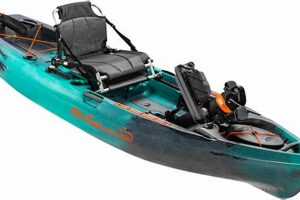
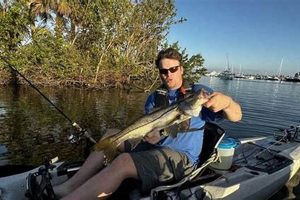
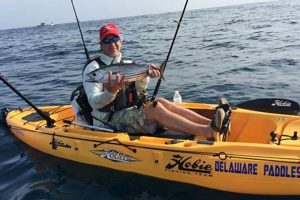
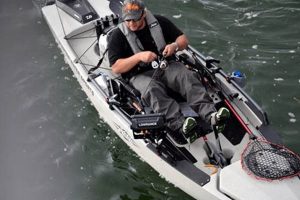
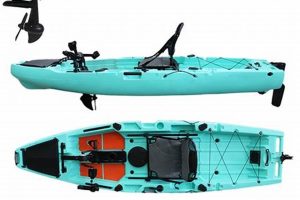
Creating custom rod storage solutions for kayaks offers anglers a way to organize their equipment and keep it readily accessible while on the water. This can range from simple adaptations of existing hardware to more complex, purpose-built designs crafted from various materials such as PVC pipe, wood, or metal. An example would be a pair of angled PVC tubes mounted behind the seat to securely hold rods while paddling or drifting.
Organized rod storage is crucial for kayak anglers. It prevents tangling, protects rods from damage, and allows for quick deployment when fish are spotted. Furthermore, a well-designed system enhances safety by minimizing clutter and keeping fishing gear secure, reducing the risk of entanglement or loss. Historically, anglers often improvised rod holders, but the increasing popularity of kayak fishing has driven innovation in DIY solutions and commercially available products.
The subsequent sections will delve into various construction methods, material choices, and design considerations for anglers interested in fabricating their own customized rod holders. Topics covered will include evaluating different materials, selecting appropriate mounting hardware, and ensuring compatibility with specific kayak models.
Tips for Building Kayak Fishing Rod Holders
Careful planning and execution are essential for constructing effective and durable rod holders. The following tips offer guidance for various stages of the process.
Tip 1: Prioritize Stability and Security: Ensure the chosen design and mounting method firmly secure rods, preventing movement during paddling, maneuvering, and battling fish. Consider using reinforcing plates or backing blocks for added strength.
Tip 2: Select Appropriate Materials: Choose materials resistant to corrosion and UV degradation. Marine-grade stainless steel, anodized aluminum, and UV-resistant plastics are recommended for longevity in harsh aquatic environments.
Tip 3: Consider Kayak Compatibility: Evaluate the kayak’s structure and available mounting points before finalizing the design. Avoid drilling into critical structural components. Utilize existing inserts or well-reinforced areas when possible.
Tip 4: Plan for Accessibility and Functionality: Position rod holders for easy access and retrieval while seated. Consider the angler’s reach and paddling stroke. Angled holders can facilitate efficient rod management.
Tip 5: Test and Refine: Thoroughly test the rod holder’s stability and functionality after installation. Make adjustments as needed to ensure optimal performance and security in real-world fishing conditions.
Tip 6: Protect Your Kayak: Use appropriate sealant or gaskets to prevent water intrusion at mounting points. This safeguards the kayak’s integrity and prolongs its lifespan.
Tip 7: Research Existing Designs: Examine various DIY rod holder designs online and in fishing forums to gather inspiration and learn from others’ experiences. Adapt existing concepts to suit individual needs and kayak configurations.
By adhering to these guidelines, anglers can create customized rod holders that enhance their fishing experience, ensuring both convenience and safety on the water.
The following section will provide detailed instructions and examples for building several popular DIY kayak fishing rod holder designs.
1. Material Selection

Appropriate material selection is paramount for constructing a functional and durable kayak fishing rod holder. The chosen material directly impacts the holder’s longevity, weight, strength, and resistance to environmental factors. A careful evaluation of available options is essential for a successful DIY project.
- Durability and Corrosion Resistance
Marine environments demand materials that withstand constant exposure to saltwater, UV radiation, and physical stress. Marine-grade stainless steel, anodized aluminum, and certain high-impact plastics offer excellent durability and corrosion resistance. While stainless steel offers superior longevity, aluminum provides a lighter-weight alternative. PVC, while less durable, presents an economical option for sheltered waters.
- Weight and Impact on Kayak Stability
Added weight affects a kayak’s balance and maneuverability. Lighter materials, such as aluminum or plastic, minimize impact on performance, particularly crucial for smaller kayaks. Heavier materials, while sturdy, may require careful placement to maintain stability. Weight considerations must be balanced against strength requirements and kayak capacity.
- Cost and Accessibility of Materials
Budget constraints can influence material choices. PVC is readily available and inexpensive, while more specialized materials like marine-grade stainless steel incur higher costs. Accessibility of materials, considering local suppliers and online retailers, also plays a role in the decision-making process.
- Workability and Ease of Fabrication
The chosen material should be compatible with available tools and the builder’s skill level. PVC is easy to cut, shape, and assemble with basic tools. Metals require more specialized equipment and expertise. Consideration of workability ensures a smoother construction process.
The interplay of these factors ultimately determines the success of a DIY kayak fishing rod holder. Matching material properties with anticipated usage conditions, budget limitations, and construction capabilities ensures a functional, durable, and reliable rod holder that enhances the overall fishing experience.
2. Mounting Location

Strategic placement of fishing rod holders is crucial for a successful kayak fishing experience. Mounting location directly impacts accessibility, casting efficiency, kayak stability, and line management. Careful consideration of these factors ensures optimal functionality and safety.
- Behind the Seat
Positioning rod holders behind the seat offers several advantages. Rods remain out of the way during paddling, minimizing interference with strokes. This location also facilitates easy access for grabbing a rod when a fish strikes. However, reaching behind the seat can be challenging for some anglers, and longer rods might extend beyond the kayak’s stern, potentially impacting maneuverability.
- In Front of the Seat (Cockpit Area)
Mounting rod holders within the cockpit area provides immediate access to rods and allows for close-quarters line management. This position is advantageous for techniques requiring precise rod control. However, rods in the cockpit can interfere with paddling and other activities, potentially compromising stability. Careful consideration of rod length and angler movement is essential.
- Side-Mounted (Gunwales)
Attaching rod holders to the gunwales (sides of the kayak) provides convenient access and keeps rods readily available. Angled gunwale mounts facilitate trolling and minimize interference with paddling. However, side-mounted rods can increase the kayak’s width, affecting stability and potentially snagging on obstacles. Weight distribution must also be carefully considered.
- Flush-Mounted (Deck)
Flush-mounted rod holders integrate seamlessly with the kayak’s deck, creating a streamlined profile and minimizing interference. These holders are ideal for transporting rods or for techniques where rods are frequently deployed and retrieved. However, accessibility might be limited compared to other mounting locations, and installation often requires more complex modifications to the kayak’s structure.
Each mounting location offers distinct advantages and disadvantages. Selecting the optimal position involves balancing accessibility, stability, fishing style, and kayak compatibility. A well-chosen mounting location contributes significantly to a streamlined and efficient kayak fishing setup.
3. Securement Method
The securement method employed in a DIY kayak fishing rod holder project is critical for ensuring both the safety of the angler and the integrity of the fishing equipment. A properly secured rod holder prevents rod loss or damage during navigation, paddling, and fish fighting. The choice of securement method depends on the holder’s design, materials used, and the kayak’s structure. Careful consideration of these factors is essential for a successful outcome.
- Straps and Bungee Cords
Straps and bungee cords offer a versatile and readily adjustable securement solution, particularly suitable for rod holders constructed from PVC or other flexible materials. They accommodate various rod diameters and provide a secure hold during transport and fishing. However, overtightening can damage rods, while loose straps risk entanglement or rod slippage. Proper tensioning and periodic inspection are necessary.
- Clamps and Mounting Hardware
Utilizing clamps and specialized mounting hardware provides a more permanent and robust securement method. Heavy-duty clamps, especially those designed for marine environments, offer superior holding power and stability. This method is ideal for rod holders fabricated from metal or for installations requiring secure attachment to the kayak’s structure. Compatibility with the kayak’s mounting points and proper installation techniques are essential.
- Inserts and Tracks
Kayaks equipped with pre-installed inserts or tracks offer convenient and secure mounting points for rod holders. Utilizing these existing features simplifies installation and ensures compatibility with the kayak’s design. Specialized mounting hardware designed for these inserts or tracks provides a robust and reliable attachment point, enhancing both stability and safety.
- Adhesives and Epoxies
Marine-grade adhesives and epoxies provide a strong bonding solution for attaching rod holders directly to the kayak’s surface. This method is suitable for flush-mounted designs or for applications where other securement methods are impractical. Proper surface preparation and selection of an appropriate adhesive are crucial for a durable and watertight bond. Compatibility with kayak materials must also be considered.
The securement method chosen significantly impacts the overall functionality and reliability of a DIY kayak fishing rod holder. Matching the securement method to the chosen materials, holder design, and kayak’s structural features ensures a safe and effective setup, enabling anglers to focus on the fishing experience rather than equipment concerns.
4. Angle and Accessibility

Optimizing angle and accessibility is paramount when designing and installing DIY kayak fishing rod holders. Proper consideration of these factors directly influences fishing efficiency, safety, and overall enjoyment on the water. A well-designed rod holder provides effortless access while minimizing interference with paddling and other onboard activities.
- Casting Angle
The angle of the rod holder significantly impacts casting performance. A slightly outward angle facilitates overhead and sidearm casts, preventing the rod from striking the kayak or the angler. Conversely, a steeper angle might be preferred for trolling or vertical jigging. The ideal casting angle depends on the targeted fishing techniques and the angler’s casting style. Experimentation and fine-tuning are often necessary to achieve optimal results.
- Retrieval Angle
Efficient retrieval requires a rod angle that allows smooth and unobstructed reeling. An angle that positions the rod handle comfortably within reach, without requiring excessive bending or twisting, minimizes fatigue and maximizes control during the fight. The retrieval angle often complements the casting angle, creating a balanced and ergonomic setup.
- Paddle Clearance
Rod holder placement and angle must not interfere with paddling strokes. Sufficient clearance between the rod handle and the paddle prevents accidental collisions, ensuring efficient propulsion and minimizing the risk of equipment damage or angler injury. This consideration is particularly crucial in confined spaces or during rapid maneuvering.
- Line Management
Rod holder angle influences line management and reduces tangling. An appropriate angle keeps the line clear of the kayak, paddle, and other gear, minimizing the risk of snags and facilitating smooth line retrieval. This is especially important when using multiple rods or in areas with heavy vegetation or underwater obstacles.
Careful consideration of these interconnected factors ensures a DIY kayak fishing rod holder setup that maximizes both functionality and enjoyment. A well-designed system promotes efficient casting and retrieval, minimizes interference with other onboard activities, and enhances overall safety. By prioritizing angle and accessibility, anglers can create a customized setup that perfectly complements their fishing style and kayak configuration.
5. Rod Protection
Rod protection is an integral aspect of designing and building effective DIY kayak fishing rod holders. Protecting rods from damage during transport, storage, and fishing enhances their longevity and performance. A well-designed holder safeguards against scratches, impacts, and UV degradation, preserving the investment in fishing equipment.
- Material Selection for Holder Construction
The materials used to construct the rod holder itself play a key role in rod protection. Smooth, non-abrasive materials like PVC, foam padding, or rubber lining prevent scratches and chafing. Durable materials resistant to UV degradation ensure long-lasting protection and maintain the holder’s structural integrity, preventing potential damage to the rods from a failing holder. For example, choosing marine-grade vinyl over standard vinyl for lining a holder offers superior resistance to saltwater and sun exposure.
- Securing Mechanisms and Rod Stability
Securement mechanisms within the rod holder are crucial for preventing rod movement and potential damage during paddling and navigation. Straps, clips, or other fastening systems should hold rods firmly in place while allowing for easy access. Adequate padding or cushioning within the holder further minimizes the risk of impact damage. For instance, incorporating bungee cords with adjustable tension ensures a snug fit regardless of rod diameter, minimizing movement and preventing impacts against the kayak’s structure.
- Placement and Orientation to Minimize Environmental Exposure
Strategic placement and orientation of rod holders minimize environmental exposure and subsequent damage. Positioning holders to avoid direct sunlight reduces UV degradation of rod blanks and guides. Similarly, placing holders away from areas prone to splashing or wave impact minimizes saltwater exposure and corrosion. For example, mounting rod holders behind the seat, angled slightly outwards, shields them from direct sunlight while keeping them accessible.
- Integrated Rod Tip Protection
Incorporating features specifically designed to protect rod tips enhances overall rod security and prevents damage to delicate guide inserts. Extending the holder slightly beyond the rod handle or adding a protective cap to the end minimizes the risk of tip breakage during transport or accidental impacts. Using a flexible material like a rubber boot at the tip opening cushions against shocks. For example, adding a short section of PVC pipe to the top of the holder creates a protective sleeve for the rod tip, safeguarding it from accidental damage.
By addressing these facets of rod protection during the design and construction process, anglers create DIY kayak fishing rod holders that not only secure rods effectively but also safeguard them from damage, extending their lifespan and preserving their performance. This holistic approach ensures a more enjoyable and productive fishing experience by minimizing equipment-related concerns and maximizing time on the water.
6. Kayak Compatibility

Kayak compatibility is a critical factor in DIY fishing rod holder projects. A successful design requires careful consideration of the kayak’s specific features and limitations to ensure structural integrity, stability, and optimal functionality. Ignoring compatibility can compromise safety and limit the effectiveness of the rod holder setup.
- Hull Type and Material
Kayak hull types and materials influence mounting options and hardware choices. Inflatable kayaks require different mounting strategies than rigid hulls, often relying on adhesive mounts or specialized track systems. Rigid kayaks, constructed from materials like polyethylene or composites, offer more versatile mounting options, including drilling and bolting. Material compatibility ensures secure attachment and prevents damage to the kayak’s structure. For example, using screws designed for plastic on a composite kayak can lead to weak points and potential leaks.
- Available Mounting Points and Accessories
Existing mounting points, such as tracks, inserts, or pre-drilled holes, simplify installation and enhance compatibility. Utilizing these features provides secure attachment points without compromising the kayak’s structural integrity. Furthermore, compatibility with existing accessories, such as fish finders or GPS mounts, must be considered to avoid interference and maximize available space. For instance, a rod holder design that obstructs access to a rudder control system compromises functionality and safety.
- Weight Capacity and Balance
The kayak’s weight capacity and balance influence material choices and mounting locations for rod holders. Adding excessive weight can negatively impact stability, particularly in smaller kayaks. Careful consideration of weight distribution is essential to maintain balance and prevent tipping. For example, mounting heavy rod holders on one side of a sit-on-top kayak can create instability, increasing the risk of capsizing.
- Kayak Width and Stability Considerations
Kayak width and inherent stability characteristics influence rod holder placement and design. Wide, stable kayaks accommodate side-mounted rod holders more readily than narrow, less stable models. Rod holder placement should not compromise the kayak’s stability or create excessive wind resistance, which can impede paddling efficiency and maneuverability. For example, extending rod holders far beyond the sides of a narrow kayak increases the risk of tipping, especially in windy conditions.
Successfully integrating a DIY fishing rod holder into a kayak requires careful consideration of these compatibility factors. Analyzing the kayak’s specific characteristics and limitations ensures a secure, functional, and safe setup that enhances the fishing experience without compromising the kayak’s performance or structural integrity. Overlooking compatibility can lead to instability, equipment failure, and potential safety hazards, underscoring the importance of careful planning and execution in DIY kayak outfitting projects.
Frequently Asked Questions
This section addresses common inquiries regarding the construction and utilization of do-it-yourself kayak fishing rod holders.
Question 1: What are the most suitable materials for constructing durable rod holders?
Marine-grade stainless steel, anodized aluminum, and UV-resistant plastics offer excellent durability and corrosion resistance in marine environments. PVC is a cost-effective alternative for sheltered waters.
Question 2: How does rod holder placement affect kayak stability?
Weight distribution is crucial. Placing heavy rod holders on one side can compromise stability. Positioning holders near the center of gravity minimizes impact on balance.
Question 3: What securement methods are recommended for different kayak types?
Rigid kayaks accommodate various methods, including bolts, clamps, and inserts. Inflatable kayaks often require adhesive mounts or specialized track systems. Securement must be compatible with both the holder and the kayak material.
Question 4: How can rod holders be designed to minimize interference with paddling?
Placement behind the seat or angled side mounts reduces interference. Rod length and angler reach should be considered to ensure unobstructed paddling strokes.
Question 5: What measures can be taken to protect fishing rods from damage within the holders?
Using non-abrasive materials like foam padding or rubber lining within the holder prevents scratches. Secure fastening mechanisms minimize movement, and integrated tip protectors safeguard delicate rod tips.
Question 6: How can one ensure compatibility between a DIY rod holder and a specific kayak model?
Consulting the kayak manufacturer’s specifications and assessing available mounting points is crucial. Considering the kayak’s weight capacity, hull type, and existing accessories ensures proper integration and avoids structural compromise.
Careful consideration of these factors ensures a successful DIY rod holder project that enhances fishing functionality without compromising safety or kayak performance.
The next section will offer a step-by-step guide for constructing a basic PVC rod holder.
Custom Kayak Fishing Rod Holder Solutions
Constructing personalized rod storage for kayaks offers significant advantages, from enhanced organization and accessibility to improved safety and fishing efficiency. Material selection, mounting location, securement methods, angle optimization, rod protection, and kayak compatibility are crucial considerations for a successful project. Careful planning and execution, informed by these factors, yield durable, functional, and safe rod holder solutions tailored to individual needs and kayak configurations.
Empowering anglers to create customized setups promotes a more streamlined and enjoyable fishing experience. Adaptable designs accommodate evolving fishing styles and kayak modifications, ensuring long-term utility. Investing time and effort in crafting personalized rod storage solutions ultimately translates to greater efficiency, safety, and enjoyment on the water.