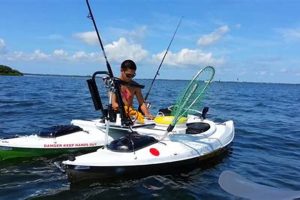
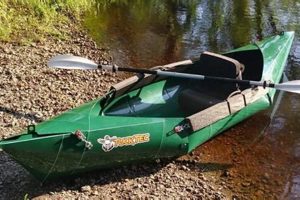
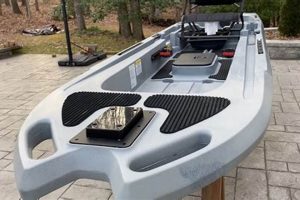
High-speed, stable watercraft designed for angling offer advantages in covering larger bodies of water quickly, reaching distant fishing spots efficiently, and maneuvering swiftly in changing currents or when pursuing agile fish species. These vessels typically feature longer, narrower hulls and lighter construction materials than recreational kayaks, prioritizing speed and tracking. Consider a hypothetical scenario: an angler needs to reach a distant estuary before the tide changes. A speed-optimized fishing kayak becomes instrumental in achieving this, maximizing fishing time at the prime location.
The demand for efficient watercraft for fishing has driven innovation in kayak design, resulting in specialized hulls and propulsion systems that prioritize velocity. This evolution enables anglers to explore further reaches of waterways, increasing their chances of encountering diverse fish populations. Historically, reaching distant fishing grounds required significant time investment, limiting opportunities. Contemporary designs address this constraint, enhancing fishing experiences and outcomes.
The subsequent sections will explore the critical factors contributing to kayak speed, including hull design, materials, and propulsion methods, followed by an analysis of popular models and a guide for selecting the most suitable option based on individual needs and fishing styles.
Tips for Selecting High-Performance Fishing Kayaks
Choosing a kayak optimized for speed and fishing requires careful consideration of various factors. The following tips offer guidance in navigating the selection process.
Tip 1: Prioritize Hull Design: Longer, narrower hulls generally track straighter and glide more efficiently, contributing to higher speeds. A displacement hull, with its pointed bow and stern, is ideal for covering long distances quickly in calm water.
Tip 2: Consider Lightweight Materials: Kayak weight significantly impacts speed and maneuverability. Lighter materials, such as fiberglass or carbon fiber, while often more expensive, contribute to enhanced performance.
Tip 3: Evaluate Propulsion Systems: Pedal-driven kayaks offer speed and efficiency advantages over traditional paddle kayaks, allowing for hands-free fishing and faster movement, especially over longer distances.
Tip 4: Assess Stability Needs: While speed is crucial, maintaining stability is essential, particularly when fishing in rougher conditions or standing to cast. Consider a kayak with a wider beam or a sit-on-top design for enhanced stability.
Tip 5: Factor in Storage Capacity: Adequate storage space for fishing gear, tackle boxes, and safety equipment is essential. Evaluate the kayak’s storage compartments and their accessibility.
Tip 6: Account for Seating Comfort: Long fishing trips necessitate a comfortable and adjustable seat. Consider features like lumbar support and padding for extended comfort.
Tip 7: Test Before Purchasing: Whenever possible, demo different kayak models to assess their speed, stability, and overall comfort before making a final decision.
By carefully considering these factors, anglers can select a kayak that balances speed, stability, and essential fishing features, leading to a more productive and enjoyable experience on the water.
The following section provides a detailed comparison of leading high-performance fishing kayaks currently available, further assisting in the selection process.
1. Hull Design

Hull design is a critical factor influencing the speed and performance of fishing kayaks. The hull’s shape, length, and width directly impact water resistance, tracking, and maneuverability, all crucial elements for anglers seeking efficient movement on the water.
- Displacement Hulls
Displacement hulls, characterized by a pointed bow and stern, are designed to slice through the water, minimizing surface area contact and reducing drag. This design excels in calm water conditions and is ideal for long-distance paddling, making it a popular choice for anglers covering extensive stretches of water. Examples include touring kayaks and some specialized fishing kayak models. The sharp entry and exit points of the hull contribute to efficient tracking and higher speeds.
- Planing Hulls
Planing hulls, featuring a flatter bottom and wider beam, are designed to rise up and skim over the water’s surface at higher speeds. This design sacrifices some tracking ability for increased stability, making it suitable for anglers who prioritize stability and maneuverability in choppy conditions or when standing to cast. Examples include recreational kayaks and some sit-on-top fishing kayaks. The wider surface area provides greater initial stability but can generate more drag at lower speeds.
- Tunnel Hulls
Tunnel hulls incorporate recessed channels or tunnels along the bottom, reducing water contact and drag while maintaining stability. This design combines elements of both displacement and planing hulls, offering a balance of speed, stability, and maneuverability. Tunnel hulls are often found in specialized fishing kayaks designed for shallow water or areas with vegetation, as the tunnels help to prevent grounding and improve tracking in challenging environments.
- Hybrid Hulls
Hybrid hulls combine aspects of different hull designs, seeking to optimize performance for specific conditions. For example, a kayak might incorporate a displacement hull at the bow for efficient tracking and a planing hull at the stern for enhanced stability. These designs aim to cater to specific fishing styles and water conditions, offering versatility and specialized performance characteristics.
Understanding the nuances of different hull designs is essential for anglers seeking the fastest fishing kayak. Selecting the appropriate hull type depends on factors such as intended fishing locations, water conditions, paddling style, and individual preferences. By carefully evaluating these factors, anglers can choose a kayak that maximizes speed and performance, enhancing their overall fishing experience.
2. Lightweight Materials

Lightweight materials play a crucial role in achieving high speeds in fishing kayaks. Reduced mass translates directly to enhanced acceleration, maneuverability, and overall performance on the water. The relationship between weight and speed is fundamental in physics: less force is required to propel a lighter object to a given velocity. This principle holds true for kayaks; a lighter kayak requires less effort to paddle or pedal, resulting in faster speeds and less fatigue over long distances. For instance, a kayak constructed from carbon fiber, known for its exceptional strength-to-weight ratio, will accelerate and glide more efficiently than a comparable kayak made from heavier polyethylene.
The practical implications of utilizing lightweight materials in fishing kayaks are significant. Anglers can reach fishing spots faster, cover more water during a fishing trip, and conserve energy for the actual act of fishing. Furthermore, lighter kayaks are often easier to transport and handle, both on and off the water. Consider a scenario where an angler needs to portage their kayak across a stretch of land to reach a remote lake. A lighter kayak will significantly ease this process, reducing physical strain and allowing for quicker access to the fishing destination. However, the benefits of lightweight materials often come at a higher cost. Materials like carbon fiber and fiberglass are typically more expensive than traditional polyethylene, presenting a trade-off between performance and affordability.
The choice of materials significantly impacts a fishing kayak’s overall speed and performance. While lightweight materials offer undeniable advantages in terms of speed, maneuverability, and ease of transport, the associated cost must be considered. Anglers seeking the fastest fishing kayaks often prioritize lightweight construction, recognizing the direct correlation between reduced weight and increased speed. Ultimately, the selection of materials depends on individual needs, budget, and the prioritization of speed and performance on the water.
3. Efficient Propulsion

Efficient propulsion forms the core of achieving high speeds in fishing kayaks. The method of converting human energy into forward momentum directly dictates a kayak’s velocity potential. Several propulsion systems cater to varying needs and preferences, each offering distinct advantages and disadvantages regarding speed, efficiency, and practicality. Traditional paddle kayaks rely on rhythmic paddling strokes, translating upper body strength and technique into forward motion. While offering simplicity and affordability, paddle kayaks can limit speed, particularly over long distances, and require continuous physical exertion. Pedal-powered kayaks, on the other hand, utilize leg muscles, generally larger and more powerful than arm muscles, offering a biomechanically advantageous approach. This system enables higher speeds, sustained over longer durations, and frees up hands for fishing activities. Furthermore, pedal drives often incorporate fins or propellers that generate greater thrust than paddles, maximizing speed potential. Consider a scenario where an angler intends to troll for extended periods. A pedal-powered kayak offers a clear advantage in maintaining consistent speed and covering more water without the fatigue associated with continuous paddling.
Electric motor propulsion systems represent another significant advancement in kayak technology. These systems offer unmatched speed capabilities and effortless maneuverability, allowing anglers to cover vast distances quickly and with minimal physical exertion. Electric motors eliminate the limitations of human-powered propulsion, enabling anglers to navigate strong currents and winds efficiently. However, electric motors introduce added complexity and cost, including battery management and potential maintenance requirements. Moreover, regulations regarding motorized watercraft may restrict their usage in certain areas. For example, anglers targeting offshore fishing grounds might prioritize the speed and range offered by an electric motor, whereas those fishing in protected estuaries might opt for a pedal or paddle-powered kayak. The choice of propulsion system directly influences the speed potential and overall fishing experience.
The quest for the fastest fishing kayak invariably involves optimizing propulsion efficiency. Whether through refined paddling techniques, biomechanically advantageous pedal drives, or technologically advanced electric motors, maximizing the conversion of energy into forward momentum is paramount. Each propulsion system presents a unique set of advantages and disadvantages concerning speed, endurance, and practicality. Anglers must carefully evaluate these factors in relation to their specific fishing styles, target locations, and budgetary constraints. Understanding the nuances of each propulsion method empowers anglers to make informed decisions, ultimately enhancing their speed on the water and optimizing their fishing experience.
4. Reduced Drag
Minimizing drag is paramount in achieving high speeds in fishing kayaks. Drag, the force resisting movement through a fluid, acts as a primary impediment to velocity. Reducing drag, therefore, directly correlates with increased speed potential. Several factors contribute to drag on a kayak, including hull design, surface texture, and the presence of protruding accessories. A sleek, hydrodynamic hull design minimizes surface area contact with the water, thereby reducing frictional drag. Smooth surfaces further diminish drag by reducing turbulence in the water flow. Unnecessary protrusions, such as poorly positioned gear mounts or dangling fishing lines, create additional drag, impeding forward momentum. Consider a scenario where two kayaks with identical propulsion systems are compared, one with a streamlined hull and the other with a wider, less hydrodynamic design. The streamlined kayak will experience significantly less drag, translating to higher speeds with the same energy input.
The practical implications of minimizing drag extend beyond theoretical physics. Reduced drag translates to tangible benefits for anglers seeking faster kayaks. Less energy is required to maintain a given speed, resulting in reduced fatigue and increased range. Furthermore, kayaks with reduced drag track straighter and respond more efficiently to steering inputs, enhancing maneuverability and control. Consider an angler navigating a swift current. A kayak with minimal drag will maintain its course more effectively, requiring less corrective steering and conserving energy. Conversely, a kayak with high drag will be more susceptible to the current’s influence, demanding greater effort to maintain the desired trajectory. Understanding the factors contributing to drag empowers anglers to make informed decisions regarding kayak selection and customization, optimizing performance on the water.
In conclusion, minimizing drag represents a critical aspect of designing and utilizing the fastest fishing kayaks. Hydrodynamic hull designs, smooth surfaces, and streamlined accessories contribute significantly to reducing drag forces. This reduction translates to tangible benefits, including increased speed, enhanced maneuverability, and reduced energy expenditure. By prioritizing drag reduction, anglers can maximize their on-the-water performance and optimize their fishing experience. The pursuit of speed in fishing kayaks necessitates a thorough understanding and application of drag-reducing principles, ensuring efficient and effective movement through the water.
5. Water Conditions

Water conditions significantly influence the performance of even the fastest fishing kayaks. Calm, flat water presents ideal conditions for maximizing speed, allowing kayaks to glide efficiently with minimal resistance. However, real-world conditions often deviate from this ideal, introducing factors that can dramatically impact a kayak’s speed and handling.
- Current
Currents, whether riverine or tidal, exert a powerful force on kayaks. A following current can significantly boost speed, allowing anglers to cover greater distances with less effort. Conversely, paddling against a strong current can dramatically reduce speed and require significantly more exertion. Consider navigating a tidal estuary; an outgoing tide can assist in reaching distant fishing grounds quickly, while an incoming tide may necessitate adjustments in route or propulsion strategy.
- Wind
Wind resistance presents a major challenge to maintaining speed in kayaks, especially those with higher profiles. Headwinds create significant drag, requiring increased effort to maintain forward momentum. Crosswinds can push kayaks off course, demanding constant correction and reducing overall speed. Anglers in exposed areas, such as large lakes or coastal regions, must carefully consider wind forecasts and adjust paddling techniques or seek sheltered areas to mitigate the impact of wind resistance on speed.
- Waves and Chop
Waves and choppy water conditions introduce additional resistance and instability, significantly impacting kayak speed and handling. Kayaks designed for speed, often featuring longer, narrower hulls, may be more susceptible to instability in rough water. Anglers facing such conditions may need to reduce speed to maintain control and avoid capsizing. Selecting a kayak with enhanced stability features, such as a wider beam or a sit-on-top design, can improve performance in choppy water but may compromise maximum speed potential in calmer conditions.
- Water Temperature
Water temperature, while not directly impacting drag, indirectly affects kayak speed through its influence on water viscosity. Colder water is denser and more viscous, creating slightly higher resistance than warmer water. While this difference is often negligible in practical terms, it can become a factor in extreme temperature ranges. Furthermore, water temperature influences biological activity, affecting fish behavior and, consequently, angler strategies and movements on the water, indirectly impacting speed requirements.
Understanding and adapting to prevailing water conditions is crucial for maximizing speed and efficiency in fishing kayaks. Anglers seeking optimal performance must consider currents, wind, waves, and even water temperature when planning their trips and choosing their routes. Selecting the fastest kayak for a given environment requires careful consideration of the interplay between hull design, propulsion system, and the prevailing water conditions. A kayak optimized for speed in calm water may not perform as well in rough conditions, highlighting the importance of matching kayak characteristics to the anticipated environment. Ultimately, skillful adaptation to dynamic water conditions distinguishes experienced anglers and contributes significantly to successful fishing outcomes.
6. Paddler Technique

Paddler technique plays a crucial role in maximizing the speed potential of even the fastest fishing kayaks. While hull design, materials, and propulsion systems contribute significantly to velocity, efficient paddling technique unlocks a kayak’s full performance capabilities. A skilled paddler can extract significantly higher speeds from the same kayak compared to a novice, highlighting the importance of mastering proper technique.
- Efficient Stroke Mechanics
Efficient stroke mechanics form the foundation of effective paddling. A proper paddling stroke utilizes core body rotation and engages larger muscle groups, maximizing power transfer and minimizing wasted energy. A high-angle paddle entry, close to the kayak, and a smooth, powerful pull through the water contribute to efficient propulsion. Conversely, a shallow paddle angle and excessive splashing indicate energy loss and reduced forward momentum. Consider two paddlers in identical kayaks; the paddler with refined stroke mechanics will achieve higher speeds with less effort.
- Cadence and Consistency
Maintaining a consistent cadence, or stroke rate, is essential for sustained speed. A rhythmic paddling motion optimizes energy expenditure and minimizes fluctuations in velocity. Varying cadence disrupts momentum and reduces overall efficiency. Consider a long-distance paddle; a consistent cadence allows for sustained speed over extended periods, whereas erratic paddling leads to fatigue and reduced performance. Furthermore, adapting cadence to changing water conditions, such as currents or wind, is crucial for maintaining optimal speed and control.
- Body Posture and Balance
Proper body posture and balance contribute significantly to paddling efficiency. A stable, upright posture maximizes core engagement and facilitates effective power transfer. Leaning or slouching reduces stability and hinders efficient paddling. Consider a kayak navigating choppy water; a paddler with good balance and posture will maintain control and speed more effectively than a paddler who is unstable and constantly adjusting their position. Maintaining a low center of gravity enhances stability and allows for more powerful strokes.
- Paddle Selection and Feathering
Selecting the appropriate paddle length and blade shape influences paddling efficiency. A paddle that is too long or too short can hinder proper stroke mechanics and reduce power transfer. Furthermore, paddle feathering, the angle between the blades, affects wind resistance and paddling comfort. Adjusting feathering to suit wind conditions minimizes drag and improves paddling efficiency. Consider a paddler facing a strong headwind; a feathered paddle reduces wind resistance, allowing for easier paddling and maintaining higher speeds.
Mastering efficient paddling technique is essential for realizing the full speed potential of any fishing kayak. Refined stroke mechanics, consistent cadence, proper body posture, and appropriate paddle selection contribute significantly to maximizing velocity and minimizing energy expenditure. While the fastest fishing kayaks offer inherent speed advantages through design and materials, proficient paddling technique unlocks their ultimate performance capabilities, allowing anglers to reach their destinations quickly and efficiently. The pursuit of speed on the water necessitates a holistic approach, combining optimized equipment with skillful paddling technique.
Frequently Asked Questions
This section addresses common inquiries regarding high-performance fishing kayaks, providing concise and informative responses.
Question 1: How is the speed of a fishing kayak measured?
Kayak speed is typically measured in knots (nautical miles per hour) or kilometers per hour. Various factors, including hull design, propulsion system, and water conditions, influence actual speed. Manufacturer specifications often provide estimated top speeds under ideal conditions.
Question 2: What are the primary differences between sit-in and sit-on-top kayaks for speed?
Sit-in kayaks generally offer slightly higher speeds due to their lower profile and reduced wind resistance. Sit-on-top kayaks, while potentially slower, provide enhanced stability and ease of entry and exit, valuable features for anglers fishing in rougher conditions or requiring frequent repositioning.
Question 3: Do lighter kayaks always translate to faster speeds?
While lighter kayaks generally accelerate faster and require less effort to paddle, other factors, such as hull design and water conditions, also play significant roles. A lighter kayak with a poorly designed hull may not necessarily be faster than a heavier kayak with a streamlined, hydrodynamic hull.
Question 4: How does hull length affect kayak speed?
Longer kayaks generally track straighter and glide more efficiently, contributing to higher potential speeds. However, increased length can also reduce maneuverability, particularly in tight spaces or when navigating complex waterways. The optimal length depends on the balance between speed and maneuverability requirements.
Question 5: What is the role of propulsion systems in kayak speed?
Propulsion systems significantly impact kayak speed. Pedal-driven kayaks typically achieve higher speeds than paddle kayaks due to the biomechanical advantages of using leg muscles. Electric motors offer the highest potential speeds but introduce factors such as battery life and regulatory restrictions.
Question 6: How do water conditions affect kayak speed?
Water conditions, including currents, wind, and waves, dramatically influence kayak speed. Favorable currents can boost speed, while headwinds and choppy water can significantly reduce it. Adapting to prevailing water conditions is crucial for maximizing speed and efficiency.
Understanding the factors influencing kayak speed empowers informed decisions aligned with individual needs and fishing styles. Careful consideration of hull design, propulsion, and anticipated water conditions optimizes on-the-water performance.
The following section provides a detailed comparison of leading high-performance fishing kayak models, further assisting in the selection process.
Fastest Fishing Kayaks
This exploration has highlighted the multifaceted nature of speed in fishing kayaks. From hydrodynamic hull designs and lightweight materials to efficient propulsion systems and adaptable paddling techniques, numerous factors contribute to maximizing velocity on the water. Minimizing drag through streamlined designs and adapting to prevailing water conditions further enhance speed potential. The selection of a high-performance fishing kayak necessitates careful consideration of these interconnected elements, balancing speed with stability, maneuverability, and fishing-specific features.
The pursuit of speed in fishing kayaks extends beyond mere velocity; it represents an optimization of on-the-water performance, enabling anglers to reach distant fishing grounds efficiently, cover more water during a fishing trip, and ultimately enhance their fishing experience. As technology continues to advance and kayak designs evolve, the quest for the fastest fishing kayak will undoubtedly continue, driving innovation and pushing the boundaries of what is possible on the water.