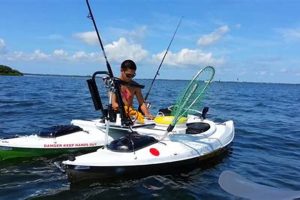
Short, compact vessels designed for angling in calm, smaller bodies of water like ponds and small lakes, these kayaks prioritize maneuverability and ease of transport. Their smaller size often makes them lighter and easier to car-top or store than longer kayaks. Generally suitable for one adult angler, these craft offer a stable platform for casting and reeling, particularly in shallow water. They are often constructed from durable materials such as rotomolded polyethylene or high-density polyethylene.
The portability and affordability of compact fishing kayaks make them attractive to beginners and anglers with limited storage space or those who fish smaller waterways frequently. This type of kayak is often a preferred choice for anglers seeking a simplified, less gear-intensive fishing experience. Historically, shorter kayaks were often used for protected coastal fishing or lake and river fishing. Modern materials and manufacturing techniques allow for more specialized designs with features tailored for specific fishing styles and environments, leading to the development of purpose-built smaller fishing kayaks.
The following sections will explore specific considerations related to size, materials, features, and suitable environments for these small fishing kayaks, providing readers with comprehensive information to make informed decisions.
Tips for Selecting and Using Compact Fishing Kayaks
Careful consideration of several factors ensures a safe and enjoyable fishing experience using a compact kayak. These tips provide essential information regarding selection, usage, and safety precautions.
Tip 1: Evaluate Stability: Prioritize stability, especially for beginners. Wider hulls generally offer greater stability than narrower designs. Consider testing kayak stability before purchase.
Tip 2: Assess Weight Capacity: Ensure the kayak’s weight capacity accommodates the angler’s weight, along with fishing gear and any other equipment. Exceeding the capacity compromises stability and safety.
Tip 3: Consider Storage Options: Compact kayaks offer storage advantages, but available space should still meet individual needs. Evaluate onboard storage compartments and potential for adding accessories like rod holders and tackle boxes.
Tip 4: Choose Appropriate Paddles: Select paddles appropriate for body size and kayaking style. Shorter paddles are generally suitable for smaller kayaks.
Tip 5: Prioritize Safety Gear: Always wear a personal flotation device (PFD). Carry a whistle, signaling device, and basic safety kit. Inform someone of fishing plans and estimated return time.
Tip 6: Check Local Regulations: Research and adhere to local regulations regarding fishing licenses, permitted areas, and specific waterway rules.
Tip 7: Practice Paddling Technique: Learn and practice efficient paddling techniques to conserve energy and maneuver effectively in various water conditions.
By considering these tips, anglers can maximize their fishing experience with a compact kayak while prioritizing safety and enjoyment on the water.
The information provided offers practical guidance for selecting and using these specialized kayaks. Further research and consultation with experienced kayak anglers can enhance understanding and improve on-water experiences.
1. Length

A 7-foot kayak’s compact length directly influences its maneuverability, a critical factor for navigating smaller waterways and confined areas. This length makes it well-suited for specific fishing environments and paddling styles. Understanding this connection provides a foundation for informed kayak selection and efficient on-water performance.
- Navigating Tight Spaces
Seven-foot kayaks excel in confined environments like narrow creeks, shallow coves, and areas dense with vegetation. Their shorter turning radius allows for quick adjustments in direction and efficient navigation through obstacles, providing access to prime fishing spots often inaccessible to larger vessels. This maneuverability allows anglers to exploit tighter fishing locations.
- Enhanced Responsiveness
The shorter length translates to increased responsiveness to paddle strokes. This allows for rapid acceleration, deceleration, and changes in direction, crucial for reacting to fish activity or adjusting position for optimal casting. The kayak’s agility enhances the angler’s ability to target fish effectively.
- Transportation and Storage
The compact size simplifies transportation and storage. A 7-foot kayak is easily car-topped, requiring less storage space than longer models. This ease of transport makes it convenient for anglers with limited storage capacity or those frequently accessing remote fishing locations.
- Trade-offs and Considerations
While maneuverability is a significant advantage, the shorter length often results in reduced tracking and lower top speeds compared to longer kayaks. This can be a disadvantage in open water or when covering longer distances. Anglers should consider their primary fishing environment and paddling style when evaluating the trade-offs between maneuverability and tracking performance. Stability is also a factor in shorter kayaks, and careful selection based on hull design is important.
The compact length of a 7-foot fishing kayak prioritizes maneuverability, offering distinct advantages in specific fishing scenarios. Evaluating this characteristic alongside potential trade-offs ensures informed selection based on individual angling needs and target environments. Understanding the interplay between length, maneuverability, and performance contributes to a more effective and enjoyable fishing experience.
2. Stability

Stability is a paramount consideration for anglers using 7-foot fishing kayaks, particularly in pond and lake environments. These smaller bodies of water often present calmer conditions compared to rivers or oceans, allowing the angler to prioritize stability for casting, reeling, and landing fish. A stable platform enhances fishing effectiveness and overall safety on the water.
- Hull Design and Stability
Hull design significantly influences kayak stability. Wider, flatter hulls generally offer greater primary stability, resisting initial tipping. This is beneficial for stationary fishing in calm pond or lake conditions. However, wider hulls can be slower and less maneuverable. A narrower hull provides better maneuverability but sacrifices some initial stability. Understanding the trade-offs between stability and maneuverability based on hull design is crucial for anglers selecting a 7-foot kayak for pond and lake use.
- Center of Gravity and Balance
A lower center of gravity contributes to greater stability. The angler’s seated position and distribution of weight within the kayak influence balance and stability. Keeping weight low and centered enhances stability, especially important in smaller kayaks. Adding accessories or gear can raise the center of gravity, affecting stability. Anglers must consider weight distribution and potential impacts on balance when outfitting their kayaks.
- Water Conditions and Stability
While ponds and lakes generally offer calmer conditions, wind, waves, or wakes from other vessels can impact stability. A 7-foot kayak’s shorter length makes it more susceptible to these external forces. Anglers should assess water conditions and choose sheltered areas when possible. Understanding the kayak’s performance limitations in various water conditions promotes safe and effective fishing practices.
- Angler Experience and Stability
An angler’s experience level influences their ability to maintain balance and control in a kayak. Beginners may benefit from a wider, more stable hull design. Experienced anglers might prefer a narrower hull for enhanced maneuverability, accepting a higher risk of tipping. Understanding personal comfort levels and skill sets allows anglers to choose a kayak that balances stability and performance based on individual needs and experience.
Stability is a crucial factor for anglers using 7-foot kayaks in pond and lake environments. Consideration of hull design, weight distribution, water conditions, and angler experience allows for informed selection and safe operation. Balancing stability with other performance characteristics like maneuverability and speed ensures a safe and productive fishing experience in these calm water environments.
3. Capacity

The single-adult angler capacity of a 7-foot fishing kayak is a defining characteristic influencing design and functionality. This capacity restriction stems from the kayak’s compact dimensions and inherent weight limitations. Understanding this limitation is crucial for angler safety and efficient kayak operation. Exceeding the recommended capacity compromises stability, maneuverability, and overall safety. A kayak overloaded with multiple occupants or excessive gear sits lower in the water, increasing the risk of capsizing, especially in challenging conditions. Furthermore, the added weight hinders maneuverability, making paddling and navigating more difficult.
Consider a scenario where two adults attempt to fish from a 7-foot kayak designed for a single occupant. The combined weight likely exceeds the kayak’s capacity, significantly impacting stability and increasing the risk of capsizing. Even if the combined weight remains within the stated capacity, the limited space restricts movement and hinders effective casting and reeling. This cramped environment diminishes the fishing experience and can create safety hazards. Conversely, a single angler within the designated weight limit enjoys optimal stability and freedom of movement, maximizing fishing effectiveness and overall enjoyment.
The single-adult angler capacity inherent in 7-foot fishing kayaks directly impacts stability, maneuverability, and safety. Adhering to this capacity limitation ensures optimal performance and a safe on-water experience. Attempting to exceed this limit compromises stability and control, potentially leading to hazardous situations. Recognizing this inherent capacity restriction as a design feature, rather than a limitation, allows anglers to select and utilize these specialized kayaks effectively and safely within their intended purpose.
4. Portability

The portability of a 7-foot fishing kayak is a defining feature, directly linked to its compact size and lightweight construction. This ease of transport significantly expands angling opportunities, allowing access to remote or difficult-to-reach fishing locations often inaccessible to larger vessels. Transporting a 7-foot kayak typically requires minimal equipment and effort. Many anglers can easily car-top these kayaks, eliminating the need for trailers and simplifying transportation logistics. This ease of transport reduces barriers to entry for individuals with limited storage space or those lacking vehicles equipped for towing trailers. Consider an angler living in an apartment with limited storage. A 7-foot kayak’s compact size allows for convenient storage within the apartment or on a small balcony, eliminating the need for off-site storage facilities. This ease of storage coupled with simplified transport expands fishing opportunities, allowing the angler to quickly and easily access various fishing locations.
The benefits of portability extend beyond individual convenience. Reduced reliance on motorized transport for accessing fishing spots promotes eco-conscious angling practices. Car-topping a kayak minimizes fuel consumption compared to towing larger boats, contributing to a smaller carbon footprint. Furthermore, the ability to easily carry a kayak short distances allows anglers to bypass motorized access points, preserving the tranquility of natural environments and minimizing disturbance to wildlife. For example, an angler can carry a 7-foot kayak across a short portage between two lakes, accessing pristine fishing areas unreachable by motorized boats, minimizing environmental impact while maximizing fishing opportunities.
The portability of 7-foot fishing kayaks directly enhances accessibility and expands angling opportunities. Simplified transport and storage empower anglers to explore diverse waterways, including remote locations inaccessible to larger craft. This portability aligns with environmentally conscious practices, reducing reliance on motorized transport and minimizing environmental impact. Understanding the connection between portability and expanded fishing opportunities allows anglers to fully leverage the advantages offered by these compact and efficient vessels.
5. Material

Durable polyethylene’s prevalence in 7-foot fishing kayak construction stems from a combination of performance characteristics ideally suited to the demands of this kayak type. Polyethylene offers a compelling balance of durability, affordability, and impact resistance, crucial for navigating shallow waters, encountering obstacles, and withstanding general wear and tear. This material’s resilience contributes significantly to the kayak’s longevity and overall value. High-density polyethylene (HDPE) and rotomolded polyethylene are common variants, each offering specific advantages. HDPE provides excellent impact resistance and UV stability, crucial for withstanding sun exposure and accidental collisions. Rotomolding creates a seamless, one-piece hull with uniform wall thickness, enhancing overall strength and durability. Consider a scenario involving a 7-foot fishing kayak navigating a shallow, rocky stream. The polyethylene hull readily absorbs impacts from submerged rocks and logs, preventing punctures or cracks that might compromise the kayak’s structural integrity. This inherent durability allows anglers to confidently navigate challenging environments, expanding fishing opportunities in diverse waterways.
Polyethylene’s inherent buoyancy contributes to the kayak’s lightweight nature, a key factor influencing portability and ease of transport. This lightweight characteristic simplifies car-topping and manual handling, allowing anglers to access remote fishing locations often inaccessible to larger, heavier vessels. Furthermore, polyethylene’s resistance to UV degradation and chemical exposure ensures long-term performance and minimizes maintenance requirements. Unlike some materials susceptible to fading or cracking under prolonged sun exposure, polyethylene retains its structural integrity and aesthetic appeal, reducing the need for frequent repairs or replacements. For instance, a 7-foot polyethylene kayak stored outdoors experiences minimal degradation despite constant exposure to sunlight and varying weather conditions. This durability reduces long-term ownership costs and contributes to the kayak’s overall value.
The selection of durable polyethylene as a primary material in 7-foot fishing kayak construction reflects a practical balance of performance, affordability, and longevity. Polyethylene’s resilience, buoyancy, and resistance to environmental factors contribute significantly to the kayak’s overall functionality and value. This material allows anglers to confidently explore diverse waterways, knowing their equipment can withstand the rigors of varied fishing environments. The inherent durability and low maintenance requirements of polyethylene align with the practical needs of anglers seeking reliable and cost-effective fishing platforms. This material choice directly supports the intended purpose of 7-foot fishing kayaks: providing accessible, portable, and durable vessels for anglers seeking to explore a wide range of fishing environments.
6. Storage
Limited onboard storage is an inherent characteristic of 7-foot fishing kayaks, directly related to their compact size. Understanding this constraint and adopting appropriate strategies for gear management are crucial for maximizing fishing effectiveness and overall enjoyment on the water. Careful gear selection and efficient organization become paramount for anglers utilizing these compact vessels. This inherent limitation necessitates strategic packing and prioritization of essential equipment.
- Essential Gear Prioritization
Anglers must prioritize essential fishing gear due to limited storage capacity. This necessitates careful consideration of tackle, rods, and other equipment based on target species and fishing techniques. For example, an angler targeting panfish in a small pond might prioritize a limited selection of lures and a single lightweight rod, while an angler pursuing larger game fish might opt for a heavier rod and a selection of larger lures. Effective prioritization maximizes fishing potential within the constraints of limited storage.
- Compact Tackle Organization
Efficient tackle organization is crucial for maximizing limited storage space. Utilizing compact tackle boxes, lure organizers, and other storage solutions keeps essential gear readily accessible and prevents clutter within the kayak. Small, waterproof containers can store essential items like hooks, weights, and swivels, while specialized lure boxes keep lures organized and prevent tangling. Strategic organization optimizes space utilization and enhances fishing efficiency.
- Dry Bag Utilization
Dry bags play a vital role in protecting sensitive items from water damage. Storing electronics, wallets, and other valuables in dry bags ensures their protection from splashes, rain, or accidental submersion. Choosing appropriately sized dry bags maximizes storage efficiency within the limited space available. Multiple smaller dry bags often provide better organization and space utilization compared to a single large bag. Effective dry bag usage safeguards essential gear and contributes to peace of mind on the water.
- External Storage Considerations
While limited onboard storage is inherent in 7-foot kayaks, some models offer external storage options like bungee cords or small cargo nets. These external storage solutions can accommodate items like spare paddles, rain gear, or a small cooler. However, anglers must consider weight distribution and balance when utilizing external storage, ensuring safe and stable kayak operation. Overloading external storage can compromise stability, particularly in windy conditions or rough water.
Limited onboard storage in 7-foot fishing kayaks necessitates strategic gear management and prioritization. Anglers must adopt efficient organizational practices and utilize appropriate storage solutions like compact tackle boxes and dry bags to maximize available space. Understanding and adapting to this inherent limitation enhances fishing efficiency and overall enjoyment on the water. By prioritizing essential gear, optimizing organization, and considering external storage options, anglers can effectively address the challenges posed by limited onboard storage and fully leverage the advantages of these compact and maneuverable fishing platforms.
7. Features
Features like rod holders and seating significantly influence the functionality and overall fishing experience in a 7-foot fishing kayak. These features, while seemingly simple, play crucial roles in enhancing angler efficiency, comfort, and safety. Their integration within the limited space of a compact kayak reflects careful design considerations aimed at optimizing the angling experience.
Rod holders provide secure storage for fishing rods, freeing the angler’s hands for paddling, maneuvering, and other tasks. This hands-free convenience is particularly valuable in smaller kayaks where space is limited and movement can be restricted. Securely stored rods minimize the risk of entanglement and damage, preserving valuable equipment and reducing distractions during critical fishing moments. For example, an angler navigating a narrow channel can safely stow rods in designated holders, preventing entanglement with overhanging branches or submerged obstacles. This allows for safe passage and maintains readiness for fishing upon reaching the desired location.
Seating comfort directly impacts the angler’s endurance and overall enjoyment. A well-designed seat provides adequate support and cushioning, reducing fatigue during extended fishing trips. Adjustable seating systems allow for customization based on individual preferences and physical characteristics, further enhancing comfort and promoting a stable fishing platform. Consider an angler spending several hours fishing in a 7-foot kayak. A comfortable, supportive seat minimizes fatigue and allows for sustained focus on fishing, increasing the likelihood of success and overall enjoyment. Conversely, an uncomfortable seat can lead to discomfort, distraction, and a shortened fishing trip.
Integrating rod holders and comfortable seating within the limited space of a 7-foot fishing kayak presents design challenges. Manufacturers must balance functionality with space constraints, prioritizing features that maximize angling efficiency without compromising stability or maneuverability. Clever design solutions, such as adjustable seating systems and strategically placed rod holders, address these challenges and optimize the use of available space. Understanding the importance of these features within the context of compact kayak design empowers anglers to make informed purchasing decisions and maximize their on-water fishing experiences.
Frequently Asked Questions
This section addresses common inquiries regarding kayaks designed for fishing, specifically those approximately seven feet in length. Clear, concise responses aim to provide comprehensive information for informed decision-making.
Question 1: What are the advantages of a compact fishing kayak?
Maneuverability in tight spaces, ease of transport and storage, and generally lower cost are key advantages. These kayaks excel in smaller bodies of water like ponds, small lakes, and narrow creeks.
Question 2: Are these kayaks suitable for ocean use?
Generally not recommended for open ocean use due to their shorter length and susceptibility to wind and waves. They are better suited for calmer waters.
Question 3: What is the typical weight capacity?
Weight capacity varies by model but typically ranges from 200 to 300 pounds, including the angler and all gear. Exceeding the specified capacity compromises stability and safety.
Question 4: What materials are commonly used in construction?
High-density polyethylene (HDPE) and rotomolded polyethylene are common due to their durability, impact resistance, and UV stability.
Question 5: What essential features should one look for?
Essential features include comfortable seating, rod holders, storage compartments, and potentially paddle holders or anchor trolleys.
Question 6: How does length affect performance?
Shorter length enhances maneuverability but may reduce tracking and top speed compared to longer kayaks. This trade-off must be considered based on intended use.
Careful consideration of these frequently asked questions facilitates informed selection based on individual angling needs and preferences. Thorough research and potential on-water testing can further enhance understanding and ensure a suitable kayak choice.
For further information regarding specific models and features, consult detailed product specifications and reviews. Seeking guidance from experienced kayak anglers can also provide valuable insights.
7 Foot Fishing Kayak
Compact fishing kayaks, particularly those around seven feet in length, offer distinct advantages for anglers targeting smaller bodies of water. Maneuverability in tight spaces, combined with ease of transport and storage, makes them ideal for navigating shallow creeks, ponds, and smaller lakes. Material selection, typically high-density polyethylene, prioritizes durability and impact resistance, crucial for navigating challenging environments. While limited storage necessitates careful gear selection and organization, specialized features such as rod holders and comfortable seating enhance fishing functionality. Understanding the trade-offs inherent in their compact size, such as reduced tracking and lower top speeds compared to longer kayaks, allows for informed decision-making based on specific fishing needs and target environments.
The increasing popularity of compact fishing kayaks reflects a growing appreciation for specialized angling tools tailored to specific environments. As technology continues to advance materials and design, further refinement of these compact vessels promises enhanced performance, comfort, and accessibility for anglers seeking efficient and enjoyable experiences on the water. Careful consideration of individual needs, paired with thorough research and potential on-water testing, ensures optimal kayak selection and fosters a deeper appreciation for the unique capabilities of these compact fishing platforms.