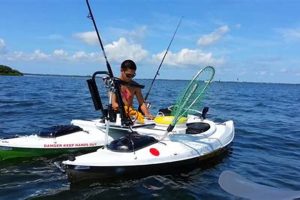
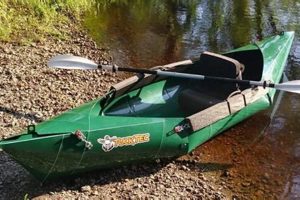
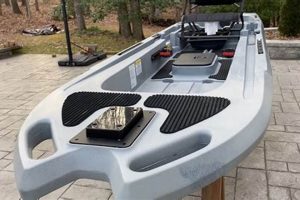
Folding kayaks, known for their portability and ease of storage, offer a unique approach to angling. These vessels allow anglers to reach secluded fishing spots often inaccessible by larger boats, while providing a stable and efficient platform for casting and reeling. The compact nature of these craft simplifies transportation and storage, making them a convenient option for individuals with limited space.
This style of angling offers several advantages. The low profile of these small watercraft provides a stealthy approach, minimizing disturbance to fish and increasing the likelihood of a successful catch. Their portability opens access to a wide range of fishing environments, from small ponds and rivers to larger lakes and coastal waters. The reduced cost compared to traditional boats and the minimal storage requirements make it an accessible and attractive option for many anglers. This growing trend reflects a desire for efficient and adaptable fishing experiences.
This article will further explore key aspects of angling from these portable vessels, including equipment choices, techniques for different species, and essential safety considerations for a rewarding and safe on-the-water experience.
Tips for Folding Kayak Fishing
Effective angling from a folding kayak requires careful planning and execution. These tips offer guidance for a successful and enjoyable experience.
Tip 1: Practice Deployment and Packing: Familiarization with the kayak’s assembly and disassembly process is crucial. Practice on dry land before venturing onto the water ensures smooth transitions and minimizes time spent on setup.
Tip 2: Prioritize Stability: Weight distribution is critical for maintaining balance. Gear should be evenly distributed and secured within the kayak to prevent shifting and maintain stability, especially during casting and reeling.
Tip 3: Choose Appropriate Paddles and Accessories: Select paddles designed for kayak fishing, considering factors like blade shape and length for efficient propulsion and maneuverability. Essential accessories like rod holders, anchor trolleys, and fish finders can enhance the fishing experience.
Tip 4: Plan Fishing Locations Strategically: Research potential fishing spots and consider factors like water depth, current, and accessibility. Folding kayaks offer access to shallow waters and secluded areas, providing unique angling opportunities.
Tip 5: Employ Stealth Techniques: The low profile of a kayak allows for a stealthy approach. Minimize noise and movement to avoid disturbing fish and increase the chances of a successful catch. Drifting quietly with the current can be particularly effective.
Tip 6: Prioritize Safety: Always wear a personal flotation device (PFD). Carry a communication device, inform someone of your fishing plans, and be aware of weather conditions. Understanding and following safety regulations is paramount.
Tip 7: Respect the Environment: Practice catch-and-release fishing whenever possible. Properly dispose of fishing line and other waste to minimize environmental impact and preserve the natural beauty of fishing locations.
By following these tips, anglers can maximize their folding kayak fishing experience, enjoying increased access to fishing locations, improved catch rates, and a deeper connection with the aquatic environment. Preparation and mindful practices are key to a successful and rewarding outing.
This information provides a foundation for a safe and productive experience. Further research and practice will enhance skills and knowledge, leading to greater enjoyment on the water.
1. Portability

Portability is a defining characteristic of Oru kayaks and a key driver of their popularity among anglers. The ability to transport and deploy these vessels in diverse environments significantly expands fishing opportunities and contributes to a more versatile and convenient angling experience. This section explores the multifaceted nature of portability in the context of Oru kayak fishing.
- Transportation and Storage
The foldable design of Oru kayaks allows them to be easily transported in vehicles, eliminating the need for trailers or roof racks. This compact form also simplifies storage, making them suitable for individuals with limited space, such as apartment dwellers or those without dedicated boat storage. The reduced logistical overhead associated with transportation and storage expands access to diverse fishing locations, from remote lakes to urban waterways.
- Reaching Remote Locations
Oru kayaks enable anglers to reach fishing spots inaccessible by larger boats. Their portability allows for traversing challenging terrain, carrying the folded kayak to secluded waters, opening up opportunities for unique and less pressured fishing experiences. This advantage is particularly valuable for anglers seeking pristine environments or targeting specific species found in hard-to-reach areas.
- Rapid Deployment and Breakdown
The relatively quick assembly and disassembly process of Oru kayaks further enhances their portability. While practice is required for efficient setup, the ability to transition from folded package to water-ready vessel in minutes minimizes downtime and maximizes fishing time. This ease of deployment and breakdown is especially beneficial for anglers who frequently change fishing locations or have limited time on the water.
- Multi-Modal Transportation
The portability of Oru kayaks extends beyond vehicular transport. Their lightweight design allows for carrying them short distances, enabling anglers to bypass obstacles or navigate terrain unsuitable for vehicles. This opens up possibilities for multi-modal transportation, combining driving, hiking, or even cycling to reach desired fishing spots. This adaptability further expands the range of accessible fishing locations.
The portability of Oru kayaks transforms the fishing experience, offering unparalleled access to a wider range of locations while simplifying transportation and storage. This core feature underpins the versatility and convenience of these vessels, contributing significantly to their appeal among anglers seeking efficient and adaptable fishing solutions.
2. Assembling/Disassembling

The assembling and disassembling process is integral to the Oru kayak fishing experience. Unlike traditional hard-shell kayaks, Oru kayaks’ foldable design necessitates these procedures before and after each use. This unique characteristic influences several aspects of the fishing experience, from transportation and storage to deployment speed and overall user experience. A thorough understanding of this process is essential for maximizing the benefits of Oru kayak fishing.
The assembly process, while initially requiring focused attention, becomes streamlined with practice. The origami-inspired folding system transforms a compact package into a rigid, seaworthy vessel. Efficiency in assembly translates directly to more time spent fishing and less time on setup. Conversely, a smooth disassembly process ensures efficient storage and transport after a fishing trip. Difficulties in either process can impact the overall enjoyment and practicality of Oru kayak fishing. For instance, an improperly assembled kayak can compromise stability and safety on the water, while a cumbersome disassembly process can be frustrating after a long day of fishing.
Mastering the assembling/disassembling process contributes significantly to the overall efficiency and enjoyment of Oru kayak fishing. Practice and familiarity with the specific model’s folding system are crucial for minimizing setup and breakdown times. This proficiency allows anglers to focus on the primary objective: fishing. Furthermore, understanding the nuances of the process, such as proper alignment and secure fastening, ensures the kayak’s structural integrity and safety on the water. Ultimately, efficient assembly and disassembly enhance the portability and convenience of Oru kayaks, making them a practical and rewarding choice for anglers seeking adaptable fishing solutions.
3. Stability

Stability is a critical factor in oru kayak fishing, directly influencing angling success and overall safety. The inherent design characteristics of these folding kayaks, while offering portability advantages, present unique stability considerations compared to traditional hard-shell kayaks. Understanding these nuances is crucial for a safe and productive fishing experience. Factors such as weight distribution, water conditions, and angler movements all play a role in maintaining equilibrium. Uneven weight distribution, for example, can create instability, increasing the risk of capsizing, particularly during casting or reeling. Similarly, challenging water conditions, such as strong winds or choppy waves, can further test a kayak’s stability. Anglers must adapt their movements and techniques to maintain balance in such situations.
The relatively narrow beam and lightweight nature of oru kayaks contribute to their maneuverability but also require careful attention to balance. Proper weight distribution is essential, with heavier items placed low and centrally within the hull. Sudden movements or leaning too far outside the kayak’s center of gravity can compromise stability. Experienced anglers often recommend practicing basic paddling and maneuvering techniques in calm water before venturing into more challenging conditions. This allows for developing a feel for the kayak’s stability characteristics and building confidence in handling various on-the-water scenarios. Furthermore, understanding how different fishing activities, such as casting and landing fish, affect stability is essential for maintaining balance and preventing accidental capsizes.
Maintaining stability in an oru kayak requires a combination of mindful weight distribution, controlled movements, and an understanding of the vessel’s inherent characteristics. Practicing essential paddling and fishing techniques in calm water builds confidence and prepares anglers for the dynamic nature of on-the-water environments. Prioritizing stability contributes significantly to both fishing success and, more importantly, angler safety. This knowledge empowers anglers to make informed decisions, adapt to changing conditions, and enjoy a more secure and productive oru kayak fishing experience.
4. Fishing Access

Fishing access represents a significant advantage of oru kayak fishing, expanding angling opportunities beyond the limitations of shore fishing and larger, less portable vessels. The compact, foldable nature of these kayaks allows anglers to transport them easily to a wider range of locations, including remote ponds, small streams, and protected coastal waters often inaccessible by traditional boats. This enhanced accessibility unlocks diverse fishing experiences, targeting various species in environments otherwise challenging to reach. For example, accessing a secluded upstream section of a river, ideal for trout fishing, becomes significantly easier with a portable, easily deployable oru kayak. Similarly, navigating shallow-water flats or exploring protected mangrove ecosystems, prime habitats for numerous fish species, is facilitated by the kayak’s shallow draft and maneuverability.
The portability and ease of deployment offered by oru kayaks directly translate to increased fishing access. Anglers are no longer limited to easily accessible shorelines or constrained by the logistical challenges of launching and retrieving larger boats. This expanded access has practical implications for both recreational and serious anglers. Recreational anglers gain the freedom to explore new waters and discover hidden fishing spots, enhancing the overall enjoyment and adventure aspect of the sport. For serious anglers, increased access equates to more opportunities for targeting specific species, exploring diverse fishing grounds, and potentially increasing catch rates. This accessibility advantage can be particularly significant in heavily pressured fisheries, where accessing less-fished areas can be key to a successful outing.
In conclusion, enhanced fishing access stands as a core benefit of oru kayak fishing. The kayak’s portability and ease of deployment open doors to a wider range of fishing environments, increasing opportunities for both recreational enjoyment and targeted angling. This advantage significantly contributes to the versatility and appeal of oru kayaks, empowering anglers to explore new waters and pursue diverse fishing experiences. This increased access, however, also necessitates responsible angling practices, including adherence to local regulations and respect for the environment, to ensure the sustainability of these valuable resources.
5. Storage
Storage considerations are integral to the practicality and appeal of oru kayak fishing. Unlike traditional rigid kayaks, oru kayaks’ foldable design allows for compact storage, a significant advantage for individuals with limited space. This characteristic eliminates the need for dedicated boat storage, such as garages or outdoor racks, making them a viable option for apartment dwellers or those with limited storage capacity. The reduced storage footprint simplifies logistics and expands the potential user base, making kayak fishing accessible to a broader demographic. For instance, an oru kayak can be conveniently stored in a closet, under a bed, or in the trunk of a car, eliminating the storage constraints often associated with traditional kayaks. This ease of storage also facilitates spontaneous fishing trips, as the kayak can be readily transported and deployed without requiring cumbersome pre-trip arrangements.
The impact of convenient storage extends beyond residential settings. The compact nature of folded oru kayaks allows for efficient storage in vehicles, facilitating transport to various fishing locations. This eliminates the need for roof racks or trailers, simplifying travel logistics and reducing transportation costs. This advantage becomes particularly relevant for anglers who frequently travel to different fishing destinations or reside in urban environments with limited parking and storage options. Furthermore, the compact storage footprint reduces security concerns compared to storing a rigid kayak outdoors, minimizing the risk of theft or damage. This added security simplifies ownership and contributes to the overall peace of mind associated with oru kayak ownership.
In summary, efficient storage is a defining feature of oru kayak fishing, directly impacting its accessibility and practicality. The foldable design’s compact storage footprint eliminates traditional storage constraints, making kayak fishing more convenient and appealing to a wider audience. This advantage simplifies transportation, reduces security concerns, and facilitates spontaneous fishing trips, contributing significantly to the overall positive experience associated with oru kayak ownership and use. The ease of storage, coupled with portability, positions oru kayaks as a versatile and practical option for anglers seeking efficient and adaptable fishing solutions, regardless of storage limitations.
6. Lightweight Design

Lightweight design is a crucial element in oru kayak fishing, significantly impacting portability, maneuverability, and overall user experience. Reduced weight simplifies transportation, deployment, and on-the-water handling, making these kayaks accessible to a broader range of anglers. This design characteristic directly influences various aspects of the fishing experience, from ease of carrying and launching to paddling efficiency and fatigue reduction during extended trips. Understanding the implications of lightweight design is essential for maximizing the benefits and enjoyment of oru kayak fishing.
- Transportation and Portability
The lightweight nature of oru kayaks simplifies transport to and from fishing locations. Eliminating the need for trailers or specialized roof racks, these kayaks can be easily carried by hand or transported in most vehicles. This portability expands access to remote or difficult-to-reach fishing spots, offering anglers greater flexibility in exploring diverse waterways.
- Deployment and Retrieval
Reduced weight significantly eases the deployment and retrieval process. Launching and landing become less physically demanding, allowing for quicker transitions between land and water. This efficiency is particularly advantageous for anglers fishing solo or in areas with limited launch access.
- On-the-Water Maneuverability
A lighter kayak translates to enhanced maneuverability on the water. Paddling effort is reduced, allowing for easier navigation through tight spaces, shallow waters, and challenging currents. This agility provides a distinct advantage when navigating complex waterways or pursuing agile fish species.
- Physical Exertion and Fatigue
The decreased weight minimizes physical exertion during both transport and paddling. This reduced strain allows anglers to fish longer with less fatigue, maximizing time on the water and enhancing the overall fishing experience, particularly during multi-day trips or extended paddling excursions.
The lightweight design of oru kayaks is integral to their portability, maneuverability, and overall user experience. This characteristic expands fishing access, simplifies deployment and retrieval, enhances on-the-water agility, and reduces physical exertion. These combined benefits contribute significantly to the appeal and practicality of oru kayak fishing, making it a versatile and accessible option for anglers of varying skill levels and physical capabilities. The emphasis on lightweight design underscores the focus on efficiency and user-friendliness, key principles underlying the oru kayak fishing experience.
Frequently Asked Questions about Oru Kayak Fishing
This section addresses common inquiries regarding oru kayak fishing, providing concise and informative responses to clarify potential concerns and misconceptions.
Question 1: How durable are Oru kayaks for fishing, considering their foldable design?
Oru kayaks are constructed from durable, high-quality materials designed to withstand regular use in various water conditions. While their foldable nature may appear less robust than traditional hard-shell kayaks, they are engineered for strength and resilience, capable of handling the demands of fishing activities.
Question 2: Are Oru kayaks stable enough for fishing activities like casting and reeling?
Stability in an Oru kayak relies heavily on proper weight distribution and angler technique. While generally stable, they require a mindful approach to balance, particularly during activities like casting. Practicing in calm water is recommended to develop a feel for the kayak’s stability characteristics.
Question 3: What types of fishing are Oru kayaks best suited for?
Oru kayaks’ portability and shallow draft make them well-suited for various fishing styles, including freshwater fishing in rivers and lakes, as well as inshore saltwater fishing in protected bays and estuaries. Their adaptability extends to diverse angling techniques, from casting and spinning to trolling and fly fishing.
Question 4: How much weight can an Oru kayak realistically hold for fishing gear and anglers?
Each Oru kayak model has a specified weight capacity, which includes the combined weight of the angler, fishing gear, and any additional equipment. Adhering to these weight limits is crucial for maintaining stability and ensuring safe operation. Consult the manufacturer’s specifications for the specific model’s weight capacity.
Question 5: What are the essential safety considerations for oru kayak fishing?
Standard kayak safety practices apply to oru kayak fishing. Wearing a personal flotation device (PFD) is paramount. Checking weather conditions before embarking, informing someone of fishing plans, and carrying a communication device are crucial safety precautions. Adhering to local boating regulations is also essential.
Question 6: How does the assembly/disassembly process impact the overall fishing experience?
While the assembly/disassembly process is unique to oru kayaks, it becomes streamlined with practice. Proficiency in these procedures minimizes setup and breakdown time, maximizing time spent fishing. However, it’s essential to allocate time for these processes and ensure proper assembly for optimal performance and safety.
Understanding these key aspects of oru kayak fishing contributes to a safer, more informed, and ultimately more rewarding experience. Thorough research and preparation are essential for maximizing the benefits of this unique and versatile angling platform.
Further exploration of specific oru kayak models and their features will aid in selecting the best option for individual angling needs and preferences. The next section delves into specific model comparisons and provides in-depth reviews to guide informed purchasing decisions.
Oru Kayak Fishing
This exploration of oru kayak fishing has highlighted key aspects of this specialized angling approach. From the portability and storage advantages inherent in the foldable design to the considerations of stability, fishing access, and the lightweight construction, the unique characteristics of these vessels shape the angler’s experience. The assembly and disassembly process, while requiring practice, contributes to the overall efficiency and portability of the system. Understanding these elements is fundamental to maximizing the benefits and addressing the inherent challenges of oru kayak fishing.
Oru kayak fishing represents a distinct approach to angling, offering both opportunities and challenges. Careful consideration of the discussed factors, combined with informed decision-making regarding kayak selection and responsible on-the-water practices, will contribute to a safe, productive, and ultimately rewarding fishing experience. Continued exploration of techniques and advancements in kayak design promises further evolution and refinement of this specialized angling method.