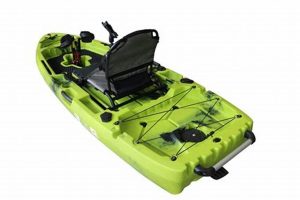
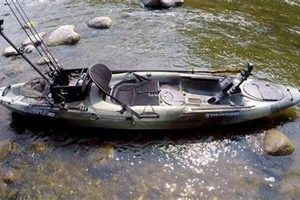
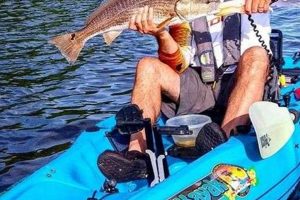
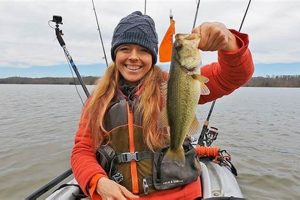
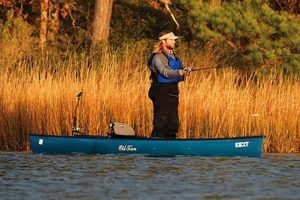
The choice between a small, human-powered vessel and a larger, motorized craft for angling presents distinct advantages and disadvantages depending on individual needs and preferences. Factors such as target species, fishing location (open ocean, lake, river), budget, and desired level of physical exertion influence this decision. For instance, a smaller, paddle-powered watercraft offers stealth and access to shallow waters, while a larger, engine-powered vessel allows for greater range and carrying capacity.
Selecting the appropriate watercraft significantly impacts fishing success and overall enjoyment. Historically, smaller, non-motorized vessels have been essential tools for subsistence fishing and continue to be popular for recreational fishing. Larger, motorized crafts emerged with advancements in engine technology, expanding opportunities for sport fishing and commercial ventures. This evolution underscores the enduring human fascination with utilizing watercraft for harvesting aquatic life. The decision impacts not only the practicality of fishing but also the angler’s connection with the environment.
This article will explore the key differences between these two primary categories of fishing watercraft, examining factors such as stability, maneuverability, cost, storage, and required equipment. A comprehensive analysis will empower anglers to make informed decisions based on their specific fishing styles and goals.
Tips for Choosing Between Kayaks and Boats for Fishing
Selecting appropriate fishing watercraft requires careful consideration of various factors. The following tips provide guidance for making an informed decision.
Tip 1: Assess Target Species and Fishing Location. Offshore fishing necessitates a larger, more stable vessel equipped for navigating open water. Conversely, smaller, nimble craft excel in shallow waters and rivers, ideal for targeting species like bass or trout.
Tip 2: Consider Budgetary Constraints. Smaller, non-motorized watercraft typically represent a lower initial investment and reduced maintenance costs compared to larger, motorized counterparts. Factor in expenses such as fuel, storage, and potential launch fees.
Tip 3: Evaluate Physical Capabilities and Preferences. Paddling requires a certain level of fitness and endurance. Motorized options offer convenience for those seeking a less physically demanding experience, especially for longer trips.
Tip 4: Prioritize Safety Equipment and Regulations. Life jackets are essential for all watercraft users. Navigation lights and other safety gear are often mandatory for larger vessels or specific bodies of water. Familiarize oneself with local regulations.
Tip 5: Determine Storage and Transportation Needs. Larger boats necessitate dedicated storage solutions, trailers, and towing vehicles. Smaller craft offer easier storage and transportation options.
Tip 6: Research Fishing-Specific Features. Rod holders, livewells, and fish finders are valuable additions to any fishing watercraft. Consider which features align with specific fishing styles and preferences.
Tip 7: Evaluate Stability and Maneuverability Requirements. Larger boats generally offer greater stability, while smaller craft excel in maneuverability, particularly in tight spaces like narrow creeks or among vegetation.
By carefully considering these factors, individuals can select fishing watercraft optimized for their needs, enhancing both safety and enjoyment on the water.
This comparative analysis facilitates informed decision-making, empowering anglers to choose the ideal platform for a successful and rewarding fishing experience.
1. Maneuverability

Maneuverability represents a critical factor in the kayak versus boat decision for anglers. The ability to navigate specific water environments directly impacts fishing success. Kayaks, due to their smaller size and lighter weight, generally offer superior maneuverability, especially in confined areas. Navigating tight creeks, maneuvering through dense vegetation, or approaching fish in shallow water without disturbance are tasks often better suited to a kayak. Boats, particularly larger models, require more space to turn and navigate. This can limit access to certain fishing grounds, particularly shallow or obstacle-filled areas. For example, pursuing bass in a densely vegetated pond favors the nimble nature of a kayak. Conversely, trolling in open water benefits from the stability and tracking of a larger boat.
The impact of maneuverability extends beyond simple navigation. It influences fishing techniques and presentations. A kayak allows for precise lure placement and subtle adjustments to fishing lines, advantageous when targeting wary fish in shallow, clear water. Quick turns and adjustments in position are easier to execute in a kayak, optimizing angling strategy for specific conditions. While larger boats may offer features like trolling motors for controlled movement, they lack the agility of a kayak in confined environments. Consider a scenario where an angler needs to quickly change position to follow a school of feeding fish; a kayak offers a clear advantage in responsiveness.
Understanding the connection between maneuverability and watercraft choice empowers anglers to select the appropriate vessel for their target species and fishing environment. While larger boats excel in stability and open-water performance, kayaks offer an edge in navigating tight spaces and executing precise fishing techniques. Recognizing the distinct advantages of each type of vessel in terms of maneuverability contributes significantly to a successful and rewarding fishing experience. The trade-off between maneuverability and stability often represents a central consideration in the kayak versus boat decision.
2. Stability
Stability plays a crucial role in the choice between kayaks and boats for fishing. The inherent design differences between these vessels significantly impact their stability characteristics, influencing angler safety, comfort, and fishing effectiveness. Kayaks, with their lower center of gravity and narrower profile, offer primary stability. They resist initial tipping but can capsize more easily if significant force is applied. Boats, generally wider and featuring deeper hulls, offer superior secondary stability. While initial tipping might feel more pronounced, they are more resistant to capsizing once leaned. This distinction is crucial for activities like standing while casting or fighting larger fish. For example, a kayak angler fishing in calm waters might value its initial stability for casting, while an angler battling strong currents or large fish in a boat would benefit from the secondary stability.
Several factors beyond hull design influence stability. Weight distribution within the vessel plays a significant role. Unevenly distributed gear in a kayak can compromise stability, while a boat’s larger size offers more tolerance for varied weight distribution. Environmental conditions, such as wind and waves, further impact stability. A kayak’s lower profile makes it more susceptible to wind and wave action, while a boat’s higher freeboard provides increased resistance. Anglers must consider the anticipated conditions when choosing between a kayak and a boat. For instance, fishing in protected bays favors a kayak, while venturing into open ocean necessitates a boat’s enhanced stability in rougher conditions.
Understanding the nuances of stability in kayaks versus boats is essential for making informed decisions about watercraft selection for fishing. Recognizing the trade-offs between primary and secondary stability, considering the impact of weight distribution and environmental factors, and evaluating the intended fishing activity are crucial for angler safety and fishing success. The choice hinges on balancing the need for maneuverability and stability based on the specific fishing environment and target species. Ultimately, prioritizing stability contributes to a more confident and enjoyable fishing experience.
3. Cost

Cost represents a significant factor influencing the choice between kayaks and boats for fishing. A comprehensive cost analysis extends beyond the initial purchase price, encompassing various recurring expenses and long-term financial considerations. Understanding the full financial implications of each option empowers anglers to make informed decisions aligned with their budgets and fishing goals.
- Initial Purchase Price
Kayaks typically represent a lower initial investment compared to boats. Entry-level fishing kayaks can be purchased for a fraction of the cost of even a small fishing boat. This difference reflects variations in materials, manufacturing processes, and included features. For example, a basic kayak might cost between $500 and $1500, while a similarly equipped small fishing boat could range from $5,000 to $20,000 or more. This initial price disparity often makes kayaks an attractive option for budget-conscious anglers.
- Recurring Expenses
Recurring expenses contribute significantly to the overall cost of ownership. Boats often incur higher recurring costs compared to kayaks. Fuel, maintenance (engine servicing, hull cleaning), insurance, registration fees, and potential mooring or storage fees contribute to ongoing boat ownership expenses. Kayaks, requiring no fuel and minimal maintenance, present a lower recurring cost profile. For instance, annual fuel costs for a boat can easily reach hundreds or even thousands of dollars, depending on usage, while kayak maintenance might involve occasional cleaning and minor repairs. These recurring costs significantly impact long-term affordability.
- Accessories and Gear
Essential accessories and gear add to the overall cost of both kayaks and boats. Fishing-specific equipment, such as rod holders, fish finders, and safety gear, represents an additional investment regardless of vessel choice. However, boats often require more specialized and expensive equipment, such as trolling motors, downriggers, and advanced navigation systems. Kayak anglers can often utilize more affordable and adaptable gear. Consider the cost of a high-quality fish finder, which could range from $200 to over $1000, impacting the overall budget for both kayak and boat anglers.
- Storage and Transportation
Storage and transportation contribute to the cost equation. Boats, particularly larger models, often require dedicated storage solutions, such as trailers, boat lifts, or marina slips, incurring additional expenses. Kayaks, due to their smaller size, offer more flexible storage options, often fitting in garages or on roof racks. Transportation costs also vary significantly. While kayaks can be transported on car roof racks, boats necessitate trailers and suitable towing vehicles, adding to fuel costs and potential maintenance expenses. These logistical considerations influence the overall cost profile of each option.
Considering all cost componentsinitial purchase price, recurring expenses, accessories, and storage/transportationprovides a complete financial picture. While kayaks often present a lower barrier to entry and reduced ongoing expenses, boats offer features and capabilities justifying higher costs for some anglers. Evaluating individual fishing needs, budget constraints, and long-term financial commitments facilitates informed decision-making, ensuring a balance between desired features and affordability. Ultimately, understanding the full financial implications associated with kayaks versus boats empowers anglers to make choices aligned with their individual circumstances and fishing goals.
4. Accessibility
Accessibility in fishing refers to the ease with which various fishing locations can be reached and utilized. The choice between a kayak and a boat significantly impacts accessibility, influencing the range of fishing opportunities available to an angler. Factors such as launch sites, transportability, and navigable waters play crucial roles in determining the overall accessibility afforded by each type of vessel.
- Launch Sites
Kayaks offer greater flexibility in launch sites. Their smaller size and lighter weight allow for launching from virtually any shoreline, including areas inaccessible to larger boats requiring developed ramps or docks. This advantage expands fishing opportunities, granting access to secluded coves, shallow rivers, and smaller bodies of water often beyond the reach of motorized vessels. For example, a kayak can be easily launched from a riverbank or a small beach, while a boat might require a trailer and a designated boat ramp, potentially limiting access to certain fishing spots.
- Transportability
Transportability considerations significantly impact accessibility. Kayaks offer convenient transport options, often fitting on car roof racks or within truck beds, eliminating the need for trailers and larger towing vehicles. This ease of transport expands the range of accessible fishing locations, allowing anglers to explore diverse waters further from home without the logistical constraints of transporting larger boats. For instance, an angler can easily transport a kayak to a remote mountain lake, whereas transporting a boat to the same location might pose significant challenges.
- Navigable Waters
The type of watercraft directly influences navigable waters. Kayaks, with their shallow draft and maneuverability, excel in shallow waters, navigating narrow creeks and traversing areas inaccessible to deeper-hulled boats. This capability opens up fishing opportunities in shallow-water environments, targeting species that inhabit these areas. Conversely, boats offer access to deeper waters and open ocean environments beyond the safe operating range of kayaks. Navigating a shallow, weedy marsh favors a kayak, while offshore fishing necessitates a boat capable of handling open water conditions.
- Physical Limitations
Physical limitations also play a role in accessibility. Kayaks, requiring paddling, may present challenges for individuals with certain physical limitations. Boats, offering motorized propulsion, provide a more accessible option for those unable to paddle extensively. Specialized adaptive equipment exists for both kayaks and boats, expanding fishing opportunities for individuals with disabilities. For instance, motorized kayaks and boats with wheelchair ramps offer solutions for anglers with mobility challenges, broadening access to the sport. Considering individual physical capabilities is crucial for choosing the most accessible watercraft.
The choice between a kayak and a boat directly impacts the accessibility of various fishing locations. Kayaks offer advantages in launch site flexibility, transportability, and shallow-water navigation. Boats provide access to deeper waters and offer solutions for those with physical limitations. Considering these factors alongside personal preferences and fishing goals enables informed decisions regarding the most suitable watercraft for maximizing fishing opportunities.
5. Storage

Storage considerations represent a key practical aspect of choosing between kayaks and boats for fishing. The size and type of watercraft significantly influence storage requirements, impacting logistical planning and overall cost of ownership. Evaluating storage options alongside fishing needs is essential for ensuring convenient and secure vessel storage.
- Space Requirements
Kayaks, due to their smaller size, present fewer storage challenges. Options range from indoor storage in garages or sheds to outdoor storage on racks or alongside houses. Boats, particularly larger models with trailers, require significantly more space, often necessitating dedicated outdoor storage or off-site storage facilities. The difference in space requirements directly impacts practical storage solutions and associated costs. A kayak can be easily stored in a standard garage, while a larger boat and trailer might require a dedicated parking space or a paid storage facility.
- Security
Securing watercraft against theft or damage is a crucial storage consideration. Kayaks, stored indoors, generally benefit from enhanced security compared to boats stored outdoors. However, both kayaks and boats require appropriate security measures, such as locks, alarms, and surveillance systems, depending on storage location and perceived risk. Storing a kayak inside a locked garage offers greater protection than storing a boat uncovered in a driveway. The level of security required influences storage choices and associated costs.
- Accessibility
Accessibility relates to the ease with which stored watercraft can be retrieved and prepared for use. Kayaks, often stored readily accessible, require less preparation time compared to boats, which may necessitate retrieving from storage facilities, mounting on trailers, and preparing for transport. Convenient access to stored vessels simplifies fishing logistics, reducing preparation time and enhancing overall enjoyment. Quickly loading a kayak onto a car roof rack from a garage offers greater convenience compared to retrieving a boat from a distant storage facility and preparing it for towing.
- Environmental Protection
Protecting watercraft from environmental elements during storage is essential for maintaining their condition and prolonging their lifespan. Kayaks and boats stored outdoors require protection from sun, rain, snow, and extreme temperatures. Covers, shelters, or climate-controlled storage facilities mitigate environmental damage, preserving the vessel’s integrity and minimizing maintenance needs. Storing a boat uncovered in direct sunlight can lead to fading and material degradation, while a covered kayak stored outdoors experiences less environmental impact. Appropriate environmental protection during storage contributes to long-term vessel preservation.
Storage considerations play a significant role in the kayak versus boat decision for fishing. Evaluating space requirements, security needs, accessibility preferences, and environmental protection measures alongside fishing objectives empowers anglers to make informed choices. Balancing convenience, security, and cost contributes to effective long-term watercraft management. Ultimately, addressing storage logistics enhances the overall fishing experience by ensuring the safe, secure, and convenient storage of essential equipment.
6. Propulsion
Propulsion methods represent a fundamental distinction between kayaks and boats, significantly impacting fishing experiences. Kayaks primarily rely on human power via paddles, offering advantages in stealth and maneuverability, ideal for approaching fish in shallow or quiet waters. This method, however, limits range and speed, restricting access to distant fishing grounds and demanding physical exertion. Boats offer diverse propulsion systems, including outboard motors, inboard motors, and electric trolling motors. These options provide greater speed and range, expanding access to distant fishing areas and reducing physical demands. Motorized propulsion, however, introduces noise and vibration, potentially disturbing fish and requiring fuel and maintenance. Consider trolling for pelagic fish miles offshore; a motorized boat becomes essential. Conversely, sight fishing in a shallow estuary favors a kayak’s quiet paddle propulsion.
The choice of propulsion system directly influences fishing techniques and target species. Kayak anglers often employ techniques requiring precise boat control and minimal disturbance, such as fly fishing or casting lures in shallow water. Boat anglers, utilizing motorized propulsion, can troll, drift fish, or employ techniques covering larger areas. The speed and range afforded by motorized boats enable targeting fast-moving pelagic species, while kayaks excel in pursuing fish in confined environments. For instance, a kayak angler might quietly paddle along a riverbank casting for trout, while a boat angler might troll for salmon in open water using downriggers and a powerful outboard motor. Each propulsion method offers distinct advantages and limitations, shaping the overall fishing experience.
Understanding the relationship between propulsion and fishing effectiveness is crucial for informed watercraft selection. Evaluating fishing locations, target species, desired fishing techniques, and personal physical capabilities informs propulsion system choices. Recognizing the trade-offs between stealth, range, speed, and physical exertion empowers anglers to select the most appropriate propulsion method for their individual fishing styles and goals. Ultimately, aligning propulsion with fishing objectives enhances efficiency, enjoyment, and success on the water.
7. Capacity

Capacity, encompassing both passenger and gear volume, represents a critical differentiator between kayaks and boats for fishing. Understanding capacity limitations and how they relate to fishing styles and preferences is essential for informed watercraft selection. Choosing a vessel with adequate capacity directly impacts comfort, safety, and the practicality of carrying necessary equipment.
- Passenger Capacity
Kayaks are typically designed for one or two passengers, although tandem models exist. This limitation restricts fishing outings to smaller groups or solo excursions. Boats, ranging from small skiffs to larger cabin cruisers, accommodate multiple passengers, enabling group fishing trips and social angling experiences. Consider a family fishing outing; a boat provides the necessary capacity, while a kayak limits participation. Passenger capacity directly influences the social dynamics and logistical planning of fishing excursions.
- Gear Capacity
Gear capacity significantly impacts fishing functionality. Kayaks offer limited storage for fishing gear, often requiring careful selection and packing of essential equipment. Rods, tackle boxes, and other necessities must fit within designated storage compartments or be secured to the deck. Boats provide significantly greater gear storage capacity, accommodating larger items like coolers, multiple rods, and specialized fishing equipment. This expanded capacity enables carrying diverse gear for various fishing techniques and targeting different species. An angler planning an extended multi-day fishing trip requires the ample storage capacity of a boat, while a kayak angler might prioritize lightweight, compact gear for shorter excursions.
- Weight Capacity
Weight capacity, encompassing both passengers and gear, is a crucial safety consideration. Exceeding weight limits compromises stability and increases the risk of capsizing or swamping. Kayaks have lower weight capacities compared to boats, limiting the combined weight of passengers and equipment. Boats, with higher weight capacities, offer greater flexibility in carrying heavier loads, including multiple passengers, ample gear, and larger catches. Respecting weight limitations is paramount for safe operation. Overloading a kayak can lead to instability and potential capsizing, while a boat’s higher weight capacity provides a greater margin of safety.
- Impact on Fishing Style
Capacity directly influences fishing styles and target species. Kayaks, with limited capacity, favor minimalist approaches and fishing techniques requiring less equipment, such as fly fishing or lure casting. Boats, with their greater capacity, accommodate specialized gear for diverse fishing styles, including trolling, deep-sea fishing, and drift fishing. Consider an angler targeting large pelagic fish; a boat with sufficient capacity for heavy tackle and fighting chairs becomes essential. Conversely, a kayak angler might focus on lightweight tackle and species accessible in shallower waters. Capacity considerations shape fishing strategies and influence target species selection.
Capacity considerations play a pivotal role in selecting appropriate fishing watercraft. Analyzing passenger needs, gear requirements, weight limitations, and desired fishing styles informs the choice between kayaks and boats. Matching capacity with fishing objectives enhances safety, efficiency, and overall enjoyment on the water. Ultimately, understanding the capacity implications of each vessel type empowers anglers to make informed decisions aligned with their individual or group fishing preferences and goals.
Frequently Asked Questions
This section addresses common inquiries regarding the choice between kayaks and boats for fishing.
Question 1: Which type of watercraft is better suited for beginners?
The ideal watercraft for beginners depends on individual circumstances and intended fishing locations. Kayaks offer a lower barrier to entry in terms of cost and required skills, particularly for calm, protected waters. Boats, while requiring more experience and investment, provide greater stability and capacity, potentially offering a more comfortable initial experience for some individuals. Prior experience with paddling or boating can influence this decision.
Question 2: What safety precautions should be considered when choosing between a kayak and a boat?
Safety is paramount regardless of watercraft choice. Life jackets are essential for all users. Kayakers should be prepared for potential capsizing and possess self-rescue skills. Boaters require familiarity with navigation rules, safety equipment operation, and emergency procedures. Weather conditions and water conditions should always be assessed before embarking on any fishing trip.
Question 3: How does fishing from a kayak differ from fishing from a boat?
Fishing from a kayak offers a closer-to-the-water experience, emphasizing stealth and maneuverability in shallow or confined areas. Fishing from a boat provides greater stability, capacity, and range, allowing access to deeper waters and diverse fishing techniques. The choice depends on target species, fishing location, and personal preferences.
Question 4: What are the primary cost considerations beyond the initial purchase price?
Recurring costs, including fuel, maintenance, storage, and insurance, contribute significantly to the overall expense of boat ownership. Kayaks generally incur lower recurring costs. Additional gear, such as fishing rods, tackle, and safety equipment, represents an investment regardless of watercraft choice. Transportation and storage solutions also impact overall expenses.
Question 5: How does the choice of watercraft impact environmental considerations?
Kayaks, being human-powered, offer a lower environmental impact compared to motorized boats, minimizing noise pollution and eliminating fuel emissions. Responsible boating practices, such as proper waste disposal and adherence to no-wake zones, are essential regardless of watercraft choice to minimize environmental impact and preserve aquatic ecosystems.
Question 6: What are the key factors to consider when choosing between a kayak and a boat for fishing specific species?
Target species and their preferred habitats significantly influence watercraft selection. Kayaks excel in shallow waters for species like bass or panfish, while boats are better suited for offshore fishing targeting larger pelagic species. The choice depends on the specific environment and fishing techniques employed to target the desired species.
Careful consideration of these factors empowers informed decision-making, ensuring a safe, enjoyable, and productive fishing experience tailored to individual needs and preferences.
For further guidance on selecting the appropriate fishing watercraft, consult local fishing regulations, experienced anglers, and reputable retailers.
Kayaks Versus Boats for Fishing
The decision between a kayak and a boat for fishing hinges on a comprehensive evaluation of individual needs, preferences, and intended fishing environments. Factors such as maneuverability, stability, cost, accessibility, storage, propulsion, and capacity significantly influence this choice. Kayaks offer advantages in shallow water accessibility, maneuverability, affordability, and ease of storage. Boats provide greater stability, capacity, range, and passenger comfort, particularly in open water or challenging conditions. Ultimately, no single watercraft type universally surpasses the other; the optimal choice aligns individual requirements with the specific demands of the chosen fishing style and target species.
Careful consideration of these factors empowers anglers to select the most appropriate vessel, enhancing both safety and enjoyment on the water. The evolving landscape of fishing watercraft design and technology continues to provide anglers with increasingly specialized options. A thorough understanding of the advantages and limitations of each watercraft type ensures informed decisions, maximizing fishing success and fostering a deeper appreciation for the diverse aquatic environments pursued.