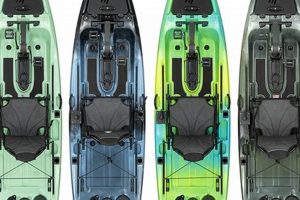
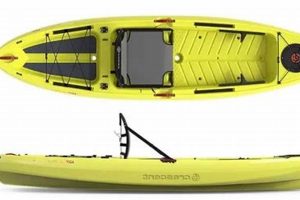
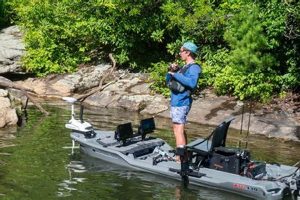
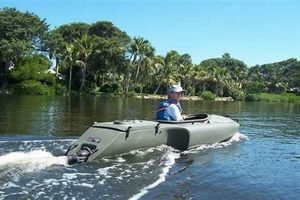
The suitability of kayaks designed for angling in river environments depends on several factors, including the specific characteristics of the kayak and the river itself. A well-equipped fishing kayak offers stability, storage for gear, and specialized features like rod holders and anchor trolleys. River conditions such as current speed, water depth, and the presence of obstacles like rocks or rapids must be considered when choosing a suitable vessel and planning a trip.
Employing appropriate watercraft for river fishing significantly enhances safety and angling success. A stable and maneuverable kayak allows anglers to access prime fishing locations often unreachable from the shore, while specialized features improve efficiency and comfort. Historically, river fishing relied heavily on shore-based techniques or less specialized boats. The development and refinement of fishing kayaks have opened up new possibilities for anglers, granting access to diverse river habitats and improving the overall fishing experience.
This discussion will further examine specific design elements that contribute to a kayak’s riverworthiness, exploring hull types, propulsion systems, and essential safety equipment. Different river classifications and their implications for kayak fishing will also be addressed, offering guidance for anglers of all skill levels. Finally, best practices for navigating river currents, handling various water conditions, and respecting river ecosystems will be covered.
Tips for River Kayak Fishing
Successful river kayak fishing requires careful planning and consideration of various factors. These tips offer guidance for selecting appropriate equipment and ensuring a safe and productive fishing experience.
Tip 1: Choose the Right Kayak: Select a kayak designed for stability in river currents. Wider, shorter kayaks offer greater stability, while longer kayaks track better in moving water. Consider inflatable kayaks for portability if accessing remote river locations.
Tip 2: Research River Conditions: Thoroughly research the river’s current speed, water depth, and potential hazards before embarking on a fishing trip. Check weather forecasts and water levels to ensure safe conditions.
Tip 3: Use Appropriate Safety Gear: Always wear a personal flotation device (PFD). Carry a whistle, first-aid kit, and communication device. Inform someone of your fishing plans and estimated return time.
Tip 4: Master Basic Kayak Skills: Practice paddling and maneuvering in calm water before venturing into river currents. Learn how to eddy turn, ferry, and recover from a capsize.
Tip 5: Employ Proper Anchoring Techniques: Utilize an anchor trolley system for efficient anchor deployment and retrieval in current. Consider using a stake-out pole for shallow-water anchoring.
Tip 6: Respect River Ecosystems: Avoid disturbing wildlife and sensitive riparian areas. Pack out all trash and fishing line. Adhere to all fishing regulations and licensing requirements.
Tip 7: Adapt to Changing Conditions: River conditions can change rapidly. Be prepared to adjust your fishing strategy or return to shore if necessary. Observe weather patterns and be aware of potential hazards.
By following these guidelines, anglers can maximize their enjoyment and success while promoting responsible river fishing practices.
This information provides a foundation for informed decision-making regarding river kayak fishing. Further research and practical experience will enhance angling skills and foster a deeper appreciation for river environments.
1. Stability

Stability stands as a critical factor in determining a fishing kayak’s suitability for river environments. A stable platform allows anglers to focus on fishing, rather than constantly battling to maintain balance, especially in moving water. This characteristic directly impacts not only safety but also fishing effectiveness.
- Primary Stability:
Primary stability refers to a kayak’s initial resistance to tipping. A wider, flatter hull design typically offers higher primary stability, making it ideal for calm rivers or slow-moving currents where anglers might stand to cast. This design provides a secure feeling and reduces the likelihood of tipping when stationary or making minor movements.
- Secondary Stability:
Secondary stability describes a kayak’s resistance to tipping at greater angles of lean. Kayaks with rounded or flared hulls often exhibit higher secondary stability, performing well in rougher water or faster currents. This design allows the kayak to lean into turns and recover effectively, inspiring confidence in challenging conditions.
- Impact of Gear and Movement:
The distribution of weight within a kayak significantly influences stability. Positioning gear low and evenly enhances stability. Sudden movements, like casting or landing a fish, can compromise stability if not anticipated and compensated for. Understanding weight distribution and practicing smooth, controlled movements are essential for maintaining balance.
- River Conditions and Stability:
River conditions, such as current speed and the presence of waves or obstacles, play a substantial role in stability requirements. Faster currents and turbulent water necessitate a kayak with higher stability, both primary and secondary. Anglers should choose a kayak that matches the anticipated river conditions to ensure safety and maximize fishing effectiveness. A kayak stable in a slow-moving stream might be unsuitable for navigating rapids or strong currents.
Ultimately, the appropriate level of stability depends on the intended fishing environment and angler preferences. A comprehensive assessment of these factors allows for informed selection, enhancing both safety and the overall fishing experience in rivers. Choosing a kayak with the right balance of primary and secondary stability for the specific river conditions is paramount for a successful and enjoyable outing.
2. Maneuverability

Maneuverability represents a critical factor in assessing a fishing kayak’s suitability for rivers. Effective maneuvering enables anglers to navigate diverse river conditions, access desirable fishing locations, and respond efficiently to changing circumstances. A highly maneuverable kayak contributes significantly to both safety and fishing success in dynamic river environments.
- Hull Design and Length:
Hull design significantly influences a kayak’s maneuverability. Shorter kayaks with a flatter hull tend to turn more quickly, making them well-suited for navigating tight bends and complex river structures. Longer kayaks, while offering better tracking in straight sections, may prove less agile in confined spaces. The choice depends on the specific characteristics of the river being fished.
- Turning Radius and Tracking:
A kayak’s turning radius, the space required to complete a turn, is a key measure of maneuverability. A smaller turning radius allows for quicker adjustments in direction, crucial for avoiding obstacles and navigating complex currents. Tracking, a kayak’s ability to maintain a straight course, is also important, particularly in open stretches of river.
- Current and Obstacle Negotiation:
Maneuverability becomes paramount when navigating river currents and obstacles. The ability to execute precise turns and maintain control in moving water is essential for avoiding hazards and reaching desired fishing spots. A highly maneuverable kayak enables anglers to effectively position themselves for optimal casting and fish retrieval.
- Wind and Water Conditions:
Wind and water conditions can significantly impact maneuverability. A kayak that handles well in calm water may become challenging to control in windy conditions or strong currents. Considering the prevailing conditions on the target river is essential when selecting a kayak. Features like rudders or skegs can enhance maneuverability in challenging environments.
The interplay of these factors determines a fishing kayak’s overall maneuverability in river environments. Selecting a kayak with appropriate maneuverability characteristics for the intended river conditions enhances angler safety, efficiency, and fishing success. Careful consideration of hull design, turning radius, and performance in varying wind and water conditions contributes to informed decision-making and a more rewarding river fishing experience.
3. Accessibility

Accessibility, in the context of river fishing kayaks, refers to the ability to reach desired fishing locations often inaccessible by other means. This capability significantly expands angling opportunities and contributes to the overall effectiveness of fishing kayaks in river environments. Evaluating accessibility involves considering factors such as portability, shallow water navigation, and the ability to traverse obstacles.
- Portability and Launch Sites:
Kayak portability directly influences accessible fishing locations. Lightweight kayaks, including inflatable models, facilitate transport to remote river sections or areas with limited launch site options. This portability expands the range of fishable water and allows anglers to explore areas beyond the reach of larger, less portable vessels. The ease of launching and retrieving the kayak also contributes to accessibility, particularly in areas with challenging terrain.
- Shallow Water Navigation:
The ability to navigate shallow water represents a key accessibility advantage of fishing kayaks. Their shallower draft compared to traditional boats allows access to shallow creeks, backwaters, and river margins often teeming with fish. This capability opens up prime fishing grounds otherwise inaccessible, significantly enhancing angling opportunities.
- Obstacle Negotiation:
Rivers often present obstacles such as fallen trees, submerged rocks, or narrow passages. A maneuverable fishing kayak, especially one with a shallow draft, allows anglers to navigate these obstacles and reach otherwise inaccessible fishing areas. This capability enhances exploration and expands fishing possibilities within the river system.
- Remote River Access:
Fishing kayaks provide access to remote river stretches often beyond the reach of motorized boats or shore-based fishing. Portability and the ability to navigate varying water depths and obstacles contribute to this expanded access. Anglers can explore pristine environments and potentially discover less-pressured fishing spots, enhancing the overall angling experience.
These facets of accessibility highlight the advantages of fishing kayaks in river environments. The ability to reach remote locations, navigate shallow water, and overcome obstacles significantly expands fishing opportunities and contributes to the effectiveness of kayaks as a fishing platform in rivers. By considering these accessibility factors, anglers can maximize their exploration potential and enhance their overall river fishing experience.
4. Storage Capacity

Storage capacity represents a crucial factor in determining a fishing kayak’s suitability for river environments. Adequate storage allows anglers to carry essential gear, tackle, safety equipment, and personal provisions, contributing significantly to both safety and fishing success during extended river trips. Insufficient storage can limit trip duration and compromise preparedness for changing conditions, underscoring the importance of carefully considering storage needs when selecting a fishing kayak for river use.
- Tackle and Gear Storage:
Dedicated storage compartments for tackle boxes, rods, reels, and other fishing gear contribute significantly to organization and efficiency on the water. Easily accessible storage allows for quick retrieval of necessary items, minimizing disruption during critical fishing moments. Features such as waterproof hatches and sealed compartments protect sensitive equipment from water damage, ensuring functionality throughout the fishing trip.
- Safety Equipment Storage:
Sufficient storage space for essential safety equipment, including a personal flotation device (PFD), first-aid kit, signaling devices, and communication tools, is paramount for safe river kayaking. Designated compartments keep these items readily accessible in case of emergencies, contributing to angler safety and preparedness. Secure storage also prevents loss or damage to critical safety equipment.
- Personal Provisions and Catch Storage:
Storage for personal items such as food, water, extra clothing, and a dry bag for electronics enhances comfort and preparedness during longer river trips. Designated compartments for storing caught fish, whether a live well or a cooler, maintain fish freshness and quality until returning to shore. Adequate storage for these provisions allows anglers to extend their time on the water and enjoy a more self-sufficient fishing experience.
- Weight Capacity and Distribution:
A kayak’s weight capacity dictates the total amount of gear and provisions that can be safely carried. Evenly distributing weight within the kayak is essential for maintaining stability and maneuverability. Exceeding the weight capacity can compromise safety and performance, highlighting the importance of considering both storage capacity and weight distribution when packing for a river fishing trip.
The interplay of these storage considerations directly impacts the practicality and effectiveness of a fishing kayak in river environments. Ample and well-designed storage contributes to angler preparedness, safety, and overall fishing success. Careful evaluation of storage needs and features before selecting a kayak allows anglers to optimize their river fishing experience and ensure they are adequately equipped for the challenges and opportunities presented by river environments.
5. Specialized Features

Specialized features significantly influence a fishing kayak’s suitability for river environments. These design elements enhance angler efficiency, safety, and overall fishing success. Features tailored for angling differentiate fishing kayaks from recreational models, optimizing their performance in river settings. The presence and quality of these features directly impact an angler’s ability to effectively fish in rivers, contributing significantly to the overall evaluation of a kayak’s river suitability.
Several key features contribute to this enhanced functionality. Rod holders secure fishing rods, freeing hands for paddling, landing fish, or other tasks. Anchor trolleys allow controlled anchor deployment and retrieval, crucial for maintaining position in currents. Tackle storage systems keep essential gear organized and readily accessible. Foot-controlled rudder systems aid in precise maneuvering and navigation, particularly in challenging currents. These features, while not universally essential, significantly improve the fishing experience in river environments. For example, an angler fishing in a fast-flowing river benefits significantly from a well-designed anchor trolley system and strategically placed rod holders. Similarly, ample tackle storage facilitates efficient lure changes and ensures essential gear remains readily available.
The integration of specialized features exemplifies the evolution of kayak design to meet the specific demands of river fishing. These features address the challenges and opportunities presented by river environments, enhancing both angler performance and safety. While a basic kayak can be used in rivers, specialized features optimize the experience and contribute to a more productive and enjoyable outing. Consideration of these features is essential when evaluating a kayak’s suitability for specific river fishing applications, allowing anglers to select a vessel tailored to their needs and the demands of the targeted river environment. Understanding the function and benefits of these features allows for informed decision-making and enhances the overall river fishing experience.
Frequently Asked Questions
This section addresses common inquiries regarding the suitability and effective use of fishing kayaks in river environments. Clear and concise responses aim to provide comprehensive information for informed decision-making.
Question 1: Are sit-on-top kayaks suitable for river fishing?
Sit-on-top kayaks offer inherent advantages in river environments due to their self-bailing design and ease of re-entry after a capsize. However, they may provide less protection from cold water and offer limited dry storage compared to sit-inside kayaks.
Question 2: How does river current speed affect kayak selection?
Faster currents necessitate kayaks with enhanced stability and maneuverability. Longer kayaks with tracking keels or rudders perform well in strong currents, while shorter, wider kayaks offer better control in slower-moving water.
Question 3: What safety precautions are essential for river kayak fishing?
Wearing a personal flotation device (PFD) is paramount. Carrying a whistle, first-aid kit, communication device, and informing someone of trip plans are also crucial safety measures.
Question 4: Are inflatable kayaks appropriate for river use?
Inflatable kayaks offer portability and durability, making them suitable for certain river environments. However, their performance in strong currents or around sharp obstacles requires careful consideration.
Question 5: How does one choose the correct paddle length for river kayaking?
Paddle length depends on factors such as kayak width, angler height, and paddling style. Consulting kayak and paddle manufacturers’ recommendations provides guidance for appropriate sizing.
Question 6: What essential gear should be carried on a river fishing kayak?
Essential gear includes fishing tackle, appropriate clothing, safety equipment, navigation tools, and provisions for hydration and sun protection. Specific gear requirements vary based on trip duration and river conditions.
Careful consideration of these frequently asked questions assists in informed decision-making regarding fishing kayak selection and safe river practices. Further research and consultation with experienced anglers can provide additional insights for optimizing river fishing experiences.
The following section will delve into specific kayak features ideal for river fishing, offering further guidance for selecting the appropriate vessel for individual needs and river conditions.
Conclusion
Suitability of fishing kayaks for rivers depends on a complex interplay of factors. Kayak characteristics, including stability, maneuverability, accessibility, storage capacity, and specialized features, must align with the specific river conditions, such as current speed, water depth, and potential hazards. A thorough assessment of these elements is crucial for ensuring angler safety and maximizing fishing success. Matching kayak capabilities to the intended river environment allows for efficient navigation, access to prime fishing locations, and effective management of gear and equipment.
Careful consideration of these factors empowers informed decision-making regarding kayak selection and promotes responsible river fishing practices. Continued exploration of kayak design advancements and a deeper understanding of river dynamics will further enhance angling experiences and foster greater appreciation for these valuable ecosystems. Ultimately, informed choices contribute to both angler safety and the long-term preservation of river environments.