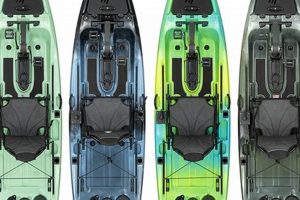
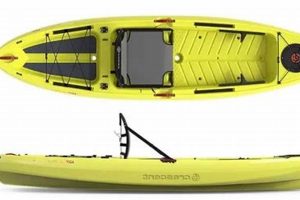
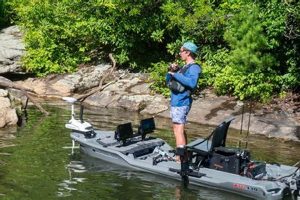
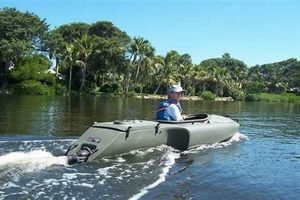
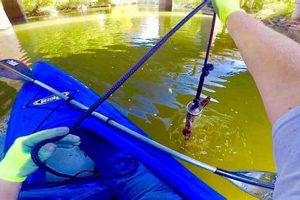
This specific type of small, human-powered watercraft is designed for angling activities. Its stability, maneuverability, and specialized features like rod holders and storage compartments cater to the needs of anglers in various aquatic environments.
Such vessels offer significant advantages for fishing enthusiasts. Their compact size allows access to shallow waters and confined areas often teeming with fish but inaccessible to larger boats. The angler’s low position on the water provides a stealthy approach, minimizing disturbance and maximizing chances of a successful catch. Furthermore, the inherent portability of these craft often eliminates the need for trailers and boat ramps, expanding fishing opportunities.
This exploration of specialized watercraft for angling leads naturally to discussions of optimal equipment selection, effective fishing techniques from these platforms, and the growing popularity of human-powered fishing.
Tips for Angling from Small, Specialized Kayaks
Maximizing success and safety when fishing from compact, sit-on-top kayaks requires careful planning and execution. The following tips offer guidance for anglers of all skill levels.
Tip 1: Prioritize Stability: Weight distribution is crucial. Centering gear and maintaining a low center of gravity enhances balance and reduces the risk of capsizing. Consider using stabilizers for added security, especially in challenging conditions.
Tip 2: Choose Appropriate Paddles: A paddle of suitable length and blade shape improves efficiency and reduces fatigue. Shorter paddles are generally preferred for maneuverability in tight spaces.
Tip 3: Utilize Specialized Equipment: Anchor systems designed for shallow water and rod holders positioned for easy access enhance fishing effectiveness. A fish finder and GPS unit can greatly improve catch rates.
Tip 4: Practice Essential Safety Procedures: Always wear a personal flotation device. Carry a communication device and inform someone of the intended fishing location and return time. Check weather forecasts before embarking.
Tip 5: Master Kayak Control: Practice maneuvering the kayak efficiently using forward and reverse strokes, as well as turning techniques. Proficiency in these skills allows for precise positioning in desired fishing spots.
Tip 6: Respect Wildlife and the Environment: Adhere to catch and release guidelines where appropriate. Dispose of fishing line and other waste responsibly to minimize environmental impact.
Tip 7: Learn Basic Kayak Maintenance: Regularly inspect and clean the kayak. Address any damage promptly to ensure optimal performance and longevity.
By adhering to these guidelines, anglers can significantly enhance their fishing experience from these specialized watercraft, maximizing both enjoyment and safety.
These practical tips provide a foundation for successful angling. Further exploration of advanced techniques and specific fishing strategies will be addressed in subsequent sections.
1. Stability

Stability represents a critical performance characteristic in fishing kayaks, directly influencing angler safety, comfort, and fishing effectiveness. A stable platform enables anglers to cast confidently, hook and land fish effectively, and remain secure in various water conditions. For a Tamarack fishing kayak, stability derives from factors like hull design (wider hulls generally offer greater initial stability), weight capacity, and the angler’s center of gravity. A kayak designed with a lower center of gravity and a wider beam tends to resist tipping, inspiring confidence, particularly for anglers new to kayak fishing. For instance, a wider, flatter hull design provides a stable platform even when encountering unexpected wakes from passing boats or changing water currents. This stability is particularly crucial when standing to cast, a technique gaining popularity among anglers for improved visibility and casting range.
Consider an angler fishing in moderately choppy conditions. A highly stable Tamarack fishing kayak allows the angler to focus on fishing rather than constantly adjusting balance. This stability translates to more efficient casting, improved hook sets, and a reduced risk of capsizing when battling a strong fish. Conversely, an unstable kayak can lead to angler fatigue, missed opportunities, and potentially dangerous situations. This underscores the importance of selecting a kayak with appropriate stability characteristics for the intended fishing environment and the angler’s experience level. Specialized features such as outriggers can further enhance stability, allowing anglers to venture into more challenging conditions with confidence.
In summary, stability represents a fundamental aspect of a Tamarack fishing kayak’s performance. Its importance cannot be overstated, influencing angler safety, comfort, and fishing success. Understanding the factors contributing to stability and choosing a kayak with suitable stability characteristics are essential steps for any angler seeking a positive and productive on-water experience. This principle of stability applies not just to stillwater fishing, but also to river fishing, where stability is essential for navigating currents and avoiding capsizing in turbulent waters.
2. Maneuverability

Maneuverability represents a critical performance attribute in fishing kayaks, particularly in environments requiring precise boat control. Its importance is amplified when navigating tight quarters, such as shallow creeks, weed-choked areas, or swift-moving rivers. A highly maneuverable Tamarack fishing kayak enables anglers to access prime fishing spots often inaccessible to larger, less agile watercraft. This discussion will explore key facets contributing to kayak maneuverability.
- Hull Design
Hull design significantly influences a kayak’s maneuverability. Shorter kayaks with a more rounded or rockered hull profile generally turn more quickly and efficiently. For example, a kayak with a pronounced rocker facilitates pivoting in place, while a flatter hull provides superior tracking in open water. Consider a scenario where an angler needs to navigate through a dense patch of lily pads. A shorter, rockered hull allows for quick turns and precise adjustments to avoid entanglement, maximizing fishing opportunities within these productive areas. Conversely, a longer, flatter hull designed for speed and stability in open water might struggle in such confined spaces.
- Paddle Length and Blade Shape
Paddle characteristics directly impact maneuverability. Shorter paddles offer greater control and quicker turning strokes, ideal for confined spaces. Blade shape also plays a role; asymmetric blades offer smoother, more efficient strokes, contributing to enhanced maneuverability. An angler using a shorter paddle with an asymmetric blade can navigate tight corners and quickly change direction with minimal effort. This becomes particularly advantageous when pursuing agile fish species or reacting to sudden changes in current or wind direction.
- Water Conditions
Prevailing water conditions influence maneuverability. Strong currents or winds can significantly impact a kayak’s responsiveness. Understanding how a particular kayak performs in various conditions is crucial for safe and effective navigation. For example, a kayak designed for calm lakes might struggle to maintain control in a swift river. In contrast, a river-specific kayak with a more streamlined hull design and pronounced rocker is better equipped to handle such conditions.
- Weight Distribution
Proper weight distribution within the kayak plays a crucial role in optimizing maneuverability. Evenly distributed weight improves balance and responsiveness, while uneven weight distribution can hinder turning performance. Consider an angler with gear piled high at the stern. This unbalanced load will make the kayak less responsive to turning strokes and more susceptible to being pushed off course by wind or current.
These facets contribute to the overall maneuverability of a Tamarack fishing kayak. Selecting a kayak with appropriate maneuverability characteristics for the intended fishing environment enhances angling effectiveness and safety. The interplay of hull design, paddle characteristics, and water conditions ultimately determines a kayaks ability to navigate effectively and position the angler for success.
3. Storage Capacity

Storage capacity represents a crucial factor influencing the functionality and practicality of fishing kayaks. Sufficient storage allows anglers to carry essential gear, including tackle boxes, rods, safety equipment, and personal items. The impact of storage capacity on fishing experience manifests in several ways. Ample storage reduces the need for multiple trips to and from the shore, maximizing time on the water. Organized storage improves efficiency by enabling quick access to necessary items without disrupting fishing flow. Furthermore, secure storage protects valuable equipment from water damage and loss. Consider an angler embarking on a multi-day fishing expedition. A kayak with substantial storage capacity allows for the transport of camping gear, food supplies, and extra clothing, enhancing self-sufficiency and extending the range of exploration. Conversely, limited storage can restrict fishing trips to shorter durations and closer proximity to shore, potentially impacting overall fishing success and enjoyment.
Specific design elements contribute to a fishing kayak’s storage capacity. Large, open hatches provide access to bulkier items. Smaller, sealed compartments protect sensitive electronics and personal belongings from water intrusion. Recessed areas, such as tank wells, secure larger items like coolers or crates. Rod holders, integrated into the kayak’s design, provide dedicated storage for fishing rods, keeping them readily accessible while preventing entanglement. The location and accessibility of storage compartments also play a crucial role. Easy-to-reach compartments allow anglers to retrieve items without compromising balance or stability, essential for safety and efficient fishing practices. For instance, a well-placed tackle storage compartment within easy reach allows for quick lure changes without disrupting fishing rhythm or requiring awkward movements. Well-designed storage systems contribute not only to convenience but also to safety by minimizing the need for disruptive movements while on the water.
In summary, adequate storage capacity contributes significantly to the overall utility and enjoyment of a Tamarack fishing kayak. Careful consideration of storage needs, design features, and accessibility ensures anglers can carry essential equipment comfortably and efficiently. This, in turn, enhances fishing effectiveness, extends trip duration, and contributes to a more positive and productive on-water experience. Selecting a kayak with appropriate storage capacity directly addresses the practical demands of angling, enabling anglers to focus on the pursuit of their target species rather than logistical challenges.
4. Comfort and Ergonomics

Comfort and ergonomics represent critical factors influencing angler performance and enjoyment, particularly during extended fishing trips. An uncomfortable kayak can lead to fatigue, discomfort, and even pain, detracting from the overall fishing experience and potentially shortening time on the water. Ergonomic design, tailored to the human body, promotes efficient paddling, reduces strain, and enhances overall comfort. Consider the impact of seat design. A well-designed seat, providing adequate lumbar support and cushioning, promotes proper posture and reduces back strain during long hours on the water. Adjustable features, such as foot braces and backrest positioning, allow for customization based on individual body dimensions, further enhancing comfort and reducing the risk of musculoskeletal issues. For example, an angler with longer legs can adjust the foot braces to achieve optimal leg extension, promoting efficient paddling and reducing fatigue.
Practical implications of ergonomic design extend beyond mere comfort. Proper ergonomics contribute directly to fishing effectiveness. A comfortable and well-supported angler can maintain focus and react quickly to fishing opportunities. Reduced fatigue allows for longer fishing sessions, increasing the chances of success. Consider an angler battling a strong fish. A stable and comfortable seating position allows the angler to exert maximum leverage and maintain control during the fight, increasing the likelihood of landing the fish. Conversely, an uncomfortable seating position can compromise balance and control, potentially leading to a lost fish or even a capsize. Furthermore, ergonomic features such as adjustable rod holders and strategically placed storage compartments minimize unnecessary movements and strain, allowing the angler to concentrate on fishing rather than logistical challenges.
In summary, comfort and ergonomics represent essential considerations in fishing kayak design. These factors directly impact angler comfort, performance, and overall enjoyment. A well-designed kayak, incorporating ergonomic principles, promotes efficient paddling, reduces fatigue, and enhances fishing effectiveness. Understanding the importance of comfort and ergonomics and selecting a kayak with appropriate features contribute significantly to a positive and productive fishing experience. This understanding translates to longer, more enjoyable, and ultimately more successful fishing trips.
5. Durability and Construction

Durability and construction represent critical factors influencing the lifespan, performance, and safety of a fishing kayak. The materials used, construction methods employed, and overall design significantly impact the kayak’s ability to withstand the rigors of on-water use, including exposure to UV radiation, impacts with rocks or submerged objects, and the stresses of repeated paddling and loading. A durable kayak ensures long-term reliability, minimizing the need for repairs and replacements. Robust construction translates to enhanced safety, providing a secure platform even in challenging conditions. For instance, a kayak constructed from high-density polyethylene (HDPE) using a rotomolding process exhibits superior impact resistance and durability compared to a kayak made from lower-grade materials or using less robust construction techniques. This durability becomes particularly crucial when navigating rocky rivers or shallow coastal areas, where impacts are more likely to occur. Furthermore, reinforced areas, such as the keel and stern, enhance the kayak’s ability to withstand abrasion and impacts from dragging or grounding.
The practical implications of durable construction extend beyond mere longevity. A well-constructed kayak maintains its structural integrity over time, preserving performance characteristics such as stability and maneuverability. This consistency ensures a predictable and enjoyable paddling experience throughout the kayak’s lifespan. Consider a kayak used frequently in saltwater environments. A kayak constructed from marine-grade materials and incorporating corrosion-resistant hardware will resist the degrading effects of saltwater exposure, maintaining its structural integrity and performance characteristics over time. Conversely, a kayak constructed from less durable materials might experience corrosion, weakening the hull and compromising its seaworthiness. Furthermore, the quality of construction influences the kayak’s ability to withstand the stresses of repeated use and loading. Reinforced seams, robust hatches, and durable deck rigging contribute to the kayak’s overall structural integrity, ensuring long-term reliability and performance.
In summary, durability and construction represent fundamental aspects of a fishing kayak’s overall quality and value. These factors directly impact the kayak’s lifespan, performance, and safety. Selecting a kayak constructed from durable materials using proven construction techniques ensures long-term reliability, minimizes maintenance requirements, and enhances safety on the water. This understanding enables informed purchasing decisions, leading to a more satisfying and dependable ownership experience. The long-term benefits of investing in a durable, well-constructed kayak outweigh any perceived short-term cost savings associated with less robust alternatives.
6. Specialized Features (Rod Holders, etc.)

Specialized features distinguish fishing kayaks from recreational models, optimizing them for angling activities. These features enhance efficiency, convenience, and overall fishing success. Careful consideration of these specialized features is crucial when selecting a Tamarack fishing kayak, ensuring the kayak aligns with individual angler needs and preferences. The following facets illustrate the importance and practical application of specialized features.
- Rod Holders
Rod holders secure fishing rods, freeing hands for paddling, landing fish, or other tasks. Various rod holder types exist, including flush-mounted, adjustable, and rotating holders. The number and placement of rod holders significantly impact fishing versatility. For instance, multiple rod holders allow anglers to troll with various lures or quickly switch between different fishing techniques. An angler targeting different species might utilize one rod for bottom fishing and another for topwater lures. Securely mounted rod holders prevent rod loss or damage while navigating challenging waters or battling strong fish.
- Tackle Storage
Dedicated tackle storage compartments keep essential gear organized and readily accessible. These compartments vary in size, configuration, and location, accommodating different tackle storage systems. Waterproof compartments protect sensitive items from moisture damage. Efficient tackle organization streamlines lure changes and terminal tackle adjustments, maximizing fishing time and minimizing disruptions. An angler searching for a specific lure can quickly locate it in a well-organized tackle storage system, maintaining fishing momentum and avoiding wasted time rummaging through disorganized gear.
- Anchor Systems
Anchor systems, including anchor trolleys and stake-out poles, maintain kayak position in desired fishing locations. These systems are particularly valuable in current or wind, preventing drift and allowing anglers to focus on fishing. Anchor trolleys allow for controlled drifting along a specific line, while stake-out poles provide secure anchoring in shallow water. An angler fishing in a river can utilize an anchor trolley to maintain position relative to a productive eddy or structure, maximizing fishing effectiveness. Similarly, a stake-out pole allows for stable fishing in shallow flats or near shoreline vegetation.
- Other Specialized Features
Other specialized features further enhance fishing kayak functionality. These include paddle parks or leashes, which secure paddles when not in use; rudders or skegs, which improve tracking and control in wind or current; and fish finders or GPS units, which enhance fish location and navigation. These features contribute to a more streamlined, efficient, and enjoyable fishing experience. A paddle park keeps the paddle secure and readily accessible when fighting a fish, while a rudder assists in maintaining course in windy conditions. A fish finder provides valuable underwater insights, aiding in the identification of promising fishing spots and increasing the likelihood of a successful catch.
These specialized features, integrated into the design of Tamarack fishing kayaks, distinguish them from recreational kayaks and significantly enhance angling effectiveness. Careful consideration of these features, in conjunction with other key kayak characteristics such as stability and maneuverability, ensures anglers select the optimal kayak for their specific needs and fishing style. The strategic integration of these features streamlines the fishing process, improves efficiency, and ultimately contributes to a more successful and rewarding on-water experience.
Frequently Asked Questions
This section addresses common inquiries regarding specialized fishing kayaks, providing concise and informative responses.
Question 1: What differentiates a fishing kayak from a recreational kayak?
Fishing kayaks feature specialized design elements, including rod holders, tackle storage, and anchor systems, optimizing them for angling activities. Recreational kayaks prioritize stability and comfort for general paddling purposes.
Question 2: How is stability determined in a fishing kayak?
Stability is influenced by hull design, width, and the angler’s center of gravity. Wider hulls generally offer greater initial stability. Weight distribution also plays a crucial role.
Question 3: What factors influence kayak maneuverability?
Maneuverability is affected by hull design, paddle length and blade shape, water conditions, and weight distribution. Shorter kayaks with rockered hulls typically exhibit enhanced maneuverability in confined spaces.
Question 4: What storage features are essential in a fishing kayak?
Essential storage features include dedicated compartments for tackle boxes, rod holders for secure rod storage, and dry storage for protecting sensitive electronics and personal items.
Question 5: How do comfort and ergonomics impact the fishing experience?
Ergonomic seating, adjustable foot braces, and strategically placed features minimize fatigue and strain, allowing for extended fishing sessions and enhanced focus. Comfort directly impacts performance and enjoyment.
Question 6: Why are durability and construction important in a fishing kayak?
Durable construction, utilizing high-quality materials and robust construction techniques, ensures longevity, withstands the rigors of on-water use, and enhances safety in challenging conditions.
Addressing these frequently asked questions provides a foundational understanding of specialized fishing kayaks, enabling informed decision-making and enhancing the overall fishing experience.
This FAQ section serves as a starting point for further exploration of specialized fishing kayak features, benefits, and selection criteria.
Conclusion
This exploration has delved into critical aspects of specialized fishing kayaks, emphasizing design elements that contribute to enhanced angling experiences. Stability, maneuverability, storage capacity, comfort, durability, and specialized features like rod holders and anchor systems all play pivotal roles in optimizing on-water effectiveness and enjoyment. The interplay of these factors dictates a kayak’s suitability for specific fishing environments and angler preferences. Understanding these elements empowers informed purchasing decisions, leading to a more rewarding and productive time on the water.
The pursuit of angling excellence necessitates careful consideration of equipment choices. Investing in a well-designed, purpose-built fishing kayak significantly enhances an angler’s ability to navigate diverse waters, access prime fishing locations, and ultimately, achieve greater success. As angling techniques and technologies continue to evolve, prioritizing these critical design elements will remain paramount in maximizing on-water experiences for anglers of all skill levels.