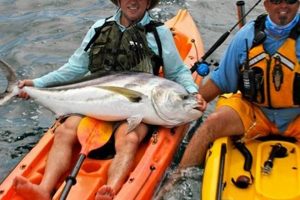
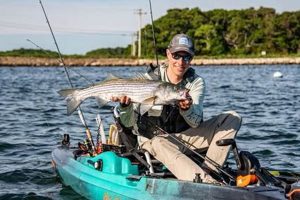
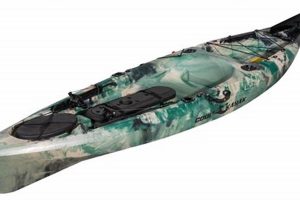
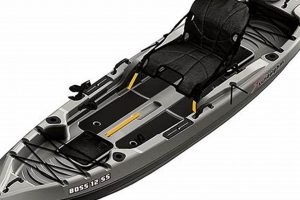
The Trophy 126 is a specific model of fishing kayak known for its stability and angler-focused features. These kayaks are often designed with ample storage for fishing gear, specialized seating for comfort during long hours on the water, and integrated rod holders and other accessories to enhance the fishing experience. They typically fall within the 12-foot length range, offering a balance between maneuverability and tracking performance suitable for various water conditions.
A well-equipped and appropriately sized watercraft is essential for anglers seeking to combine their passion with exploration. The stability and specialized design features of this class of kayak offer improved casting accuracy and overall fishing success. This type of kayak can enhance safety and comfort, allowing anglers to focus on their technique and enjoy their time on the water. The evolution of kayak design has led to increasingly specialized models, catering to specific activities like fishing, demonstrating the growing recognition of the sport’s unique demands.
Further exploration of specific features, comparisons with other models, and user reviews can provide a more comprehensive understanding of this type of kayak and its suitability for various fishing styles and environments. Understanding the nuances of kayak design and features will equip anglers to make informed decisions and enhance their overall fishing experience.
Tips for Utilizing a Fishing Kayak
Maximizing the benefits of a fishing kayak requires careful consideration of various factors, from pre-trip planning to on-the-water techniques. The following tips offer guidance for enhancing safety and optimizing the fishing experience.
Tip 1: Pre-Trip Planning: Thorough research of the intended fishing location is crucial. Understanding water conditions, potential hazards, and local regulations can significantly impact safety and success. Consulting weather forecasts and familiarizing oneself with the area’s topography are essential steps in pre-trip preparation.
Tip 2: Safety First: Wearing a personal flotation device (PFD) is paramount for all kayaking excursions. Carrying essential safety equipment, such as a whistle, signaling device, and first-aid kit, is equally crucial. Informing someone of the planned fishing route and estimated return time adds another layer of safety.
Tip 3: Gear Organization: Efficient storage and readily accessible equipment are key to a productive fishing trip. Utilizing waterproof storage solutions and strategically organizing gear within the kayak can prevent clutter and enhance efficiency on the water.
Tip 4: Paddle Selection and Technique: Choosing an appropriate paddle length and mastering efficient paddling techniques are essential for conserving energy and navigating effectively. Proper paddling technique reduces fatigue and allows for longer and more enjoyable fishing excursions.
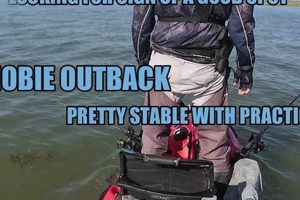
Tip 5: Kayak Stability and Balance: Understanding the kayak’s center of gravity and maintaining balance is crucial, especially when casting or retrieving fish. Practicing entering and exiting the kayak in shallow water can build confidence and enhance stability.
Tip 6: Respecting the Environment: Adhering to “leave no trace” principles is essential for preserving the natural environment. Proper disposal of fishing line and other waste materials contributes to the long-term health of the ecosystem.
By implementing these strategies, anglers can enhance their safety, improve their fishing effectiveness, and contribute to the preservation of natural resources. A thoughtful and prepared approach to kayak fishing ensures a more rewarding and sustainable experience.
These tips provide a foundation for successful kayak fishing. Further research and practice will contribute to a deeper understanding of the nuances of this rewarding outdoor activity.
1. Stability

Stability is a critical factor in kayak fishing, directly influencing angler safety, comfort, and fishing effectiveness. For the Trophy 126, stability considerations are paramount due to the activities typically undertaken while on the water, such as casting, retrieving fish, and navigating various water conditions.
- Primary Stability:
Primary stability refers to the kayak’s initial resistance to tipping when at rest. A wider hull and lower center of gravity contribute to greater primary stability. This characteristic is essential for maintaining balance while casting and retrieving, particularly for anglers new to kayak fishing or those fishing in calm conditions. The Trophy 126’s design prioritizes primary stability for a secure and predictable platform.
- Secondary Stability:
Secondary stability refers to the kayak’s resistance to tipping further once it’s leaned past its initial stability point. Kayaks designed with a rounded hull often have greater secondary stability, allowing for more aggressive leaning and maneuvering. This characteristic is valuable in rougher water conditions or when engaging in activities that require shifting weight, such as fighting larger fish. Analysis of the Trophy 126’s secondary stability characteristics can provide insight into its performance in challenging environments.
- Contributing Factors:
Various factors influence kayak stability, including hull design (width, shape, and chines), weight distribution, and angler positioning. The Trophy 126’s design features contribute to its overall stability profile. For instance, the placement of seating and storage compartments plays a significant role in weight distribution and consequently, stability. An understanding of these factors empowers informed decisions regarding gear placement and angler movement within the kayak.
- Impact on Fishing Performance:
Enhanced stability translates to improved casting accuracy, more confident hook sets, and safer handling of larger fish. The Trophy 126’s stability characteristics directly contribute to its effectiveness as a fishing platform. For example, maintaining balance in challenging conditions allows anglers to focus on fishing technique rather than maintaining equilibrium. This translates to a more enjoyable and productive fishing experience.
The Trophy 126’s stability profile is a core component of its overall performance and suitability for fishing. A comprehensive understanding of its stability characteristics, combined with an awareness of environmental factors and individual paddling styles, enables anglers to maximize their fishing experience while prioritizing safety and comfort.
2. Storage Capacity

Storage capacity is a defining feature of the Trophy 126 fishing kayak, directly impacting its practicality and suitability for various fishing expeditions. Adequate storage facilitates organized gear management, enabling anglers to carry essential equipment, including tackle boxes, rods, reels, safety gear, and personal items. The impact of sufficient storage extends beyond mere convenience; it directly influences fishing efficiency and overall success. For instance, readily accessible tackle and tools allow for seamless transitions between fishing techniques and swift responses to changing conditions. Conversely, inadequate storage can lead to cluttered decks, hindering movement and increasing the risk of lost or damaged equipment. Consider a scenario where an angler needs to quickly change lures to adapt to shifting fish behavior. Ample, well-organized storage allows for a swift and efficient change, maximizing fishing time and potentially increasing catch rates. Conversely, limited storage might necessitate rummaging through gear, disrupting fishing flow and potentially missing opportune moments.
Several design elements contribute to the Trophy 126’s storage capacity. Dedicated compartments, such as front and rear storage hatches, offer secure and waterproof storage for larger items. Smaller compartments, often located within reach of the angler, provide quick access to frequently used items like pliers, line cutters, and lures. Bungee cord systems secure items on the deck, ensuring gear remains within easy reach while preventing loss overboard. The strategic placement and design of these storage features reflect a focus on optimizing angler efficiency and maximizing on-the-water performance. For example, a large rear hatch accommodates bulky items like tackle boxes and coolers, while smaller, readily accessible compartments keep essential tools at hand. This thoughtful design facilitates organized gear management and contributes to a streamlined fishing experience.
Understanding the storage capacity of the Trophy 126 empowers anglers to make informed decisions regarding gear selection and organization. Evaluating personal fishing styles and anticipated needs allows for strategic packing and optimal utilization of available space. This preparation translates to enhanced efficiency on the water, contributing to a more focused and productive fishing experience. Furthermore, recognizing the limitations of storage capacity promotes responsible gear selection and prevents overloading the kayak, which could compromise stability and safety. The Trophy 126’s storage solutions, while generally well-regarded, should be evaluated in the context of individual angler needs and anticipated fishing scenarios.
3. Fishing Features
Dedicated fishing features distinguish the Trophy 126 from recreational kayaks, optimizing its performance for angling activities. These features represent a direct response to the specific needs of anglers, enhancing efficiency, comfort, and overall fishing success. Consider the cause-and-effect relationship between integrated rod holders and hands-free fishing. Rod holders allow anglers to troll lures or maintain multiple lines in the water simultaneously, increasing the likelihood of attracting fish. This seemingly simple feature directly impacts fishing outcomes. Similarly, strategically placed mounting tracks enable customization with fish finders and other electronic accessories, improving the angler’s ability to locate fish and understand underwater terrain. This customization potential is a key component of the Trophy 126’s appeal to serious anglers.
The practical significance of these features becomes evident in real-world scenarios. Imagine an angler battling a strong fish. Having readily accessible gear, such as pliers secured to a nearby mounting point, allows for efficient hook removal and release, minimizing stress on the fish and maximizing the angler’s time in the water. Similarly, adjustable footrests contribute to paddling efficiency and stability, crucial factors when navigating currents or maintaining position while fishing. These features, while seemingly minor, collectively contribute to a significantly enhanced fishing experience. Consider the scenario of an angler fishing in challenging conditions, such as windy weather or strong currents. A stable platform with strategically placed rod holders and readily accessible gear becomes crucial not only for fishing success but also for maintaining comfort and safety. The Trophy 126’s fishing-specific features are designed to address precisely these challenges.
Understanding the interplay between these features and their practical implications empowers anglers to maximize the Trophy 126’s potential. Recognizing the purpose and functionality of each feature, from rod holders to storage compartments, allows for strategic gear organization and efficient utilization of the kayak’s design. While the Trophy 126 offers a comprehensive suite of fishing features, individual anglers might prioritize certain features based on their specific fishing styles and target species. A thorough understanding of these features contributes to informed purchasing decisions and ultimately, a more rewarding and productive fishing experience.
4. Maneuverability
Maneuverability is a critical performance attribute for fishing kayaks, particularly in environments requiring precise navigation, such as shallow creeks, weed-choked areas, or rapidly changing currents. For the Trophy 126, maneuverability directly influences the angler’s ability to access prime fishing locations and respond effectively to changing conditions. The kayak’s responsiveness to paddle input and its ability to turn efficiently are key components of its overall maneuverability profile. Consider the cause-and-effect relationship between a shorter hull length and increased maneuverability. A shorter kayak generally rotates more quickly, allowing for sharper turns and greater agility in confined spaces. This characteristic is highly advantageous when navigating tight corners or pursuing fish in complex environments. Conversely, a longer kayak might offer superior tracking in open water but sacrifice maneuverability in tight quarters. The Trophy 126’s design seeks to balance these considerations, providing sufficient maneuverability for navigating diverse fishing locations.
The practical significance of maneuverability becomes evident in various fishing scenarios. Imagine navigating a narrow, winding creek choked with fallen logs and submerged vegetation. A highly maneuverable kayak allows the angler to navigate these obstacles effectively, accessing otherwise inaccessible fishing spots. Similarly, when pursuing fish in shallow water or near structures, the ability to quickly change direction is essential for maintaining optimal casting angles and staying in close proximity to the target. The Trophy 126’s maneuverability characteristics contribute to its versatility and suitability for diverse fishing environments. For example, its relatively shorter length compared to touring kayaks enhances its responsiveness in tight spots, while its hull design maintains sufficient tracking performance for open-water paddling. This balance is a key consideration for anglers who fish in a variety of locations.
Understanding the nuances of kayak maneuverability and its impact on fishing performance is crucial for informed decision-making. Factors influencing maneuverability include hull design (length, width, and shape), rudder systems (if equipped), and paddling technique. The Trophy 126’s maneuverability profile, while generally well-suited for its intended purpose, should be evaluated in the context of individual fishing styles and anticipated fishing locations. Recognizing the limitations of maneuverability in certain conditions, such as strong winds or fast currents, empowers anglers to make informed choices regarding fishing location selection and paddling strategies. Ultimately, a comprehensive understanding of maneuverability contributes to enhanced safety, increased fishing efficiency, and a more rewarding overall experience on the water.
5. Comfort

Comfort is a paramount consideration in fishing kayak design, directly impacting angler endurance, focus, and overall enjoyment. Extended periods on the water necessitate a comfortable seating arrangement and ergonomic design features to mitigate fatigue and enhance the fishing experience. For the Trophy 126, comfort considerations are crucial for maximizing fishing effectiveness and ensuring enjoyable outings. A comfortable angler is more likely to remain focused on fishing, react quickly to opportunities, and maintain energy levels throughout the day. Conversely, discomfort can lead to distraction, fatigue, and a shortened fishing trip.
- Seating System:
The Trophy 126’s seating system plays a pivotal role in overall comfort. Features such as adjustable backrests, breathable seat materials, and ample padding contribute to a supportive and comfortable seating posture. Consider the impact of proper lumbar support on long-term comfort. A well-designed backrest alleviates strain on the lower back, reducing fatigue and promoting proper posture, essential for extended periods of sitting. The Trophy 126’s seating system is designed to address these ergonomic considerations.
- Legroom and Footrests:
Adequate legroom and adjustable footrests are essential for maintaining proper posture and circulation. The ability to customize leg positioning accommodates anglers of varying heights and ensures comfortable paddling and casting positions. Imagine an angler with longer legs struggling to find a comfortable paddling position in a kayak with limited legroom. This restricted posture can lead to discomfort, cramping, and reduced paddling efficiency. The Trophy 126’s design addresses these concerns with adjustable footrests and ample legroom.
- Deck Design and Layout:
The Trophy 126’s deck layout contributes to overall comfort and fishing efficiency. A spacious, uncluttered deck provides ample room for angler movement and gear organization. Easy access to storage compartments and fishing accessories further enhances comfort and convenience. Consider a scenario where an angler needs to quickly retrieve a lure from a storage compartment. A well-designed deck layout allows for easy access without requiring awkward reaching or twisting, minimizing disruption and maximizing fishing time. The Trophy 126’s deck layout is designed with these practical considerations in mind.
- Stability and Handling:
While not directly related to seating or physical comfort, the kayak’s stability and handling characteristics contribute to a sense of security and confidence on the water, enhancing overall comfort and reducing anxiety. A stable platform minimizes the risk of tipping, allowing the angler to focus on fishing rather than maintaining balance. This sense of security contributes to a more relaxed and enjoyable experience. The Trophy 126’s stable hull design and predictable handling characteristics promote this sense of confidence and control.
The convergence of these comfort-focused features contributes significantly to the Trophy 126’s overall appeal and effectiveness as a fishing platform. A comfortable angler is a more effective angler, better able to focus on fishing technique, respond to opportunities, and enjoy extended time on the water. While individual comfort preferences vary, the Trophy 126’s design considerations address key ergonomic principles and offer a comfortable platform for a wide range of anglers. Evaluating these features in the context of individual needs and anticipated fishing conditions empowers informed purchasing decisions and contributes to a more rewarding and enjoyable fishing experience.
6. Durability

Durability is a critical factor influencing the lifespan and overall value of a fishing kayak, especially considering the demanding environments these vessels often endure. For the Trophy 126, durability translates to resilience against impacts, abrasion, UV exposure, and fluctuating temperatures. The kayak’s construction materials and manufacturing processes directly impact its ability to withstand these challenges. Cause and effect play a significant role in this context. For instance, a kayak constructed from high-density polyethylene (HDPE) is more likely to resist impacts and abrasion compared to a kayak made from a less durable material. This material selection directly influences the kayak’s long-term performance and resistance to wear and tear. The practical significance of this becomes apparent when considering the potential impacts encountered during transport, launching, and navigating various water conditions, including rocky shorelines, submerged logs, or abrasive sand. A durable kayak withstands these encounters, minimizing the risk of damage and ensuring a longer lifespan.
The Trophy 126’s durability contributes to its overall value proposition. A kayak capable of withstanding rigorous use represents a sound investment, minimizing repair costs and maximizing time on the water. Consider a scenario where a kayak is frequently dragged across rocky terrain during transport or launch. A durable hull material resists scratches and gouges, maintaining the kayak’s structural integrity and aesthetic appeal. This resistance to wear and tear translates to a longer lifespan and a higher resale value. Furthermore, UV resistance is crucial for kayaks exposed to prolonged sunlight. A kayak constructed from UV-resistant materials retains its color and structural integrity, preventing fading and cracking over time. This resistance to environmental factors further contributes to the kayak’s longevity and overall value.
Understanding the factors contributing to kayak durability empowers informed purchasing decisions and promotes responsible kayak maintenance. While the Trophy 126 is generally considered a durable kayak, proper care and storage further enhance its lifespan. Regular cleaning, proper storage practices, and prompt repairs of minor damage contribute to the kayak’s long-term performance and value retention. Furthermore, understanding the limitations of the kayak’s durability, such as its resistance to extreme temperatures or specific types of impact, allows anglers to make informed choices regarding usage and storage practices. Ultimately, prioritizing durability ensures a reliable and long-lasting fishing platform, maximizing the return on investment and contributing to countless hours of enjoyment on the water.
7. Performance

Performance, encompassing speed, tracking, and stability, is a critical factor influencing the overall effectiveness and enjoyment derived from a fishing kayak like the Trophy 126. This model’s performance characteristics directly impact its suitability for various fishing environments and techniques. Cause and effect relationships are evident in this context. For instance, a kayak with superior tracking capabilities covers greater distances with less effort, allowing anglers to reach distant fishing spots more efficiently. This directly impacts the range and scope of fishing opportunities. Conversely, a kayak lacking tracking performance might require constant course correction, leading to fatigue and reduced fishing time. The Trophy 126’s performance characteristics are designed to address these considerations, balancing speed, tracking, and stability for optimal on-the-water performance. The practical significance of this becomes apparent when considering real-world scenarios. Imagine an angler paddling against a strong current or wind. A kayak with efficient hull design and superior tracking minimizes the impact of these external forces, allowing the angler to maintain course and reach the intended destination with less effort. This enhanced performance translates to conserved energy and more time focused on fishing.
Further analysis reveals the interplay between performance characteristics and specific fishing techniques. A stable kayak is essential for stand-up fishing, allowing anglers to maintain balance while casting and retrieving. Similarly, a kayak with good maneuverability is crucial for navigating tight spaces and pursuing fish in complex environments like mangrove forests or shallow creeks. The Trophy 126’s performance profile is designed to cater to a variety of fishing styles, balancing stability, maneuverability, and tracking for versatile performance in diverse conditions. Consider an angler targeting fish in a fast-moving river. A kayak with excellent tracking and maneuverability allows the angler to maintain position and navigate complex currents effectively, maximizing fishing opportunities and ensuring a safe and productive experience. The Trophy 126’s performance attributes contribute to its suitability for such demanding environments.
Performance is a multifaceted attribute encompassing speed, tracking, stability, and maneuverability, all crucial for maximizing fishing success and enjoyment. While the Trophy 126’s performance is generally well-regarded, individual preferences and fishing styles influence the relative importance of these characteristics. Understanding these nuances empowers informed purchasing decisions and ensures the selected kayak aligns with individual needs and anticipated fishing environments. Addressing potential performance limitations in specific conditions, such as strong winds or challenging currents, enables anglers to adapt their techniques and maximize their on-the-water experience. Ultimately, prioritizing performance contributes to a more efficient, effective, and enjoyable fishing experience, allowing anglers to focus on what matters most: catching fish.
Frequently Asked Questions
This section addresses common inquiries regarding the Trophy 126 fishing kayak, providing concise and informative responses to facilitate informed decision-making.
Question 1: What differentiates the Trophy 126 from other fishing kayaks in its class?
The Trophy 126 distinguishes itself through a combination of stability, specialized fishing features, and a focus on angler comfort. Key differentiators often include its storage capacity, seating system, and integrated features like rod holders and mounting tracks.
Question 2: How does the Trophy 126 perform in various water conditions, such as calm lakes versus moving rivers?
The Trophy 126 generally performs well in a variety of conditions. Its stability contributes to confident performance in calm lakes, while its maneuverability and tracking capabilities allow for effective navigation in rivers with moderate currents. However, performance can be affected by extreme conditions like strong winds or fast-flowing water.
Question 3: What weight capacity and storage limitations should be considered when planning fishing expeditions with the Trophy 126?
Weight capacity specifications are available from the manufacturer and should be strictly adhered to for safety. Storage capacity, while ample, should be evaluated in the context of planned gear and supplies. Overloading can compromise stability and performance.
Question 4: What maintenance procedures are recommended to ensure the long-term durability and performance of the Trophy 126?
Regular cleaning with mild soap and water, proper storage out of direct sunlight, and prompt attention to any damage contribute significantly to the kayak’s longevity. Consult the owner’s manual for specific maintenance recommendations.
Question 5: Are there specific accessories recommended to enhance the fishing functionality of the Trophy 126?
While the Trophy 126 is well-equipped, anglers often enhance its functionality with accessories like fish finders, anchor systems, and upgraded seating. Accessory choices depend on individual fishing styles and preferences.
Question 6: Where can one find reliable reviews and user feedback regarding the Trophy 126’s real-world performance?
Reputable online retailers, kayaking forums, and specialized fishing publications often feature user reviews and expert assessments of the Trophy 126 and comparable models. These resources offer valuable insights into real-world performance and user experiences.
Careful consideration of these frequently asked questions, combined with thorough research and product comparisons, will facilitate informed purchasing decisions and contribute to a satisfying kayak fishing experience.
For further information and detailed specifications, consult the manufacturer’s website or authorized dealers.
Conclusion
The Trophy 126 fishing kayak presents a compelling option for anglers seeking a balance of stability, specialized features, and performance. Its design prioritizes angler comfort and efficiency, incorporating features like ample storage, integrated rod holders, and a comfortable seating system. Durability considerations are addressed through robust construction materials and manufacturing processes. Performance characteristics, including maneuverability and tracking, contribute to its versatility in various fishing environments. Understanding these attributes empowers informed purchasing decisions and contributes to a more rewarding fishing experience.
The evolution of fishing kayak design reflects the growing demand for specialized watercraft catering to the unique needs of anglers. Careful consideration of individual fishing styles, target species, and anticipated fishing locations is paramount when selecting a fishing kayak. The Trophy 126, with its comprehensive features and performance characteristics, warrants serious consideration for anglers seeking a dedicated and versatile fishing platform. Further research and hands-on experience will provide a deeper understanding of this model’s capabilities and its potential to enhance fishing pursuits.