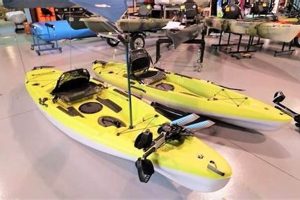
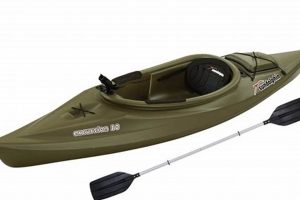
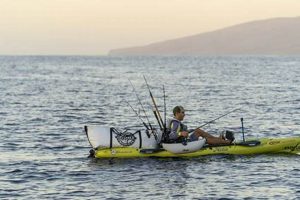
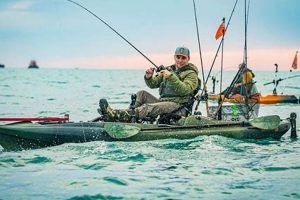
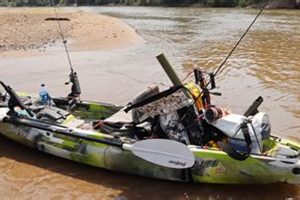
This specific model of watercraft is a sit-on-top vessel designed for angling. Characterized by its length and purpose-built features, this type of kayak offers stability and specialized storage for fishing gear.
Such vessels provide anglers with enhanced access to shallow waters and improved maneuverability compared to larger boats. The design facilitates hands-free fishing and often incorporates features like rod holders, tackle storage, and even livewells. This allows for a more focused and efficient fishing experience. These specialized kayaks have become increasingly popular as a cost-effective and versatile option for both recreational and serious anglers.
Further exploration will cover specific design elements, materials used in construction, performance characteristics, and comparisons with other popular fishing kayak models.
Tips for Utilizing a Fishing Kayak
Proper utilization of a fishing kayak enhances safety and maximizes angling success. Adherence to these guidelines contributes to a more productive and enjoyable experience.
Tip 1: Pre-Trip Planning: Before embarking, thoroughly research the intended fishing location. Check weather forecasts, water conditions, and local regulations. Inform someone of the planned route and estimated return time.
Tip 2: Safety First: Always wear a personal flotation device (PFD). Carry essential safety gear, including a whistle, signaling device, and first-aid kit. A leash connecting the paddle to the kayak prevents loss in case of capsizing.
Tip 3: Proper Gear Storage: Securely store fishing gear and equipment to prevent shifting during movement. Distribute weight evenly for optimal stability and performance.
Tip 4: Paddle Technique: Efficient paddling technique conserves energy and improves maneuverability. Utilize a proper kayaking paddle and learn basic paddling strokes.
Tip 5: Anchoring Techniques: Mastering anchoring techniques prevents drifting in desired fishing locations. Select an appropriate anchor system and practice deployment and retrieval.
Tip 6: Respect Wildlife and Environment: Practice Leave No Trace principles. Pack out all trash, avoid disturbing wildlife, and respect sensitive ecosystems.
Tip 7: Understanding Water Conditions: Be aware of currents, tides, and wind patterns. Adjust fishing strategies accordingly and exercise caution in challenging conditions.
By following these guidelines, anglers can enhance their safety, improve their fishing success, and contribute to the preservation of natural resources.
These tips contribute to a safer and more rewarding fishing experience, setting the stage for discussing specific techniques and strategies.
1. Stability

Stability represents a critical performance characteristic in fishing kayaks, directly influencing angler safety and fishing effectiveness. Specifically regarding the ATAK 140 fishing kayak, stability derives from a combination of hull design, width, and weight distribution. A broader hull generally provides greater initial stability, reducing the likelihood of tipping, particularly during casting or reeling. The ATAK 140’s specific hull design, often featuring a flatter bottom and pronounced chines, aims to maximize stability for diverse fishing scenarios, including standing casting. Weight capacity and distribution also play a crucial role. Proper weight distribution within the kayak further enhances stability, enabling anglers to maintain balance even when shifting positions or encountering external forces like wind or waves. Understanding the factors contributing to stability allows for informed decision-making regarding gear placement and movement within the kayak.
Consider the scenario of an angler sight-fishing in shallow water. The inherent stability of the ATAK 140 allows the angler to stand and cast with confidence, maintaining balance while simultaneously observing fish behavior and executing precise casts. In contrast, a less stable kayak might necessitate remaining seated, limiting visibility and casting range. Further enhancing stability, features like outriggers or stabilizers can be added to the ATAK 140, broadening its range of applications and allowing anglers to venture into more challenging conditions. This adaptability contributes significantly to the kayak’s versatility and overall utility in diverse fishing environments.
In summary, stability in the ATAK 140 fishing kayak results from a carefully considered design maximizing angler safety and fishing effectiveness. Understanding the interplay of hull design, weight distribution, and potential stability enhancements enables anglers to optimize performance and confidently navigate various fishing scenarios. This focus on stability distinguishes the ATAK 140 as a platform designed for serious anglers seeking a balance of performance and safety.
2. Storage Capacity

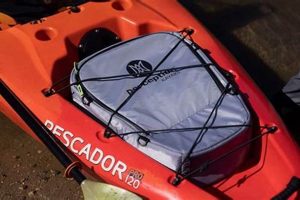
Storage capacity represents a critical factor influencing the practicality and effectiveness of the ATAK 140 fishing kayak. Ample storage directly impacts the angler’s ability to carry essential gear, including tackle boxes, rods, safety equipment, and personal items. The ATAK 140 typically incorporates various storage solutions designed to accommodate these needs. Front and rear storage wells offer substantial space for larger items, while smaller compartments and integrated storage pockets provide organized access to frequently used tools and accessories. The specific storage design often includes features like bungee cords and hatches to secure gear against movement and water intrusion. This focus on storage capacity allows anglers to remain self-sufficient during extended fishing trips and efficiently manage equipment in diverse environments.
Consider a scenario involving a multi-day fishing expedition in a remote location. Sufficient storage capacity allows the angler to carry ample supplies, including food, water, and camping gear, in addition to fishing equipment. The ability to transport these essentials directly influences the feasibility and success of such expeditions. Alternatively, consider a shorter trip focused on lure fishing. Organized storage allows for efficient access to various lures and tackle, minimizing time spent searching and maximizing fishing time. The practical significance of storage capacity becomes particularly evident in these contexts, highlighting its direct impact on the overall fishing experience.
In summary, the ATAK 140 fishing kayak’s storage capacity contributes significantly to its versatility and utility for diverse fishing scenarios. The strategic integration of various storage solutions allows anglers to effectively manage equipment and supplies, enhancing both efficiency and overall fishing success. Adequate storage capacity addresses practical challenges associated with gear management and expands the range of fishing opportunities achievable with this platform. This careful consideration of storage requirements further reinforces the ATAK 140’s focus on practicality and performance for serious anglers.
3. Maneuverability
Maneuverability represents a crucial performance attribute of the ATAK 140 fishing kayak, directly influencing its effectiveness in diverse aquatic environments. This characteristic encompasses the kayak’s responsiveness to paddling input, its ability to navigate tight spaces, and its capacity to track a straight course. Several factors contribute to the ATAK 140’s maneuverability, including hull design, length, and the presence of a rudder or skeg. A well-designed hull, often featuring a moderate rocker profile and defined chines, facilitates efficient turning and precise directional control. The kayak’s length also plays a significant role; while longer kayaks generally track better in open water, shorter kayaks offer enhanced maneuverability in confined areas like creeks or mangrove tunnels. The inclusion of a rudder or skeg further enhances directional stability and tracking performance, particularly in windy conditions or strong currents. Understanding these factors provides insights into the ATAK 140’s suitability for specific fishing environments and techniques.
Consider navigating a narrow, winding creek choked with submerged logs and overhanging branches. The ATAK 140’s maneuverability becomes paramount in such a scenario. Its responsiveness to paddle strokes and ability to turn quickly allows the angler to navigate tight bends and avoid obstacles effectively. Alternatively, consider fishing in open water with significant wind or current. Here, the addition of a rudder or skeg becomes invaluable, enhancing directional stability and minimizing the need for constant corrective strokes. These examples illustrate the practical significance of maneuverability and its impact on the overall fishing experience. The ability to precisely position the kayak for optimal casting angles or to maintain a desired drift in a current significantly influences fishing success.
In summary, maneuverability in the ATAK 140 fishing kayak stems from a combination of design elements working in concert. Hull design, length, and rudder/skeg systems contribute to the kayak’s responsiveness and control, enabling anglers to navigate diverse environments effectively. Understanding the interplay of these factors allows for informed decision-making regarding kayak selection and utilization in specific fishing scenarios. This emphasis on maneuverability positions the ATAK 140 as a versatile platform capable of navigating both open water and confined spaces, enhancing its appeal to anglers seeking adaptability and performance in various fishing environments.
4. Durability

Durability represents a critical factor influencing the long-term value and performance of the ATAK 140 fishing kayak. This characteristic encompasses the kayak’s ability to withstand impacts, abrasion, UV exposure, and general wear and tear associated with regular use in diverse environments. A durable kayak ensures longevity, minimizes maintenance requirements, and provides a reliable platform for anglers in challenging conditions. Several factors contribute to the ATAK 140’s durability, including construction materials, manufacturing processes, and design features.
- Material Selection
The choice of materials significantly impacts a kayak’s durability. The ATAK 140 typically utilizes high-density polyethylene (HDPE) or similar robust polymers known for their impact resistance and resistance to UV degradation. HDPE offers a balance of strength, weight, and affordability, making it a suitable choice for fishing kayaks subjected to varied conditions. Alternative materials, like rotomolded polyethylene, offer enhanced durability and impact resistance, often at a higher price point. The selection of appropriate materials directly influences the kayak’s ability to withstand impacts from rocks, submerged obstacles, or improper handling during transport and storage.
- Construction Methods
Manufacturing processes play a crucial role in determining a kayak’s overall durability. Rotomolding, a common manufacturing technique for kayaks, creates a seamless, one-piece hull with uniform wall thickness, enhancing structural integrity and impact resistance. This process minimizes weak points and potential leak paths, contributing to the kayak’s longevity. Other construction methods, such as thermoforming, may involve joining multiple components, potentially creating areas susceptible to stress cracking or leakage over time. Careful consideration of construction methods allows for informed evaluation of the kayak’s long-term durability.
- UV Resistance
Exposure to ultraviolet radiation from sunlight can degrade certain plastics, leading to discoloration, brittleness, and reduced structural integrity. The ATAK 140 incorporates UV inhibitors in its construction materials to mitigate these effects. These additives protect the kayak from sun damage, extending its lifespan and maintaining its performance characteristics over time. The effectiveness of UV protection directly influences the kayak’s ability to withstand prolonged exposure to sunlight, particularly in harsh climates.
- Hardware and Fittings
The durability of hardware components, such as handles, latches, and attachment points, contributes significantly to the overall longevity of the kayak. Corrosion-resistant stainless steel or marine-grade aluminum fittings are preferred choices due to their ability to withstand exposure to saltwater and other corrosive elements. Durable hardware ensures the kayak’s continued functionality and minimizes maintenance requirements associated with replacing corroded or damaged components.
The convergence of material selection, construction methods, UV resistance, and hardware quality determines the ATAK 140’s overall durability. A durable kayak withstands the rigors of regular use in diverse environments, providing a reliable platform for anglers seeking long-term value and consistent performance. This emphasis on durability underscores the ATAK 140’s design focus on providing a dependable and resilient fishing platform capable of withstanding the demands of serious anglers.
5. Special Features

Special features distinguish the ATAK 140 fishing kayak from generic recreational kayaks, enhancing its functionality and catering to the specific needs of anglers. These features represent deliberate design choices aimed at improving fishing efficiency, comfort, and overall experience. Examining these specialized components reveals a focus on practicality and performance, underscoring the ATAK 140’s purpose-built nature.
Common special features include integrated rod holders, strategically positioned to keep rods secure and readily accessible. These holders vary in type, from flush-mounted rod holders for trolling to adjustable rod holders for diverse fishing techniques. Tackle storage solutions represent another key feature, often incorporating dedicated compartments, trays, and storage pockets designed to organize and protect essential fishing gear. These specialized storage solutions minimize clutter and maximize efficiency, allowing anglers to quickly locate and deploy lures or tackle without disrupting their fishing flow. Further enhancing comfort and functionality, adjustable seating systems allow anglers to customize their seating position for optimal comfort and support during extended fishing sessions. Features like adjustable footrests and backrests contribute to ergonomic support, reducing fatigue and enhancing overall fishing enjoyment. Additional specialized features might include integrated fish finders, GPS systems, anchor trolleys, and paddle parks, further enhancing the kayak’s capabilities and catering to specific fishing styles. For example, an integrated fish finder provides real-time information about water depth and fish location, enhancing fishing success, while an anchor trolley system facilitates controlled drifting in currents. The availability and configuration of these special features may vary depending on the specific model and manufacturer of the ATAK 140.
The thoughtful integration of these special features directly influences the ATAK 140’s utility and appeal to anglers. These features enhance fishing efficiency, comfort, and overall success, distinguishing the ATAK 140 as a specialized fishing platform. Understanding the functionality and benefits of these features enables anglers to make informed decisions about kayak selection and utilization, optimizing their fishing experience and maximizing their chances of success on the water. The presence and design of these features reflect a focus on catering to the specific needs and demands of anglers, further solidifying the ATAK 140’s position as a purpose-built fishing kayak.
Frequently Asked Questions
This section addresses common inquiries regarding the ATAK 140 fishing kayak, providing concise and informative responses to facilitate informed decision-making.
Question 1: What differentiates the ATAK 140 from other fishing kayaks?
The ATAK 140 distinguishes itself through a combination of stability, specialized features, and storage capacity tailored for angling. Its design prioritizes performance and practicality for fishing, setting it apart from recreational kayaks.
Question 2: Is the ATAK 140 suitable for beginners?
While designed for fishing, its stability and ease of use make it accessible to beginners. However, prior experience with kayaking is recommended for optimal performance and safety.
Question 3: What is the weight capacity of the ATAK 140?
Weight capacity varies depending on the specific model and manufacturer. Consulting official specifications is crucial for determining the appropriate weight limit and ensuring safe operation.
Question 4: What types of fishing are best suited for the ATAK 140?
Its versatility makes it suitable for various fishing styles, including inshore fishing, freshwater angling, and even some offshore applications in calm conditions. Stability and maneuverability contribute to its adaptability.
Question 5: What maintenance is required for the ATAK 140?
Regular rinsing with fresh water after each use helps prevent saltwater corrosion and prolongs the lifespan of the kayak. Periodic inspection of hardware and storage areas ensures optimal performance and safety.
Question 6: Are there any accessories recommended for the ATAK 140?
Recommended accessories include a personal flotation device (PFD), paddle leash, appropriate paddle, anchor system, and dry bags for storing electronics and valuables. Further customization based on individual fishing preferences enhances utility and overall experience.
Addressing these common inquiries provides a comprehensive understanding of key considerations related to the ATAK 140 fishing kayak. Thorough research and consideration of individual needs and preferences contribute to informed purchasing decisions and maximized enjoyment on the water.
Further exploration might delve into specific model comparisons, user reviews, or advanced fishing techniques applicable to the ATAK 140.
Conclusion
Exploration of the ATAK 140 fishing kayak reveals a vessel designed for diverse angling scenarios. Key attributes include stability, maneuverability, ample storage, and specialized features catering to angler needs. Durability ensures long-term value and reliable performance in various environments. Understanding these characteristics facilitates informed decision-making for prospective purchasers.
The ATAK 140 presents a compelling option for anglers seeking a dedicated fishing platform. Careful consideration of individual needs, fishing styles, and target environments remains crucial for optimizing kayak selection and maximizing on-the-water success. Continued exploration of specific models, user experiences, and advanced techniques will further enhance appreciation for this specialized kayak’s capabilities.