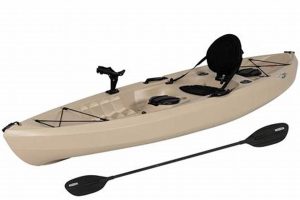
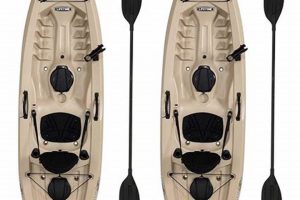
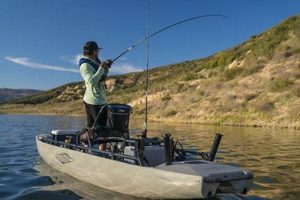
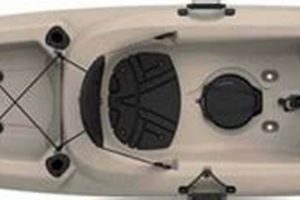
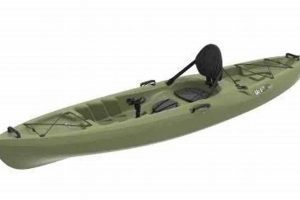
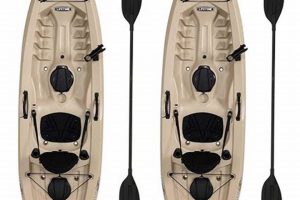
A compact, low-profile vessel designed for fishing, this type of watercraft prioritizes stability and a reduced visual presence, allowing anglers to approach fish undetected. Features often include specialized seating, ample storage for gear, and a design that minimizes noise and water disturbance. This focus on quiet movement and a low profile contributes to a more immersive and successful fishing experience.
The advantages of this specialized kayak type are numerous. Enhanced stealth allows anglers to get closer to fish, increasing the likelihood of a successful catch. Stability is crucial for casting, reeling, and landing fish, especially in challenging conditions. Dedicated storage solutions keep gear organized and readily accessible. Historically, fishing from small, maneuverable boats has been a common practice. Modern designs leverage advanced materials and hydrodynamic principles to optimize these characteristics for a more rewarding angling experience.
This exploration of key features, benefits, and historical context provides a foundation for a deeper understanding of the evolution and advantages of this specific type of fishing kayak. Further topics will cover material selection, design considerations, and the impact of these specialized kayaks on the sport of fishing.
Tips for Effective Kayak Fishing
Maximizing success on the water requires careful consideration of various factors, from pre-trip planning to on-the-water techniques. The following tips offer guidance for a productive and enjoyable experience.
Tip 1: Pre-Trip Planning: Thorough preparation is essential. Research potential fishing locations, considering factors such as water depth, currents, and species presence. Check weather forecasts and pack appropriate clothing and safety gear.
Tip 2: Launch Quietly: Minimize noise and disturbance when entering the water. A smooth, controlled launch prevents spooking fish and maximizes stealth.
Tip 3: Paddle Efficiently: Utilize efficient paddling techniques to conserve energy and maintain a low profile. Short, controlled strokes are less disruptive than long, sweeping movements.
Tip 4: Position Strategically: Approach fishing spots from downwind or down-current whenever possible. This allows for a natural drift and reduces the chance of fish detecting the kayak.
Tip 5: Gear Management: Organize gear for easy access and minimize clutter. Keep essential items within reach to avoid unnecessary movement and noise.
Tip 6: Observation is Key: Pay close attention to the surroundings. Observe water conditions, bird activity, and any other signs that might indicate fish presence.
Tip 7: Practice Stealth: Minimize movement and noise while fishing. Avoid sudden actions and keep a low center of gravity to maintain stability.
By implementing these strategies, anglers can significantly improve their chances of a successful and rewarding fishing experience. These practical tips enhance stealth, efficiency, and overall enjoyment on the water.
This guidance provides a framework for maximizing on-the-water success. The following concluding section will reiterate key takeaways and emphasize the importance of responsible angling practices.
1. Quiet Movement

Quiet movement is paramount for successful angling from a specialized fishing kayak. Minimizing noise and water disturbance significantly increases the chances of approaching fish undetected, a core principle of stealth angling. This section explores the multifaceted nature of quiet movement in this context.
- Hull Design and Hydrodynamics
The kayak’s hull design plays a crucial role in minimizing noise and water displacement. A streamlined hull with minimal drag reduces water resistance, resulting in quieter movement through the water. For example, a displacement hull, designed to cut through the water smoothly, generates less noise and disturbance than a flatter, planing hull designed for speed. This careful consideration of hydrodynamics contributes significantly to the stealth capabilities of the kayak.
- Paddling Technique
Efficient and quiet paddling techniques are essential for maintaining stealth. Short, controlled strokes minimize splashing and noise, allowing the angler to approach fish undetected. Conversely, powerful, aggressive strokes create significant disturbance, potentially alerting fish to the angler’s presence. Practicing smooth, controlled paddling is vital for maximizing stealth.
- Gear Management and Storage
Proper gear management contributes to quiet operation. Securely stowing equipment prevents rattling or shifting noises that could spook fish. Designated storage compartments within the kayak help organize gear and minimize movement during operation. For instance, loose gear rolling around on the deck creates noise and disrupts balance, compromising stealth. Careful organization enhances both quiet movement and overall fishing efficiency.
- Environmental Considerations
External factors such as wind and current influence the kayak’s movement and noise levels. Paddling into the wind or current generates more noise and requires greater effort, potentially alerting fish. Understanding and adapting to these environmental conditions is critical for maintaining stealth. Approaching fishing locations strategically, considering wind and current direction, minimizes disturbance and maximizes angling success.
These interconnected factors contribute to the overall quiet movement of the specialized fishing kayak. By understanding and optimizing each element, anglers significantly improve their stealth capabilities, enhancing their connection with the environment and increasing the likelihood of a successful and fulfilling fishing experience.
2. Low Profile

A low profile is a critical design element in specialized fishing kayaks, directly influencing stealth and angling success. Minimizing the kayak’s visual signature above the waterline reduces the likelihood of detection by fish, particularly in shallow, clear water or calm conditions. This characteristic allows anglers to approach fish more closely, increasing opportunities for observation and successful casting. For example, in sight-fishing scenarios where fish are easily spooked by surface disturbances, a low-profile kayak provides a significant advantage, enabling anglers to remain virtually unseen.
Several design features contribute to a kayak’s low profile. A streamlined deck and hull minimize the overall height above the waterline. Recessed seating positions the angler closer to the water, further reducing the visual signature. Minimizing unnecessary protrusions, such as elevated rod holders or bulky accessories, also contributes to a lower profile. The practical significance of this design philosophy is evident in the enhanced stealth capabilities it provides. By reducing visibility, the kayak blends more seamlessly with the surrounding environment, allowing anglers to approach fish with minimal disturbance.
The connection between a low profile and successful angling is undeniable. This design feature is integral to the overall stealth of the specialized fishing kayak, maximizing the angler’s ability to approach fish undetected. The practical application of this understanding lies in selecting kayaks with design features that prioritize a low profile, enabling a more immersive and effective fishing experience. While other factors like paddling technique and gear management also contribute to stealth, a low profile serves as a foundational element, enhancing the efficacy of these other strategies.
3. Stability

Stability is a crucial attribute in specialized fishing kayaks, inextricably linked to stealth, angler comfort, and overall fishing success. A stable platform allows for smooth, controlled movements, minimizing disturbances that could alert fish. This is particularly crucial in stealth angling, where the goal is to approach fish undetected. A stable kayak enables anglers to cast, reel, and land fish efficiently, even in challenging conditions such as currents or wind. Consider, for example, the scenario of hooking a large fish. A stable kayak provides the necessary platform to manage the fight without compromising balance or control, reducing the risk of capsizing and maximizing the chances of landing the fish. The ability to maintain stability while performing essential angling tasks contributes significantly to overall success and enjoyment.
Several factors influence kayak stability. Hull design plays a critical role, with wider, flatter hulls generally offering greater initial stability. However, these designs can be less maneuverable and more susceptible to wind drift. Longer, narrower hulls tend to track better and offer superior secondary stability (resistance to tipping once leaned), though they may feel less stable initially. The angler’s center of gravity also affects stability. Sitting lower in the kayak enhances stability, while standing or making sudden movements can compromise it. Understanding these principles allows anglers to choose kayaks and adopt practices that maximize stability based on their individual needs and fishing styles. For instance, an angler frequently fishing in calm, shallow waters might prioritize initial stability offered by a wider hull, while an angler fishing in open, choppy conditions might prioritize the secondary stability of a longer, narrower hull.
The practical implications of kayak stability extend beyond simply preventing capsizes. Enhanced stability contributes directly to stealth by minimizing disturbances. It allows for more precise casting and more effective fish fighting, leading to increased angling success. Furthermore, a stable platform promotes angler comfort and confidence, allowing for longer, more enjoyable fishing trips. Recognizing the interconnectedness of these elements highlights the importance of stability as a core component of specialized fishing kayak design and its direct impact on the overall angling experience. Choosing a kayak with appropriate stability characteristics for the intended fishing environment and practicing techniques that maintain balance are crucial for maximizing both safety and success on the water.
4. Specialized Storage

Specialized storage solutions are integral to the design and functionality of emotion stealth angler fishing kayaks. Efficient organization of gear directly impacts stealth, angler efficiency, and overall fishing success. A well-designed storage system minimizes clutter, reduces noise, and allows for quick access to essential equipment, contributing to a more streamlined and effective angling experience. This exploration delves into the key facets of specialized storage in these kayaks.
- Rod Management Systems
Dedicated rod holders, both flush-mounted and adjustable, secure rods safely and efficiently. Flush-mounted rod holders minimize the kayak’s profile and reduce the risk of entanglement, crucial for navigating tight spaces or vegetated areas. Adjustable rod holders allow for customized positioning based on fishing techniques and target species. For example, trolling requires different rod positioning compared to casting or jigging. Secure rod storage minimizes noise and prevents gear loss, enhancing both stealth and efficiency.
- Tackle Storage Compartments
Designated compartments for tackle boxes, lures, and other small items maintain organization and accessibility. Water-resistant compartments protect sensitive gear from the elements. Compartmentalization allows anglers to quickly locate specific items without rummaging through loose gear, minimizing noise and maximizing efficiency. This is particularly crucial in low-light conditions or when quick adjustments are needed. Efficient tackle storage contributes to a streamlined and focused fishing experience.
- Dry Storage Hatches
Dry storage hatches provide secure, waterproof storage for essential items such as electronics, clothing, and food. Maintaining dry gear is crucial for comfort and safety, especially during longer trips or in inclement weather. Protecting electronics from water damage is particularly important, as they are essential for navigation, communication, and fish finding. Dry storage hatches contribute to a more prepared and worry-free fishing experience.
- Integrated Storage Solutions
Innovative designs often incorporate integrated storage solutions, such as recessed storage wells or under-seat compartments. These features maximize storage capacity without compromising the kayak’s stability or low profile. Recessed storage wells can accommodate larger items like tackle bags or coolers, while under-seat compartments offer convenient access to frequently used items. Such integrated solutions contribute to a more organized and efficient use of space within the kayak.
These specialized storage solutions are essential components of the emotion stealth angler fishing kayak. By prioritizing organization and accessibility, these features enhance stealth, efficiency, and overall fishing success. The strategic placement and design of storage compartments contribute to a more streamlined and immersive angling experience, allowing anglers to focus on the task at hand and maximizing their connection with the environment. The thoughtful integration of these storage solutions underscores the design philosophy behind these specialized kayaks, prioritizing functionality and the needs of the angler.
5. Enhanced Angling

Enhanced angling experiences are a direct result of the specialized design and features of the emotion stealth angler fishing kayak. The kayak’s inherent stealth, stability, and specialized storage solutions contribute significantly to improved fishing outcomes. Cause and effect relationships are evident: the low profile and quiet operation allow closer approaches to fish, increasing opportunities for observation and targeted casting. Stability ensures precise casting and effective fish fighting. Efficient storage keeps essential gear readily accessible, minimizing disruptive movements and maximizing fishing time. Consider a scenario where an angler targets wary fish in shallow, clear water. The kayak’s stealth capabilities enable an approach that minimizes disturbance, significantly increasing the likelihood of a successful hookup. This exemplifies the direct link between the kayak’s design and enhanced angling opportunities.
The importance of “enhanced angling” as a core component of the emotion stealth angler fishing kayak experience cannot be overstated. It represents the culmination of the kayak’s design philosophy, bringing together elements of stealth, stability, and functionality to create a more effective and rewarding fishing platform. Practical applications of this understanding are numerous. Anglers can leverage the kayak’s stealth to target specific species in challenging environments. Improved stability allows for techniques that would be difficult or impossible in less stable vessels. Efficient storage facilitates longer trips and more diverse fishing approaches. For example, an angler targeting bonefish on shallow flats can utilize the kayak’s low profile and quiet movement to approach within casting range without spooking the fish, a feat difficult to achieve in other types of watercraft.
The emotion stealth angler fishing kayak prioritizes enhanced angling by design. Its specialized features work in concert to create a platform that maximizes fishing success and enjoyment. While challenges such as navigating strong currents or windy conditions remain, the kayak’s inherent advantages significantly improve the odds of a successful outing. This understanding underscores the value of specialized equipment and its impact on achieving desired angling outcomes. The ability to consistently and effectively approach fish, present lures, and manage the fight contributes to a more rewarding and fulfilling experience on the water, reinforcing the connection between the angler and the environment.
6. Immersive Experience
The concept of an “immersive experience” is central to the appeal of the emotion stealth angler fishing kayak. It represents a deeper connection with the natural environment, facilitated by the kayak’s design and functionality. This connection transcends the mere act of fishing and becomes an engagement with the surrounding ecosystem. The following facets explore the components of this immersive experience.
- Connection with Nature
The quiet operation and low profile of the kayak minimize disruption to the natural environment, allowing anglers to observe wildlife and ecosystems undisturbed. Paddling silently through calm waters, observing herons stalking prey or turtles basking on logs, fosters a sense of presence and integration with nature. This direct interaction with the environment enhances appreciation for its complexity and fragility. The kayak becomes more than just a vessel; it becomes a gateway to a deeper understanding of the natural world.
- Heightened Senses
The reduced noise and physical separation from motorized watercraft heighten sensory awareness. The subtle sounds of the water lapping against the hull, the feel of the paddle in the hand, the sight of fish rising to the surfacethese experiences become more pronounced and meaningful in the quiet environment of the kayak. This heightened sensory engagement intensifies the feeling of presence and connection with the surrounding environment. For example, the splash of a feeding fish becomes a focal point of attention, sharpening focus and anticipation.
- Focus and Mindfulness
The act of paddling, casting, and retrieving requires focus and coordination, fostering a state of mindfulness. The angler becomes fully present in the moment, attuned to the nuances of the environment. This focus can be meditative and restorative, providing a respite from the distractions of daily life. The rhythmic motion of paddling and the quiet anticipation of a strike cultivate a sense of calm and connection to the present moment. This mindful engagement enhances the overall experience, transforming a fishing trip into a form of active meditation.
- Sense of Accomplishment
Successfully navigating the kayak and landing a fish using stealth and skill provides a profound sense of accomplishment. This achievement is amplified by the intimate connection with the environment fostered by the kayak’s design. The challenges presented by maneuvering the kayak quietly, approaching fish undetected, and skillfully playing and landing a fish contribute to a more rewarding experience. The sense of accomplishment extends beyond the mere act of catching a fish; it encompasses the entire process of engaging with the environment and overcoming its challenges.
These facets of the immersive experience are integral to the appeal of the emotion stealth angler fishing kayak. They transform fishing from a recreational activity into a multi-sensory engagement with the natural world. The kayak’s design facilitates this immersion by minimizing disruption and maximizing connection. This understanding deepens appreciation for the kayak as more than just a fishing vesselit is a tool for exploring and connecting with the natural environment on a deeper level, fostering a sense of respect, wonder, and personal fulfillment.
Frequently Asked Questions
This section addresses common inquiries regarding specialized fishing kayaks designed for stealth and enhanced angling experiences. Clear and concise responses provide practical information for informed decision-making.
Question 1: What differentiates a specialized fishing kayak from a recreational kayak?
Specialized fishing kayaks prioritize stability, stealth, and specialized features like rod holders, tackle storage, and often a lower profile design for enhanced angling. Recreational kayaks generally prioritize comfort and ease of use for general paddling activities.
Question 2: How does hull design impact stability and maneuverability?
Wider hulls offer greater initial stability but may sacrifice maneuverability. Longer, narrower hulls provide better tracking and secondary stability (resistance to tipping when leaned) but may feel less stable initially. The choice depends on intended fishing environments and angler preferences.
Question 3: What are the key considerations for choosing a paddle?
Paddle length, blade shape, and material composition influence paddling efficiency and comfort. Longer paddles generate more power, while shorter paddles are better for maneuverability. Blade shape affects stroke efficiency, and material choices influence weight and durability.
Question 4: How does one maintain and care for a fishing kayak?
Regular cleaning, proper storage, and occasional inspections for damage are essential for maintaining kayak longevity. Rinsing with fresh water after each use removes salt and debris. Storing the kayak out of direct sunlight and extreme temperatures prevents material degradation. Periodically inspecting for cracks, scratches, or loose fittings ensures safe and optimal performance.
Question 5: What safety precautions should one take when kayak fishing?
Wearing a personal flotation device (PFD), carrying a whistle or other signaling device, informing someone of fishing plans, and checking weather forecasts are essential safety practices. Understanding local regulations and potential hazards, such as currents or changing tides, further mitigates risk.
Question 6: What are the advantages of pedal-powered kayaks for fishing?
Pedal-powered kayaks offer hands-free propulsion, allowing anglers to focus on fishing. They also provide greater speed and range compared to paddle kayaks, enabling access to more distant fishing locations and efficient coverage of larger areas. However, pedal drives can add complexity and cost.
Understanding these key aspects of specialized fishing kayaks empowers informed decisions aligned with individual angling needs and preferences. Careful consideration of design features, materials, and safety considerations ensures a rewarding and fulfilling experience on the water.
This concludes the FAQ section. The following section will offer a comprehensive guide to essential gear and accessories for kayak fishing.
Conclusion
This exploration has provided comprehensive insights into the specialized design and functionality of kayaks engineered for stealth angling. Key elements, including a low profile, quiet movement, enhanced stability, specialized storage, and the resultant benefits of enhanced angling and a more immersive experience, have been examined in detail. The interconnectedness of these features contributes to a unique angling platform designed to maximize stealth, efficiency, and connection with the aquatic environment.
The evolution of kayak design continues to refine the angling experience, pushing the boundaries of stealth and performance. As anglers seek closer communion with nature and more effective fishing approaches, specialized kayaks offer a compelling pathway toward achieving these goals. The pursuit of a more seamless integration between angler and environment drives ongoing innovation, promising further advancements in kayak design and technology. This pursuit underscores the enduring appeal of angling and the human desire to connect with the natural world on a deeper level.