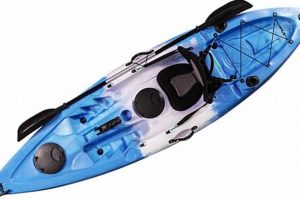
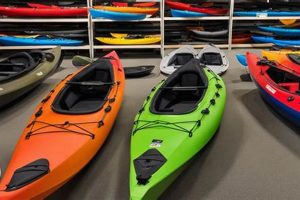
A small, narrow watercraft propelled by a double-bladed paddle is typically used for recreation, touring, or competitive sports. These vessels are characterized by a closed deck and a cockpit where the paddler sits, facing forward. A spray skirt is often used to prevent water from entering the cockpit.
This type of watercraft offers a unique connection with nature, allowing for exploration of waterways inaccessible to larger vessels. Its low profile and maneuverability make it ideal for navigating shallow waters, rivers, and coastal areas. The relatively low cost and ease of transport compared to larger boats contribute to its popularity for both recreational and fitness purposes. The history of these vessels traces back to indigenous peoples of the Arctic regions, who utilized them for hunting and transportation.
This overview serves as an introduction to a more detailed exploration of various aspects of these versatile vessels. The following sections will delve into specific topics such as design variations, paddling techniques, safety considerations, and popular destinations.
Tips for Small Watercraft Paddling
Safe and enjoyable paddling experiences require preparation and awareness. The following tips offer guidance for both novice and experienced paddlers.
Tip 1: Dress for the Water Temperature, Not the Air Temperature. Cold water immersion can be dangerous. Wearing appropriate clothing, such as a wetsuit or drysuit, is crucial, especially in colder climates.
Tip 2: Always Wear a Personal Flotation Device (PFD). A PFD is essential safety equipment and should be worn at all times, regardless of swimming ability.
Tip 3: Check Weather Conditions Before Heading Out. Wind, waves, and tides can significantly impact paddling conditions. Be aware of the forecast and avoid paddling in adverse weather.
Tip 4: File a Float Plan. Inform someone on shore of your intended route, estimated return time, and emergency contacts.
Tip 5: Learn Basic Paddling Strokes and Rescue Techniques. Proper paddling technique enhances efficiency and control. Knowing basic rescue techniques can be life-saving in emergency situations.
Tip 6: Carry Essential Safety Gear. This may include a whistle, signaling device, first-aid kit, bilge pump, and paddle float.
Tip 7: Be Aware of Other Watercraft and Potential Hazards. Maintain a safe distance from larger vessels and be mindful of obstacles such as rocks, logs, and shallow water.
Adhering to these guidelines will contribute to safer and more enjoyable experiences on the water. Proper preparation and a respect for the environment are paramount.
These tips offer valuable insights into safe paddling practices. The concluding section will summarize the key takeaways and reiterate the importance of responsible paddling.
1. Hull Design

Hull design significantly influences a kayak’s performance characteristics, dictating its stability, speed, maneuverability, and tracking. Different hull designs cater to various paddling styles and water conditions. A flat-bottomed hull offers excellent primary stability, making it ideal for beginners and calm waters, but compromises speed and tracking in rougher conditions. A rounded hull provides less initial stability but superior secondary stability, making it suitable for more experienced paddlers and open water. A V-shaped hull offers efficient tracking and speed, cutting through waves effectively, but can feel less stable. Chined hulls combine characteristics of flat and rounded hulls, offering a balance of stability and performance.
Understanding the nuances of hull design empowers informed decisions regarding kayak selection. A recreational paddler seeking stability on calm lakes benefits from a flat or chined hull. A touring kayaker prioritizing speed and efficiency on open water may prefer a V-shaped or rounded hull. Whitewater kayakers require maneuverable hulls with pronounced rocker (upward curve at the bow and stern). The interplay between hull design and intended use is critical for optimal performance and safety. For instance, a flat-bottomed kayak designed for recreational use on calm lakes would be unsuitable for navigating challenging ocean conditions where a V-shaped hull would be more appropriate.
Ultimately, selecting the appropriate hull design hinges on understanding the intended paddling environment and desired performance characteristics. A careful assessment of these factors, combined with an understanding of different hull types, ensures optimal performance, safety, and enjoyment on the water. This understanding also contributes to safer navigation and more efficient energy expenditure while paddling.
2. Paddle Types

Paddle selection significantly impacts kayaking performance and efficiency. Different paddle types cater to various paddling styles, body types, and water conditions. Understanding the nuances of paddle design facilitates informed decision-making, leading to enhanced paddling experiences.
- Blade Shape
Blade shape influences power and efficiency. High-angle blades, shorter and wider, generate more power per stroke, suited for short bursts of speed and maneuvering. Low-angle blades, longer and narrower, offer greater efficiency over long distances, minimizing fatigue. Asymmetrical blades reduce flutter and increase efficiency by mirroring the natural curvature of the stroke.
- Shaft Material
Shaft material affects weight, stiffness, and cost. Aluminum shafts are durable and affordable but heavier. Fiberglass shafts offer a balance of weight, stiffness, and cost. Carbon fiber shafts are the lightest and stiffest but also the most expensive, offering greater efficiency and reduced fatigue. The choice of shaft material depends on budget and performance preferences.
- Paddle Length
Proper paddle length is crucial for efficient paddling. Factors influencing paddle length include paddler height, boat width, and paddling style. Longer paddles generate more power but require greater reach, while shorter paddles offer more control and faster cadence. Properly sized paddles maximize efficiency and minimize strain.
- Feathering Angle
Feathering angle refers to the offset between the two blades. Feathered blades reduce wind resistance on the blade not in the water, enhancing efficiency in windy conditions. Unfeathered blades are simpler to use and often preferred by beginners. Adjustable feathering angles allow for customization based on conditions and personal preference.
Selecting the appropriate paddle involves careful consideration of these factors. A proper fit, alongside correct paddling technique, maximizes efficiency, reduces fatigue, and enhances overall enjoyment. Understanding the interplay between blade shape, shaft material, paddle length, and feathering angle empowers informed decisions regarding paddle selection. For instance, a touring paddler prioritizing efficiency might choose a lightweight carbon fiber paddle with low-angle blades and a feathered angle, while a whitewater paddler might prioritize a shorter, more robust paddle with high-angle blades and an unfeathered or adjustable feathered angle.
3. Safety Gear

Safety gear is an integral component of responsible kayaking, inextricably linked to mitigating risks inherent in the activity. The interplay between the environment and human factors necessitates a comprehensive approach to safety, encompassing both preventative measures and responses to potential emergencies. A properly outfitted kayak, coupled with appropriate safety equipment and practiced procedures, significantly reduces the likelihood of incidents and enhances the ability to manage unforeseen circumstances effectively. For example, a paddler encountering unexpected strong winds and waves can utilize a bilge pump and paddle float to maintain buoyancy and recover from a capsize, significantly improving their chances of self-rescue.
Several key pieces of safety equipment are considered essential. Personal flotation devices (PFDs), designed to provide buoyancy in the event of a capsize, are paramount. A signaling device, such as a whistle or flare, facilitates communication in emergencies, enabling the paddler to attract attention and summon assistance. Carrying a first-aid kit allows for immediate response to minor injuries, while a communication device, such as a waterproof VHF radio or satellite messenger, enables contact with emergency services in remote locations. Furthermore, navigation tools like charts, compasses, and GPS devices aid in maintaining course and preventing disorientation, particularly in challenging conditions like fog or strong currents. Appropriate attire, including proper layering and immersion protection like a wetsuit or drysuit, mitigates the risk of hypothermia in cold water environments. Regularly inspecting and maintaining this equipment ensures optimal functionality when needed.
Ultimately, prioritizing safety gear demonstrates a commitment to responsible paddling practices. Understanding the function and application of each piece of equipment, coupled with regular practice and preparedness, significantly reduces risks and fosters safer, more enjoyable kayaking experiences. The absence or malfunction of critical safety gear can transform a minor incident into a life-threatening situation, highlighting the practical significance of this understanding. Preparation and a proactive approach to safety are cornerstones of enjoyable and incident-free kayaking.

Navigation skills are essential for safe and efficient kayaking. These skills encompass understanding charts and maps, utilizing a compass, employing GPS devices, interpreting natural indicators, and accounting for environmental factors such as currents and tides. Effective navigation ensures paddlers can plan routes, maintain their intended course, and return safely, particularly in challenging conditions or unfamiliar waters. For instance, a kayaker navigating a complex coastal area with numerous islands and channels relies on chart reading skills to identify safe passages, avoid hazards, and reach their destination. Conversely, a lack of navigational proficiency can lead to disorientation, stranding, or collisions with obstacles, particularly in conditions of reduced visibility or strong currents.
The practical significance of navigation skills becomes particularly apparent in dynamic environments. Tidal flows can significantly impact a kayak’s progress and direction, requiring paddlers to adjust their course and timing accordingly. Wind and waves can push a kayak off course, necessitating constant correction and awareness of position. Furthermore, navigational skills are crucial for assessing potential hazards, such as submerged rocks, shallow areas, or areas with heavy boat traffic. Understanding how to interpret nautical charts, use a compass, and employ GPS technology empowers paddlers to make informed decisions, adapt to changing conditions, and avoid potentially dangerous situations. For example, a kayaker paddling in a tidal river must account for the direction and strength of the current to maintain their desired course and avoid being swept downstream. This understanding is further underscored in sea kayaking expeditions where precise navigation is crucial for reaching distant destinations and managing potential changes in weather or sea conditions.
Proficient navigation skills are fundamental to responsible and enjoyable kayaking. They enhance safety by minimizing the risk of disorientation and allowing paddlers to avoid hazards. They contribute to efficiency by optimizing route planning and minimizing wasted effort. Moreover, they empower paddlers to explore new areas with confidence, expanding the horizons of their kayaking experiences. The challenges posed by dynamic water environments underscore the practical necessity of these skills, enabling informed decision-making and fostering a deeper connection with the aquatic landscape.
5. Water Conditions
Water conditions significantly influence kayak handling and overall safety. Understanding the dynamic nature of aquatic environments, including factors like wind, waves, currents, and tides, is crucial for informed decision-making and risk mitigation. Assessing these conditions before and during a paddling trip allows for proactive adjustments to route planning, paddling technique, and safety protocols. Neglecting to account for water conditions can lead to challenging situations, potentially jeopardizing safety and diminishing the enjoyment of the experience.
- Wind
Wind strength and direction significantly impact kayak handling. Headwinds create resistance, requiring increased effort and potentially slowing progress. Tailwinds can assist propulsion but may also increase the risk of capsizing if not managed carefully. Crosswinds can push the kayak off course, requiring corrective strokes and careful navigation. Strong winds can generate waves and chop, further complicating paddling conditions. For instance, a strong offshore wind can quickly carry a kayaker away from the shore, making return difficult, highlighting the importance of checking wind forecasts before embarking on a trip.
- Waves
Waves present both opportunities and challenges for kayakers. Smaller waves can be enjoyable to ride and surf, while larger waves can capsize a kayak if approached improperly. Wave height, frequency, and direction influence paddling technique and route selection. Kayakers should learn how to approach waves head-on or at an angle to minimize the risk of capsizing and practice recovery techniques in case of an overturn. For example, paddling in large waves requires specialized skills and equipment, including a sea kayak with a rudder or skeg and a spray skirt to prevent water from entering the cockpit.
- Currents
Currents, both tidal and river currents, influence kayak speed and direction. Paddling against a strong current requires significant effort and can be challenging. Paddling with a current can increase speed and efficiency but requires careful attention to navigation to avoid hazards downstream. Understanding how currents interact with the shoreline and other features like bridges or narrow channels is crucial for safe passage. For example, paddling in a tidal race, where opposing currents meet, can create turbulent conditions and present a significant challenge even for experienced kayakers.
- Tides
Tides affect water levels and currents, particularly in coastal areas. Rising tides can inundate launch sites or create access to previously inaccessible areas. Falling tides can expose shallow areas or create strong currents around points and headlands. Understanding tidal patterns is essential for planning launch and landing locations, navigating shallow areas, and avoiding being stranded by a receding tide. For example, launching a kayak at high tide in an area with a large tidal range can result in being stranded far from the water’s edge when the tide goes out.
Assessing and adapting to these water conditions is fundamental for safe and enjoyable kayaking. A comprehensive understanding of these factors, combined with appropriate paddling techniques and safety precautions, empowers informed decision-making, mitigates risks, and enhances the overall kayaking experience. Failing to account for water conditions can lead to challenging situations, potentially compromising safety and negatively impacting the enjoyment of the activity. For example, combining strong winds with an outgoing tide can create particularly hazardous conditions, highlighting the importance of considering the cumulative effect of various water conditions.
6. Storage Capacity

Storage capacity in kayaks directly influences the feasibility of various paddling activities. The volume and accessibility of storage space dictate what equipment, provisions, and personal belongings can be carried, impacting trip duration, comfort, and safety. Kayaks designed for different purposes offer varying storage capacities, reflecting the specific needs of each activity. A recreational kayak used for short day trips typically provides limited storage, sufficient for a small cooler and personal items. Touring kayaks, designed for multi-day expeditions, prioritize ample storage space for camping gear, food, and water. Sea kayaks, intended for open water paddling, often feature watertight compartments to protect essential gear from the elements. The relationship between storage capacity and intended use is crucial for effective trip planning and ensuring adequate resources are available. For example, embarking on an overnight camping trip in a recreational kayak with limited storage would be impractical, whereas a touring kayak with dedicated compartments for a tent, sleeping bag, and cooking equipment allows for comfortable self-sufficiency.
The practical significance of storage capacity becomes particularly apparent in scenarios requiring specific equipment. Fishing kayaks often incorporate specialized storage compartments for rods, tackle boxes, and live bait wells, enabling anglers to transport their gear efficiently and maintain the freshness of their catch. Whitewater kayaks prioritize accessible storage for safety equipment like throw ropes and first-aid kits, ensuring these essential items are readily available in emergency situations. Similarly, expedition kayaks designed for remote journeys emphasize large, watertight storage compartments to protect provisions and equipment from the elements over extended periods. The design and configuration of storage compartments also contribute to the overall balance and stability of the kayak. Improperly distributed weight can negatively impact handling and maneuverability, highlighting the importance of careful packing and securing of gear. Understanding the interplay between storage capacity, intended use, and kayak design empowers informed decisions regarding equipment selection and trip planning.
Ultimately, storage capacity is a critical factor influencing the practicality and enjoyment of kayaking experiences. Matching storage capacity to the intended activity ensures paddlers can carry necessary equipment, provisions, and personal belongings comfortably and safely. A comprehensive understanding of storage options, weight distribution principles, and the specific needs of different paddling disciplines allows for informed decision-making and enhances the overall kayaking experience. Neglecting to consider storage capacity can lead to logistical challenges, compromised safety, and diminished enjoyment, underscoring the practical significance of this aspect of kayak design and usage. For example, insufficient storage for adequate food and water on a long-distance trip can have serious consequences, emphasizing the importance of careful planning and appropriate gear selection.
7. Transportation Methods
Transportation methods significantly influence kayak accessibility and the range of paddling opportunities available. The portability of a kayak dictates how easily it can be transported to various launch sites, impacting the choice of paddling destinations and the logistics of trip planning. Various transportation methods exist, each with its own advantages and limitations, catering to different kayak types and logistical considerations. Roof racks offer a versatile solution for transporting kayaks on vehicles, accommodating a range of kayak sizes and shapes. Trailers provide greater carrying capacity for multiple kayaks or larger, heavier models, eliminating the need for overhead lifting. Inside transport, suitable for smaller, inflatable, or foldable kayaks, offers protection from the elements but requires sufficient vehicle space. The choice of transportation method depends on factors such as kayak size and weight, vehicle type, travel distance, and storage capacity. For example, transporting a long sea kayak to a remote coastal launch site may necessitate a trailer, while a shorter recreational kayak can be easily transported on a roof rack. Conversely, an inflatable kayak, deflated and packed into a bag, can be transported inside a vehicle, offering flexibility for spontaneous paddling trips.
The practical implications of transportation methods extend beyond simple conveyance. Loading and unloading kayaks require careful consideration of weight, balance, and proper lifting techniques to prevent injury and damage to the kayak or vehicle. Securement methods, using straps and tie-down points, are crucial for ensuring the kayak remains stable during transit, minimizing the risk of shifting or detachment. Furthermore, transportation regulations, such as maximum overhang and lighting requirements, vary by jurisdiction and must be adhered to for legal and safe transport. For instance, transporting a kayak that extends significantly beyond the rear of the vehicle requires appropriate markings and lighting to comply with traffic regulations. The choice of transportation method also impacts access to specific launch sites. Some launch sites may have limited parking or restricted access for larger vehicles towing trailers, necessitating alternative transportation solutions or careful planning. Understanding these practical considerations ensures safe and efficient transportation, facilitating access to a wider range of paddling destinations.
Effective transportation methods are essential for expanding kayaking horizons and optimizing paddling experiences. Choosing the appropriate method, considering factors like kayak type, vehicle capabilities, and logistical constraints, enhances accessibility, minimizes transportation challenges, and maximizes opportunities for exploration. Neglecting these considerations can lead to logistical difficulties, potential damage to equipment, or even safety hazards, highlighting the practical significance of understanding and implementing effective transportation strategies. Ultimately, efficient transportation contributes to a seamless and enjoyable paddling experience, allowing kayakers to focus on the joys of exploring the water rather than the challenges of getting there.
Frequently Asked Questions
This section addresses common inquiries regarding small, paddle-driven watercraft, providing concise and informative responses to clarify potential uncertainties and enhance understanding.
Question 1: What are the key differences between sit-on-top and sit-inside kayaks?
Sit-on-top kayaks offer greater stability and ease of entry and exit, making them suitable for beginners and warmer climates. Sit-inside kayaks provide better protection from the elements and allow for more efficient paddling in colder conditions but can feel more confining.
Question 2: How is stability affected by kayak width and hull design?
Wider kayaks generally offer greater initial stability. Hull design also plays a crucial role; flat-bottomed hulls are more stable than rounded or V-shaped hulls, which prioritize speed and maneuverability over initial stability.
Question 3: What factors influence the choice of paddle length?
Paddle length depends on factors such as paddler height, kayak width, and paddling style. Longer paddles provide more leverage but require greater reach, while shorter paddles offer quicker cadence and better control.
Question 4: What essential safety gear should be carried on every kayaking trip?
Essential safety gear includes a personal flotation device (PFD), a signaling device (whistle or flare), a first-aid kit, and appropriate clothing for the water temperature. Additional safety gear may include a bilge pump, paddle float, and communication device.
Question 5: How do wind and currents affect kayaking, and how can one prepare for these conditions?
Wind and currents can significantly impact paddling speed, direction, and effort. Checking weather forecasts before embarking and understanding how to adjust paddling technique based on wind and current conditions is essential for safe and efficient navigation.
Question 6: What are the different types of kayaking, and how do they differ in terms of equipment and skill level?
Kayaking encompasses various disciplines, including recreational kayaking, touring kayaking, sea kayaking, and whitewater kayaking. Each discipline requires specific equipment and skill sets, ranging from basic paddling techniques for recreational kayaking to advanced rescue skills and specialized equipment for whitewater kayaking.
Understanding these fundamental aspects of kayaking contributes to safer, more informed decision-making and enhances overall enjoyment on the water. Proper preparation, equipment selection, and awareness of environmental conditions are crucial for successful kayaking experiences.
The next section will delve into advanced kayaking techniques, building upon the foundational knowledge established in this FAQ.
Conclusion
This exploration has provided a comprehensive overview of small, paddle-driven watercraft, encompassing various aspects from fundamental design principles and equipment selection to advanced paddling techniques and safety considerations. Hull design, paddle characteristics, and appropriate safety gear play crucial roles in performance, efficiency, and risk mitigation. Understanding water conditions, navigational skills, storage capacity, and transportation methods further enhances preparedness and facilitates informed decision-making, contributing to safer and more rewarding paddling experiences. The interplay of these factors underscores the importance of a holistic approach to kayaking, emphasizing the interconnectedness of equipment, technique, and environmental awareness.
Mastery of these elements unlocks the full potential of small watercraft, fostering a deeper appreciation for the aquatic environment. Continued learning, skill development, and responsible paddling practices are essential for maximizing enjoyment and ensuring the preservation of these valuable resources for future generations. The journey of kayaking extends beyond mere recreation; it represents an opportunity for personal growth, connection with nature, and responsible stewardship of the waterways.