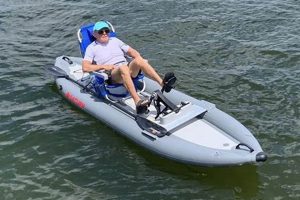
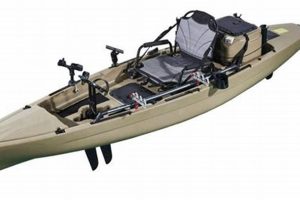
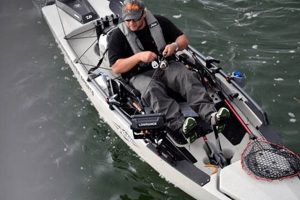
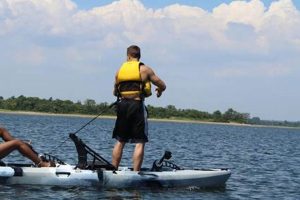
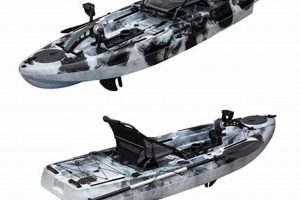
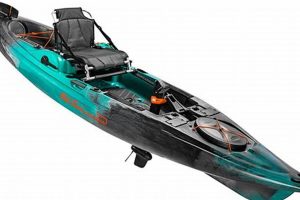
This type of watercraft combines the portability of an inflatable vessel with the efficiency of pedal-powered propulsion, specifically designed for angling. It typically features a compact, foldable design when deflated, allowing for easy transport and storage. Once inflated, it provides a stable platform equipped with a pedal-drive system, freeing the user’s hands for fishing activities. Specialized features like rod holders, gear tracks, and even livewells are often incorporated.
Hands-free propulsion offers significant advantages for anglers. It allows for precise maneuvering in shallow water, quiet movement to avoid disturbing fish, and the ability to maintain position against currents or wind. The compact nature of these vessels makes them accessible to individuals with limited storage space or those who prefer to transport their craft easily. The evolution of materials and design has led to durable, high-performance options that rival traditional hard-shell kayaks in stability and speed.
Further exploration will delve into the various types of these watercraft, key features to consider, and factors influencing selection for specific fishing environments. This detailed examination will equip readers with the necessary knowledge to make informed decisions when choosing the best option for their angling pursuits.
Tips for Utilizing Pedal-Driven Inflatable Fishing Kayaks
Effective use of these specialized watercraft requires consideration of various factors, from pre-trip preparation to on-the-water techniques. The following tips offer guidance for maximizing performance and safety.
Tip 1: Practice Deployment and Inflation: Familiarization with the inflation process and setup procedures is crucial before reaching the water. Practice assembling and inflating the kayak to ensure smooth deployment at the launch site.
Tip 2: Understand Pedal System Operation: Each pedal-drive system has unique characteristics. Thoroughly review the manufacturer’s instructions to understand operation, maintenance, and troubleshooting techniques.
Tip 3: Plan Routes and Check Water Conditions: Research potential fishing locations, paying attention to water depth, currents, and potential hazards. Wind conditions significantly impact inflatable vessels, so careful planning is essential.
Tip 4: Distribute Weight Evenly: Proper weight distribution is crucial for stability. Distribute fishing gear and supplies evenly throughout the kayak to maintain balance and optimal performance.
Tip 5: Utilize Safety Gear: A personal flotation device (PFD) is essential and should be worn at all times. Carry a whistle, signaling device, and basic safety equipment in accordance with local regulations.
Tip 6: Master Pedal Steering and Maneuvering: Practice maneuvering the kayak using the pedal drive system in open water before navigating tight spaces or challenging conditions. Understand how the rudder or steering system responds to pedal input.
Tip 7: Respect Wildlife and the Environment: Maintain a safe distance from wildlife and avoid disturbing natural habitats. Adhere to “Leave No Trace” principles and dispose of waste responsibly.
Adherence to these guidelines will contribute to a safer, more efficient, and enjoyable fishing experience. Careful planning and informed operation unlock the full potential of these versatile vessels.
This practical advice provides a solid foundation for using a pedal-driven inflatable fishing kayak. The following section will delve into specific techniques and strategies for maximizing fishing success.
1. Portability
Portability stands as a defining characteristic of inflatable fishing kayaks with pedals, significantly impacting their accessibility and usability. Unlike rigid kayaks, these vessels can be deflated and packed into a manageable size, facilitating transport and storage. This feature broadens their appeal to individuals with limited storage space or those seeking convenient transportation options.
- Reduced Size and Weight:
Deflated, these kayaks occupy a fraction of the space of their rigid counterparts. This compact form, coupled with relatively lightweight materials, allows for easy transport in vehicles, on public transport, or even on foot. This convenience expands access to remote fishing locations previously inaccessible with traditional kayaks.
- Simplified Storage:
The compact nature of these kayaks simplifies storage. They can be easily stowed in closets, garages, or even apartments, eliminating the need for specialized storage racks or large outdoor spaces. This convenience makes them a practical option for urban dwellers or those with limited storage capacity.
- Ease of Transport to Remote Locations:
The portability of these kayaks opens up opportunities for fishing in remote locations. They can be easily transported in backpacks, on hiking trails, or in smaller vehicles, enabling anglers to reach secluded waters inaccessible to larger, less portable vessels.
- Travel-Friendly Design:
The packable nature of these kayaks makes them ideal for travel. Whether by car, plane, or train, their deflated form simplifies transport, allowing anglers to explore diverse fishing destinations without the constraints of transporting a rigid kayak.
The portability inherent in inflatable fishing kayaks with pedals significantly enhances their versatility and appeal. This key feature expands fishing possibilities, allowing anglers greater freedom and flexibility in choosing when and where they pursue their passion.
2. Stability

Stability forms a critical aspect of inflatable fishing kayak design, directly influencing angling effectiveness and overall safety. While the inflatable nature might initially raise concerns about stability compared to rigid kayaks, advancements in design and construction have yielded remarkably stable platforms suitable for a range of fishing activities. Factors contributing to stability include wider beam widths, multiple air chambers, and strategically positioned drop-stitch flooring. These elements work in concert to create a balanced and secure platform capable of withstanding the movements inherent in casting, reeling, and landing fish.
Consider the scenario of sight casting in shallow water. A stable platform allows anglers to stand and cast with confidence, enhancing visibility and accuracy. Conversely, a less stable kayak would hinder casting performance and potentially compromise safety. Similarly, when battling a strong fish, stability becomes paramount. A stable platform allows anglers to effectively leverage their body weight and maintain control during the fight, minimizing the risk of capsizing. The practical significance of stability extends beyond casting and fighting fish. It also contributes to a more comfortable and secure experience when entering and exiting the kayak, particularly in challenging conditions such as shallow water or uneven terrain.
Stability in inflatable fishing kayaks with pedals directly correlates with angler confidence and fishing success. Understanding the design features contributing to stability, coupled with an awareness of personal balance limitations, empowers anglers to select the appropriate vessel and utilize it effectively in diverse fishing environments. While inherent design characteristics play a significant role, proper weight distribution within the kayak also contributes to maintaining optimal stability. Careful consideration of these factors allows anglers to maximize stability, enhancing both performance and safety on the water.
3. Pedal Propulsion

Pedal propulsion represents a significant advancement in kayak fishing, offering distinct advantages over traditional paddle-powered vessels. Within the context of inflatable fishing kayaks, pedal drives provide hands-free operation, enhanced maneuverability, and increased efficiency, fundamentally changing the angling experience. This exploration delves into the multifaceted benefits of pedal propulsion in these specialized watercraft.
- Hands-Free Fishing:
The most immediate benefit of pedal propulsion is the liberation of hands for fishing activities. Anglers can maintain position, navigate, and adjust their approach while simultaneously casting, retrieving, and handling fish. This is particularly advantageous in techniques requiring precise lure presentation or immediate hooksets, such as fly fishing or topwater lure presentations.
- Enhanced Maneuverability:
Pedal drives, often coupled with rudder steering, offer precise directional control. This allows for intricate maneuvering in tight spaces, such as navigating shallow water, approaching structure, or maintaining position in currents. This level of control is particularly beneficial in challenging fishing environments or when targeting specific fish-holding areas.
- Increased Efficiency and Speed:
Pedal propulsion generally provides greater speed and efficiency compared to paddling, particularly over longer distances. The continuous, cyclical motion of pedaling translates to consistent propulsion, allowing anglers to cover more water and reach distant fishing spots more quickly. This efficiency also reduces fatigue, enabling longer fishing sessions.
- Stealth and Reduced Disturbance:
The quiet operation of pedal drives minimizes disturbance to fish, particularly in shallow or clear water. Unlike paddling, which creates surface ripples and noise, pedaling allows for a stealthier approach, increasing the likelihood of success when targeting wary fish.
The integration of pedal propulsion into inflatable fishing kayaks transforms the on-the-water experience. By freeing hands for fishing, enhancing maneuverability, and increasing efficiency, pedal drives empower anglers to explore new possibilities and maximize their fishing success. The ability to cover more water, maintain precise position, and approach fish stealthily significantly elevates the effectiveness and enjoyment of inflatable kayak fishing.
4. Fishing Features

Specialized features distinguish fishing kayaks from recreational models. These integrated elements enhance angling effectiveness and overall experience, directly contributing to success on the water. In the context of inflatable fishing kayaks with pedals, these features are thoughtfully incorporated to maximize functionality while maintaining portability and performance.
- Rod Holders:
Rod holders provide secure storage and easy access to fishing rods, freeing hands for other tasks like paddling, adjusting lures, or landing fish. Multiple rod holders, strategically positioned, allow anglers to switch between different techniques or target multiple species. Flush-mounted rod holders minimize interference with paddling or casting, while adjustable rod holders offer flexibility in positioning rods at optimal angles.
- Gear Tracks and Mounts:
Gear tracks offer versatile mounting points for accessories such as fish finders, GPS units, cameras, and other essential equipment. These tracks provide customizable configurations to suit individual angling preferences and techniques. The ability to quickly attach and detach accessories enhances adaptability to changing fishing conditions or target species.
- Storage Options:
Dedicated storage compartments, including dry hatches, tackle boxes, and bungee cords, keep gear organized and protected from the elements. Ample storage capacity is crucial for longer fishing trips or when carrying specialized equipment. Well-designed storage solutions contribute to a clutter-free deck, facilitating efficient movement and access to essential gear.
- Livewells and Bait Tanks:
Integrated livewells or bait tanks maintain the health and vitality of live bait or caught fish. These features are essential for anglers targeting specific species or participating in tournaments requiring live releases. Properly designed livewells ensure adequate oxygenation and temperature control, contributing to the ethical handling of fish.
These integrated fishing features transform inflatable kayaks with pedals into specialized angling platforms. The combination of hands-free propulsion and dedicated fishing features maximizes efficiency and enjoyment on the water, empowering anglers to focus on the pursuit of their target species. The thoughtful inclusion of these features underscores the design focus on functionality and performance within the context of inflatable kayak fishing.
5. Durability
Durability constitutes a critical factor in the evaluation of inflatable fishing kayaks with pedals. These vessels are subjected to various stresses, including abrasion, UV exposure, and pressure fluctuations. Material selection and construction techniques directly influence a kayak’s ability to withstand these challenges and maintain long-term performance. Modern inflatable kayaks often utilize multi-layer PVC or reinforced fabrics designed for puncture resistance and UV protection. Reinforced seams and high-pressure valves further contribute to overall durability. For example, a kayak constructed with a thicker denier fabric and multiple chambers will likely demonstrate greater resistance to punctures from sharp rocks or submerged debris compared to a thinner, single-chamber design. This enhanced durability translates to increased longevity and reduced risk of on-the-water failures, crucial factors for anglers seeking reliable performance in diverse environments.
The practical implications of durability extend beyond simple longevity. A durable inflatable kayak provides a reliable platform that maintains its structural integrity under challenging conditions. Consider navigating through shallow, rocky terrain. A durable kayak will withstand minor scrapes and impacts, ensuring continued functionality. Conversely, a less durable kayak risks punctures or tears, potentially jeopardizing the fishing trip and requiring costly repairs. Furthermore, durability contributes to long-term value. An inflatable kayak built to withstand rigorous use represents a sound investment, offering years of reliable service with minimal maintenance. This long-term perspective is particularly relevant for anglers who frequently use their kayaks or venture into demanding environments.
Durability in inflatable fishing kayaks with pedals represents a crucial balance between performance and longevity. Material selection, construction techniques, and design features all contribute to a kayak’s ability to withstand the rigors of on-the-water use. Understanding these elements empowers anglers to make informed decisions based on their individual needs and fishing environments. Selecting a durable kayak enhances not only the longevity of the vessel but also the overall safety and confidence of the angler. This informed perspective emphasizes the practical significance of durability as a key factor in the evaluation and selection of an inflatable fishing kayak with pedals.
6. Maneuverability
Maneuverability represents a critical performance attribute in inflatable fishing kayaks equipped with pedal drives. This characteristic dictates the vessel’s responsiveness and precision in navigating diverse water environments. The combination of pedal propulsion and rudder steering systems grants anglers exceptional control, enabling precise adjustments in direction and position. This capability is particularly advantageous when navigating complex waterways, targeting specific fish-holding locations, or maintaining position against currents or wind. Cause and effect relationships are readily apparent. Efficient pedal strokes translate directly into controlled propulsion, while rudder adjustments facilitate directional changes. This interconnectedness empowers anglers to execute precise movements, maximizing fishing effectiveness.
Consider navigating a narrow, winding creek choked with submerged logs. Maneuverability becomes paramount in such scenarios. The ability to execute tight turns and precise adjustments allows anglers to navigate these obstacles effectively, accessing prime fishing locations often inaccessible to less maneuverable vessels. Alternatively, envision maintaining position along a weed bed in a strong current. The precise control afforded by pedal propulsion and rudder steering enables anglers to hold their position effortlessly, focusing on lure presentation rather than battling the current. These real-life examples underscore the practical significance of maneuverability in inflatable fishing kayaks with pedals.
In summary, maneuverability significantly enhances the versatility and effectiveness of inflatable fishing kayaks with pedals. The combination of pedal-powered propulsion and responsive rudder steering systems grants anglers unparalleled control, enabling precise navigation in challenging environments. This capability translates to increased fishing opportunities and improved success rates, highlighting the importance of maneuverability as a defining characteristic of these specialized watercraft. Understanding the factors influencing maneuverability empowers anglers to select and utilize their vessels effectively, maximizing their fishing potential.
Frequently Asked Questions
This section addresses common inquiries regarding inflatable fishing kayaks with pedals, providing concise and informative responses to facilitate informed decision-making.
Question 1: How durable are inflatable fishing kayaks compared to traditional hard-shell kayaks?
Modern inflatable kayaks utilize durable materials like multi-layer PVC and reinforced fabrics designed for puncture resistance and UV protection. While not as inherently rigid as hard-shell kayaks, they offer surprising durability suitable for various fishing environments.
Question 2: How stable are these kayaks, especially when standing to cast?
Design elements like wider beams, multiple air chambers, and drop-stitch flooring contribute to significant stability. While individual balance varies, many anglers find these kayaks stable enough for stand-up casting, particularly in calmer waters.
Question 3: Are inflatable kayaks with pedal drives difficult to transport and set up?
Portability is a key advantage. These kayaks deflate and pack into a manageable size for easy transport. Inflation and setup are typically straightforward, though practice is recommended before the initial outing.
Question 4: What is the maintenance required for an inflatable fishing kayak with a pedal drive?
Regular rinsing with fresh water after each use helps prevent salt or sediment buildup. Periodic inspection of seams, valves, and the pedal drive system is recommended. Specific maintenance requirements vary depending on the manufacturer and model.
Question 5: What are the speed and range capabilities of a pedal-powered inflatable fishing kayak?
Speed and range depend on factors like water conditions, angler effort, and kayak design. Pedal drives generally offer greater speed and efficiency compared to paddling, allowing anglers to cover more water and access distant fishing spots.
Question 6: Are inflatable fishing kayaks with pedal drives suitable for all water types?
While suitable for many environments, including lakes, rivers, and calm coastal waters, careful consideration of wind and wave conditions is essential. These kayaks are generally not recommended for challenging open ocean environments.
Addressing these common concerns provides a clearer understanding of the capabilities and limitations of inflatable fishing kayaks with pedals. Careful consideration of individual needs and intended usage will guide appropriate selection.
This concludes the FAQ section. Subsequent sections will offer further insights into selecting the appropriate kayak and maximizing its on-the-water performance.
Conclusion
Inflatable fishing kayaks with pedals represent a significant advancement in angling technology. This exploration has highlighted key aspects, from portability and stability to the advantages of pedal propulsion and specialized fishing features. Durability and maneuverability considerations further inform selection and usage. The synthesis of these elements positions these vessels as versatile and effective tools for diverse fishing environments.
The evolution of inflatable kayak design continues to refine performance and expand angling possibilities. As technology progresses and materials improve, these versatile watercraft will likely play an increasingly prominent role in the future of fishing. Careful consideration of the factors outlined herein empowers informed decision-making, ensuring optimal selection and utilization of inflatable fishing kayaks with pedals for enhanced angling experiences.