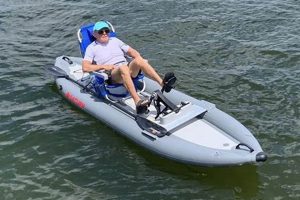
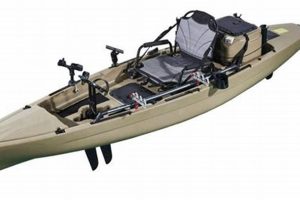
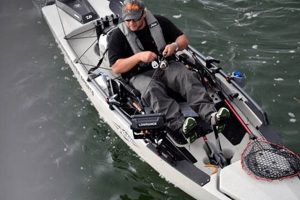
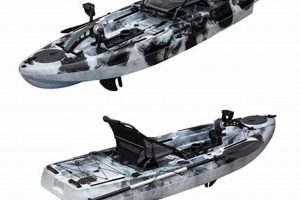
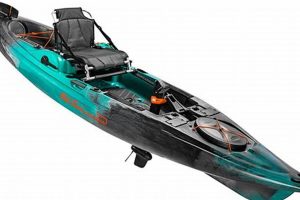
High-quality, human-powered fishing vessels propelled by foot pedals represent a significant advancement in angling technology. These watercraft offer hands-free operation, allowing anglers to focus on fishing techniques while maintaining precise boat control and navigating diverse aquatic environments. A well-designed pedal-powered fishing kayak typically features adjustable seating, ample storage for tackle and gear, and a stable hull design for comfortable and efficient fishing experiences.
Hands-free propulsion offers substantial advantages compared to traditional paddle kayaks, including increased speed and range, reduced fatigue, and the ability to fish effectively in currents or wind. This evolution in kayak design stems from a growing demand for more efficient and enjoyable fishing experiences. The combination of stability, maneuverability, and pedal-powered propulsion allows anglers to access previously challenging fishing locations and spend more time actively fishing.
This discussion will delve into the critical factors to consider when selecting a pedal-driven fishing kayak, such as hull design, propulsion systems, features, and budget considerations. Further exploration will cover popular models, maintenance best practices, and essential accessories to enhance on-water performance and fishing success.
Tips for Selecting a Pedal-Driven Fishing Kayak
Choosing a suitable pedal-driven fishing kayak requires careful consideration of various factors to ensure optimal performance, stability, and enjoyment on the water. The following tips offer guidance for making an informed decision.
Tip 1: Consider Hull Design: Kayak hull designs significantly impact stability and maneuverability. A wider, flatter hull provides greater stability, particularly important for stand-up fishing, while a longer, narrower hull offers better tracking and speed.
Tip 2: Evaluate Propulsion Systems: Assess different pedal-drive mechanisms, including propeller and fin designs. Propeller systems excel in open water, while fin systems perform well in shallow water and over vegetation. Consider maintenance requirements and durability.
Tip 3: Prioritize Comfort and Adjustability: A comfortable seat and adjustable footrests are essential for long fishing trips. Look for features like breathable seating materials and adjustable backrests. Ensure the kayak offers adequate legroom and storage space.
Tip 4: Assess Weight Capacity and Stability: Carefully consider the combined weight of the angler, gear, and potential catch. Choose a kayak with a sufficient weight capacity and a stable hull design to prevent tipping.
Tip 5: Factor in Storage and Gear Management: Ample storage is crucial for carrying fishing rods, tackle boxes, and other essential gear. Look for well-designed storage compartments, rod holders, and mounting options for fish finders and other accessories.
Tip 6: Establish a Budget: Pedal-driven kayaks vary significantly in price. Establish a realistic budget and explore options within that range. Consider features, materials, and brand reputation when evaluating value for money.
Tip 7: Test Drive Before Purchase: Whenever possible, test drive different models before making a final decision. This allows potential buyers to experience the kayak’s stability, maneuverability, and comfort firsthand.
By considering these tips, anglers can select a pedal-driven fishing kayak that meets their specific needs and enhances their on-water fishing experiences. A well-chosen vessel can provide years of enjoyment and successful angling.
The subsequent section will explore popular models and provide further insights into maximizing performance on the water.
1. Stability

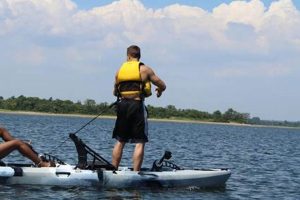
Stability forms a cornerstone of a superior pedal-driven fishing kayak experience. A stable platform allows anglers to confidently cast, reel, and land fish, even in challenging conditions such as wind, chop, or currents. Compromised stability can lead to angler fatigue, difficulty in maneuvering, and potentially dangerous situations, especially when handling large fish or navigating complex water environments. The inherent stability of a kayak influences its suitability for different fishing styles, including stand-up fishing, which requires a significantly more stable platform than seated fishing.
Several factors contribute to kayak stability. Hull design plays a crucial role, with wider, flatter hulls generally offering greater initial stability. Features such as outriggers or pontoons can further enhance stability, though they may compromise maneuverability in tight spaces. Weight distribution also plays a significant role; proper loading and balance enhance stability. For example, a kayak loaded with gear primarily at the stern will be less stable than one with weight evenly distributed. Understanding the interplay of these factors allows anglers to make informed decisions when selecting and outfitting a pedal-driven fishing kayak for optimal performance and safety.
Selecting a kayak with appropriate stability characteristics is essential for maximizing fishing effectiveness and safety. Anglers should carefully consider their intended fishing style, target species, and typical water conditions when evaluating stability. Choosing a kayak optimized for stability ensures a comfortable and confident fishing experience, allowing for greater focus on angling techniques and less concern about balance and potential capsize.
2. Propulsion efficiency
Propulsion efficiency stands as a critical factor in determining the overall performance of a pedal-driven fishing kayak. It directly impacts the speed, range, and maneuverability of the vessel, influencing how effectively anglers can cover water and position themselves for optimal fishing. A highly efficient propulsion system allows for greater distances to be covered with less effort, conserving energy for the actual fishing activity. Understanding the elements contributing to propulsion efficiency empowers informed decision-making during kayak selection.
- Drive Mechanism Design:
Different drive mechanisms, such as propeller-based systems and fin-based systems, exhibit varying levels of efficiency. Propeller systems generally excel in open water, delivering higher speeds, but can be susceptible to fouling in weedy or shallow environments. Fin-based systems perform well in shallow water and vegetation, offering better maneuverability in confined spaces, but may not achieve the same top speeds as propellers. The choice depends on the intended fishing environment and priorities regarding speed versus maneuverability.
- Gear Ratio and Pedal System:
The gear ratio of the pedal drive system significantly impacts the efficiency of power transfer from the angler to the propulsion mechanism. A higher gear ratio results in more speed per pedal rotation but requires greater effort. A lower gear ratio offers more torque for navigating currents or challenging conditions but may sacrifice top-end speed. The optimal gear ratio depends on individual preferences and typical fishing scenarios. Ergonomic pedal design also plays a role in comfort and efficient power transfer.
- Hull Design and Water Resistance:
The kayak’s hull design interacts directly with the water, impacting overall resistance and, consequently, propulsion efficiency. A sleek, hydrodynamic hull minimizes drag, allowing for easier movement through the water. Conversely, a wider, flatter hull, while providing stability, may increase water resistance and require more effort to propel. The choice involves balancing stability requirements with the desire for efficient propulsion.
- Maintenance and Condition of the Drive System:
Regular maintenance of the pedal drive system, including lubrication and inspection for wear and tear, is essential for maintaining optimal propulsion efficiency. A well-maintained system operates smoothly, minimizing friction and maximizing power transfer. Neglecting maintenance can lead to decreased performance, increased effort, and potential mechanical failures.
Optimizing these elements collectively contributes significantly to selecting a best-in-class pedal-driven fishing kayak. A highly efficient propulsion system translates to greater on-water performance, allowing anglers to cover more ground, conserve energy, and focus on the core activity of fishing. This translates to a more enjoyable and potentially more successful angling experience.
3. Hull Design
Hull design significantly influences the performance of a pedal-driven fishing kayak, impacting stability, speed, maneuverability, and overall fishing effectiveness. Careful consideration of hull characteristics is essential for selecting a kayak optimized for specific fishing environments and angling styles. Understanding the nuances of hull design empowers informed decisions and contributes to a more enjoyable and productive on-water experience.
- Displacement Hulls
Displacement hulls, characterized by a V-shaped or rounded bottom, are designed to move efficiently through the water by displacing water as the kayak moves forward. This design prioritizes tracking and speed, making them suitable for covering longer distances in open water conditions. Kayaks with displacement hulls typically track well in a straight line and maintain momentum efficiently. However, they may be less stable than other hull types, especially in rough water or when making sharp turns. This design characteristic makes them a good choice for anglers targeting pelagic species in open water or those requiring efficient movement across larger bodies of water.
- Planing Hulls
Planing hulls feature a flatter bottom with a sharper chine (the transition point between the bottom and sides of the hull). This design allows the kayak to rise up and plane on the surface of the water at higher speeds, reducing drag and increasing speed potential. Planing hulls excel in calm water conditions and offer superior speed compared to displacement hulls. However, they may be less stable at lower speeds and more susceptible to wind and current drift. Anglers prioritizing speed and operating primarily in calmer waters often prefer planing hulls.
- Pontoon Hulls
Pontoon hulls incorporate additional pontoons or outriggers alongside the main hull. These pontoons significantly increase stability, making them ideal for stand-up fishing or activities requiring enhanced balance. Pontoon hulls excel in providing a stable platform for anglers to cast, reel, and maneuver while standing. However, the added pontoons can introduce increased drag, reducing speed and maneuverability compared to other hull designs. Anglers prioritizing stability often choose pontoon hulls, recognizing the trade-off in speed and agility. This design is particularly prevalent in kayaks specifically designed for fishing.
- Hybrid Hulls
Hybrid hulls combine elements of different hull designs to achieve a balance of performance characteristics. For example, a hybrid hull might incorporate a moderately V-shaped bottom with a slightly flattened section towards the stern, aiming to blend the tracking of a displacement hull with the stability of a planning hull. Hybrid designs seek to provide a versatile option suited for a range of water conditions and fishing styles. However, the compromises inherent in blending designs may result in a hull that doesn’t excel in any one particular area. Anglers seeking versatility and a balance of performance attributes often gravitate towards hybrid hull designs.
Matching hull design to specific fishing needs and conditions significantly contributes to a positive on-water experience. Anglers focusing on open-water fishing or requiring efficient travel over longer distances may prefer a displacement hull. Those prioritizing speed in calm water might opt for a planing hull. Anglers seeking maximum stability, particularly for stand-up fishing, will likely find pontoon hulls advantageous. Understanding the characteristics of each hull type empowers informed decision-making, enabling anglers to select the best pedal-driven fishing kayak tailored to their individual needs and fishing style. This informed choice contributes to increased comfort, efficiency, and overall enjoyment on the water.
4. Comfort Features
Comfort features play a crucial role in defining a best-in-class pedal-driven fishing kayak. Extended periods on the water, often under challenging conditions, necessitate a comfortable and supportive environment for the angler. Discomfort can lead to fatigue, reduced focus, and a diminished overall fishing experience. Prioritizing comfort features directly translates to enhanced endurance, improved concentration, and increased enjoyment on the water, ultimately contributing to a more successful and rewarding fishing trip. A well-designed kayak prioritizes angler comfort to maximize fishing effectiveness and enjoyment.
Several key comfort features distinguish superior pedal-driven fishing kayaks. A well-designed, adjustable seat with proper lumbar support is paramount. Materials should be breathable and durable, promoting comfort even in hot and humid conditions. Adjustable footrests accommodate varying leg lengths and allow for optimal pedaling efficiency and posture. Sufficient legroom and deck space contribute to overall comfort and ease of movement within the kayak. Strategically placed storage compartments and readily accessible gear tracks minimize the need for excessive reaching or bending, reducing strain and maximizing fishing time. Ample deck space provides freedom of movement and storage options for essential gear.
The practical significance of prioritizing comfort features becomes evident during extended fishing trips. A comfortable angler can maintain focus and effectiveness throughout the day, maximizing opportunities and minimizing fatigue. For example, an angler battling discomfort due to an inadequate seat or poorly positioned footrests will likely experience diminished performance compared to an angler comfortably situated in a well-designed kayak. Choosing a kayak with superior comfort features represents a worthwhile investment, contributing to increased enjoyment, reduced fatigue, and enhanced overall fishing success. The result is a more enjoyable and productive fishing experience, emphasizing the critical role of comfort in maximizing on-water performance.
5. Storage Capacity
Storage capacity stands as a critical factor in evaluating pedal-driven fishing kayaks, directly impacting organization, efficiency, and overall fishing success. Ample and well-designed storage facilitates easy access to essential gear, minimizing disruptions and maximizing fishing time. Insufficient or poorly planned storage can lead to frustration, wasted time searching for equipment, and a compromised fishing experience. The importance of storage capacity becomes particularly pronounced during longer trips or when carrying specialized gear for specific fishing techniques.
- Rod Storage
Dedicated rod holders, whether flush-mounted or adjustable, are essential for securing rods safely and conveniently. Well-designed rod holders prevent rod damage and entanglement while keeping them readily accessible for quick deployment. The number and placement of rod holders should align with the angler’s typical fishing style and the number of rods used concurrently.
- Tackle Storage
Designated compartments for tackle boxes, trays, and other fishing accessories contribute significantly to organization and efficiency. Waterproof compartments safeguard sensitive electronics and gear from water damage. Easy-access storage within reach of the seating position minimizes disruption during fishing. The size, configuration, and accessibility of tackle storage should align with individual angler preferences and the type of fishing pursued.
- Dry Storage
Watertight compartments provide essential protection for sensitive items such as phones, wallets, and cameras. Dry storage is crucial for maintaining the functionality and longevity of electronic devices and preventing damage to essential personal belongings. The capacity and accessibility of dry storage influence the practicality of carrying valuable items on the water.
- Gear Tracks and Mounting Points
Integrated gear tracks and mounting points offer versatile options for customizing storage solutions and attaching accessories like fish finders, GPS units, and camera mounts. These features provide flexibility for tailoring the kayak to specific fishing needs and preferences. The availability and placement of gear tracks and mounting points directly influence the adaptability and customization potential of the kayak.
A best-in-class pedal-driven fishing kayak incorporates thoughtful storage solutions that enhance organization, efficiency, and overall fishing success. Prioritizing storage capacity contributes to a more streamlined and enjoyable fishing experience by keeping essential gear readily accessible, minimizing clutter, and allowing anglers to focus on the task at hand. Careful consideration of storage features during kayak selection represents a crucial step towards maximizing on-water performance and overall fishing satisfaction. Evaluating storage capacity based on individual fishing styles and gear requirements helps determine the optimal kayak configuration.
6. Durability/Maintenance
Durability and ease of maintenance are essential considerations when selecting a best-in-class pedal-driven fishing kayak. These factors directly impact the long-term cost of ownership, the frequency of required upkeep, and the overall lifespan of the kayak. A durable, easily maintained vessel ensures more time on the water and less time and expense dedicated to repairs and maintenance. Evaluating these aspects contributes significantly to informed decision-making and ensures a wise investment in fishing equipment.
- Construction Materials
The materials used in kayak construction significantly influence durability and maintenance requirements. High-density polyethylene (HDPE) offers excellent impact resistance and UV protection, requiring minimal maintenance. Fiberglass kayaks provide superior strength and a lighter weight but may require more specialized repairs if damaged. Thermoformed ABS kayaks offer a balance of durability and weight but can be more susceptible to scratches and abrasions. The choice of material depends on the anticipated usage, storage conditions, and budget constraints.
- Drive System Maintenance
The pedal drive system, a core component of these kayaks, requires regular maintenance to ensure optimal performance and longevity. Routine lubrication, cleaning, and inspection for wear and tear are essential. Sealed drive systems minimize maintenance requirements by protecting internal components from water and debris. The complexity and accessibility of the drive system for maintenance should be carefully considered. Easy access to serviceable parts simplifies maintenance and reduces potential downtime.
- Hardware and Fittings
Corrosion-resistant hardware and fittings, such as stainless steel or marine-grade aluminum, contribute to the long-term durability of the kayak. High-quality hardware resists rust and degradation from exposure to saltwater and UV radiation, minimizing the need for replacements and ensuring the continued functionality of critical components. Inspecting the quality of hardware provides insights into the overall durability and longevity of the kayak.
- Storage and Transportation Considerations
Proper storage and transportation practices play a significant role in maintaining the kayak’s condition. Storing the kayak out of direct sunlight and protecting it from extreme temperatures helps prevent material degradation and extends its lifespan. Using appropriate roof racks and tie-down straps during transportation minimizes the risk of damage during transit. Considering storage and transportation logistics contributes to preserving the kayak’s integrity and minimizing potential repairs.
Selecting a durable, low-maintenance pedal-driven fishing kayak represents a sound investment, maximizing time on the water and minimizing long-term costs. Careful consideration of construction materials, drive system maintenance requirements, hardware quality, and storage practices contributes significantly to informed decision-making. Prioritizing durability and ease of maintenance ensures a reliable and enjoyable fishing platform for years to come, reinforcing the importance of these factors in defining a truly best-in-class pedal-driven fishing kayak. This long-term perspective emphasizes the value of durability and ease of maintenance in maximizing the return on investment and overall fishing enjoyment.
7. Price Point
Price point plays a significant role in the evaluation and selection of a pedal-driven fishing kayak, often influencing perceived value and affordability. While “best” often implies premium quality and features, the definition of “best” varies greatly depending on individual budgets and needs. The relationship between price point and the ideal fishing kayak involves careful consideration of features, materials, performance, and long-term value. A higher price point doesn’t automatically equate to a “better” kayak for every angler; rather, the optimal choice depends on aligning features and performance with budgetary constraints.
For example, a premium kayak might boast a high-end pedal drive system, advanced electronics, and premium seating, justifying a higher price tag. This kayak may be the “best” choice for an angler prioritizing top-tier performance and features, regardless of cost. Conversely, a budget-friendly kayak, while lacking some premium features, can provide adequate performance and functionality for anglers with tighter budgets. This option represents the “best” value for anglers prioritizing affordability over top-end features. Understanding this distinction allows for informed decisions that maximize value within a given price range. One might consider a kayak priced around $1500 a mid-range option, balancing features and affordability, while a $3000+ kayak typically represents the high-end market, boasting advanced features and materials. A sub-$1000 option caters to budget-conscious anglers, often compromising some features for affordability.
Ultimately, the connection between price point and the “best” pedal-driven fishing kayak hinges on individual needs, priorities, and budgetary constraints. Evaluating features, performance, and long-term value within different price brackets allows anglers to make informed decisions and select the optimal kayak that aligns with their specific requirements and budget. Recognizing that “best” is subjective and dependent on individual circumstances empowers anglers to choose wisely, maximizing value and ensuring a satisfying purchase experience. Careful consideration of price alongside other key features like stability, propulsion efficiency, and comfort ultimately leads to the selection of the truly “best” kayak for each individual angler.
Frequently Asked Questions
This section addresses common inquiries regarding pedal-driven fishing kayaks, providing concise and informative responses to facilitate informed decision-making.
Question 1: What are the primary advantages of a pedal-driven fishing kayak over a traditional paddle kayak?
Pedal-driven kayaks offer hands-free propulsion, allowing anglers to focus on fishing. They provide increased speed and range, reducing fatigue and enabling efficient fishing in currents or wind.
Question 2: How does hull design impact the performance of a pedal-driven fishing kayak?
Hull design influences stability, speed, and maneuverability. Wider hulls offer greater stability, while longer, narrower hulls enhance speed and tracking. Specialized hull designs, such as pontoon hulls, cater to specific fishing styles like stand-up fishing.
Question 3: What maintenance is typically required for a pedal-driven kayak’s propulsion system?
Regular maintenance includes rinsing the system with fresh water after each use, periodic lubrication of moving parts, and occasional inspection for wear and tear. Specific maintenance requirements vary depending on the drive system design.
Question 4: What factors should be considered when choosing between a propeller-based and a fin-based pedal drive system?
Propeller systems generally offer higher speeds in open water but are more susceptible to fouling in vegetation or shallow areas. Fin systems excel in shallow water and over vegetation but may not achieve the same top speeds as propellers.
Question 5: What safety precautions should be taken when using a pedal-driven fishing kayak?
Standard safety precautions include wearing a personal flotation device (PFD), carrying a whistle or other signaling device, informing someone of fishing plans, and checking weather conditions before heading out on the water.
Question 6: What is the typical price range for a quality pedal-driven fishing kayak?
Prices vary significantly based on features, materials, and brand reputation. Entry-level models may start around $1000, while high-end kayaks equipped with advanced features can exceed $3000. Mid-range options typically fall between $1500 and $2500.
Careful consideration of these frequently asked questions empowers potential buyers to make informed decisions when selecting a pedal-driven fishing kayak. Understanding the nuances of these vessels contributes to a more satisfying and successful on-water experience.
The following section delves further into specific models and features, providing additional guidance for selecting the ideal fishing kayak.
Conclusion
Optimal selection hinges on a comprehensive understanding of individual angler needs, fishing styles, and target environments. Careful evaluation of hull design, propulsion systems, comfort features, storage capacity, durability, maintenance requirements, and price point contributes significantly to informed decision-making. Prioritizing these interconnected factors empowers anglers to choose a vessel optimized for performance, comfort, and long-term value.
Investing in a premium, human-powered fishing vessel provides an unparalleled opportunity to enhance on-water experiences. Thoughtful consideration of these key aspects ensures not only a successful fishing platform but also a source of lasting enjoyment and connection with the aquatic environment. Informed choices lay the foundation for countless rewarding fishing expeditions.