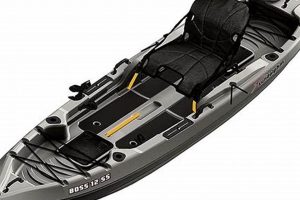
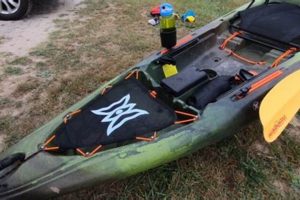
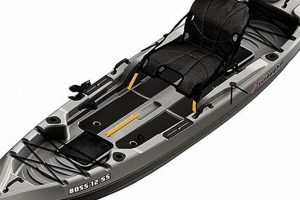
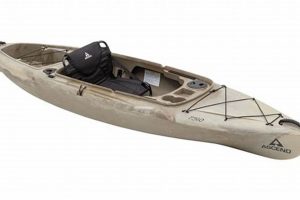
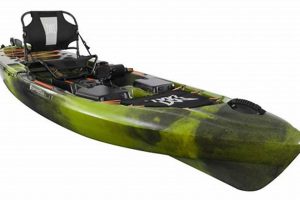
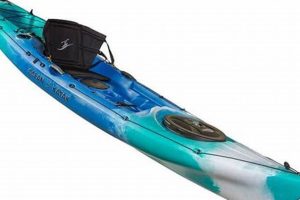
This specific type of watercraft combines several key features. “Sit-on-top” describes the open-deck design, offering enhanced stability and ease of entry and exit compared to traditional closed-cockpit kayaks. Designed for angling, these vessels typically incorporate features like rod holders, tackle storage, and sometimes even livewells. Furthermore, the emphasis on affordability makes this style of kayak accessible to a wider range of individuals interested in fishing from the water.
The combination of stability, specialized features, and lower cost makes this type of watercraft an attractive option for anglers of varying skill levels. The sit-on-top design provides a sense of security, particularly for beginners, while the fishing-specific features enhance the angling experience. Historically, fishing kayaks were often expensive, limiting accessibility. The increasing availability of budget-friendly options opens up new possibilities for those seeking to explore the sport.
This article will further explore various aspects of choosing and using this type of kayak. Topics covered will include selecting the right size and features, essential safety equipment, recommended fishing techniques, and maintenance tips. Readers will gain a comprehensive understanding of how to maximize their enjoyment and success on the water.
Tips for Selecting and Using a Budget-Friendly Fishing Kayak
Careful consideration of several factors contributes to a successful and enjoyable experience on the water. The following tips provide guidance for individuals seeking to maximize their investment in an affordable sit-on-top fishing kayak.
Tip 1: Prioritize Stability and Capacity: Wider kayaks generally offer greater stability, especially valuable for beginners. Consider carrying capacity based on anticipated weight of gear and angler, ensuring safe and efficient performance.
Tip 2: Evaluate Fishing-Specific Features: Rod holders, tackle storage compartments, and anchor trolleys are essential elements for angling. Assess the quantity and placement of these features to meet individual fishing needs.
Tip 3: Consider Propulsion Options: Paddle kayaks are versatile and offer excellent exercise, but pedal-powered or motorized options may be preferable for covering larger distances or fishing in stronger currents.
Tip 4: Research Materials and Construction: Durable materials like high-density polyethylene contribute to longevity. Examine the construction quality and look for features like reinforced hulls and decks.
Tip 5: Factor in Transportation and Storage: Determine appropriate transportation methods based on vehicle type. Evaluate storage options considering available space and environmental conditions.
Tip 6: Test Before Purchasing: If possible, try out different models before making a final decision. Assess stability, comfort, and maneuverability on the water.
Tip 7: Budget for Essential Safety Gear: A personal flotation device (PFD), whistle, and appropriate lighting are critical for safety. Consider additional safety equipment based on fishing location and conditions.
By addressing these factors, individuals can make informed decisions about their purchase and ensure a positive experience on the water. Appropriate selection and preparation enhance both safety and enjoyment while fishing.
Through these tips, prospective kayak anglers can better understand the key considerations involved in selecting and using a budget-friendly option tailored to their needs. The subsequent conclusion offers a final perspective on the value and benefits of these versatile watercraft.
1. Stability

Stability is a paramount concern when selecting an affordable sit-on-top fishing kayak. It directly impacts angler safety, comfort, and confidence on the water, especially in varying conditions or when engaging with fish. A stable platform allows for easier casting, reeling, and landing, contributing to a more enjoyable and productive fishing experience.
- Hull Design and Stability
Hull design significantly influences stability. Wider, flatter hulls generally provide greater primary stability (initial resistance to tipping), making them suitable for calm waters and beginners. Kayaks with a more rounded or V-shaped hull may offer less initial stability but better secondary stability (resistance to capsizing once tipped), potentially advantageous in rougher conditions for experienced paddlers. Budget-friendly kayaks often prioritize primary stability for a broader user base.
- Center of Gravity and Weight Distribution
A lower center of gravity contributes to increased stability. Distributing weight evenly within the kayak is crucial. Positioning heavier items lower and closer to the center enhances balance. Affordable fishing kayaks often feature designated storage areas to facilitate proper weight distribution.
- Impact of Water Conditions on Stability
Calm waters generally pose fewer stability challenges. Wind, waves, and currents can significantly impact stability, requiring greater attention to balance and kayak control. Anglers using affordable kayaks should exercise caution in challenging conditions, selecting appropriate locations and times for fishing.
- Stability Enhancements
Outriggers or stabilizers can be added to increase stability, particularly beneficial for individuals with balance concerns or when fishing in rougher waters. While these additions can enhance stability, they may impact maneuverability and portability, factors to consider when selecting an affordable option.
Prioritizing stability when choosing an affordable sit-on-top fishing kayak is essential for safety and fishing success. Understanding the interplay between hull design, weight distribution, water conditions, and potential enhancements allows anglers to make informed decisions and maximize their on-the-water experience. A stable platform contributes to confidence and enjoyment, enabling anglers to focus on fishing rather than maintaining balance.
2. Fishing Features

Dedicated fishing features distinguish a fishing kayak from recreational models. These features directly impact angling efficiency and enjoyment. While premium kayaks often boast extensive features, affordable options can still provide essential functionalities for a successful fishing experience. Evaluating these features within a budget context is crucial for informed purchasing decisions.
- Rod Holders
Rod holders are fundamental components of a fishing kayak, providing secure storage and quick access to rods. Flush-mounted rod holders offer a streamlined profile, minimizing line entanglement. Adjustable rod holders accommodate various fishing styles and rod lengths. Affordable kayaks may offer fewer rod holders than high-end models, but strategically placed holders can still provide ample functionality.
- Storage Options
Storage compartments are essential for organizing tackle, gear, and personal items. Dry storage protects sensitive electronics and equipment from water damage. Open storage areas allow for quick access to frequently used items. Affordable kayaks often prioritize open storage to minimize cost, while dry storage may be limited or absent. Anglers should consider storage needs based on fishing style and anticipated gear.
- Mounting Tracks and Gear Compatibility
Mounting tracks provide versatile platforms for attaching fish finders, GPS units, cameras, and other accessories. Compatibility with standard mounting systems allows for customization and future upgrades. While some affordable kayaks may include shorter mounting tracks or fewer mounting points, they can still offer adequate customization options for essential electronics and gear.
- Paddle Holders/Parks
Dedicated paddle holders or parks secure the paddle when not in use, freeing hands for fishing. These features prevent accidental paddle loss and minimize interference with fishing activities. While often standard on even affordable models, the design and effectiveness of these holders can vary, influencing ease of use and security.
While advanced features may be limited in affordable sit-on-top fishing kayaks, prioritizing essential functionalities such as strategically placed rod holders, sufficient storage, and compatible mounting systems ensures a productive and enjoyable fishing experience. Careful consideration of individual fishing needs and budget constraints enables anglers to select a kayak equipped with the appropriate features for their specific requirements.
3. Weight Capacity

Weight capacity is a critical factor influencing the performance and safety of an affordable sit-on-top fishing kayak. This specification represents the maximum combined weight of the angler, gear, and any additional cargo the kayak can safely support. Exceeding the specified weight capacity compromises stability, maneuverability, and ultimately, safety. Understanding the relationship between weight capacity and kayak performance is essential for making informed purchasing decisions.
A kayak’s weight capacity directly correlates with its volume and dimensions. Larger, wider kayaks generally offer higher weight capacities. However, increased size often comes at the expense of maneuverability and portability. Affordable kayaks often balance cost considerations with capacity, offering sufficient load-bearing capabilities while remaining manageable for transport and storage. For example, a kayak rated for 300 lbs. can comfortably accommodate a 200 lb. angler plus 100 lbs. of gear, but adding another 50 lbs. risks compromising stability and performance. Conversely, a smaller kayak with a 250 lb. capacity might be suitable for a lighter angler with minimal gear but inadequate for larger individuals or extensive fishing equipment.
Careful consideration of individual needs and anticipated loads is crucial. Overestimating weight capacity can lead to dangerous instability, while underestimating can limit functionality and enjoyment. Accurately assessing the combined weight of angler, gear, and potential catches ensures safe and efficient kayak operation. Selecting an affordable kayak with appropriate weight capacity is fundamental for a positive and safe on-the-water experience.
4. Durability
Durability is a crucial factor influencing the lifespan and overall value of an affordable sit-on-top fishing kayak. While budget considerations often drive purchasing decisions, compromising durability can lead to premature wear and tear, costly repairs, or even replacement. Understanding the factors contributing to kayak durability enables informed choices and maximizes long-term investment.
- Material Selection
Material selection significantly impacts a kayak’s resistance to impact, abrasion, and UV degradation. High-density polyethylene (HDPE) is a common material in affordable kayaks, offering a good balance of durability and cost-effectiveness. Other materials, such as rotomolded polyethylene, provide enhanced impact resistance but often come at a higher price point. Understanding the properties of different materials allows for informed decisions based on anticipated usage and environmental conditions.
- Construction Quality
Construction quality influences a kayak’s structural integrity and resistance to leaks. Well-constructed kayaks feature reinforced hulls, decks, and seams, minimizing the risk of damage from impacts or stress. Examining weld quality and overall construction details can provide insights into a kayak’s potential durability. Thorough inspection before purchase is essential, especially for affordable kayaks where construction quality can vary.
- UV Resistance
Exposure to sunlight can degrade kayak materials over time, leading to fading, cracking, and reduced structural integrity. UV-resistant coatings or additives can mitigate these effects, prolonging the lifespan of the kayak. Storing the kayak out of direct sunlight when not in use further protects against UV degradation. Considering UV resistance is particularly important for kayaks frequently used in sunny climates.
- Maintenance and Care
Proper maintenance and care contribute significantly to a kayak’s longevity. Regular cleaning, rinsing with fresh water after saltwater use, and proper storage minimize wear and tear. Addressing minor damage promptly prevents further deterioration. Understanding basic maintenance procedures can significantly extend the lifespan of even an affordable kayak.
Balancing durability with affordability requires careful consideration of material selection, construction quality, UV resistance, and ongoing maintenance. While budget constraints may limit options, prioritizing these factors ensures a longer-lasting and more enjoyable kayaking experience. Informed decision-making maximizes the value of the investment, providing years of reliable performance on the water.
5. Price Point
Price point plays a crucial role in the accessibility of sit-on-top fishing kayaks. Affordability expands the potential user base, enabling more individuals to experience kayak fishing. The market offers a range of price points, influenced by factors such as materials, features, and brand recognition. Understanding these factors empowers consumers to make informed decisions aligned with budget and desired functionality. For example, a basic, no-frills kayak constructed from less expensive materials might retail for a few hundred dollars, while a feature-rich model incorporating premium materials and advanced technologies could command a price several times higher. Balancing desired features with budgetary constraints is key.
Several factors contribute to variations in price. Material selection significantly impacts cost; high-density polyethylene (HDPE) typically represents a more budget-friendly option compared to rotomolded polyethylene. Feature sets also influence price; basic models with fewer fishing-specific features typically cost less than those equipped with integrated electronics, rod holders, and advanced storage systems. Brand recognition often commands a premium, reflecting perceived quality and reputation. Assessing individual needs and prioritizing essential features allows for cost-effective selection without compromising functionality. For instance, an angler primarily fishing in calm, protected waters might prioritize stability and basic features over advanced electronics or premium materials, thus opting for a more affordable model.
Understanding the relationship between price point and features empowers consumers to make informed decisions. Prioritizing essential features and researching various brands and models within a defined budget range yields optimal value. Recognizing that affordability doesn’t necessarily equate to lower quality is important; many budget-friendly options offer excellent performance and durability. Careful evaluation of materials, construction, and features allows anglers to select a kayak that meets their needs without exceeding financial limitations. This informed approach maximizes enjoyment and long-term value, making kayak fishing accessible to a wider audience.
Frequently Asked Questions
This section addresses common inquiries regarding affordable sit-on-top fishing kayaks, providing concise and informative responses to facilitate informed decision-making.
Question 1: What is the typical price range for an affordable sit-on-top fishing kayak?
Prices typically range from $300 to $800, depending on features, materials, and brand. Thorough research and comparison shopping are recommended to identify the best value within this range.
Question 2: Are affordable fishing kayaks less durable than more expensive models?
Not necessarily. While some budget-friendly models may utilize less expensive materials, many offer comparable durability to higher-priced options through robust construction techniques and careful material selection. Focus on build quality and materials when evaluating durability.
Question 3: What essential features should one look for in an affordable fishing kayak?
Essential features include rod holders, storage compartments, and a comfortable seat. Prioritize features aligned with individual fishing styles and needs. While additional features can enhance the experience, they may also increase cost.
Question 4: Are affordable fishing kayaks suitable for ocean use?
Some affordable models are suitable for calm, protected ocean bays or nearshore use. However, kayaks intended for open ocean conditions typically require more specialized design features and higher weight capacities, often exceeding typical budget price points. Careful consideration of water conditions and kayak capabilities is crucial.
Question 5: How does one transport an affordable fishing kayak?
Roof racks are the most common transportation method. Some affordable kayaks are lightweight enough for car-topping without specialized racks. Assess vehicle compatibility and kayak weight when determining appropriate transportation solutions.
Question 6: What safety precautions are necessary when using an affordable fishing kayak?
Always wear a personal flotation device (PFD). Inform someone of planned fishing locations and estimated return times. Carry essential safety equipment, including a whistle, signaling device, and appropriate lighting. Check weather conditions before embarking and adhere to safe boating practices.
Careful consideration of these frequently asked questions empowers individuals to make informed decisions when selecting an affordable sit-on-top fishing kayak. Balancing budget with essential features and safety considerations ensures a positive and enjoyable on-the-water experience.
The following section offers concluding thoughts and recommendations for prospective kayak anglers.
Conclusion
Careful selection of an affordable sit-on-top fishing kayak involves evaluating key factors such as stability, fishing-specific features, weight capacity, durability, and price point. Balancing these considerations ensures optimal performance, safety, and long-term value. Prioritizing essential features within budget constraints enables anglers to access the sport without compromising functionality or enjoyment. Understanding the interplay of these factors empowers informed purchasing decisions, maximizing on-the-water experiences.
The increasing availability of budget-friendly fishing kayaks expands access to this rewarding pastime. Careful research, informed decision-making, and appropriate safety precautions contribute to positive experiences on the water. The combination of affordability and functionality opens new avenues for individuals seeking to explore the world of kayak fishing, fostering a deeper appreciation for the outdoors and the sport itself. This accessibility promotes growth and enjoyment within the angling community, encouraging continued exploration and engagement with the natural world.