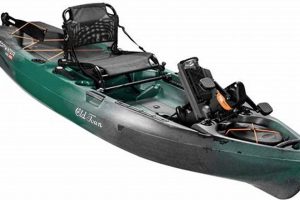
Selecting a suitable watercraft for individuals with larger body types involves careful consideration of factors like weight capacity, width, and cockpit dimensions. A kayak designed to accommodate higher weights offers enhanced stability and comfort, preventing tipping and ensuring an enjoyable paddling experience. For example, a wider kayak with a larger cockpit opening can provide ample space and ease of entry and exit for larger paddlers.
Prioritizing these features contributes significantly to safety and performance on the water. Historically, kayaks were not always designed with a wide range of body types in mind. The increasing popularity of recreational kayaking has led to a greater focus on inclusive design, resulting in more options for individuals of all sizes. This inclusivity allows more people to enjoy the physical and mental health benefits associated with paddling, including improved cardiovascular fitness and stress reduction.
Key factors to consider when choosing a suitable kayak include weight capacity, cockpit dimensions, width, length, and hull design. Subsequent sections will explore these considerations in detail, offering guidance on selecting the optimal kayak for enhanced stability, comfort, and performance.
Tips for Selecting a Kayak for Larger Individuals
Choosing the right kayak is crucial for comfort, stability, and overall enjoyment on the water. The following tips offer guidance for individuals seeking a kayak suitable for their needs.
Tip 1: Prioritize Weight Capacity: Never exceed a kayak’s specified weight limit. This includes the paddler’s weight, plus any gear and equipment. Opting for a kayak with a higher weight capacity than needed provides additional stability.
Tip 2: Consider Cockpit Dimensions: A larger cockpit opening allows for easier entry and exit. Sufficient legroom is essential for comfort, especially on longer paddling trips.
Tip 3: Evaluate Kayak Width: Wider kayaks generally offer greater stability. However, increased width can also impact maneuverability. Consider the desired balance between stability and responsiveness.
Tip 4: Think About Kayak Length: Longer kayaks tend to track straighter and glide more efficiently, while shorter kayaks are more maneuverable. Consider the intended use and paddling environment when selecting length.
Tip 5: Examine Hull Design: A flat hull offers greater initial stability, making it suitable for calm waters. A rounded or V-shaped hull provides better performance in rougher conditions but may feel less stable initially.
Tip 6: Test Before Purchasing: If possible, try out different kayak models before making a purchase. Sitting in a kayak, even on dry land, can provide valuable insight into cockpit size and comfort.
Tip 7: Research and Read Reviews: Consult online resources, read reviews, and seek advice from experienced paddlers. Gathering information from various sources helps in making an informed decision.
By considering these tips, individuals can select a kayak that offers optimal stability, comfort, and performance, enhancing their overall paddling experience.
Ultimately, choosing the appropriate kayak allows for safe and enjoyable exploration of diverse waterways.
1. Weight Capacity

Weight capacity stands as a critical factor when selecting a kayak, particularly for larger individuals. It represents the maximum weight a kayak can safely support, encompassing the combined weight of the paddler, gear, and any additional equipment. Understanding weight capacity is paramount for ensuring both safety and performance on the water.
- Maximum Load:
This signifies the absolute weight limit designated by the manufacturer. Exceeding this limit compromises stability, increases the risk of capsizing, and can potentially damage the kayak. For larger paddlers, selecting a kayak with ample weight capacity is non-negotiable.
- Performance Impact:
Even within the safe weight limit, the total load influences a kayak’s performance. A heavier load sits lower in the water, increasing drag and affecting maneuverability. Individuals with higher body weights should anticipate this effect and consider kayaks designed for larger loads to mitigate performance limitations.
- Stability Considerations:
Weight distribution within the kayak also affects stability. A kayak loaded near its capacity but with balanced weight distribution will be more stable than a kayak loaded under capacity but with uneven weight distribution. Larger paddlers benefit from wider, more stable kayak designs that accommodate higher weight capacities and offer better balance.
- Gear and Equipment:
Calculating the total weight includes not only the paddler’s weight but also essential gear like paddles, life vests, dry bags, and any fishing or camping equipment. Larger individuals carrying additional gear should account for this added weight when considering a kayak’s capacity. Overlooking this factor can lead to an unsafe and unstable paddling experience.
Therefore, choosing a kayak with appropriate weight capacity is fundamental for larger individuals. Careful consideration of this factor ensures safety, optimizes performance, and contributes to a more enjoyable and comfortable paddling experience. Selecting a kayak with a weight capacity significantly higher than the anticipated load provides a margin of safety and enhances stability, particularly crucial for larger paddlers.
2. Cockpit Size
Cockpit size is a crucial factor influencing kayak selection, especially for larger individuals. A properly sized cockpit contributes significantly to comfort, ease of entry and exit, and overall paddling experience. Insufficient cockpit space can restrict movement, cause discomfort, and pose challenges for entering and exiting the kayak, particularly for those with larger frames.
- Legroom and Comfort:
Adequate legroom within the cockpit is essential for comfort, especially during longer paddling excursions. Restricted legroom can lead to cramping, discomfort, and reduced circulation. Larger paddlers often require more legroom and should prioritize kayaks with spacious cockpits that allow for comfortable leg extension and movement.
- Entry and Exit:
The cockpit opening’s dimensions directly impact the ease of entering and exiting the kayak. A larger opening simplifies this process, especially for individuals with limited mobility or larger body sizes. Kayaks with smaller openings can present challenges for larger paddlers, potentially leading to instability or difficulty during entry and exit.
- Fit and Security:
A well-fitting cockpit enhances paddler security and control. While a spacious cockpit is essential for comfort, it shouldn’t be so large that it compromises stability or control. The cockpit should provide a snug yet comfortable fit, allowing the paddler to maintain proper posture and effectively control the kayak. This balance between spaciousness and security is particularly important for larger individuals, who may require more room while still needing a secure and stable feel.
- Cockpit Style:
Different kayak styles feature varying cockpit designs. Sit-on-top kayaks generally offer more open cockpits, providing ample space and ease of entry. Sit-inside kayaks, particularly recreational models, also offer varying cockpit sizes. Larger individuals might find sit-on-tops more accommodating due to their open design, while those seeking greater protection from the elements might prefer sit-inside kayaks with larger cockpit openings. Choosing the right cockpit style and size is crucial for comfort and safety.
Therefore, cockpit size directly impacts the suitability of a kayak for larger individuals. Prioritizing a kayak with a spacious cockpit that allows for comfortable legroom, easy entry and exit, and a secure fit significantly enhances the overall paddling experience. This careful consideration ensures comfort, promotes safety, and allows larger paddlers to enjoy their time on the water with greater ease and confidence.
3. Width

Kayak width significantly influences stability, a crucial factor for larger individuals. A wider hull generally provides enhanced stability, reducing the likelihood of tipping, especially in calm water conditions. Understanding the relationship between width and stability is essential for selecting a kayak suitable for larger paddlers.
- Initial Stability:
Wider kayaks offer greater initial stability, meaning they feel more stable when sitting still or paddling at slower speeds. This is particularly beneficial for larger paddlers, as a higher center of gravity can make narrower kayaks feel tippy. A wider hull provides a more secure and comfortable platform, increasing confidence on the water.
- Secondary Stability:
While initial stability is important, secondary stabilitythe stability when a kayak is leanedalso plays a role. Wider kayaks typically have less secondary stability than narrower kayaks. This means they may feel less stable when leaning into a turn. However, for larger individuals prioritizing stability over maneuverability, the enhanced initial stability of a wider kayak often outweighs the reduced secondary stability.
- Maneuverability:
Wider kayaks tend to be less maneuverable than narrower kayaks. They require more effort to turn and may not be as responsive in challenging conditions. While this can be a drawback for experienced paddlers seeking agility, larger individuals often prioritize stability over maneuverability, making wider kayaks a suitable choice for recreational paddling in calm waters.
- Speed and Tracking:
Wider kayaks generally have more wetted surface area, which creates greater drag and reduces speed compared to narrower kayaks. They also tend to track less efficiently, requiring more corrective strokes to maintain a straight line. However, for larger individuals primarily focused on stability and comfortable paddling in calm conditions, the slight reduction in speed and tracking performance is often less of a concern than the increased stability offered by a wider hull.
Therefore, kayak width is a critical consideration for larger paddlers. Selecting a wider kayak provides enhanced initial stability, promoting confidence and safety on the water. While maneuverability and speed may be slightly compromised, the increased stability offered by a wider hull is a significant advantage for larger individuals, contributing to a more secure and enjoyable paddling experience.
4. Length

Kayak length plays a significant role in determining its performance characteristics, including speed, tracking, and maneuverability. Selecting the appropriate length is crucial for optimizing the paddling experience, especially for larger individuals who require additional stability and comfort. Understanding the impact of length on various performance aspects helps in choosing a kayak best suited for individual needs and paddling conditions.
- Tracking:
Longer kayaks generally track straighter and require fewer corrective strokes to maintain a desired course. This improved tracking performance is advantageous for longer paddling trips and open water conditions. Shorter kayaks, while more maneuverable, tend to wander off course more easily, requiring frequent adjustments to maintain direction. For larger individuals paddling longer distances, the enhanced tracking of a longer kayak can contribute to a more efficient and less tiring experience.
- Speed and Glide:
Longer kayaks typically glide more efficiently and achieve higher speeds with less effort. Their longer waterline reduces drag, allowing them to cut through the water more smoothly. Shorter kayaks, while easier to accelerate initially, require more effort to maintain speed over longer distances. For larger paddlers seeking efficient cruising, the enhanced speed and glide of a longer kayak can be beneficial.
- Maneuverability:
Shorter kayaks excel in maneuverability, allowing for quicker turns and easier navigation in tight spaces or complex waterways. Longer kayaks, due to their increased length and inertia, require more effort to turn and maneuver. While maneuverability is essential for certain paddling styles and environments, larger individuals often prioritize stability, making the slightly reduced maneuverability of a longer kayak less of a concern.
- Storage Capacity:
Longer kayaks often offer more storage space, accommodating gear and equipment for longer expeditions. This is particularly advantageous for camping trips or fishing excursions where carrying additional gear is necessary. For larger individuals who may require more gear or prefer longer paddling trips, the increased storage capacity of a longer kayak can be a significant benefit.
Therefore, kayak length is a key consideration when choosing a suitable kayak, especially for larger individuals. Balancing the advantages of tracking, speed, and storage capacity against maneuverability considerations helps in selecting a kayak that optimizes performance and comfort based on individual needs and paddling preferences. While longer kayaks generally offer benefits in tracking, speed, and storage, the optimal length ultimately depends on the intended use and paddling environment. For larger individuals, the increased stability and load capacity often associated with longer kayaks can contribute significantly to a more enjoyable and confident paddling experience.
5. Hull Design

Hull design significantly influences a kayak’s performance characteristics, impacting stability, maneuverability, and speed. Selecting an appropriate hull design is crucial for an optimal paddling experience, especially for larger individuals who often prioritize stability and comfort. Understanding the nuances of various hull designs empowers informed decision-making, aligning kayak selection with individual needs and paddling conditions.
- Flat Hull:
Flat hulls provide excellent initial stability, making them ideal for calm water conditions like lakes and slow-moving rivers. Their wide, flat bottom offers a stable platform, minimizing tipping and enhancing confidence for larger paddlers. However, flat hulls tend to be less maneuverable and less efficient in tracking a straight line compared to other hull designs. They are best suited for recreational paddling where stability is prioritized over performance.
- Rounded Hull:
Rounded hulls offer a balance between stability and maneuverability. They provide good initial stability while also allowing for efficient turning and maneuvering. This versatility makes them suitable for a variety of paddling environments, from calm lakes to moderate currents. For larger individuals seeking a combination of stability and responsiveness, a rounded hull can be a suitable compromise.
- V-Shaped Hull:
V-shaped hulls excel in tracking and speed, efficiently cutting through the water and maintaining a straight course. They offer less initial stability than flat or rounded hulls but provide superior secondary stability, meaning they feel more stable when leaned into a turn. V-shaped hulls are often preferred for open water paddling and touring, where speed and efficiency are prioritized. While less stable initially, they can be suitable for larger paddlers who prioritize performance and paddle in more challenging conditions.
- Pontoon Hull:
Pontoon hulls, characterized by two separate hulls connected by a deck, offer exceptional stability, even in rougher conditions. This design maximizes stability and minimizes the risk of tipping, making them ideal for fishing kayaks or recreational paddling in choppy water. While less maneuverable and slower than other hull types, the enhanced stability of pontoon hulls can be particularly beneficial for larger individuals seeking maximum stability and security on the water. They offer a stable platform for fishing or recreational paddling, especially in challenging conditions where stability is paramount.
Therefore, hull design is a critical consideration when selecting a kayak, particularly for larger individuals. Understanding the performance characteristics of various hull designs allows informed decision-making, ensuring the chosen kayak aligns with individual needs and paddling styles. Prioritizing stability, maneuverability, or a combination of both, along with considering the intended paddling environment, guides the selection process, ultimately contributing to a safer and more enjoyable paddling experience.
6. Seat Comfort

Seat comfort is a crucial factor influencing the overall kayaking experience, particularly for larger individuals. Extended periods on the water necessitate adequate support and cushioning to prevent discomfort, fatigue, and potential back pain. A comfortable seat allows for prolonged enjoyment and exploration, while an uncomfortable seat can quickly curtail even the most enthusiastic paddling adventure. For larger individuals, proper seat design and adjustability become even more critical, as standard kayak seats may lack the necessary support and width to accommodate larger frames comfortably. An ill-fitting seat can lead to pressure points, reduced circulation, and overall discomfort, significantly impacting the paddling experience. For instance, a poorly designed seat lacking sufficient lumbar support can lead to back pain, particularly for individuals with pre-existing back conditions. Conversely, a well-designed seat with adjustable back support, ample cushioning, and a wider base can significantly enhance comfort and allow for extended paddling without discomfort.
Several factors contribute to seat comfort, including cushioning, back support, adjustability, and material. Ample cushioning absorbs shock and vibrations, reducing strain on the body. Adjustable back support allows paddlers to customize the seat to their individual needs, promoting proper posture and reducing back strain. Breathable, quick-drying materials enhance comfort, especially in warmer climates. For larger individuals, seats with wider bases and higher weight capacities are essential for proper support and stability. Investing in a high-quality, adjustable seat tailored to individual needs significantly enhances long-term comfort and enjoyment on the water. For example, some kayak models offer upgraded seats with enhanced lumbar support, adjustable thigh braces, and breathable mesh fabric, catering specifically to the needs of larger paddlers.
Therefore, prioritizing seat comfort is paramount when selecting a kayak, particularly for larger individuals. A comfortable and supportive seat promotes proper posture, reduces fatigue, and allows for extended paddling without discomfort. Considering factors like cushioning, back support, adjustability, and material ensures a comfortable and enjoyable experience on the water. Understanding the connection between seat comfort and overall paddling satisfaction empowers informed decision-making, ultimately enhancing the kayaking experience for individuals of all sizes. Addressing seat comfort preemptively mitigates potential discomfort and allows for a more enjoyable and fulfilling time on the water.
Frequently Asked Questions
This section addresses common inquiries regarding kayak selection for individuals with larger body types. Clear and concise responses aim to provide practical guidance for informed decision-making.
Question 1: How is weight capacity determined, and why is it crucial for larger paddlers?
Weight capacity represents the maximum combined weight of the paddler, gear, and any additional equipment a kayak can safely support. Exceeding this limit compromises stability and increases the risk of capsizing. For larger individuals, adhering to weight capacity guidelines is paramount for safety and optimal performance.
Question 2: What cockpit dimensions should larger individuals consider for optimal comfort and ease of entry?
Larger paddlers should prioritize kayaks with wider cockpit openings and ample legroom. A spacious cockpit simplifies entry and exit while ensuring comfortable paddling, especially during longer excursions.
Question 3: How does kayak width influence stability, and what width is generally recommended for larger paddlers?
Wider kayaks offer enhanced initial stability, reducing the likelihood of tipping. While maneuverability may be slightly compromised, the added stability is often beneficial for larger individuals. A wider beam, typically exceeding 30 inches, is generally recommended.
Question 4: How does kayak length affect tracking and speed, and what length is suitable for larger paddlers?
Longer kayaks generally track straighter and glide more efficiently, achieving higher speeds with less effort. While maneuverability may be slightly reduced, the improved tracking and speed can be advantageous for larger paddlers, particularly in open water. A length of 12 feet or more is often suitable.
Question 5: Which hull design offers the best stability for larger individuals, and how does it impact performance?
Flat hulls and pontoon hulls generally provide the greatest initial stability, minimizing tipping. However, this stability often comes at the expense of maneuverability and speed. Rounded hulls offer a compromise between stability and maneuverability, while V-shaped hulls prioritize speed and tracking. The optimal hull design depends on the individual’s priorities and paddling environment.
Question 6: Why is seat comfort particularly important for larger kayakers, and what features should they look for in a seat?
Proper seat design is crucial for comfort and support, especially during longer paddling trips. Larger individuals should prioritize seats with ample cushioning, adjustable back support, and a wider base for optimal comfort and weight distribution. Features like breathable materials and adjustable thigh braces can further enhance comfort and reduce fatigue.
Careful consideration of these factors ensures selection of a kayak that prioritizes safety, comfort, and performance for larger individuals. Prioritizing these aspects allows individuals to enjoy the benefits of kayaking with confidence and ease.
The subsequent section will offer specific kayak recommendations based on these criteria.
Finding the Best Kayak for Larger Paddlers
Selecting a kayak suited for larger individuals requires careful evaluation of several key factors. Weight capacity, cockpit dimensions, width, length, and hull design all contribute significantly to on-water stability, comfort, and overall paddling experience. Prioritizing these elements ensures not only a safe and enjoyable outing but also allows individuals of all sizes to experience the physical and mental benefits of kayaking. Choosing a kayak tailored to individual needs empowers exploration of diverse waterways with confidence and ease.
Ultimately, the ideal kayak empowers individuals to explore waterways with comfort and confidence. Informed decision-making based on thorough research and consideration of individual needs leads to a fulfilling and enriching paddling experience. The journey of selecting the right kayak is an investment in long-term enjoyment and exploration of the natural world.